
One day, out of the blue, I thought, ‘It would be really nice to learn rockabilly.’ So, there was no doubt—although not indispensable, looking for that Gretsch guitar sound became a really tempting opportunity for a little guitar-buying escapade.
All Rockabilly & Surf Guitar lends to Gretsch
Since 1987, my passion for guitars has been ignited. My guitar teacher’s collection of Guitar Player magazines introduced me to magical and legendary brands like Gretsch that truly captivated me. As a teenager, though, a $3,000 Gretsch was an astronomical amount of money. It was absolutely out of my mind to think I could afford such an expensive instrument. But for rockabilly, nothing beats a Gretsch—not just for the tone but for the style and attitude.
With my new goal of playing rockabilly, I visited my favorite guitar store to check out the Gretsch lineup and was surprised by how much things had changed. Gretsch, still family-owned but partnering with Fender for production, marketing, and distribution, has maintained its unique vibe and legacy while becoming more accessible. Despite this partnership, Gretsch retains its distinct identity, offering models that reflect its classic sound and look, with modern touches and, most importantly, without having to mortgage your left arm for a quality guitar.
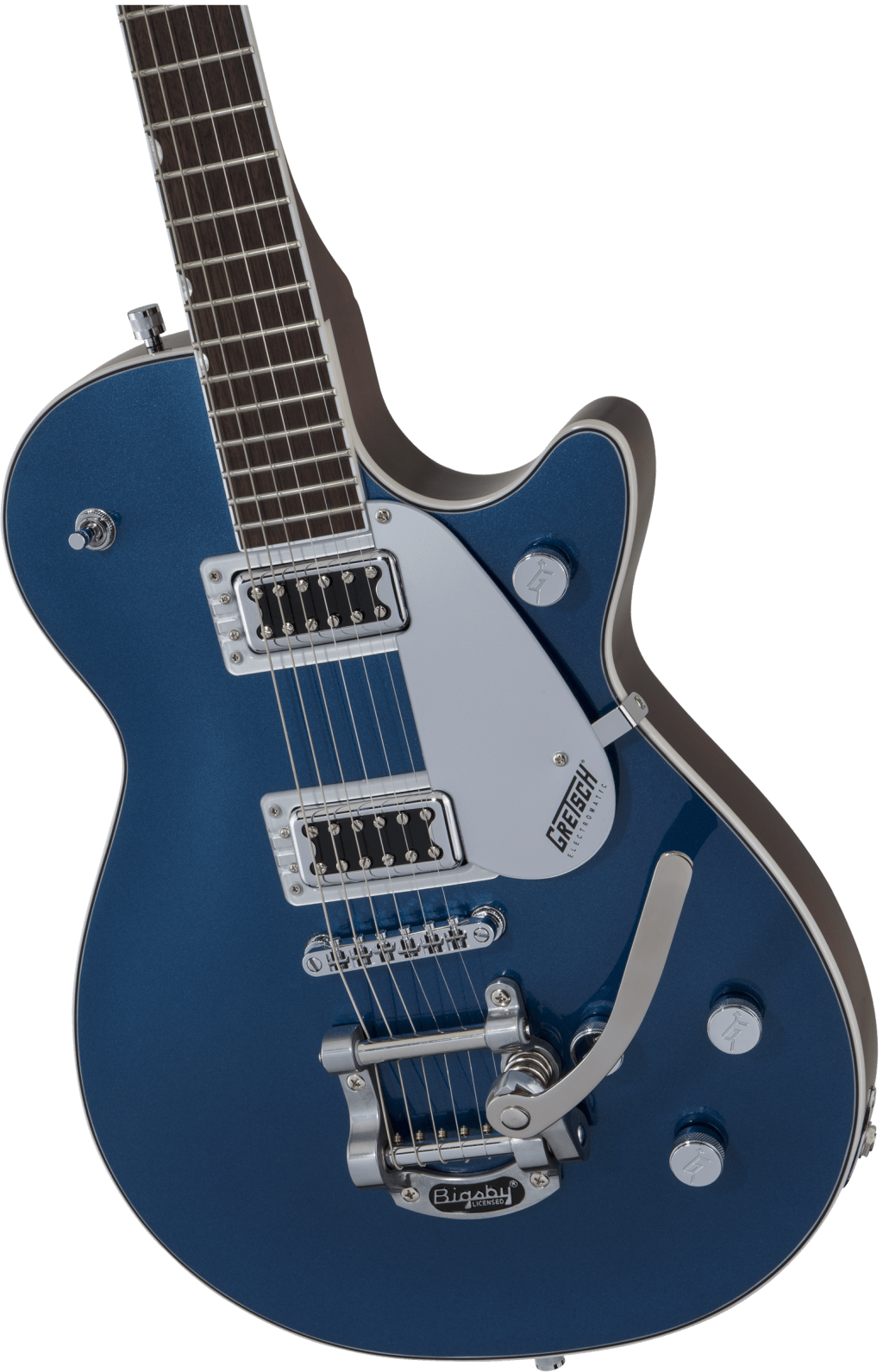
At the store, I was amazed by the variety of Gretsch models available. I started with the high-end options but soon found more affordable ones, like the Electromatic G5230T. The metallic blue color and Bigsby tremolo caught my eye, and at $600 USD, it was well within my $1,000 budget. The craftsmanship was impressive, especially for a guitar made in China at this price point. When I plugged it in, it had everything I was looking for and sounded fantastic. I bought it on the spot.

Good lookin’
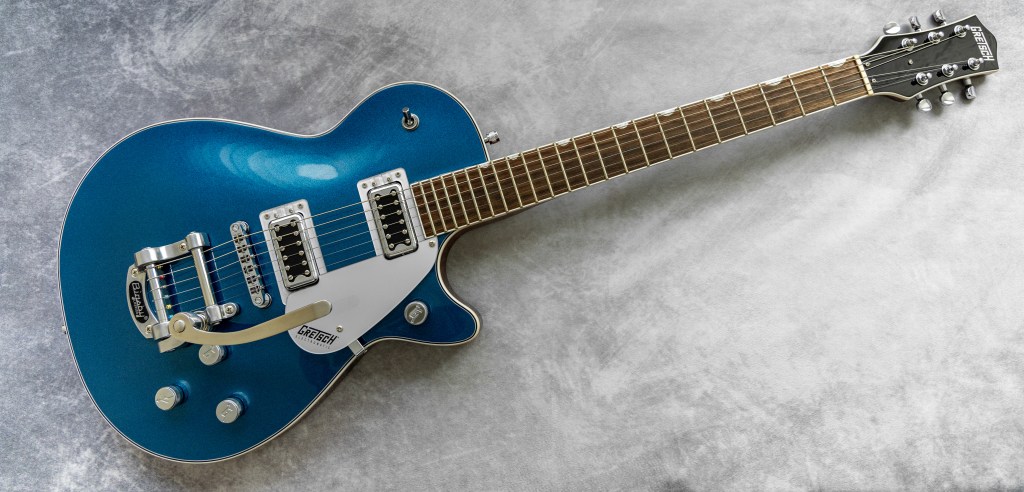
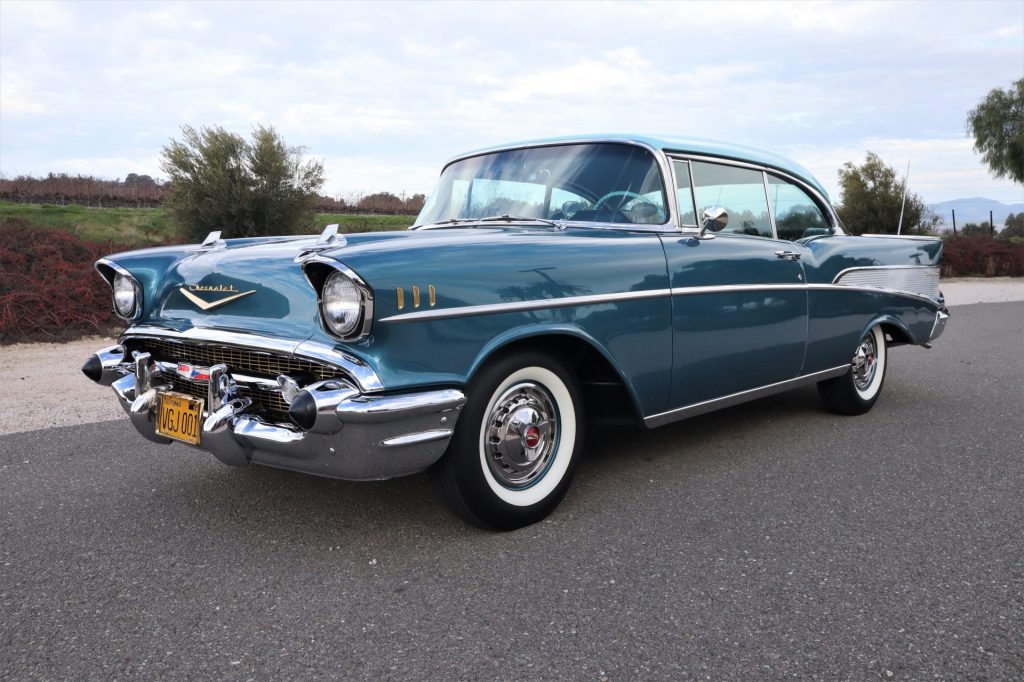
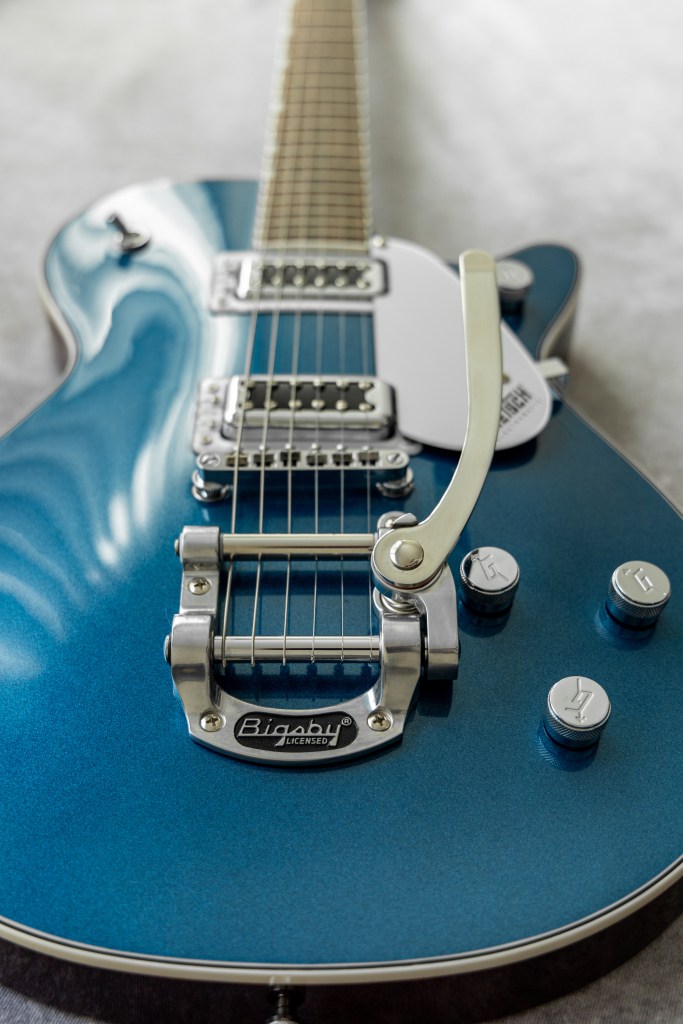
Gretsch initially wowed the world with the Dual Silver Jet, featuring a sparkling finish reminiscent of their drum-set finishes. Since then, the brand has maintained a stylistic connection to the automotive industry, epitomized by colors like Firebird Red or Cadillac Green. The Aleutian Blue on my G5230T is a soft blue with gray and warm undertones, reminiscent of the serene, cool hues of Alaska’s Aleutian Islands. The flawlessly applied metallic finish is noteworthy, especially since such finishes are notoriously tricky and prone to imperfections. Another remarkable feature is the white binding which adds complexity in manufacturing and usually increases the price. This binding enhances not only the body but also the fingerboard.
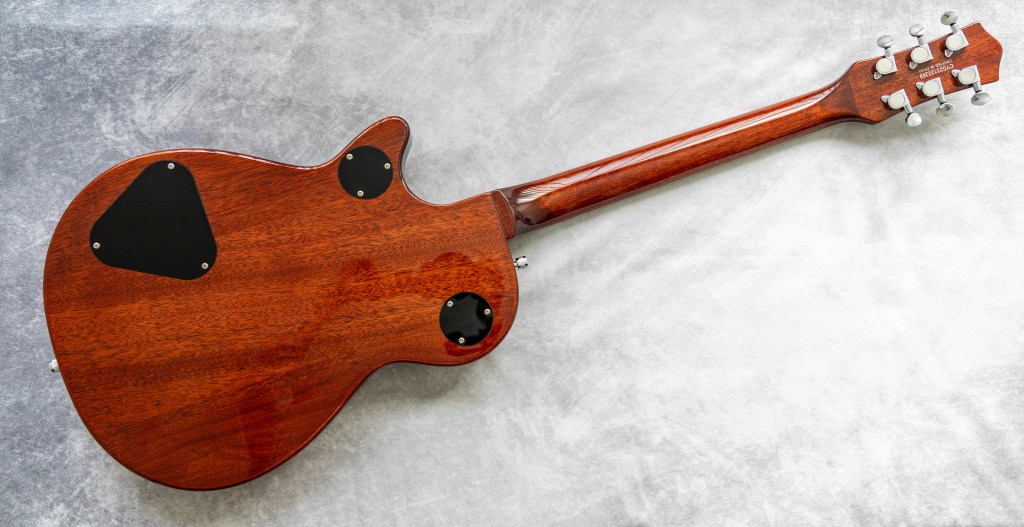
The guitar’s back, made of mahogany with a reddish, translucent urethane finish, beautifully showcases the wood’s texture. The body appears to be a single piece of mahogany topped with carved maple, while the neck consists of three parts: the neck, its base, and the head. The guitar features a neck-through construction, which enhances sustain.
The guitar has a Les Paul-like shape, although they’re not identical. While I’m not usually a fan of pickguards and understand why some players remove them from their Les Pauls, I quite like the gray plexiglass pickguard on this Gretsch, which is rounder than a Les Paul’s. Despite its solid appearance, the guitar’s body is actually chambered, making it lighter and giving it a unique sound profile. Although it lacks the contoured body of a Stratocaster and the edges can feel hard against my forearm during long sessions, it doesn’t cause real discomfort.
One thing I really love is that the GT3230T gives me the perfect rockabilly look, feel, and sound in a smaller body. I prefer its compact size over the larger hollow-body Gretsch models.

I have to admit, this isn’t the most comfortable guitar I own—the neck feels chunky and the heavier gauge strings (10-46) are less pliable but deliver great tone. My main critique concerns the fret edges; they aren’t as rounded as I’d prefer, making the guitar feel less “played in” straight from the factory. However, this is a minor issue. The frets are medium-jumbo. Overall, my primary gripe with the G5230T is its playability. It’s not the most comfortable guitar to play, and I feel a bit of strain while using it. However, this depends on each player. It’s not awful; it just requires a bit more effort and feels a tad stiff.
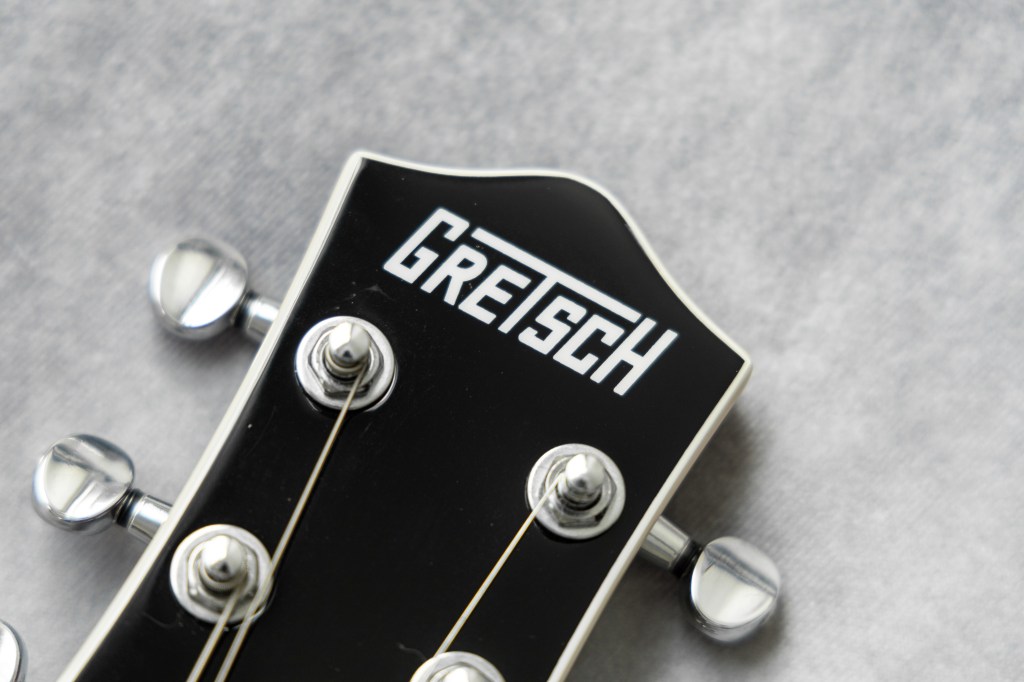
The G5230T’s thumbnail-shaped inlays are quintessentially Gretsch. The fingerboard, made of laurel instead of the more expensive and rarer rosewood, looks decent and serves as a reasonable, lower-cost alternative. The tuning machines, while functional, are of die-cast construction and feel somewhat generic and cheap. The hardware includes sturdy metal volume and tone knobs marked with a ‘G’ and an arrow indicating settings, a three-way selector switch with a metallic tip, and distinctive knurled strap retainer knobs.
Despite being crafted in China, the attention to detail on this Gretsch is notable, reflecting high quality standards. The construction is flawless, which is surprising at this price range, especially considering that other brands, like Epiphone, have had quality issues even in higher-priced models. The Gretsch feels like a great deal, as the quality of wood and craftsmanship would cost substantially more if made in the USA. While some corners might have been cut in the electronics and hardware to keep costs down, the guitar feels substantial and far from a budget model. Priced at $600 USD, it compares well with guitars costing over $1,000.
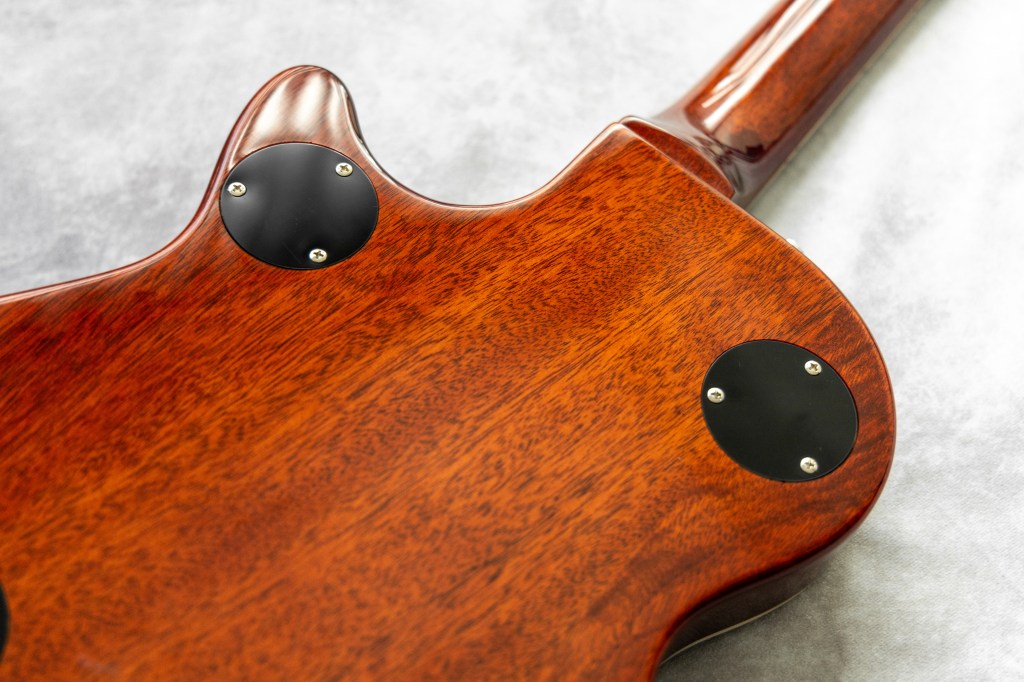

The tuning machinery looks somewhat cheap an generic although it works fine.
Sound
When I looked for a Gretsch, sound was paramount. I wanted that iconic, legendary twang of Cliff Gallup, Duane Eddy, Brian Setzer, Los Straitjackets’ Danny Amis, and The Reverend Horton Heat. I thought much of the sound came from hollow-body construction, so I had my doubts about a solid body guitar, even if chambered. But when I connected the G5230T to a Fender Tone Master Princeton Reverb Amp… Oh my goodness! I was blown away by the bite and twangy sound with tons of personality. It’s not the darker humbucking Gibson sound, nor the characteristic nasal Fender tone. It’s something subtly different, fascinatingly different. The G5230T features two Filter’Tron pickups, which is where the “dual jet” moniker comes from.
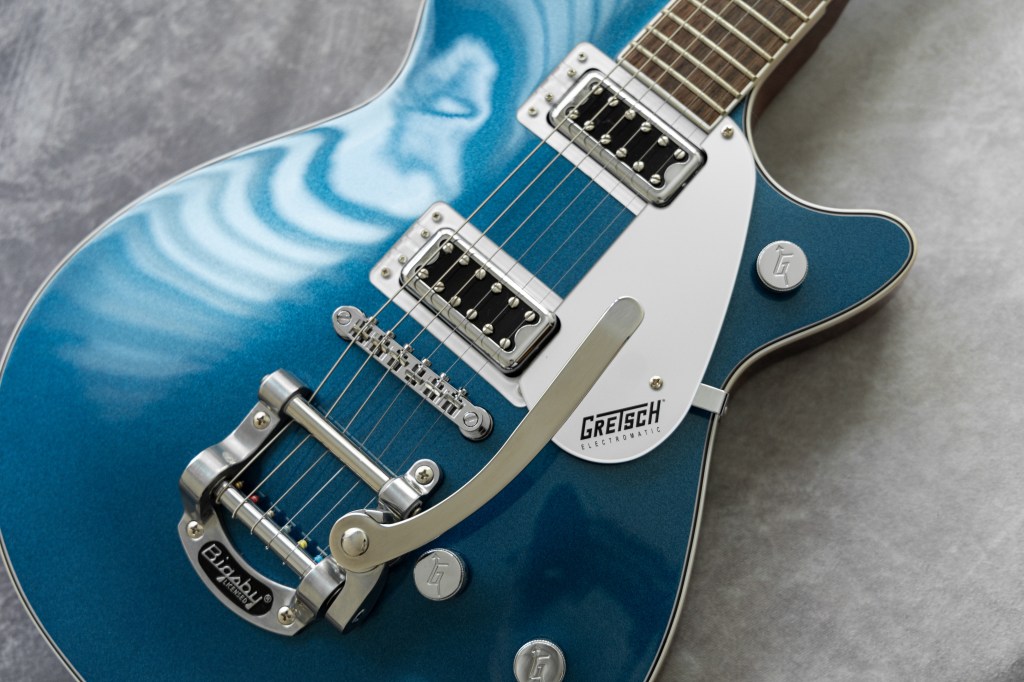
In 1956, Chet Atkins was frustrated with the hum issues he encountered in the studio from his electric guitar. As a prominent Gretsch endorser, similar to Les Paul for Gibson, Atkins needed a solution. Ray Butts created one with Gretsch’s Filter’Tron pickups. These pickups are narrower than the average humbucker, with coils and pole pieces placed closer together, reducing the magnetic field width and focusing the sound.
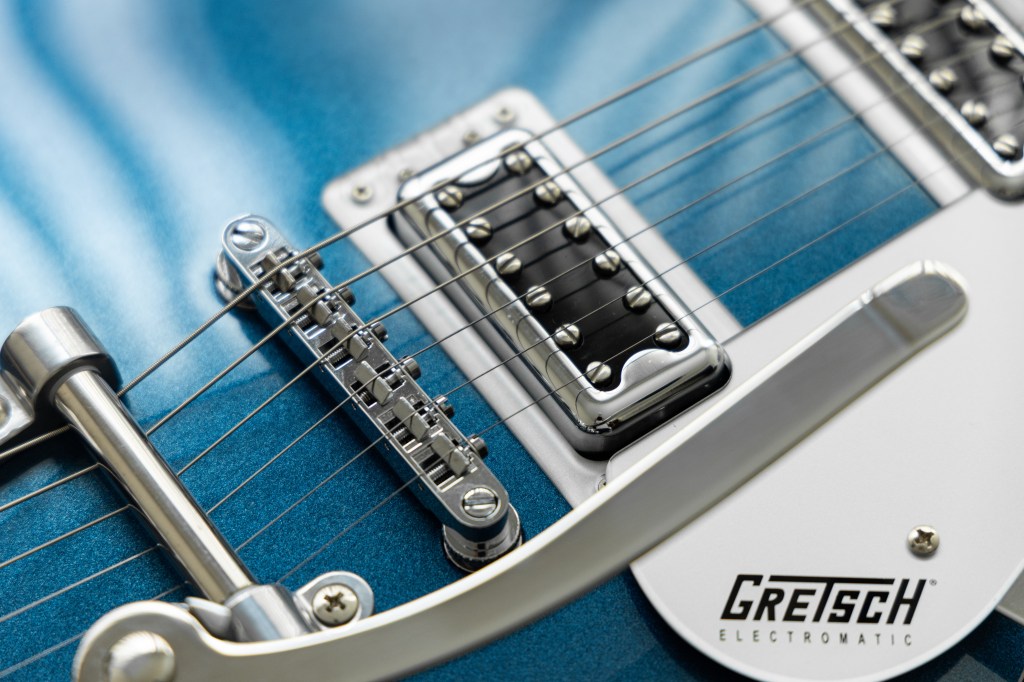
Unlike Gibson’s PAF pickups, which use shorter Alnico bar magnets, the larger Filter’Tron bar magnets enhance magnetic field strength, creating a distinctive ‘chime and growl.’ Additionally, Filter’Trons remain bright and clear even when distorted, offering a unique sound with warmer, mid-heavy tones compared to the PAF. While the Filter’Trons have a lower output (around 3k-5k ohms), they deliver a signal that combines humbucker warmth with single-coil clarity.
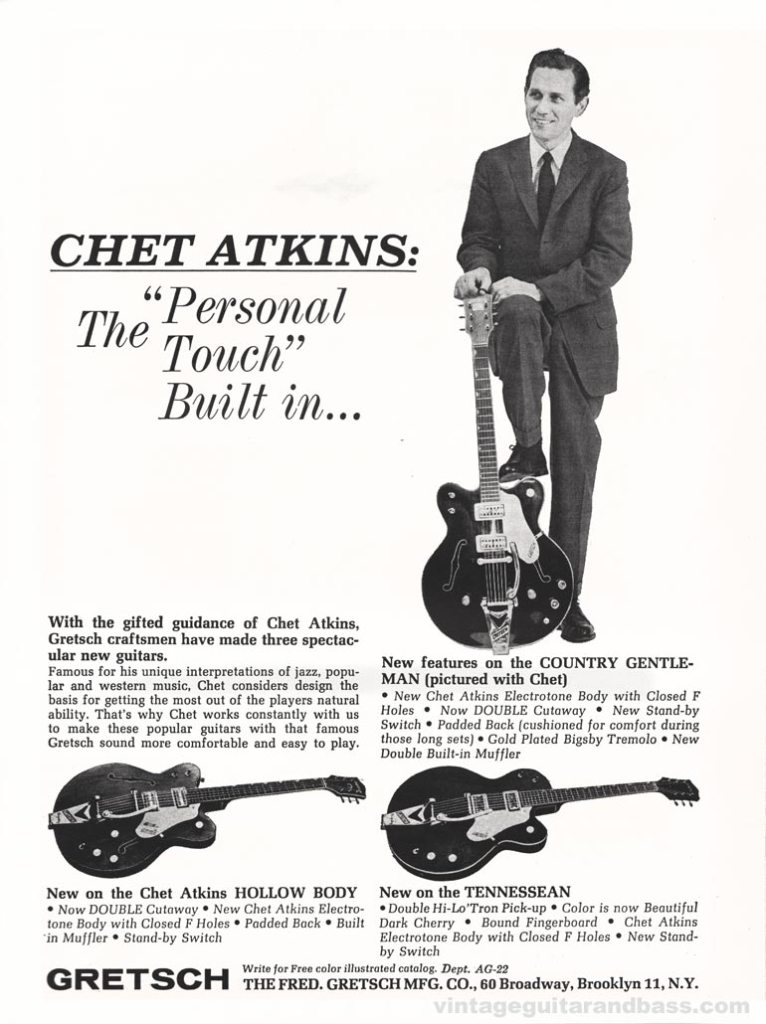
Image courtesy of www.vintageguitarandbass.com
The result is quite adaptable. The G5230T isn’t just for surf guitar or rockabilly; it handles hard rock, jazz, and blues with a distinctive treble snarl that responds beautifully. Whether you’re playing rhythm or lead, clean or distorted, this guitar performs very well in varied situations.
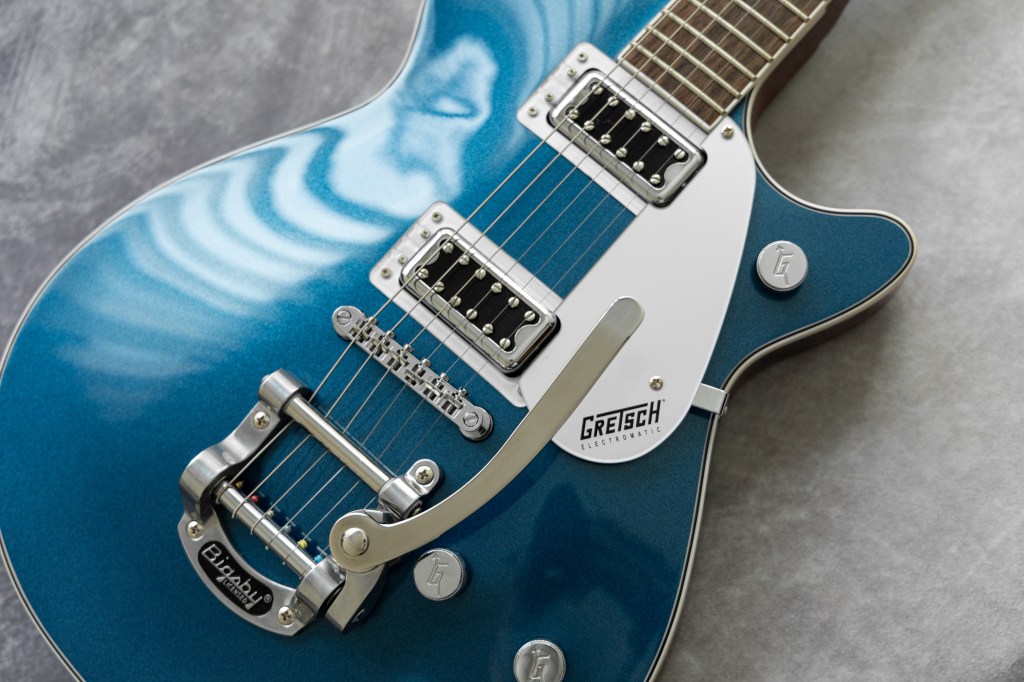
Something I really like with the G5230T is that it also features individual volume controls for each pickup, a master volume, and a master tone control, providing a wide range of tonal possibilities. You can blend the pickups in various ways, adjusting the volume of each to find the perfect balance. The master tone control allows you to roll off the highs for a warmer, jazzier sound or keep them up for a brighter, more cutting tone. Additionally, there’s a treble-bleed circuit to maintain consistent volume while adjusting the tone.
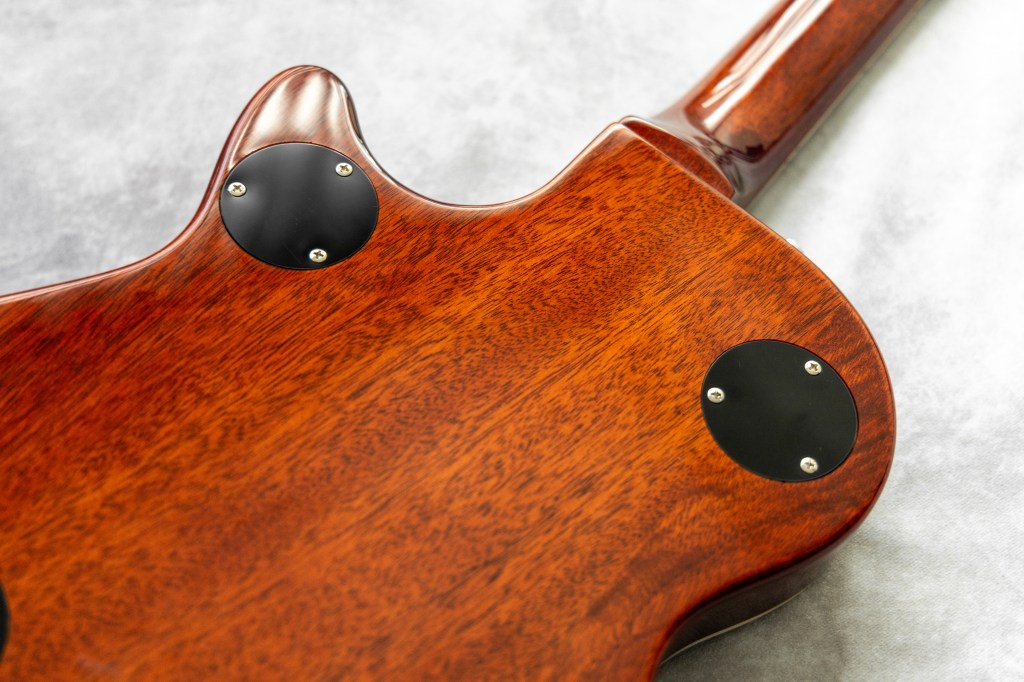
The Bigsby Tremolo
If you want to add an instant surf flavor to your chords, the Bigsby delivers an experience you can’t get elsewhere. It’s not designed for deep dive bombs like a Floyd Rose, but it excels at smooth pitch bends and subtle vibrato effects. It offers a gentler, more musical approach to vibrato, perfectly complementing the guitar’s vintage aesthetic. Surprisingly, the tuning remains reasonably stable. While it’s not a locking system that guarantees perfect stability and changing strings can be a bit of a hassle, I prefer it to a fixed tailpiece. Try playing “Stray Cat Strut” without a Bigsby—it just won’t feel right. Plus, it definitely adds to the instrument’s look and vibe.

Amplifier Pairing
Although it might be easy to assume that this Gretsch is only suited for rockabilly, country, or surf music, it can actually handle a wide variety of musical genres. I’ve paired this guitar with several different amplifiers, and it sounds fantastic through all of them. My favorite combination is with Fender amps like a Princeton or a Twin Reverb. When paired with a Marshall, it brings out a raw, gritty tone that’s great for classic rock. Plugged into a Vox AC30, it achieves a jangly, British Invasion sound. The G5230T is a chameleon, adapting well to different amps and genres. I haven’t tried it for metal, as that’s not quite my style, but who knows? A Telecaster can surprise you in the heavy metal department. So, while it may seem like a one-trick pony for rockabilly and surf guitar at first glance, there’s much more to this Gretsch than you might expect.
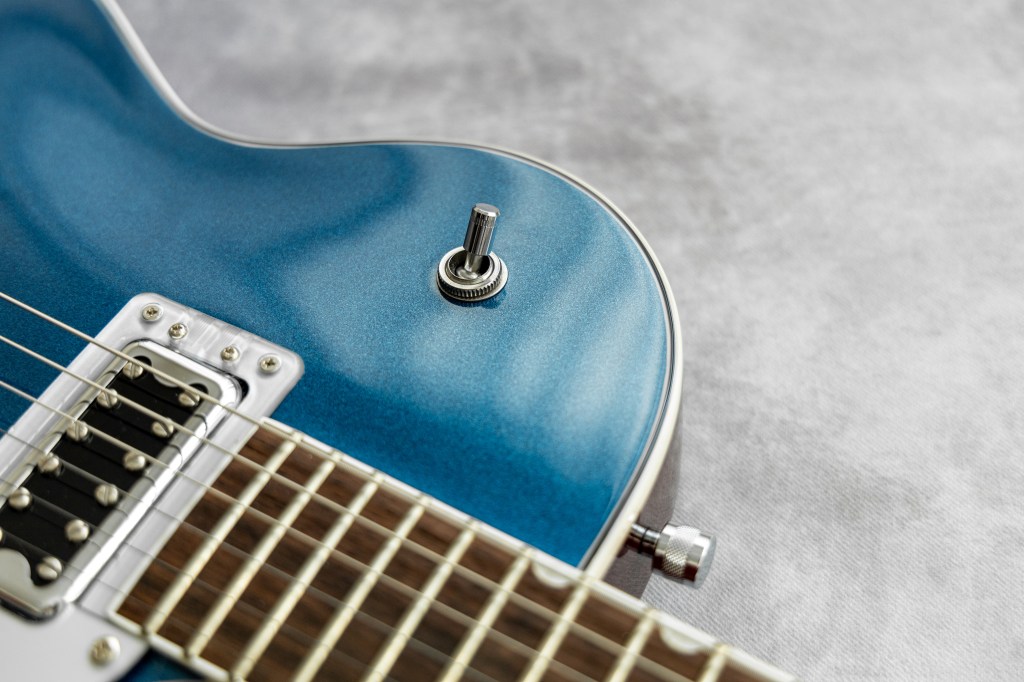
Pros & Cons
Pros:
- Stunning Aesthetics: The Aleutian Blue metallic finish with flawless application, complemented by white binding and classic Gretsch design elements like thumbnail-shaped inlays and G-Arrow control knobs, make this guitar a visual standout with vintage charm.
- Compact and Lightweight Design: The chambered mahogany body offers the iconic rockabilly look and sound in a smaller, lighter form factor compared to larger hollow-body models, making it more comfortable for players who prefer a compact size.
- Versatile Sound Profile: Equipped with Black Top Filter’Tron pickups, the guitar delivers the legendary Gretsch twang and bite. It adapts well to various music genres—including rockabilly, surf, hard rock, jazz, and blues—and pairs excellently with different amplifiers.
- Exceptional Value for Money: Priced at $600 USD, it offers craftsmanship and materials typically found in higher-priced guitars, providing excellent value without sacrificing quality.
- High-Quality Construction: Despite being made in China, the guitar exhibits excellent craftsmanship with attention to detail, using quality woods like a mahogany body with a maple top and a laurel fingerboard. The neck-through construction enhances sustain.
- Tonal Flexibility: Features individual volume controls for each pickup, a master volume, a master tone control, and a treble-bleed circuit. This setup allows for a wide range of tonal possibilities and precise sound shaping to suit different playing styles.
- Bigsby B50 Tremolo System: Adds smooth pitch bends and subtle vibrato effects, enhancing musical expression and perfectly complementing the guitar’s vintage aesthetic.
Cons:
- Bigsby Limitations: The Bigsby B50 tremolo isn’t designed for extreme pitch bending and can be cumbersome during string changes. Players accustomed to more versatile or modern tremolo systems may find it limited.
- Playability Concerns: The chunky neck and heavier gauge strings (10-46) can make the guitar feel stiff, requiring more effort to play and potentially causing strain during extended sessions.
- Unrefined Fret Edges: The fret edges are not as rounded or smooth as they could be, affecting comfort and making the guitar feel less “played-in” straight from the factory.
- Generic Tuning Machines: The die-cast tuning machines feel somewhat generic and cheap, which may impact tuning stability and don’t match the quality of the rest of the instrument.
- Lack of Ergonomic Contouring: The body lacks contoured edges, causing it to feel hard against the forearm during long playing sessions, which can reduce comfort compared to models like the Stratocaster.
Conclusion
The Gretsch G5230T Electromatic Jet FT Single-Cut with Bigsby is a special guitar, far from the sound of Stratocaster-like bodies paired with humbucking pickups. It’s also not a Gibson clone. It offers a unique blend of classic Gretsch aesthetics with a strong retro vibe, reminiscent of an era of large, shiny cars and fast, mind-blowing jets. This guitar combines modern playability and versatile sound with a 50s style that’s quite cool in its own right.
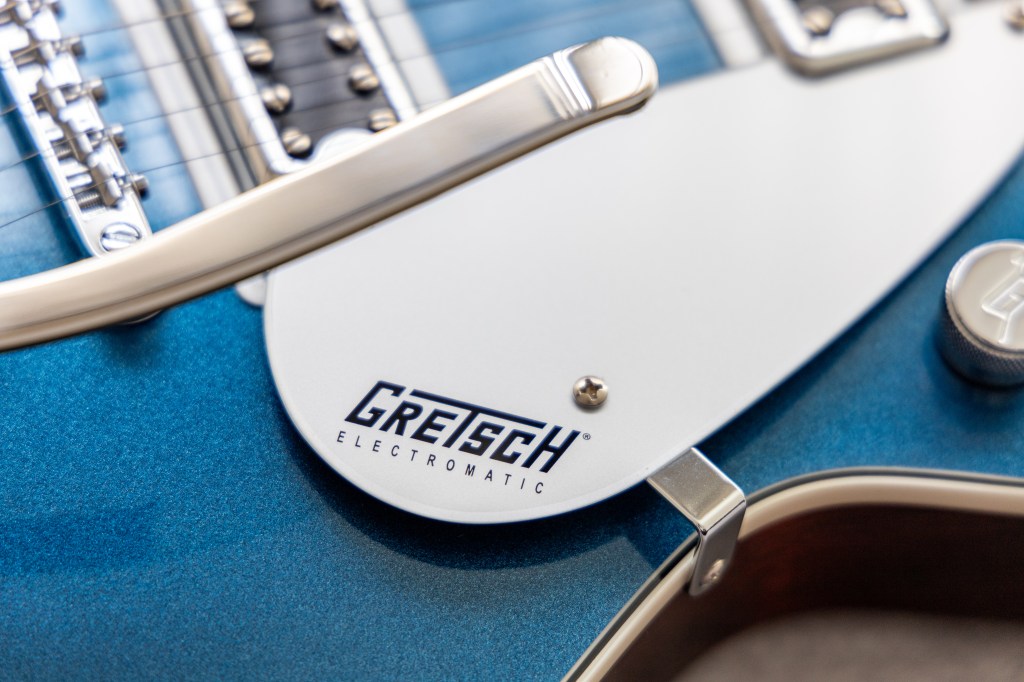
Its stunning metallic finish, solid build, and rich tonal palette make it a standout choice for anyone looking to add a touch of vintage flair to their collection while being surprised by its wide tonal range, suitable for many musical styles and genres. No, it’s not perfect, and the list of cons demonstrates that this guitar may not be everyone’s cup of tea.
For me, the G5230T feels like a dream realized. It’s a testament to how accessible good-quality instruments have become without breaking the bank. The Gretsch G5230T offers a fantastic gateway to a different world of musical possibilities, with a clearly defined personality. In many ways, it’s like holding a piece of history in your hands, and it’s a truly joy to play.
Specs
General:
– Suggested retail price: $599.99
– Model Number: 2507210502
– Series: Electromatic®
– Family: Jet™
– Platform: Jet™
– Color: Aleutian Blue
– Orientation: Right-Hand
Body:
– Build: Solid Body
– Body Finish: Gloss
– Body Shape: Jet™
– Body Material: Chambered Mahogany
– Bracing: Chambered
– Body Binding: White with B/W Purfling
– Body Top: Arched Laminated Maple
– Body Depth: 1.85″ (47 mm)
Neck:
– Neck Material: Mahogany
– Neck Construction: Set-Neck
– Neck Finish: Gloss Urethane
– Neck Shape: Thin “U”
– Neck Binding: White
– Scale Length: 24.6″ (625 mm)
– Fingerboard Radius: 12″ (305 mm)
– Fingerboard Material: Laurel
– Number of Frets: 22
– Fret Size: Medium Jumbo
– Nut Material: Synthetic Bone
– Nut Width: 1.6875″ (42.86 mm)
– Position Inlays: Pearloid Neo-Classic™ Thumbnail
– Neck Plate: None
Miscellaneous
– Strings: Nickel Plated Steel (.010-.046 Gauges)
– Strap Buttons: Gretsch® Knurled Strap Retainer Knobs
– Case/Gig Bag: Optional G6238FT Gretsch® Flat Top Solid Body Hardshell (p/n 099-6474-000); Optional G2164 Gretsch® Solid Body Gig Bag (p/n 099-6460-000)
Hardware:
– Bridge: Anchored Adjusto-Matic™
– Hardware Finish: Chrome
– Tailpiece: Bigsby® B50
– Tuning Machines: Die-Cast
– Pickguard: Silver Plexi with Black Gretsch® & Electromatic® Logos
– Control Knobs: G-Arrow
Electronics:
– Bridge Pickup: Black Top Filter’Tron™
– Middle Pickup: N/A
– Neck Pickup: Black Top Filter’Tron™
– Controls: Volume 1. (Neck Pickup), Volume 2. (Bridge Pickup), Master Volume, Master Tone
– Pickup Switching: 3-Position Toggle: Position 1. Bridge Pickup, Position 2. Bridge And Neck Pickups, Position 3. Neck Pickup
– Special Electronics: N/A
– Pickup Configuration: Filter’Tron™ / Filter’Tron™


 oscaronguitars.com
Leave a comment