
This story of friendship, art, and memory is about my dear friend Federico Padilla, who transformed a simple guitar I lent him into a unique piece of art—a powerful symbol of life, heritage, and generosity.
The Unexpected Gift
The beauty of true friendship often lies in the unexpected gifts we receive from one another. For me, a photographer and guitarist, this gift came in the form of a classical guitar that was far from ordinary. It was a guitar transformed by the hands and heart of Federico Padilla, a man whose deep understanding of Aztec culture and cosmogony infused the instrument with symbolic meaning. This is a story not just of a guitar, but of a life, a friendship, and the indelible marks we leave on the world through art.
A Simple Request
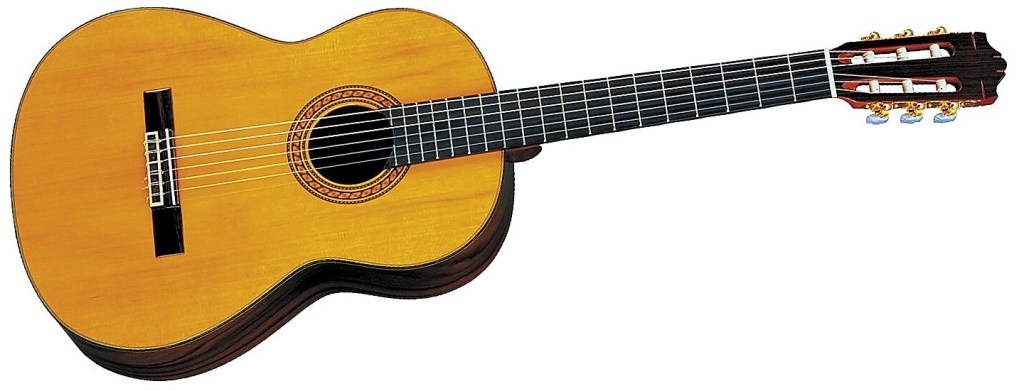
During a Christmas gathering, my close friend Federico asked to borrow one of my guitars. This was a common request among friends, especially in Mexico, where music often accompanies social events. Without much thought, I lent Federico a good-sounding but not particularly valuable classical guitar, just in case of any accidents, damage, or loss, and soon forgot about it.
A Curious Proposal
Months later, Federico reached out again, but this time with a question that piqued my curiosity. As a professor at the National School of Anthropology and History with a deep knowledge of pre-Columbian thought, Federico asked if he could do something with my guitar. Intrigued, I agreed, knowing that Federico’s understanding of Aztec symbolism and cosmogony was profound and that he was up to something.
Past Collaborations
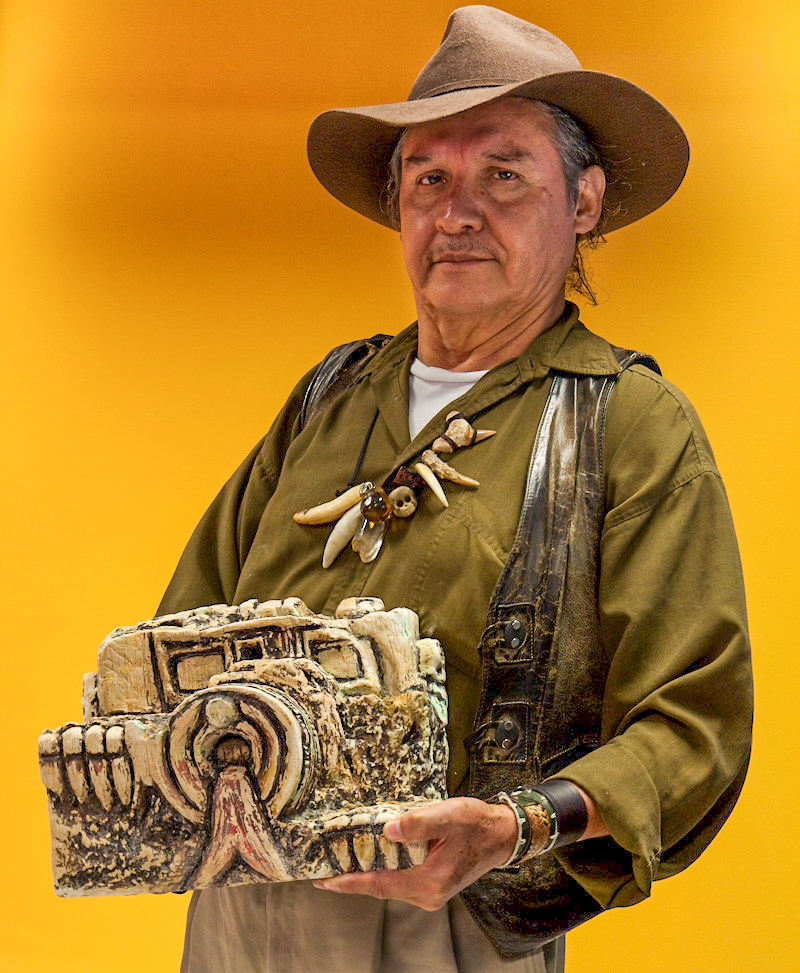
Federico had previously helped me with other unusual projects. For instance, when I asked him to create a camera as the Aztecs might have imagined one, Federico embraced the challenge. Though the Aztecs lacked the technology to create a camera, the exercise was about envisioning how they would have conceptualized such a device. Federico’s interpretation was ideographic, blending Aztec symbolism with their ancient concepts of time and space, resulting in a fascinating piece that was as much about cultural reflection as it was about creativity.
An Artistic Transformation
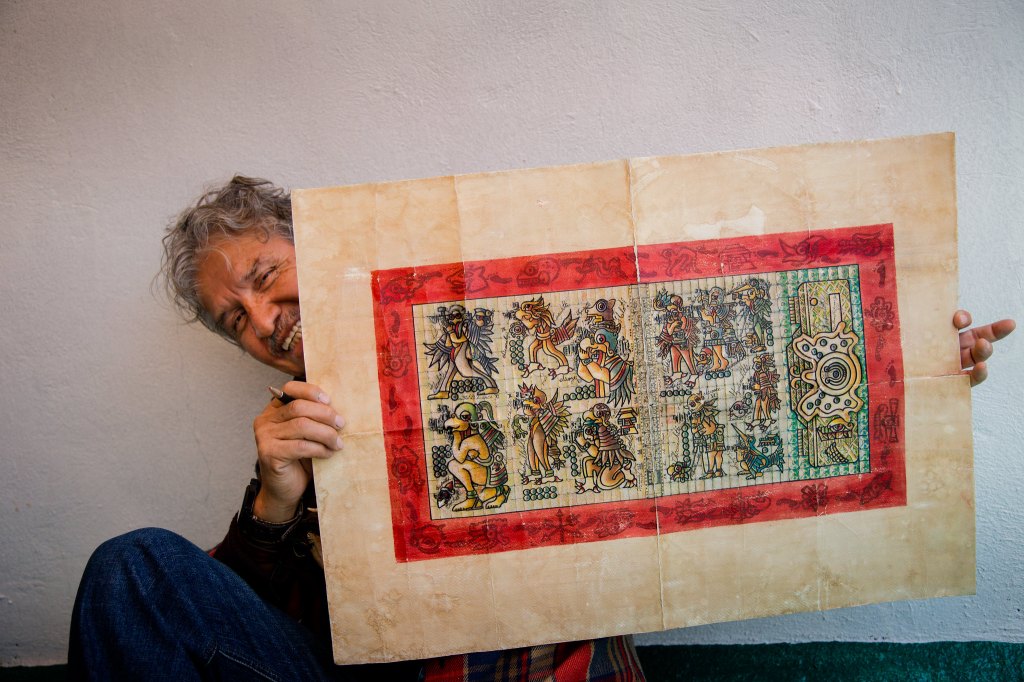
When the time came for me to write a photographic manual for field anthropologists working in Mexico, I turned to Federico once more. This time, I needed a cover for my book that would resonate with the cultural richness of the region. Federico created a codex-style drawing that captured the essence of the project, intertwining photographic elements with ancient symbolism. These experiences set the stage for what was to come with the guitar.
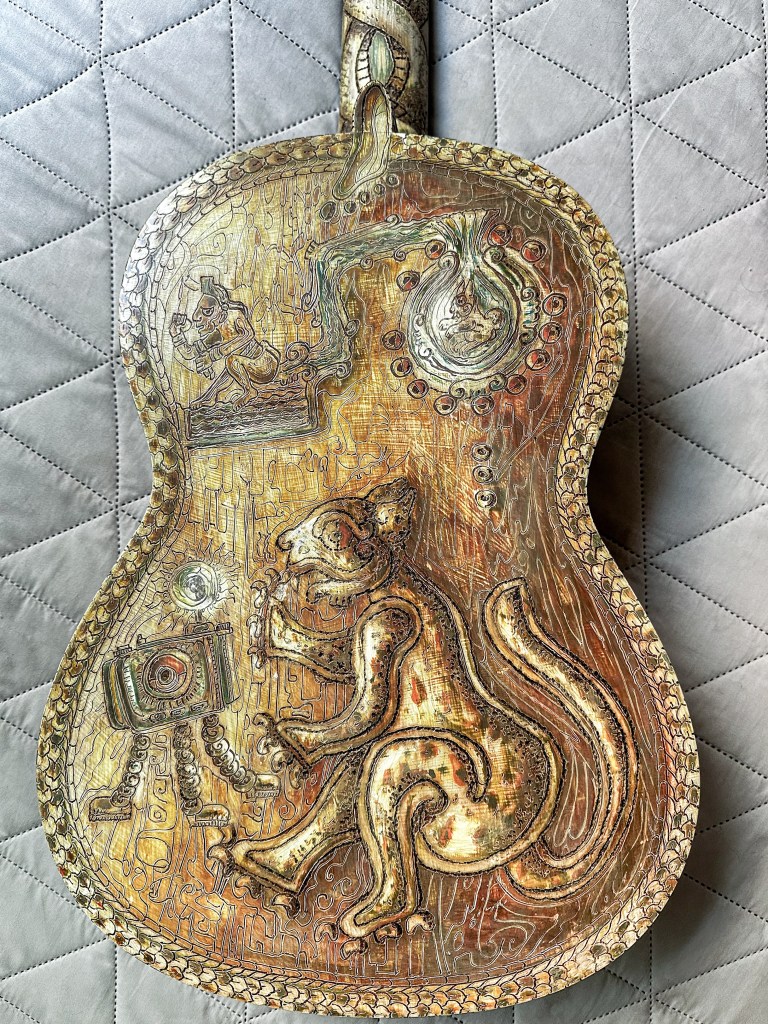
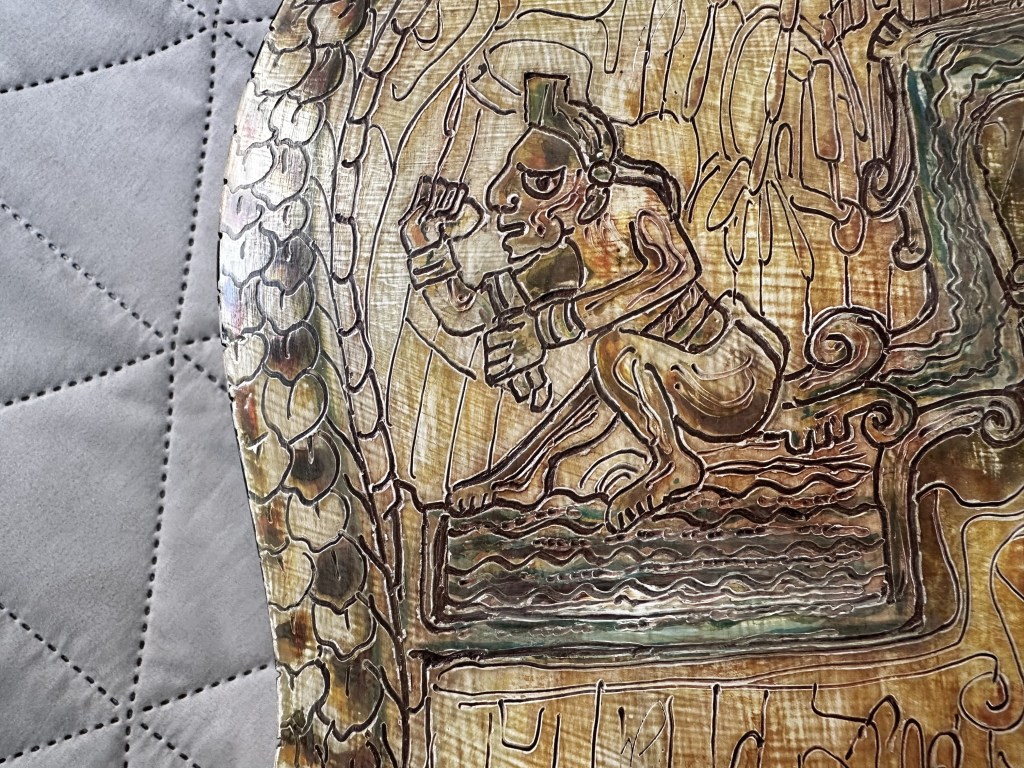
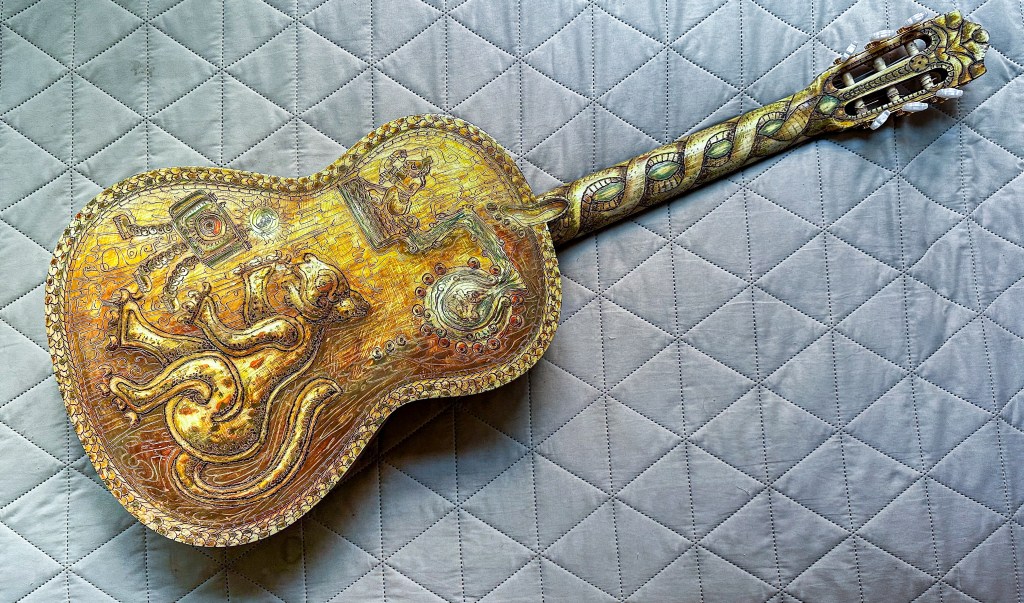
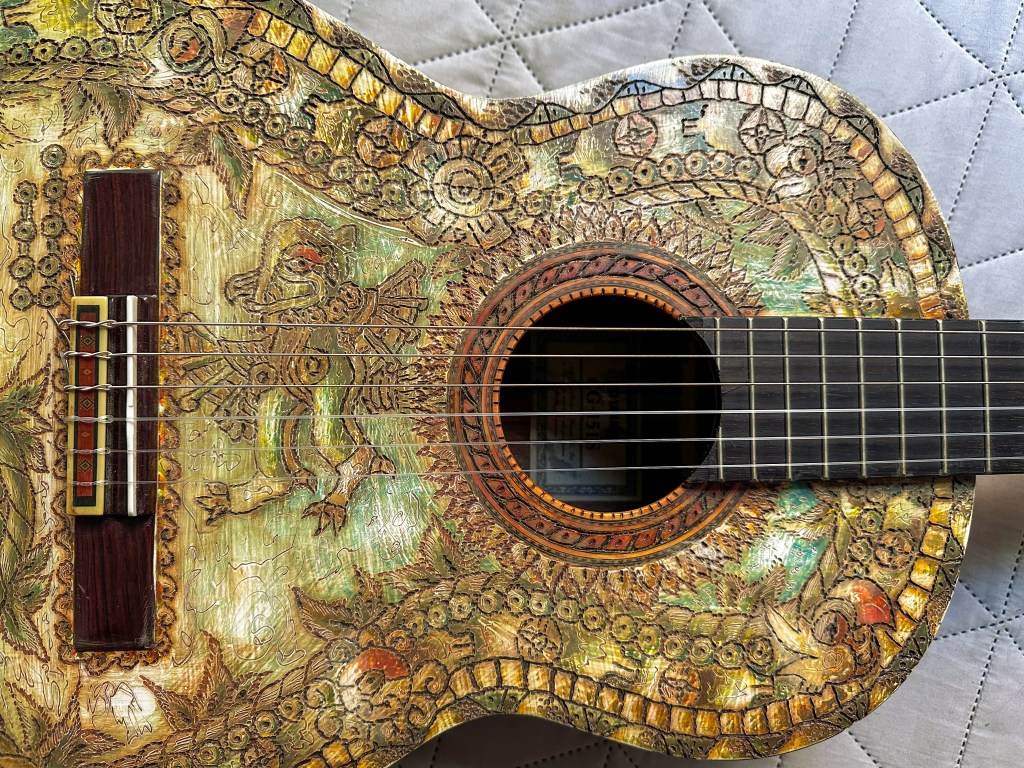
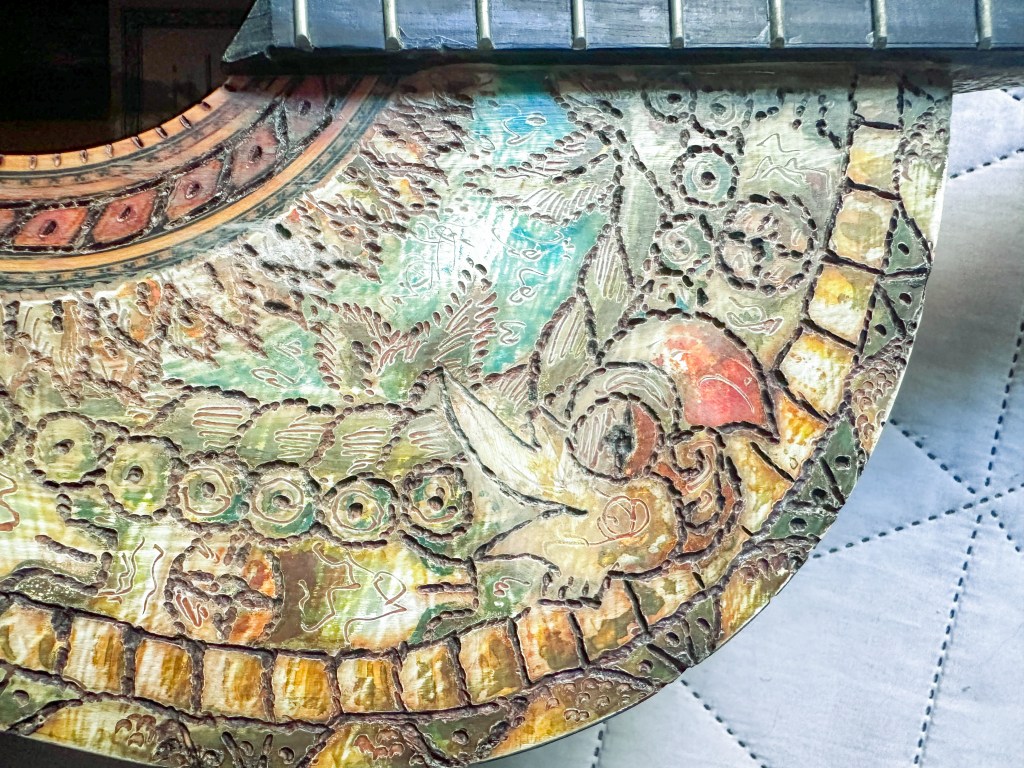
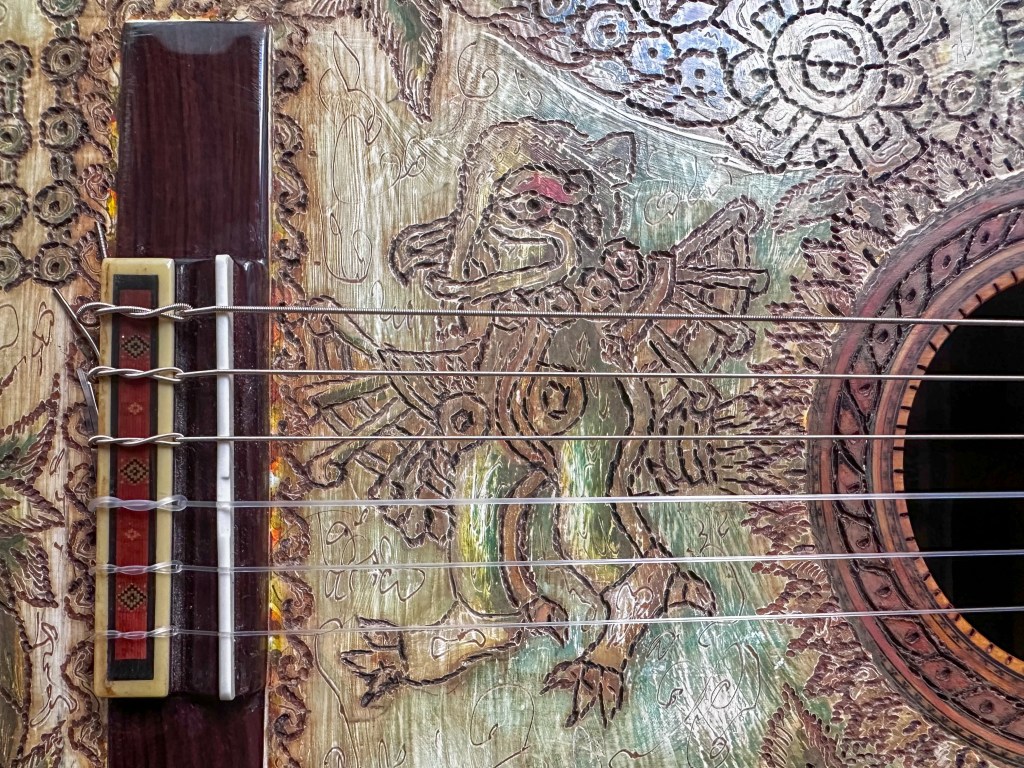
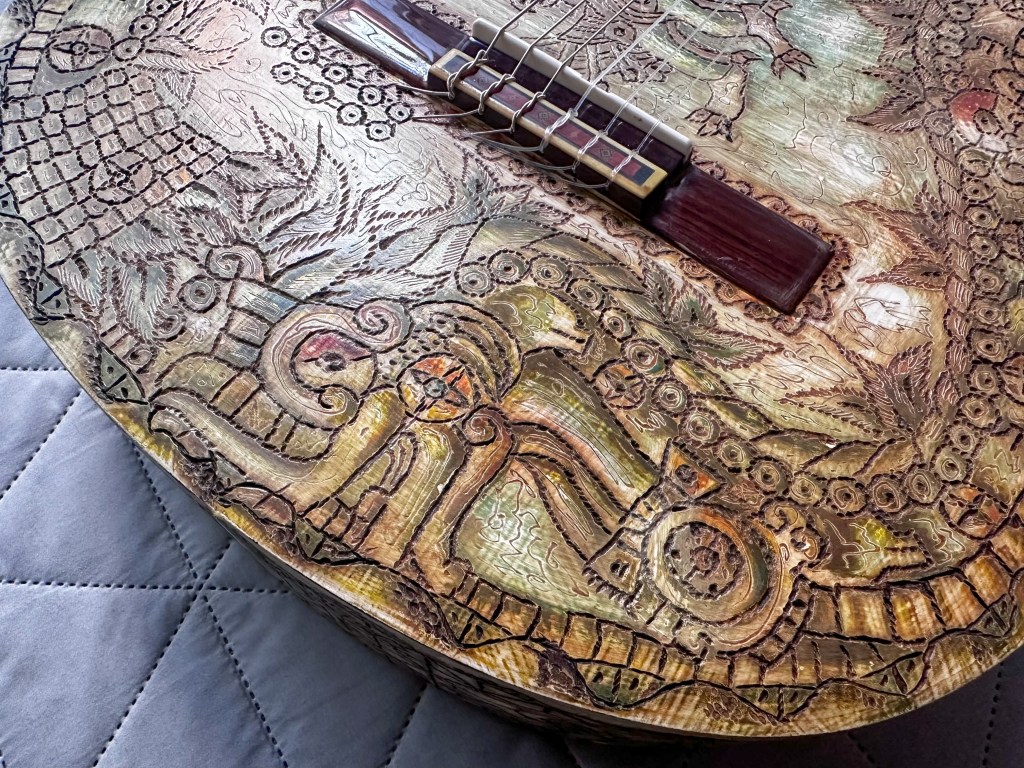
After months of work, Federico returned the guitar to me, but it was no longer just an instrument. It had been transformed into a work of art. Federico had sanded and cleaned the guitar, and though no photographic record exists of the process, the result was breathtaking. He had drawn a codex on the bare wood, one that symbolized my life—a representation deeply rooted in our shared experiences and Federico’s understanding of who I am: a photography professor, a musician, and a lover of symbolic art.

Federico’s craftsmanship didn’t stop at the drawing. He used a pyrography tool to burn the design into the wood and then painted the guitar with pigments made from formulas used by the ancient Aztecs. The colors and symbols he chose were not merely aesthetic choices; they carried profound meanings, turning the guitar into a symbolic artifact of my life.



A Lasting Legacy
This guitar, now a unique piece in the world, holds immeasurable historical, ethnographic, and even archaeological value. But for me, its true worth lies in the personal connection it represents—a tribute to the friendship and generosity of Federico Padilla, who passed away last year. Federico’s brother, Sergio, delivered the sad news, leaving me to reflect on the moments we shared and the incredible gifts Federico had given me.
“If I would never die, if I would never disappear. Where there is no death, where death is conquest, may I go there.”
-Nezahualcoyotl, philosopher, architect, and warrior-king of Texcoco, renowned for his wisdom and cultural contributions during the Aztec era.
A Tribute to Friendship
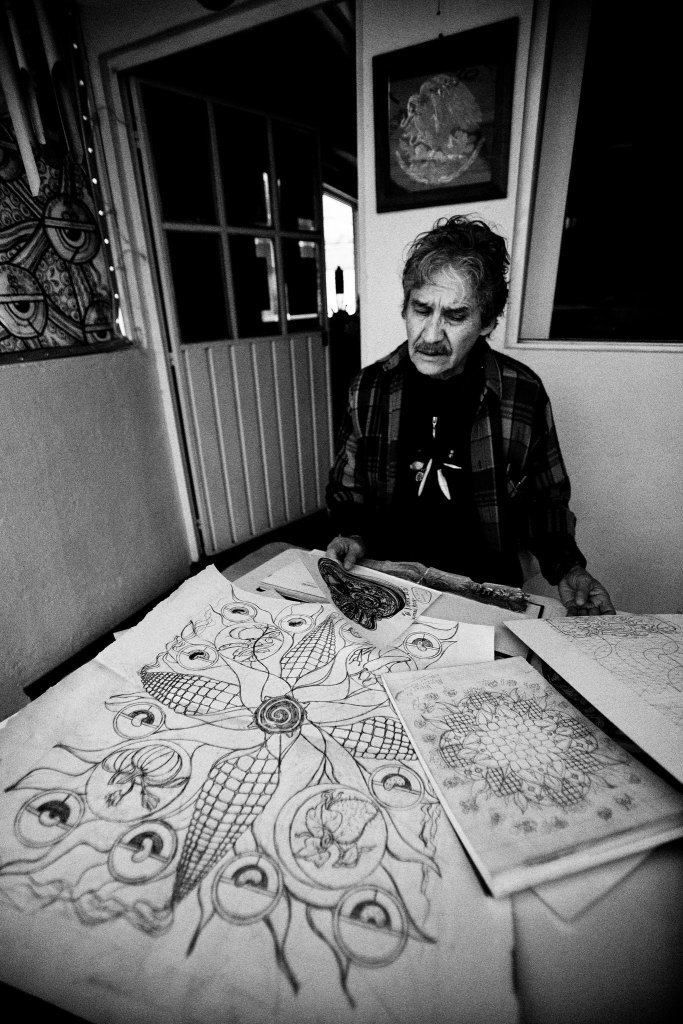
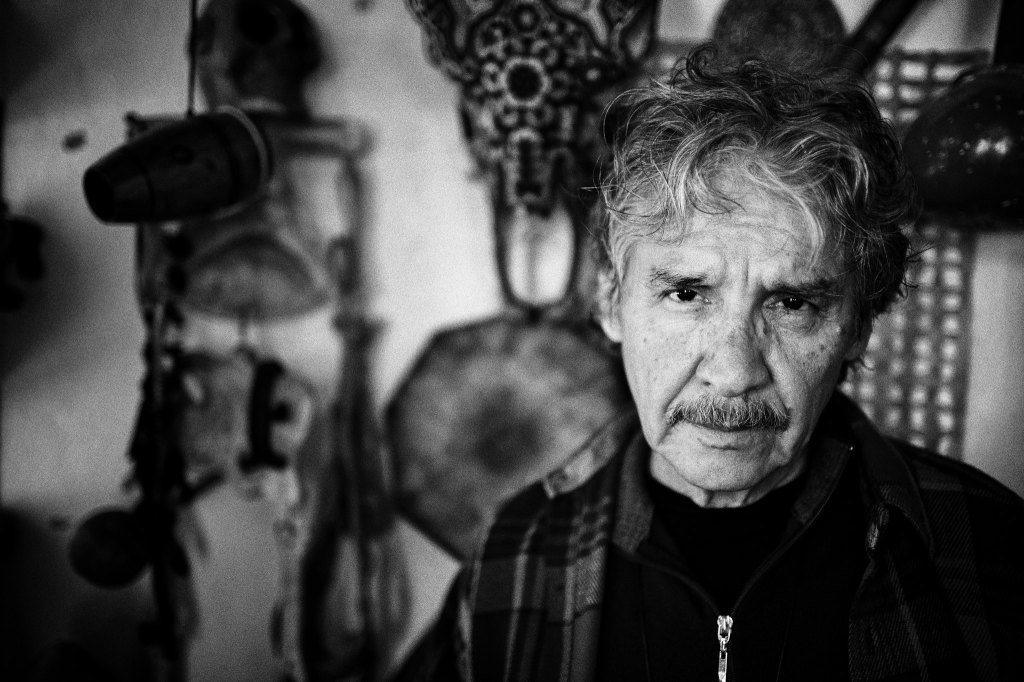
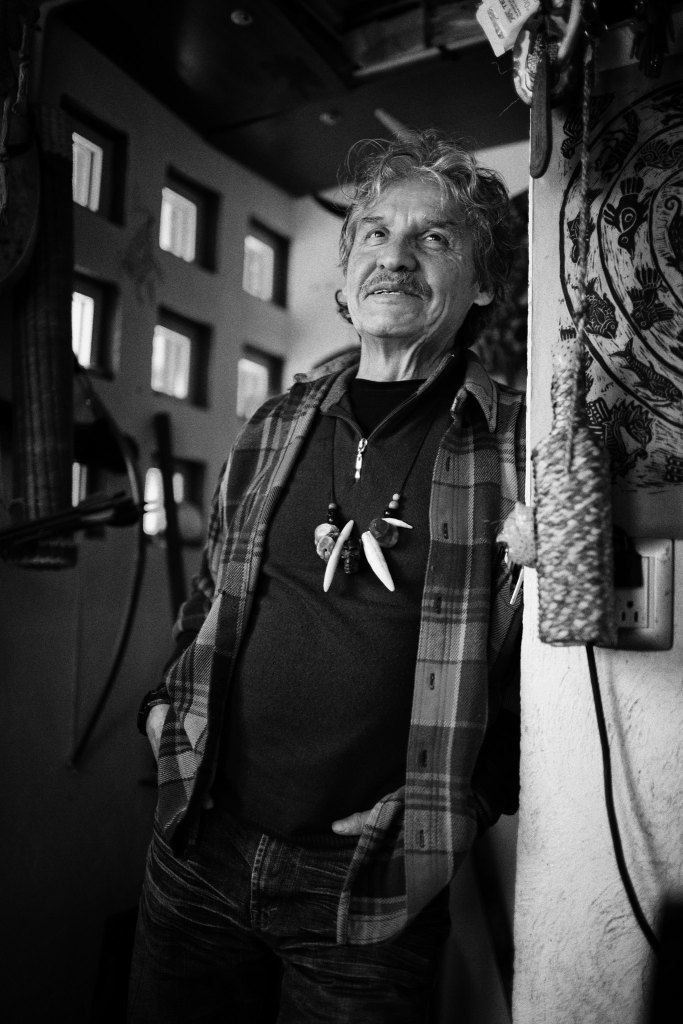
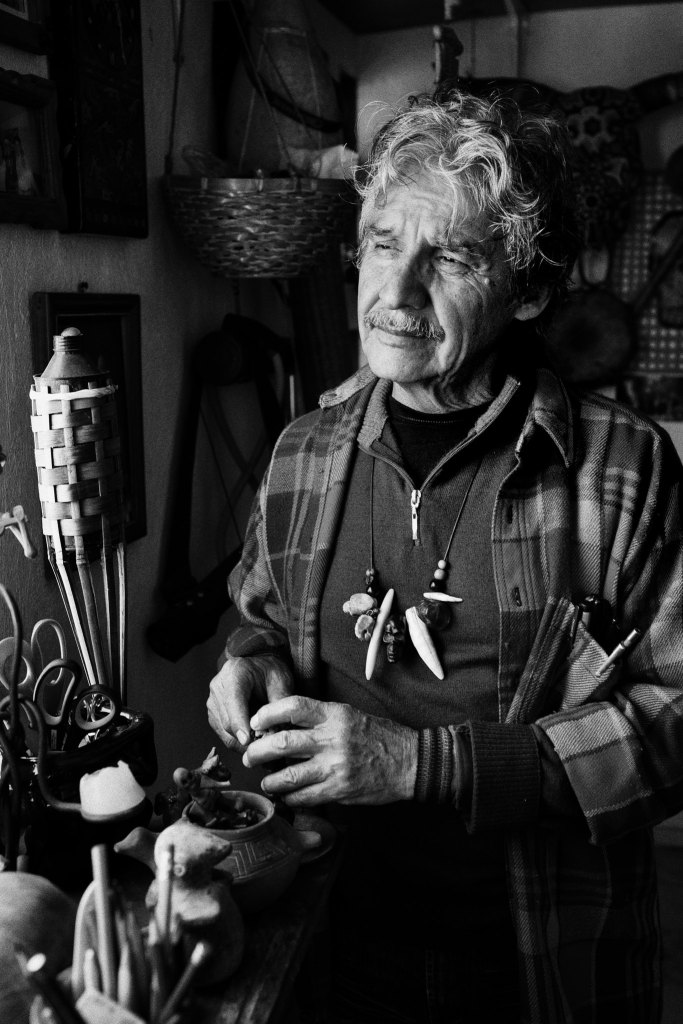
I had photographed Federico in his studio, trying to capture his joy, depth, and artistic spirit. Federico was a man who gave selflessly, expecting nothing in return, and this guitar, now dubbed the ‘Aztec Guitar,’ stands as a testament to that generosity. It was once a mass-produced instrument, but Federico’s touch turned it into a masterpiece, a symbol of our friendship, and a permanent reminder of the incredible man that Federico was.

Conclusion
Federico Padilla’s legacy lives on in the guitar that now sits in a place of honor in my home—a piece that is as much about the past as it is about the future. Wherever Federico may be, I am certain that he continues to create, his brushes never far from his side, painting wherever he is with the same generosity and spirit that touched all who knew him.
 oscaronguitars.com
Leave a comment