

The Unexpected Truth About Guitar Mastery
When I first picked up a guitar nearly 40 years ago, like most aspiring guitarists, I dove headfirst into learning chords, scales, and all the technical stuff that seemed crucial at the time. I spent countless hours on finger exercises, building strength and flexibility, and getting those exotic scales and modes under my fingers. But there was one thing that, in hindsight, I neglected—a skill that turned out to be far more important than I initially realized: time.
The Dream vs. Reality: We All Want to Be Rock Stars
Let’s be honest, when most of us start playing guitar, we dream of shredding epic solos on stage, basking in the glow of thousands of screaming fans. Who doesn’t want to be the next Joe Perry, right? But here’s the kicker: solos only make up about 10% of what you’ll actually play. The remaining 90%? That’s rhythm guitar. And if your timing is off, everything else falls apart—no matter how well you can solo. Also, at the end of the day, a solo played out of time is worthless. No matter how fast you play or how dexterous your fingering is, it’s all going to the trash can if it’s out of time.
The Heartbeat of the Band: Timing Is Everything
In any band, the drums and bass are the foundation. They set the tempo and create the groove. But here’s where the rhythm guitarist comes in. It’s your job to fill in the harmonic structure, to add that crucial layer of sound that makes the music whole. And you’ve got to do it in time. If your rhythm is shaky, if you’re ahead or behind the beat, everyone will notice. And trust me, it won’t be pretty.
The Groove and the Pocket: it’s all in the funk
Two key concepts in rhythm guitar are the ‘groove’ and the ‘pocket.’ You need to be locked into the groove, playing in the pocket where everything just clicks. This means you have to play in a tight, constant, and consistent beat along with the rest of the band. One genre that nails this perfectly is funk.
So, picture this: it’s the mid-1960s, and James Brown, the Godfather of Funk himself, is on the hunt for a guitarist who can keep up with his relentless energy and groove. He’s not just looking for any guitarist—he needs someone who can lock into that tight, funky rhythm that would define his sound for years to come.
Enter Jimmy Nolen, a seasoned player known for his incredible rhythm chops. Brown brings him in for an audition, and instead of asking Nolen to shred a solo or show off some flashy technique, Brown simply asks, ‘Can you play a D9 chord?’ Jimmy replies, ‘Darn right, I can!’ Brown then looks Nolen in the eye and asks, ‘All night?’
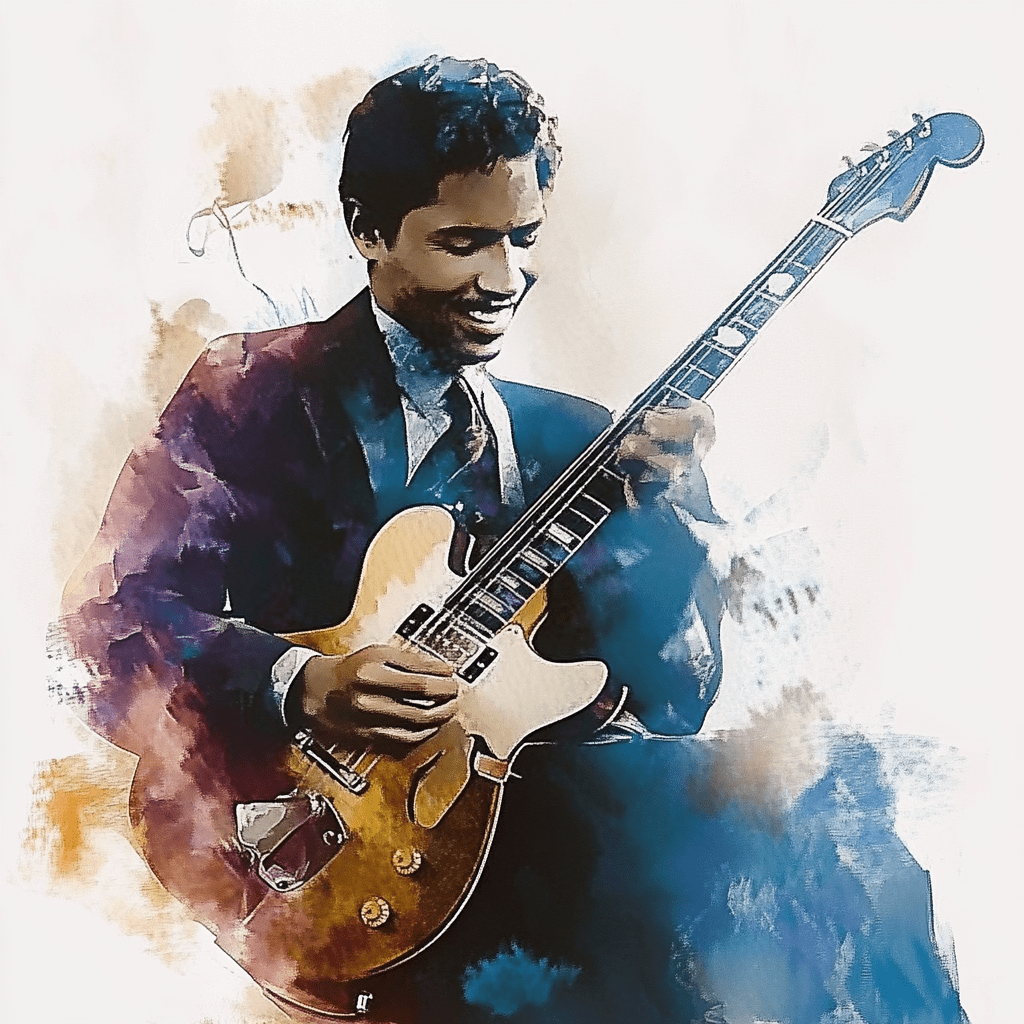
And that’s the moment where you realize this isn’t just about playing a chord—it’s about endurance, dedication, and the ability to keep that groove going, no matter what. That’s how Jimmy Nolen became the main guitarist for James Brown, laying down those tight, funky rhythms that would become the backbone of some of the greatest funk hits ever. The rest, as they say, is history.
Metronomes, Drum Machines, and Foot Tapping: Tools to Improve Your Timing
Improving your timing isn’t glamorous, but it’s essential. Start with a metronome. Yes, it’s boring, but it teaches you the subdivisions of time—those essential building blocks of rhythm. Practice with it, and once you’re comfortable, move on to playing along with a drum machine. Focus on syncing up with the bass drum or the snare, hi-hat, or even the cymbals if you’re playing funk.
And don’t underestimate the power of tapping your foot. It might seem old school, but it grounds you in the rhythm and helps you feel the music in a more physical way.
Keeping It Simple: You Don’t Need Fancy Gear to Get a Good Groove
Here’s some good news: you don’t need a ton of gear to work on your timing while playing funk. A simple clean amp and maybe a touch of reverb are all you need to get started. Focus on nailing the groove before worrying about effects or complex gear setups. The goal is to develop a rock-solid sense of time that will serve you no matter what style you’re playing. Funk is fun, and you can put on your James Brown playlist and play along with Jimmy Nolen for hours of groove practice and enjoyment.
Time Is Your Most Valuable Asset
At the end of the day, you can learn all the scales and harmonies you want, but if your timing is off, it won’t matter. Rhythm is the foundation of great guitar playing, and it’s something you need to invest time in mastering. So, grab that metronome, lock in with the beat, and remember—time is the most valuable thing you can spend on your guitar journey.
 oscaronguitars.com
Leave a comment