
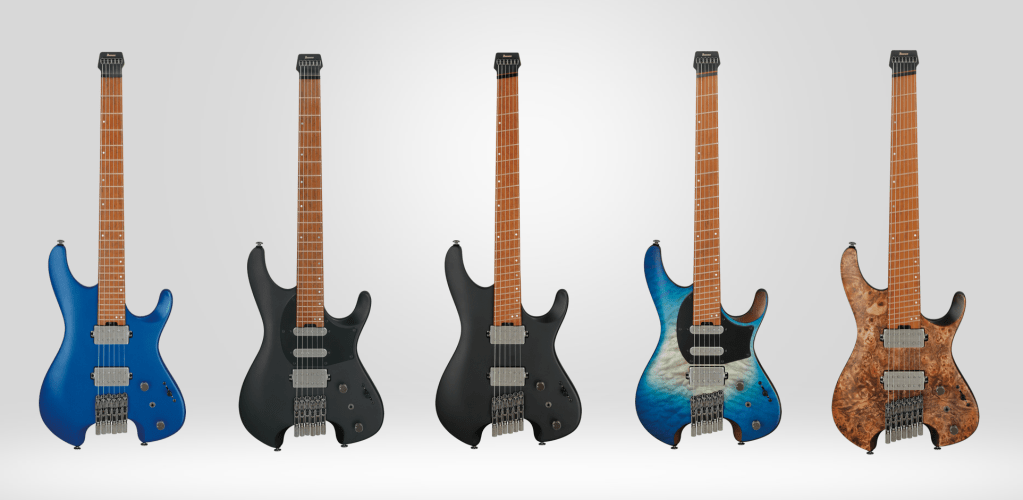
The guitar world is buzzing with excitement as Ibanez makes a significant move into the headless guitar market, a niche that has historically been both revered and misunderstood. Headless guitars have long been a symbol of innovation, attracting players looking for something beyond the traditional six-string format. Now, with the launch of Ibanez’s Q Series, the brand is not just dipping its toes but diving headfirst into this unique segment.
A Brief History of Headless Guitars
Before we get into why Ibanez’s entry is a big deal, let’s take a step back and look at the history of headless guitars. The headless guitar concept was popularized by Ned Steinberger in the late 1970s. His design philosophy was simple: remove the headstock to reduce weight and enhance balance.

The first widely recognized headless guitars were the Steinberger models, which became iconic in the 1980s. Some famous guitarists known for using Steinberger guitars include David Bowie, who played one during his “Glass Spider” tour, and Eddie Van Halen, who famously used a Steinberger GL2T with a TransTrem system for unique pitch-bending tricks. Lou Reed, known for his innovative rock style, also used a Steinberger, as did jazz-fusion legend Allan Holdsworth, who appreciated its ergonomic design. Mike Rutherford of Genesis and Steve Howe of Yes were other notable musicians who used Steinberger guitars, particularly in live performances, showcasing their versatility and unique sound.






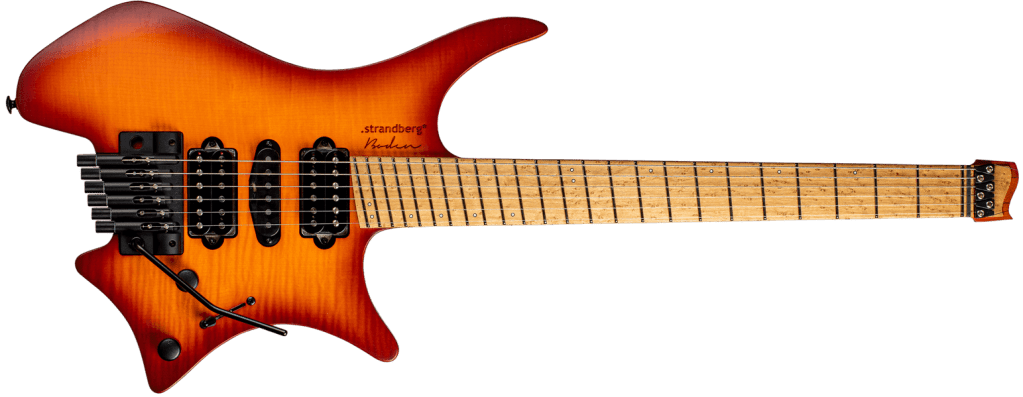
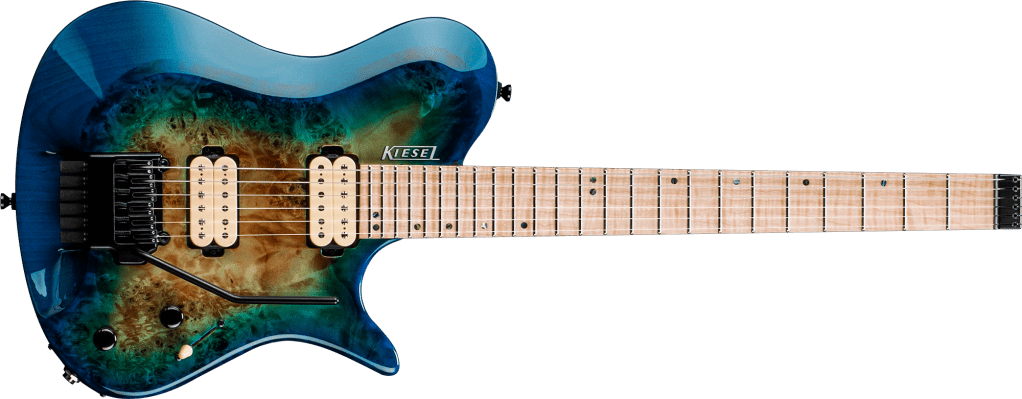
Steinberger wasn’t alone in this venture. Brands like Strandberg and Kiesel have also carved out a niche in the headless guitar market.
The Pros and Cons of Headless Guitars
Headless guitars come with a mix of benefits and potential drawbacks that have made them both loved and loathed by guitarists over the years.
Pros:
- Weight and Balance: Without a headstock, these guitars are lighter and more balanced, making them easier to play for extended periods.
- Portability: The compact design makes headless guitars ideal for travel—no more worrying about a fragile headstock snapping off during transit.
- Tuning Stability: With the tuning pegs moved to the body, these guitars often offer better tuning stability, especially with double-ball-end strings.
Cons:
- Aesthetic Appeal: Let’s face it—headless guitars can be a divisive topic when it comes to looks. Some players love the futuristic design, while others find it off-putting.
- Limited Options: Despite their advantages, headless guitars have historically been less popular, meaning fewer models and customization options compared to traditional guitars.
- Learning Curve: The ergonomics and balance, while beneficial, can feel odd to players used to traditional guitar shapes, requiring some adjustment time.
Why is Ibanez Entering the Market?
The answer lies in the changing demands of modern guitarists. Today’s players are looking for more than just a great sound—they want versatility, comfort, and innovation. The Ibanez Q Series, part of their Quest line, is a direct response to these needs. Ibanez developed a platform designed to maximize tone, performance, and playability.
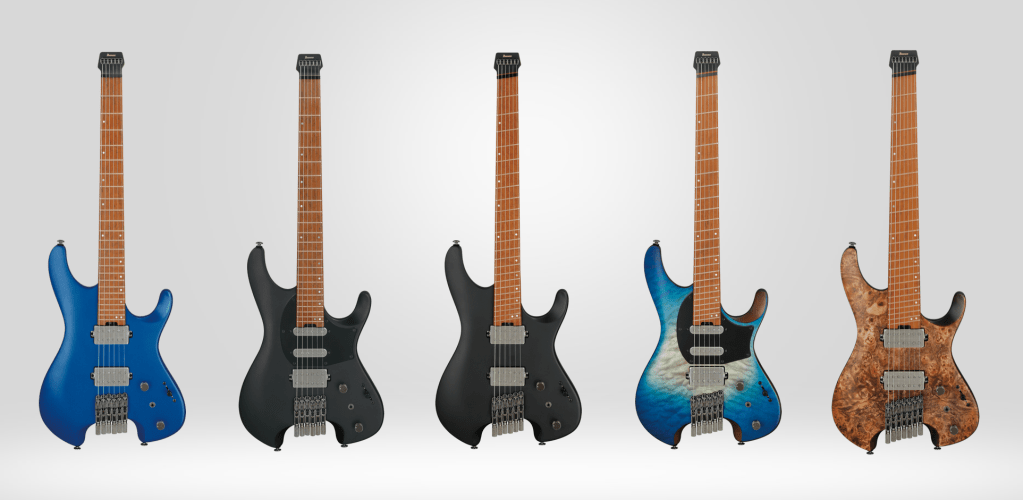
The Q Series stands out for its lightweight design, compact body, and advanced features. For example, the QX subseries includes an 8-degree inward slant on the frets, which is a boon for technical players who need precision and comfort. The series also features custom pickups like the Q58 humbuckers and R1 single coils, specifically designed for headless guitars. These pickups promise a balanced tonal range, ensuring clarity and power across all frequencies.
The new Ibanez Q Series headless guitars are making waves with their innovative design and competitive pricing, making them an attractive option for modern guitarists. The Q Series includes models like the Q52 and Q54, each offering unique features tailored for technical and progressive playing styles.
The Price of Losing Your Head
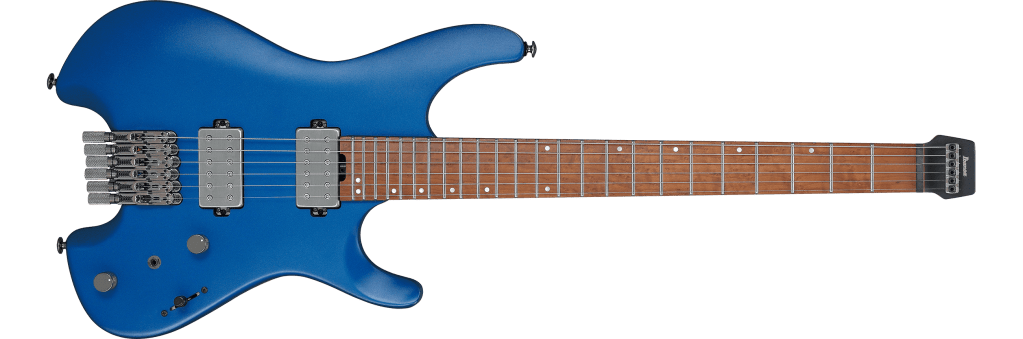
The Ibanez Q52 is available in the Laser Blue Matte finish and is priced around $1,099.99. This model features a roasted maple/bubinga neck, a nyatoh body, and custom R1 single-coil and Q58 humbucker pickups, designed specifically for headless guitars. The ergonomic design and versatile tonal options make it a solid choice for players looking to explore the benefits of a headless guitar.
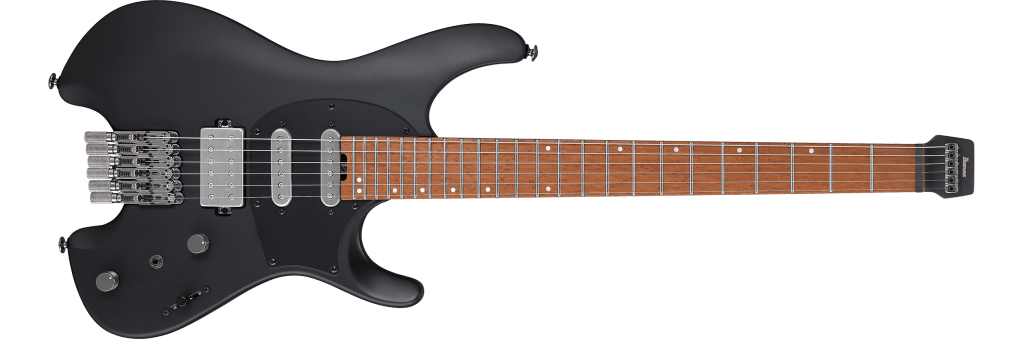
The Ibanez Q54 is slightly more premium, with its price ranging from $1,149.99 to $1,199.99 depending on the retailer and finish options. This model also features a nyatoh body and roasted maple neck, but adds a birdseye maple fingerboard for enhanced playability and tonal clarity. It offers similar pickup configurations and tonal versatility as the Q52, with additional premium features like the Mono-Tune bridge for precise intonation.
These prices place the Ibanez Q Series in the mid-range category, making them accessible to a broad range of players while offering the quality and innovation Ibanez is known for. If you’re considering a headless guitar, the Q Series is definitely worth checking out for its balance of price, performance, and modern features.
What’s Next for Ibanez?
Ibanez’s foray into the headless guitar market with the Q Series could be a game-changer. The company has a long history of pushing the envelope with innovative designs, and this series is no exception. By targeting modern players who demand more from their instruments, Ibanez is positioning itself as a leader in the evolving guitar landscape.
But will the Q Series catch on? Early reviews are positive, with players appreciating the attention to detail and the thoughtfulness of the design. The success of the Q Series could inspire other major brands to revisit the headless concept, leading to a resurgence of this once-niche guitar type.
Conclusion: A New Era of Guitar Innovation
Ibanez’s entry into the headless guitar market is more than just a new product line—it’s a statement. It shows that the company is not content with resting on its laurels and is willing to innovate to meet the needs of modern guitarists. Whether you’re a touring musician looking for a more portable option, or a home player intrigued by the ergonomic benefits, the Ibanez Q Series offers something truly unique.
As the guitar world continues to evolve, one thing is clear: headless guitars, once considered a quirky novelty, are here to stay. And with brands like Ibanez leading the charge, the future looks bright for players seeking innovation without compromise.
 oscaronguitars.com
Leave a comment