
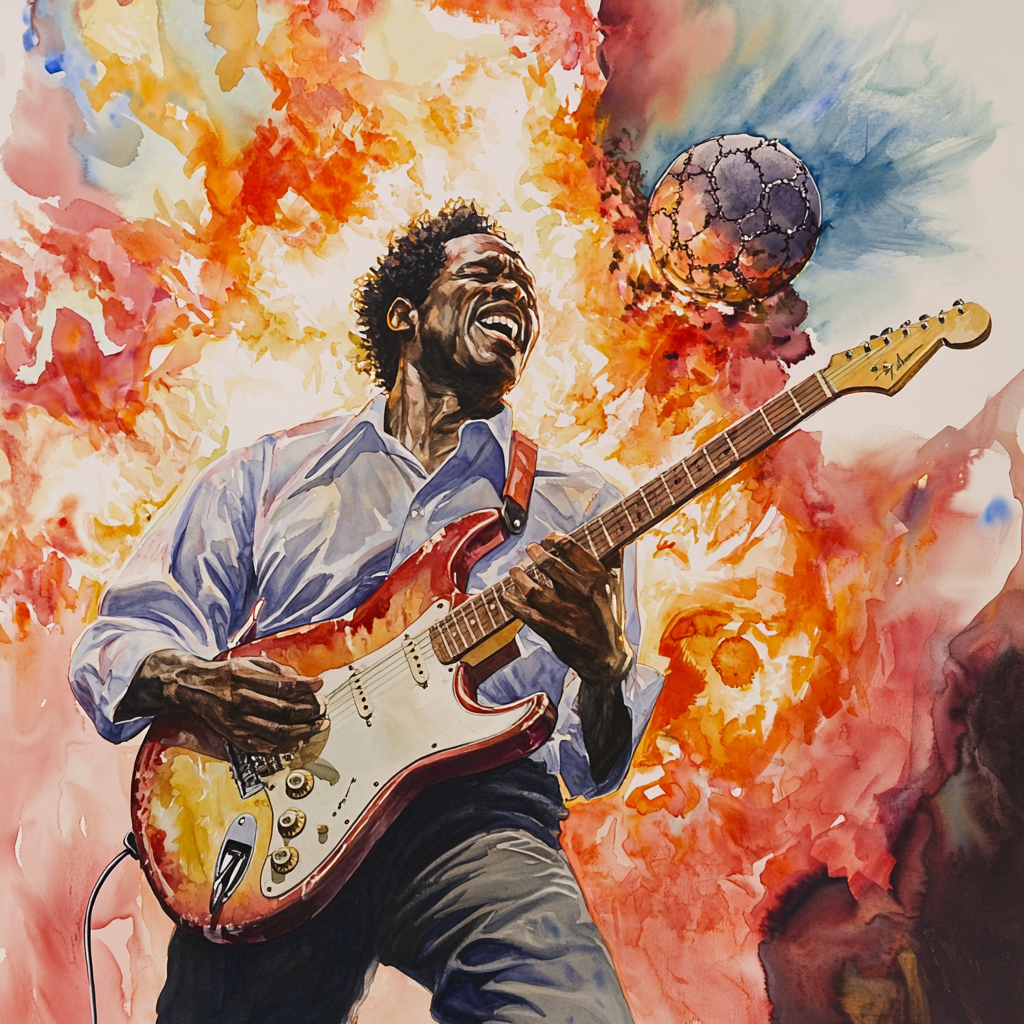
So, you’re jamming out, and you decide to crank that distortion all the way up. It’s like adding rocket fuel to your playing, right? But have you ever noticed how, when you push it to the max, your guitar’s original tone seems to vanish? I’ve been there too, and I’ve learned that finding the sweet spot with distortion can make all the difference in how your guitar sounds.
Finding the Right Amount of Distortion
Let’s talk about using just the right amount of distortion. It’s like adding spice to your favorite dish—too little, and it’s bland; too much, and it overpowers everything else. Joe Perry from Aerosmith once said that even when he cranked up his amp, he still wanted people to know if he was playing a Telecaster, a Stratocaster, or a Les Paul. That’s the magic of balancing distortion—you keep the character of the guitar while adding that extra punch.
Think of it like this: Distortion can be a mask or an amplifier for your tone. When used wisely, it enhances what’s already there. But if you drown your signal in effects, it’s easy to lose the essence of your instrument. That’s where the real skill comes in—knowing when to stop.
Masters of the Craft: Going Over the Top
Now, don’t get me wrong—there are guitarists who go all out with effects and still sound incredible. Take Tom Morello or Steve Vai, for example. These guys are true masters of their craft, and they know how to use effects as an extension of their playing. But there’s a risk here too, one that I like to call “effectism.” It’s when you start thinking you sound amazing just because of all the effects you’ve stacked on. In reality, it’s your skill and dexterity that should shine through, not just the effects.
The Art of Restraint: Learning from the Greats
I was watching a Rick Beato video the other day, and he featured Nuno Bettencourt—man, what a player. It was incredible to see how he made a Stratocaster with a Marshall amp sound so different, just with his fingers. That’s what it’s all about—making the guitar your own, even with minimal effects.
Eddie Van Halen is another perfect example. He didn’t have access to the best gear when he was starting out. Instead of letting that hold him back, he found ways to sound unique using just his fingers. It wasn’t about the gear; it was about his creativity and technique. When you can make a guitar sing without any bells and whistles, that’s when you know you’re onto something.
Conclusion: It’s All in the Fingers
At the end of the day, it’s not about how many effects you can pile on, but about how well you can play. If you sound good unplugged, with control over your dynamics and timing, that’s when you’re ready to add distortion and effects. And trust me, once you find that balance, you’ll probably end up holding back more than you push forward—because that’s where the real magic happens.
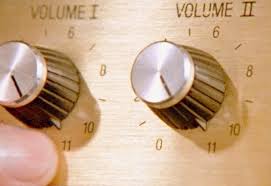
So next time you’re tempted to crank everything to 11, just remember: it’s your fingers that do the talking. Keep your tone intact, and let your playing be the star of the show.
 oscaronguitars.com
Leave a comment