

Early Days: From Stray Cat to Guitar Slinger
Brian Setzer’s journey through the music world began on April 10, 1959, in Massapequa, New York. His initial love affair with the guitar was sparked by the raw energy of 1950s rock ‘n’ roll and swing music. Setzer’s career took off in the early 1980s when he formed the Stray Cats, the band that would catapult him into the spotlight and spearhead the rockabilly revival. The Stray Cats’ blend of punk energy and rockabilly style was a fresh contrast to the prevailing musical trends of the time, making Setzer a standout figure in the industry.
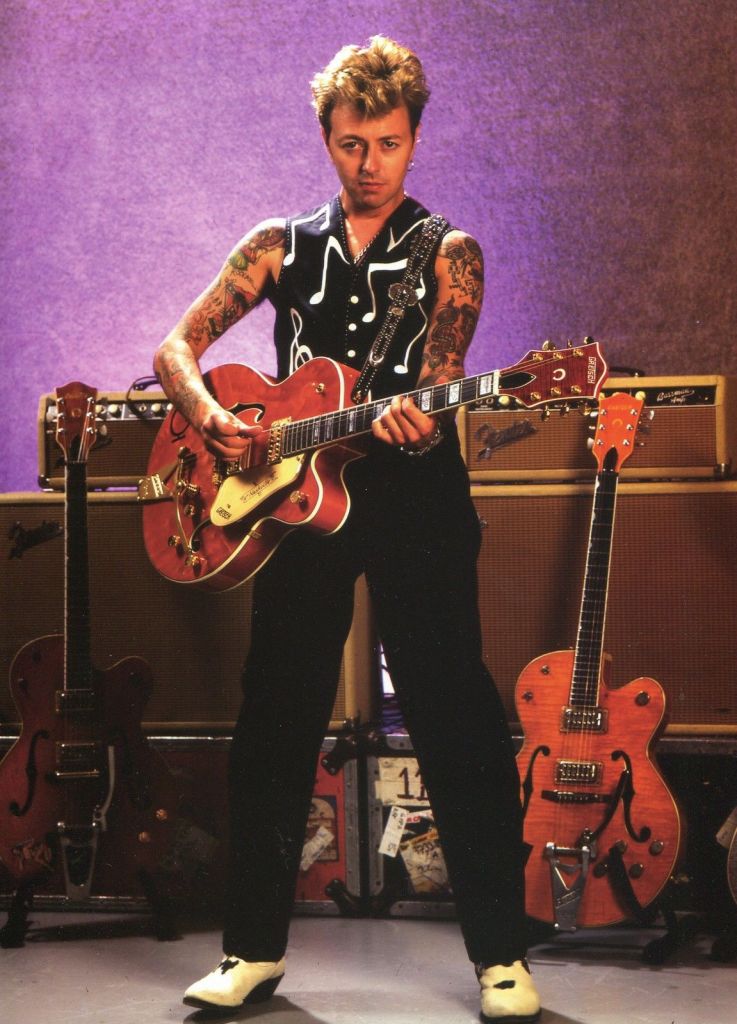
The Stray Cats Era: Rockabilly Resurrected
With the Stray Cats, Setzer reintroduced the twangy guitar sounds of the 1950s to a new generation. Hits like “Stray Cat Strut” and “Rock This Town” were not only commercial successes but also served as a blueprint for revitalizing the rockabilly genre. Setzer’s ability to blend virtuosic guitar skills with catchy songwriting proved a winning formula, earning the Stray Cats critical acclaim and a dedicated fanbase.
Solo Ventures and the Brian Setzer Orchestra
After the initial disbanding of the Stray Cats in the mid-1980s, Setzer embarked on a solo career that saw him exploring various musical avenues, including blues and swing music. His most notable venture was the formation of the Brian Setzer Orchestra, a 17-piece big band that fused the vibrant energy of swing with rock ‘n’ roll, culminating in the Grammy-winning hit “Jump, Jive an’ Wail.” This project showcased Setzer’s versatility and reaffirmed his status as a pioneer in music fusion.

Iconic Tracks and Musical Mastery
A few tracks that exemplify Setzer’s unique style and influence include:
- “Rock This Town” – A rockabilly classic that showcases Setzer’s fiery guitar licks and energetic performance style.
- “Jump, Jive an’ Wail” – This Grammy-winning track brought swing to the rock audience, featuring Setzer’s dynamic guitar and band leadership.
- “Sleepwalk” – Setzer’s instrumental rendition of this classic is a testament to his expressive and melodic guitar playing.
- “Rumble in Brighton” – Combines punk rock energy with rockabilly style, highlighting Setzer’s ability to fuse genres.
Gear and Style: The Tools of a Rockabilly Icon
Setzer is famously associated with Gretsch guitars, particularly the Gretsch 6120 models. His signature model, the Gretsch Brian Setzer Hot Rod, is stripped down to essentials—lacking a tone control and featuring a single volume knob with a three-position pickup switch. He often pairs these with Fender Bassman amps for a clean, powerful sound that can carry the twang and bite essential to rockabilly tones.
Legacy and Influence
Brian Setzer’s influence extends beyond just his music; he is credited with reviving not only interest in rockabilly but also in swing music among a younger audience. His seamless blending of genres and charismatic stage presence has left an indelible mark on the music industry.

Conclusion: The Eternal Cool of Brian Setzer
Brian Setzer remains a symbol of cool, merging classic sensibilities with modern flair. Whether he’s wielding a guitar in front of the Brian Setzer Orchestra or rocking out with the Stray Cats, Setzer continues to embody the spirit of rock ‘n’ roll and swing, ensuring his place in the pantheon of guitar greats.
Bonus Track: 10 Setzer Snippets
- Car Enthusiast: Setzer shares a passion for classic cars, often seen driving and restoring vintage models.
- Tattoo Lover: His distinctive tattoos further accentuate his rockabilly persona.
- Film and TV Appearances: Setzer has appeared in several films and TV shows, often performing or playing a version of himself.
- Grammy Awards: He has won three Grammy Awards, highlighting his diverse musical talents.
- Music Educator: Setzer has conducted numerous guitar clinics and masterclasses, sharing his expertise with aspiring musicians.
- Collector: He owns an impressive collection of vintage guitars and amps.
- Animal Rights Supporter: An avid animal lover, Setzer supports various animal rescue organizations.
- Jazz Influences: While known for rockabilly and swing, Setzer also draws significant influence from jazz guitarists.
- Dice as knobs: He was the first to swap out his guitar knobs for Monopoly dice, adding a playful twist to his instrument.
- Innovator: Setzer continually explores new sounds and technologies to enhance his music, ensuring it remains fresh and engaging.
Check my “Brian Setzer + BSO” playlist on Spotify.
 oscaronguitars.com
Leave a comment