
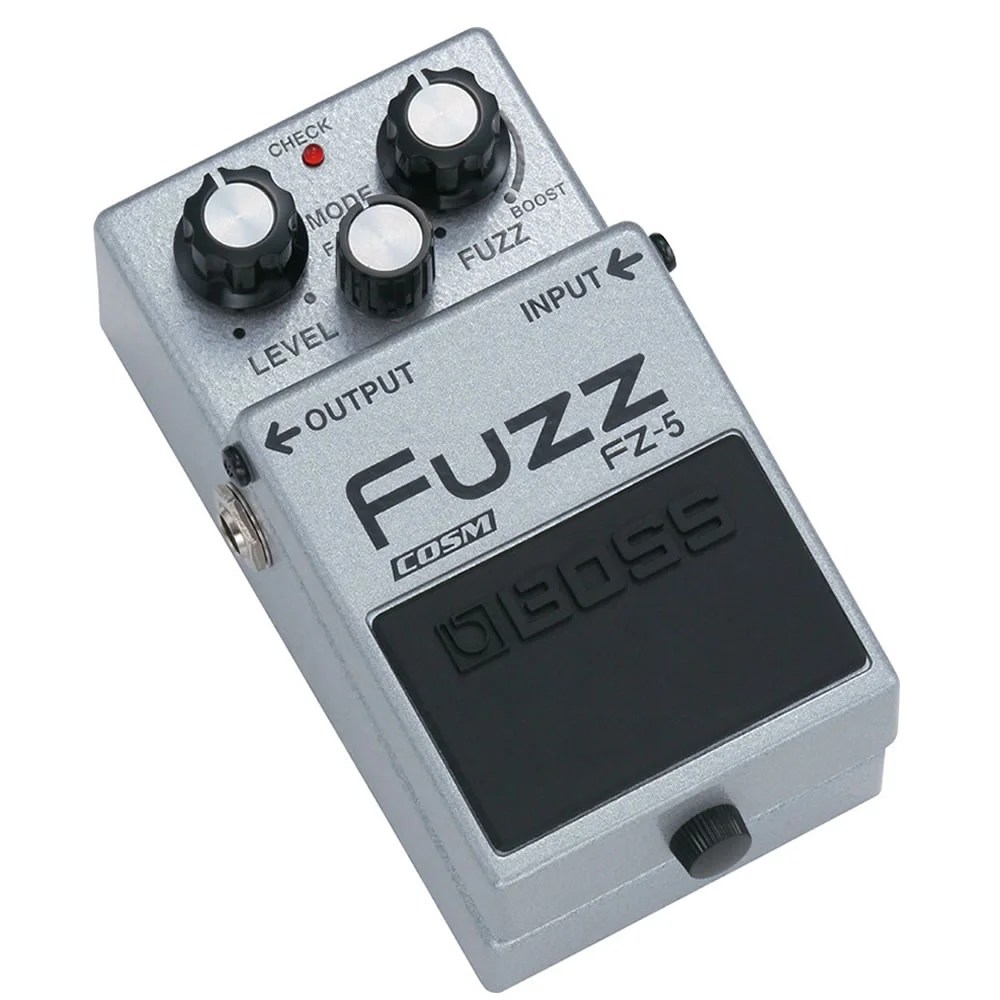
Hey there, guitar fanatic! Today, we’re going to tackle a topic that’s as wild and unruly as a Jimi Hendrix solo—guitar fuzz. If you’ve ever wondered what that thick, saturated, and almost broken sound is that you’ve heard on countless classic rock tracks, chances are, you’re hearing fuzz. But what exactly is guitar fuzz? How does it differ from distortion and overdrive, and why do so many guitarists swear by it? Let’s dive into the wonderfully chaotic world of fuzz, and I’ll break it down for you in a way that’s as easy as chatting with a buddy over a cup of coffee.
What is Fuzz?
Fuzz is the wild child of the guitar effects world. If overdrive is a warm hug and distortion is a firm handshake, fuzz is like getting tackled by a grizzly bear—unexpected, powerful, and a little out of control. Fuzz takes your guitar’s signal and completely obliterates it, creating a sound that’s thick, woolly, and often described as “broken” or “mangled.” But that’s exactly the point! Fuzz isn’t about subtlety; it’s about making a bold, unapologetic statement.
When you play through a fuzz pedal, your guitar’s signal is clipped so hard that the waveform essentially becomes a square wave. This creates a sound that’s super saturated, with tons of sustain and harmonics. The result is a tone that’s almost synth-like, with a raw, primal edge that can take your playing to another dimension.
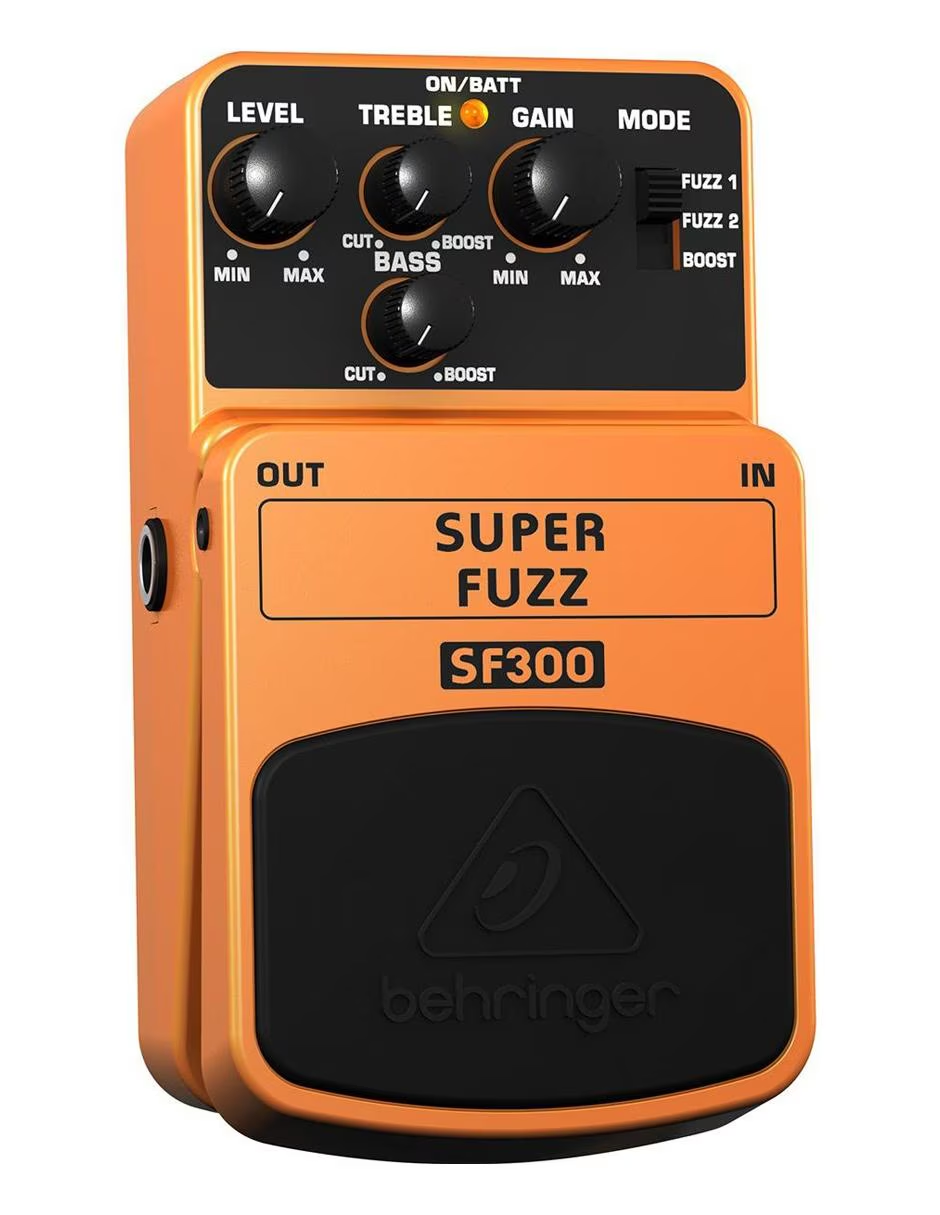
Fuzz vs. Distortion vs. Overdrive: What’s the Difference?
Alright, let’s clear up some confusion here. Fuzz, distortion, and overdrive all alter your guitar’s signal, but they do so in different ways.
- Overdrive: Overdrive mimics the sound of a tube amp pushed to its limits. It’s warm, dynamic, and responds to your playing intensity. Overdrive adds grit and sustain, but it doesn’t completely change the character of your tone.
- Distortion: Distortion is more aggressive, compressing your signal and adding a thicker, more saturated sound. It’s the backbone of rock and metal, transforming your tone into something heavier and more powerful.
- Fuzz: Fuzz is a whole different beast. It doesn’t just add grit or saturation—it completely reshapes your sound. Fuzz creates a sound that’s thick, compressed, and almost unnatural, with tons of sustain and harmonics. It’s chaotic, unpredictable, and utterly addictive.
So, while overdrive and distortion might still retain some of your guitar’s original character, fuzz takes that character, rips it up, and turns it into something completely new.
A Brief History of Fuzz
The story of fuzz begins in the early 1960s, when guitarists started to push their amps and equipment to their limits, often resulting in unintended distortion. One of the first recorded instances of fuzz came from a recording session gone wrong. In 1961, Marty Robbins was recording “Don’t Worry” when a malfunctioning mixing console created a fuzzy, distorted bass tone. Instead of fixing the issue, the producers liked the sound and kept it in the final mix.
This accidental fuzz sound caught the attention of other musicians and engineers, leading to the creation of the first fuzz pedals. The Maestro FZ-1 Fuzz-Tone, released in 1962, was one of the earliest commercially available fuzz pedals. It became famous thanks to the Rolling Stones’ hit “(I Can’t Get No) Satisfaction,” where Keith Richards used the Fuzz-Tone to create that iconic riff.
From there, fuzz pedals exploded in popularity, with artists like Jimi Hendrix, Eric Clapton, and Jimmy Page using fuzz to craft some of the most memorable tones in rock history.
How Does Fuzz Work?
So, how does fuzz actually work? Without getting too deep into the technical weeds, fuzz works by taking your guitar’s signal and amplifying it to the point of extreme clipping. This clipping is so intense that it squares off the waveform, creating that signature fuzz sound.
Fuzz pedals typically use transistors (often germanium or silicon) to achieve this effect. Germanium transistors, used in early fuzz pedals, are known for their warm, smooth sound. However, they’re also temperature-sensitive and can be a bit unpredictable. Silicon transistors, on the other hand, offer a more stable and aggressive tone, which is why many modern fuzz pedals use them.
The result is a sound that’s thick, buzzy, and full of sustain. Fuzz pedals can also introduce a lot of harmonic content, giving your tone a rich, complex character that’s hard to achieve with overdrive or distortion alone.
Why Guitarists Love Fuzz
Fuzz might not be for everyone, but those who love it are fiercely devoted to it. Here’s why fuzz has earned a place on so many pedalboards:
- Unique Sound: Fuzz doesn’t sound like anything else. It’s a bold, aggressive tone that stands out in a mix. If you’re looking to make a statement with your playing, fuzz is the way to go.
- Sustain for Days: Fuzz adds an insane amount of sustain to your notes, allowing them to ring out almost indefinitely. This is especially useful for solos, where you want your notes to hang in the air.
- Harmonic Richness: Fuzz introduces a lot of harmonic content to your tone, creating a sound that’s thick, rich, and full of character. It can make single notes sound huge and chords sound massive.
- Versatility: While fuzz is often associated with classic rock and psychedelic music, it’s actually incredibly versatile. You can use fuzz in blues, rock, metal, and even experimental genres. It’s all about how you dial it in.
- Expressiveness: Fuzz might seem like an unruly beast, but it’s actually quite responsive to your playing dynamics. Play softly, and you get a cleaner, more controlled sound. Dig in, and you unleash the full fury of the fuzz.
Classic Fuzz Pedals
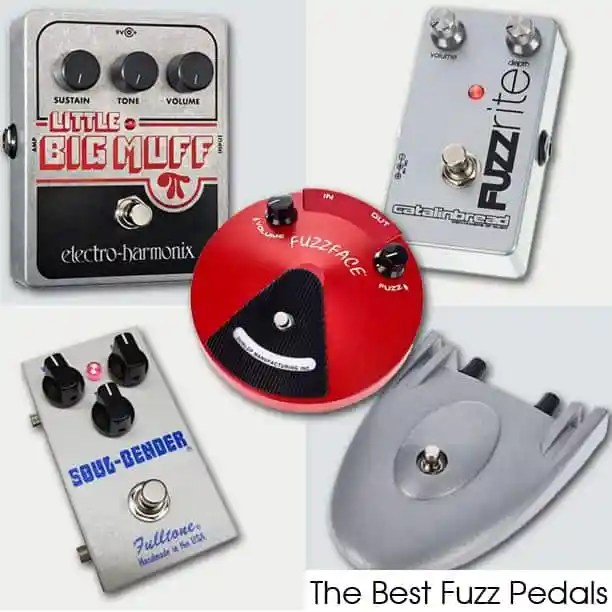
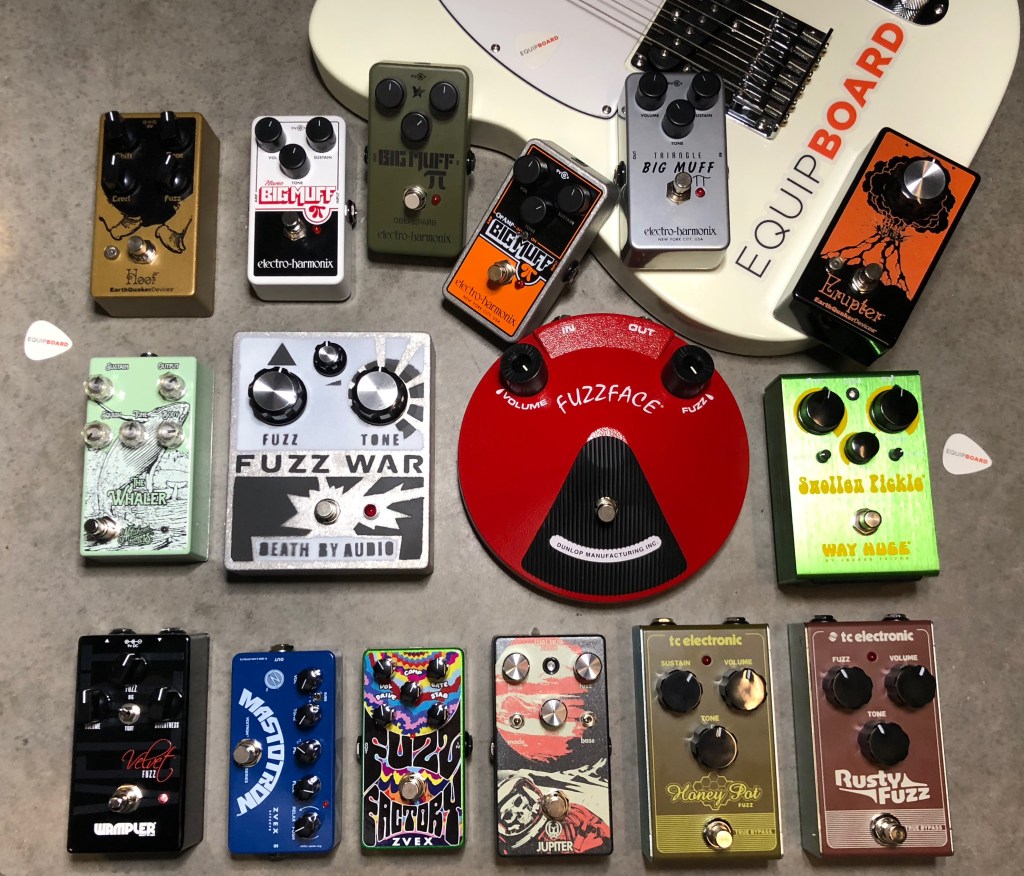
There are a ton of fuzz pedals out there, each with its own unique flavor. Here are a few classics that have stood the test of time:
- Electro-Harmonix Big Muff Pi: The Big Muff is probably the most famous fuzz pedal of all time. Known for its huge, saturated sound, it’s been used by legends like David Gilmour, Billy Corgan, and Jack White. The Big Muff can do everything from smooth, creamy fuzz to full-on sonic destruction.
- Dallas Arbiter Fuzz Face: The Fuzz Face was Jimi Hendrix’s fuzz pedal of choice, and it’s easy to see why. With its warm, smooth tone and touch-sensitive response, the Fuzz Face is perfect for those classic rock and blues tones.
- Maestro FZ-1 Fuzz-Tone: The pedal that started it all. The Maestro Fuzz-Tone might be a bit primitive by today’s standards, but it’s responsible for some of the most iconic fuzz tones in rock history. It’s a must-have for vintage tone enthusiasts.
- Zvex Fuzz Factory: The Fuzz Factory is a modern fuzz pedal with a ton of flexibility. It’s known for its wild, unpredictable sounds and its ability to create everything from classic fuzz tones to completely off-the-wall noises. If you like to experiment, the Fuzz Factory is a blast to play with.
- Fulltone ‘69 Fuzz: A faithful recreation of the early germanium fuzz pedals, the Fulltone ‘69 Fuzz offers that warm, vintage fuzz sound that’s perfect for blues and classic rock. It’s got a smooth, musical quality that’s hard to beat.

Tips for Using Fuzz
Fuzz can be a bit tricky to master, but once you get the hang of it, it’s incredibly rewarding. Here are some tips to help you get the most out of your fuzz pedal:
- Set Your Amp Clean: Fuzz pedals sound best when your amp is set to a clean or slightly broken-up tone. If your amp is already distorted, adding fuzz might just turn your tone into a wall of noise.
- Use Your Guitar’s Volume Knob: One of the coolest things about fuzz is how it reacts to your guitar’s volume knob. Roll back the volume for a cleaner, more controlled sound, or crank it up for full-on fuzz madness. This gives you a lot of tonal flexibility without having to touch your pedal.
- Experiment with Stacking: Fuzz pedals can be great for stacking with other pedals. Try combining fuzz with overdrive or distortion for some unique and powerful sounds. Just be careful not to overdo it—too much fuzz can easily turn into mush.
- Play with Your Pedal’s Settings: Fuzz pedals often have more control knobs than just gain and volume. Take the time to experiment with all the settings, especially the tone knob and any bias controls. Small adjustments can make a big difference in your overall sound.
- Watch Your Pickup Selection: Fuzz can sound very different depending on which pickup you’re using. Single-coils will typically give you a brighter, more articulate fuzz tone, while humbuckers will add thickness and power. Experiment with both to see what you like best.
Iconic Fuzz Tones
Let’s take a look at some legendary guitarists who have used fuzz to create iconic tones:
- Jimi Hendrix: Hendrix is the undisputed king of fuzz. His use of the Fuzz Face pedal on tracks like “Purple Haze” and “Foxy Lady” set the standard for fuzz tones. Hendrix’s fuzz sound is raw, powerful, and dripping with character.
- David Gilmour: Pink Floyd’s David Gilmour used the Electro-Harmonix Big Muff Pi to create his signature lead tones. Songs like “Comfortably Numb” showcase the smooth, singing quality that fuzz can add to a solo.
- Keith Richards: The Rolling Stones’ guitarist used a Maestro FZ-1 Fuzz-Tone to create the iconic riff in “(I Can’t Get No) Satisfaction.” This track is one of the earliest examples of fuzz in rock music and remains a classic to this day.
- Billy Corgan: The Smashing Pumpkins’ frontman is known for his massive, layered guitar tones, and fuzz plays a big role in that sound. The Big Muff Pi is a key part of Corgan’s tone, adding thickness and sustain to his riffs.
- Jack White: Known for his raw, gritty guitar sound, Jack White has used fuzz extensively in his work with The White Stripes and his solo projects. The Big Muff and the Fuzz Factory are both staples on his pedalboard, helping to create that signature lo-fi, garage rock tone.
Conclusion: Embrace the Fuzz
So, what exactly is guitar fuzz? It’s more than just an effect—it’s a way to completely transform your guitar’s sound, adding sustain, harmonics, and a healthy dose of chaos. Fuzz is for the guitarist who isn’t afraid to push the boundaries, who wants to create something bold, and who isn’t concerned with sounding “pretty.”
The beauty of fuzz lies in its unpredictability. It’s an effect that rewards experimentation, and it’s one of the most expressive tools in a guitarist’s arsenal. Whether you’re looking to channel the spirit of Hendrix, craft massive walls of sound like Billy Corgan, or just add a bit of edge to your playing, fuzz has got you covered.
Remember, fuzz is all about embracing the wild side of guitar playing. It’s not supposed to be clean or controlled—it’s messy, loud, and full of life. So, plug in, turn up, and let the fuzz take you on a sonic adventure. You never know where it might lead, but that’s all part of the fun.
Bonus Track: Fuzz Playlist
Experience the raw power of fuzz guitar with iconic tracks from legends like Hendrix, The Stooges, and Led Zeppelin in this gritty, distortion-fueled in my “FuzzMadness” playlist on Spotify!

 oscaronguitars.com
Leave a comment