
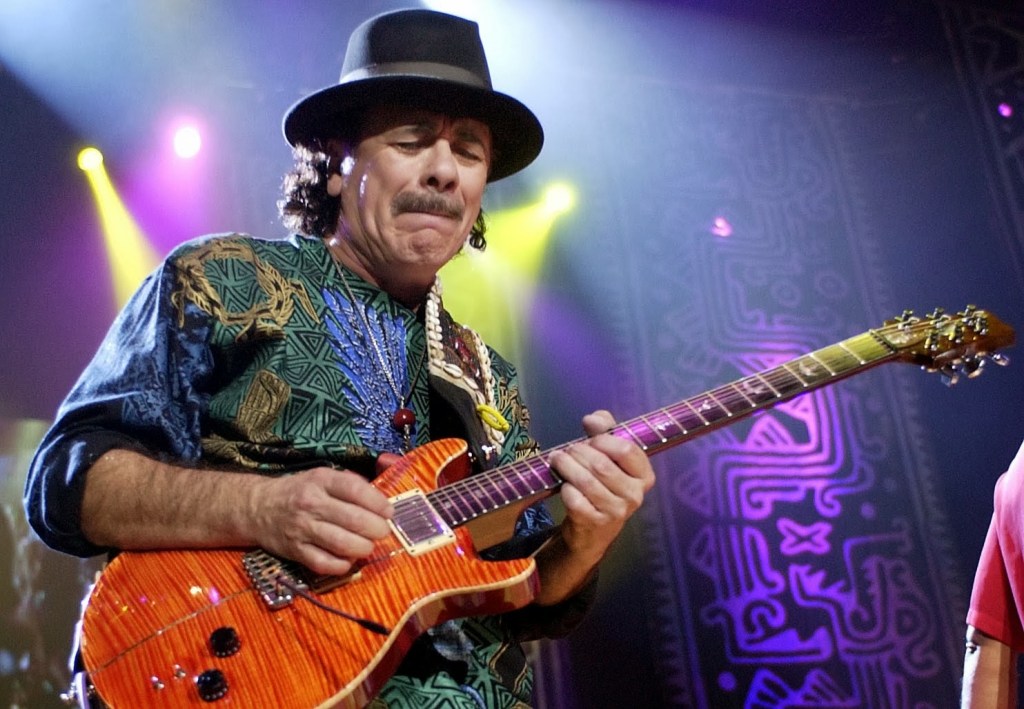
Carlos Santana isn’t just another guitar hero to me—he’s my sensei, a guiding light in my 40-year guitar journey. I’ve always wanted to play like him, to sound like him. It’s never been easy because the challenge isn’t just technical. Santana’s music carries a soulful depth that sets him apart from any shredder. It’s not about playing a thousand notes per second; it’s about how he can play a single note that reaches the very core of your being. Every time he performs “Europa” live, the sustained notes seem to lift you off the ground, taking you to another place. His elegance in crafting melodies and creating an atmosphere is unmatched.
What fascinates me even more is how deeply rooted he is in the blues, Mexican music, and African rhythms, which pulse through all his songs. That connection has moved me for decades, and there’s nothing I enjoy more than playing along with his recordings. Whether it’s “Europa,” “Samba Pa Ti,” or “Oye Como Va,” his music transports me every time. My pursuit of Santana’s tone led me to buy an original Santana SE, then a Santana PRS SE Signature, and finally finding that sweet spot with a PRS SE DGT, a Cort CR250, or my Epiphone Les Paul Custom Black Beauty paired with Amplitube on my computer.
But it’s not just about playing the notes—it’s about letting them fill your soul. That magic is something I’ll chase for a lifetime, and it never seems to fade. So, when I decided to write about Santana on my blog, I knew it had to be a long, detailed tribute. Be patient with me, because I could go on and on about my favorite guitarist—Mr. Carlos Humberto Santana Barragán, the legend you simply know as Santana.
Early Life: A Fusion of Cultures and Sounds
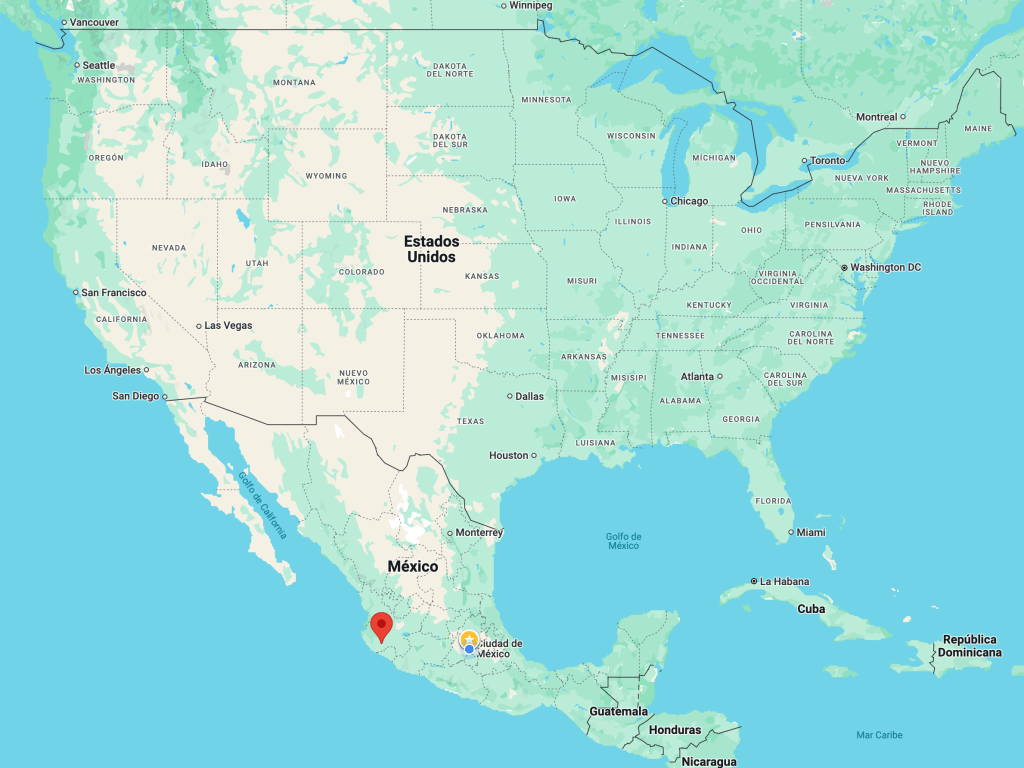
Carlos Santana, born on July 20, 1947, in Autlán de Navarro, Jalisco, Mexico, grew up surrounded by a rich cultural mix of traditional Mexican music and the emerging sounds of American jazz, blues, and rock ‘n’ roll.
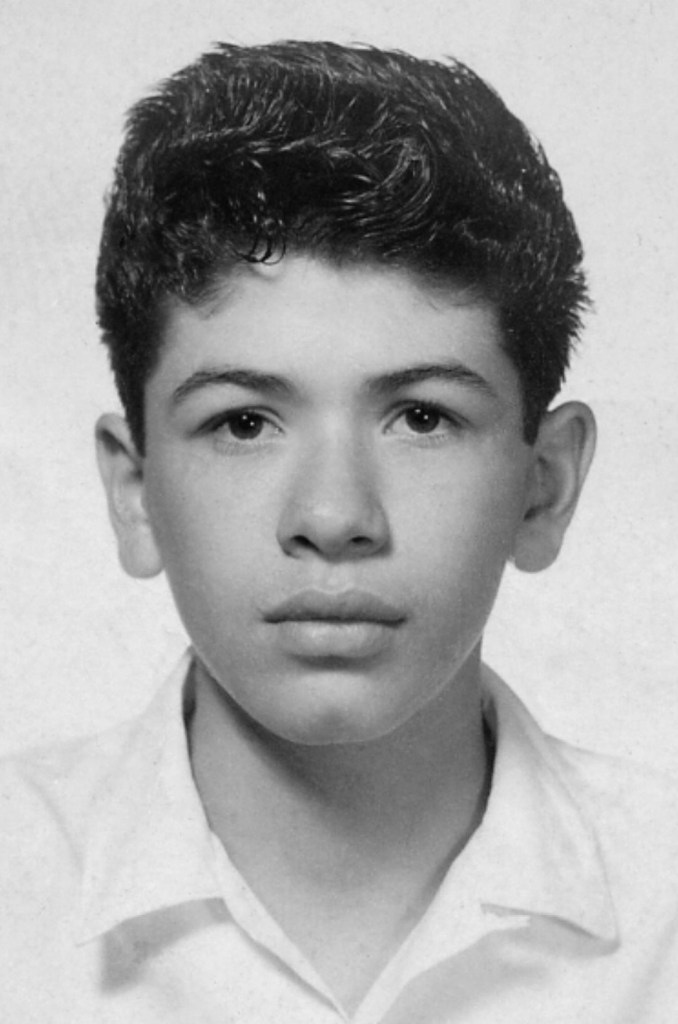
From a young age, he was drawn to the guitar, a passion fueled by his exposure to these diverse genres. As his family relocated to San Francisco in the early 1960s, Santana found himself at the heart of a musical revolution, surrounded by a vibrant scene that would profoundly influence his artistic path. This convergence of Latin roots and American counterculture laid the foundation for the distinctive guitar sound that would define his career—a fusion of Latin rhythms, rock, and blues that has resonated with audiences across generations.
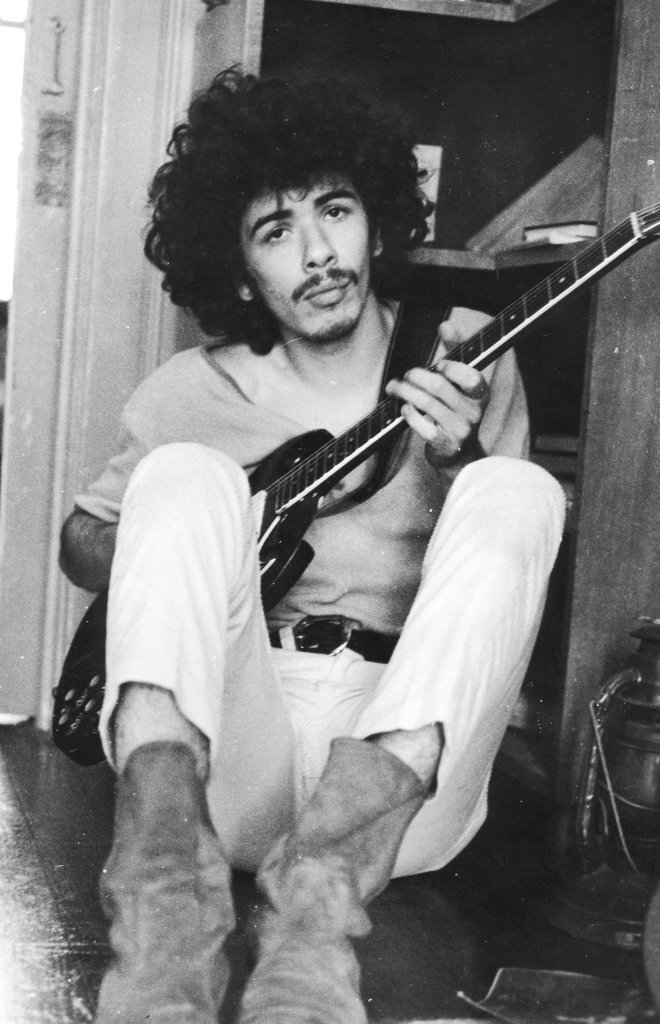
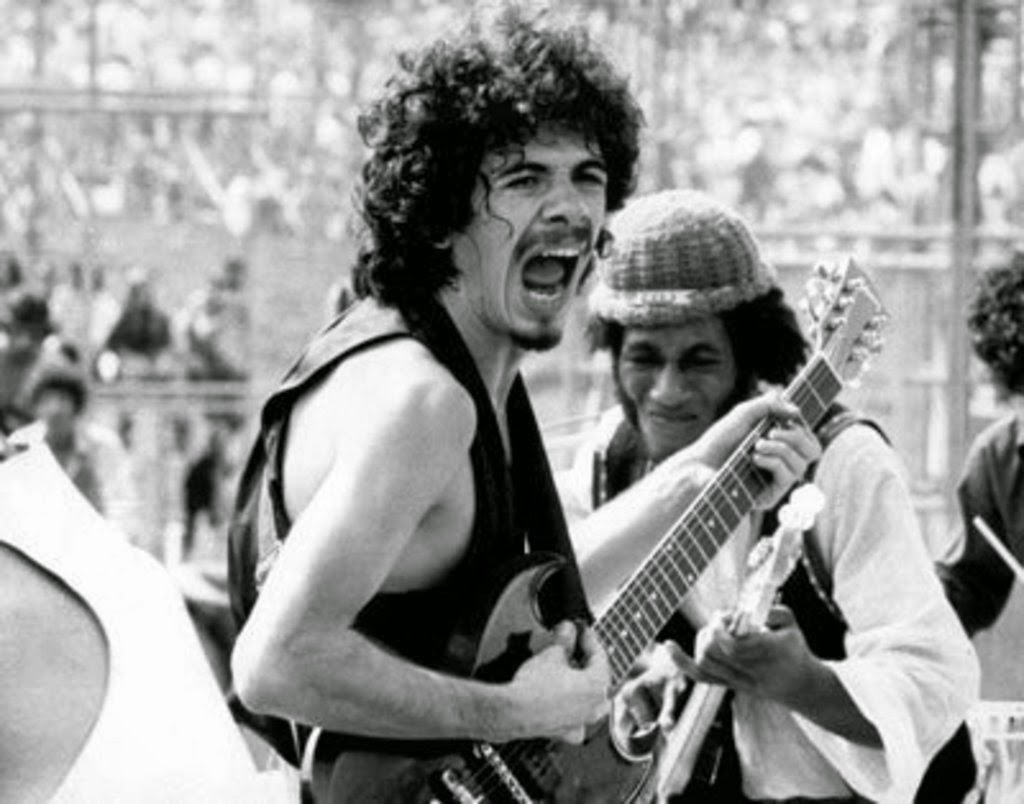
Carlos Santana rose to fame in the late 1960s with his groundbreaking band, Santana, which became a trailblazer in blending rock, blues, jazz, and Latin American rhythms. This fusion was revolutionary at a time when rock music was dominated by Western influences, and Santana’s ability to seamlessly integrate Afro-Cuban beats, percussive Latin grooves, and electrifying guitar solos set them apart. A defining moment in their early success came at the Woodstock Festival in 1969, where their electrifying performance of “Soul Sacrifice” became a high point of the festival.
Santana’s fiery, melodic guitar tone, coupled with the band’s tight, rhythm-heavy sound, mesmerized a global audience and marked their entry into the pantheon of rock legends.
Following this breakthrough, Santana’s debut album, Santana (1969), became a commercial and critical triumph. Tracks like “Evil Ways” and “Soul Sacrifice” highlighted the band’s innovative blend of styles and showcased Carlos Santana’s virtuosic guitar playing, characterized by his use of melodic sustain, smooth bends, and a deep emotional resonance. The album’s success helped redefine the possibilities of rock music by merging the improvisational elements of jazz with the pulsating rhythms of Latin music, laying the foundation for Santana’s enduring influence in the decades to come. This synthesis of genres not only expanded the scope of rock but also introduced a multicultural dimension that reflected Santana’s personal and musical roots.
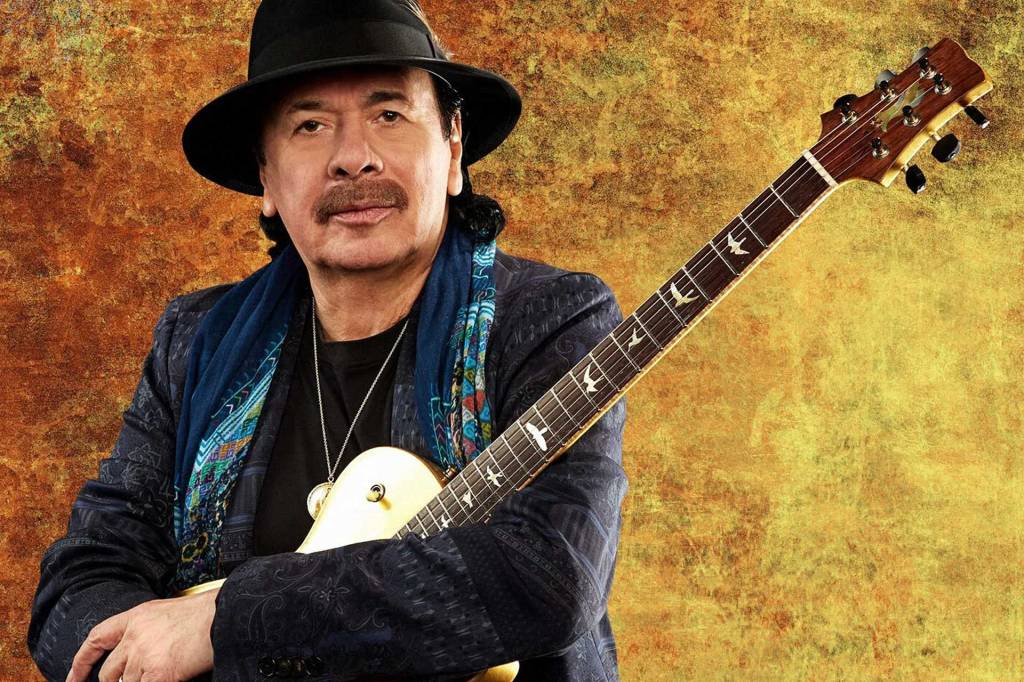
Gear and Style: The Santana Setup
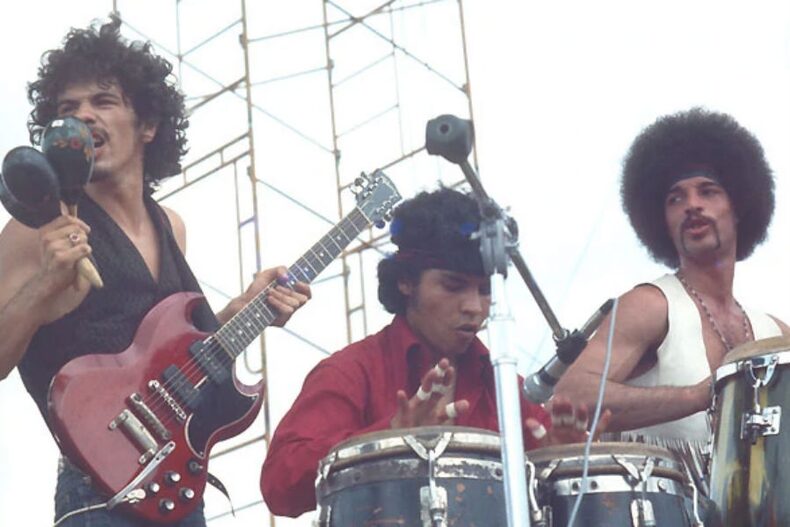
Santana’s Guitar Evolution: Gibson at Woodstock
Carlos Santana’s journey through guitars and amplifiers is a fascinating evolution that has significantly shaped his sound and, in many ways, the guitar industry itself. Early in his career, Santana played Gibson guitars, notably the Gibson SG and Gibson Les Paul models. The warmth and sustain of these guitars fit well with his melodic, emotionally charged playing style. His use of the Gibson SG during his iconic 1969 Woodstock performance contributed to his early recognition as a guitar virtuoso with a distinctive, fluid tone. However, while Gibson guitars served Santana well in the early stages of his career, his search for an instrument that could better align with his evolving sound eventually led him to experiment with other brands.
The Yamaha Era: Expanding the Sonic Palette
During the 1970s, Santana shifted to using Yamaha SG guitars. The Yamaha SG2000, in particular, became a key part of his setup during this period. This guitar’s heavy body and dual humbucker pickups allowed Santana to achieve the deep, resonant sustain he desired, while also offering the versatility to navigate his signature mix of rock, blues, and Latin sounds. Though the Yamaha SG2000 provided him with more tonal control and clarity, Santana’s collaboration with guitar makers continued as he sought to refine his sound.
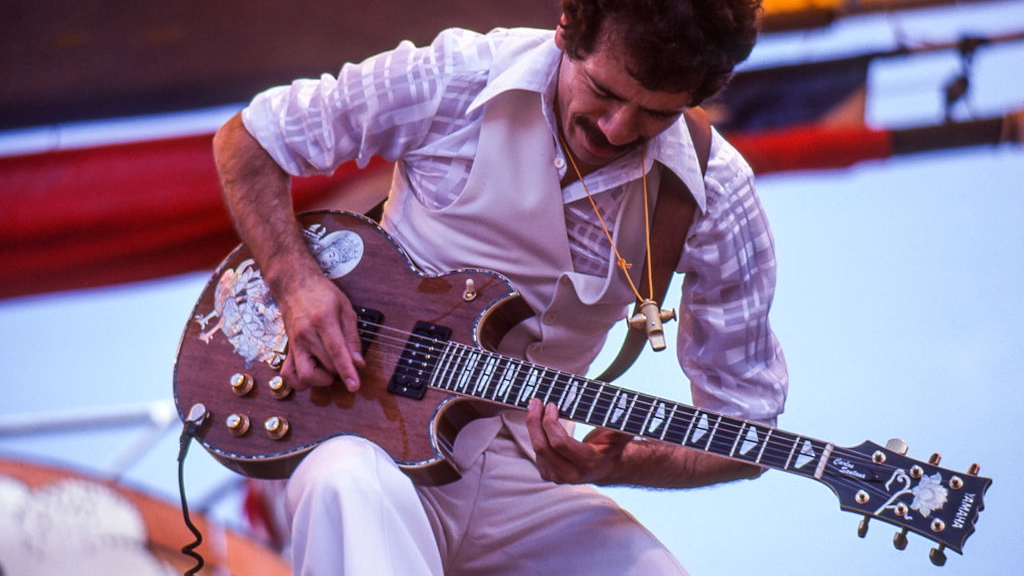
He used the Yamaha SG2000 on several key recordings. Notable tracks such as “Europa,” “Open Invitation,” and his powerful rendition of “She’s Not There” from the Moonflower album (1977). This guitar was also integral in live versions of “Dance Sister Dance (Baila Mi Hermana)” and “Let the Children Play / Jugando,” highlighting its role in both studio and live performances.
Santana continued to use the Yamaha SG series through several albums, including Inner Secrets (1978), Marathon (1979), Zebop! (1981), and Shango (1982). These records featured a mix of Latin rock, jazz, and experimental sounds, and the Yamaha SG2000‘s sustain and tonal depth played a crucial role in crafting Santana’s unique fusion of genres during this period.
The PRS Partnership: Redefining Guitar Craftsmanship
Santana’s most profound influence on the guitar world began in the 1980s when he partnered with luthier Paul Reed Smith. At the time, PRS (Paul Reed Smith) guitars were a boutique brand, known for their craftsmanship but far from a major player in the guitar market. Santana’s collaboration with Paul Reed Smith led to the development of the PRS Santana model, which was designed to meet Santana’s precise tonal demands.
With its custom pickups, specially designed body, and impeccable build quality, the PRS Santana became a key tool for Santana’s lead style, emphasizing sustain, clarity, and rich tonal color. This model was integral to his legendary sound, known for smooth bends, soulful vibratos, and a balance between sharp, biting highs and warm, creamy lows.
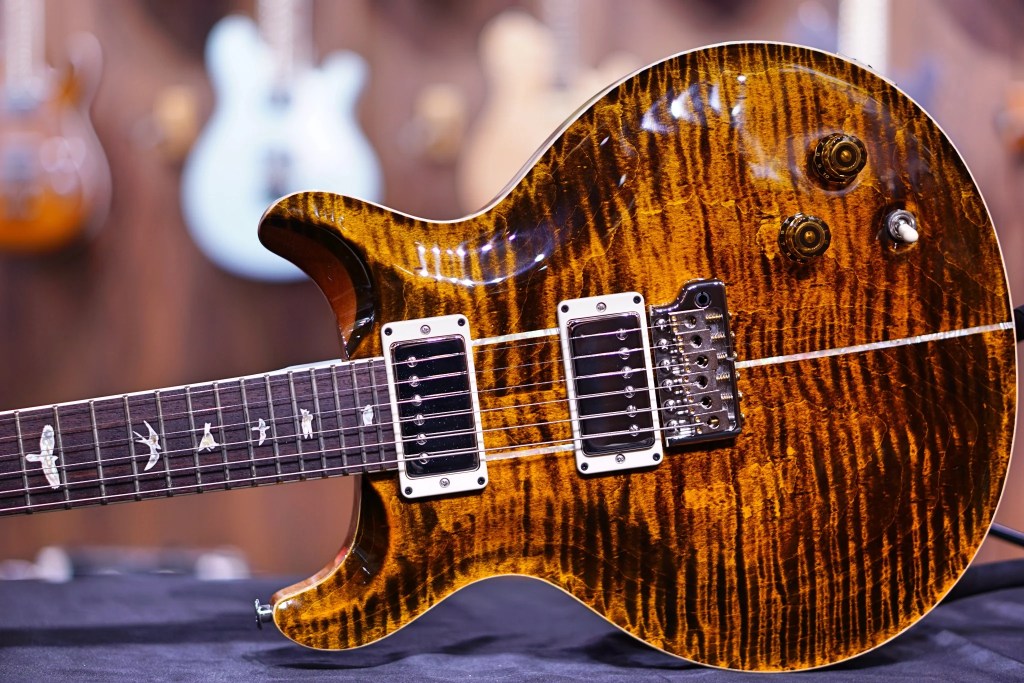
Santana and the PRS SE: Propelling PRS to the Top
After decades of working together to design custom, high-end PRS guitars, Carlos Santana wanted to make a version of his signature guitars more accessible to a wider audience, a quality instrument with an affordable price tag. PRS response was the Santana SE model in the early 2000s.
The Santana SE guitar, designed with the same attention to detail as PRS’s high-end models, includes many of the features that Santana himself values, such as the signature double-cutaway body and custom PRS humbuckers. The success of the Santana SE helped to propel the entire SE series, establishing PRS as a leading brand in the market for high-quality, affordable instruments

The Mesa/Boogie Connection: Crafting the Perfect Tone
Carlos Santana’s relationship with Mesa/Boogie amplifiers began in the early 1970s, when he encountered Randall Smith, the founder of Mesa Engineering, in a music shop in California. At the time, Smith was modifying Fender Princeton amps to increase their power and overdrive capabilities.
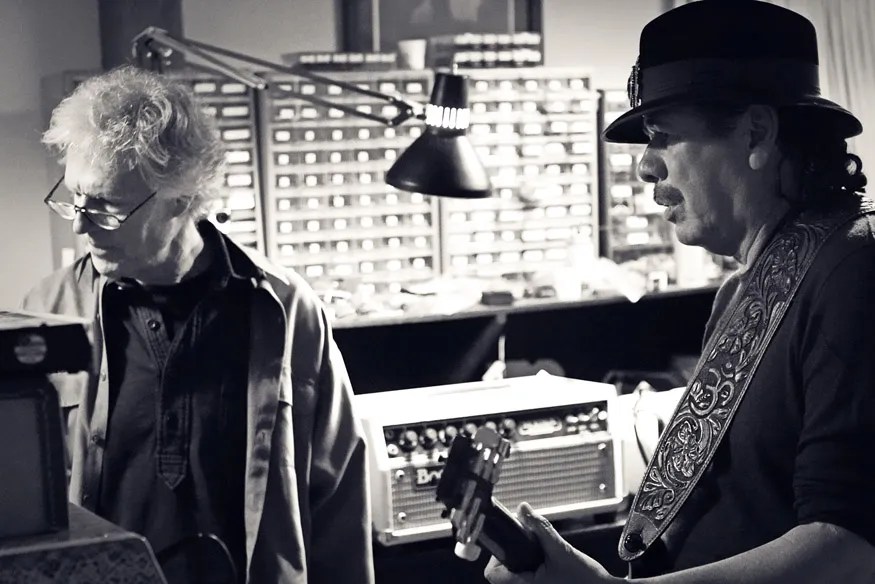
Santana tried one of these modified amps and was immediately impressed with its smooth, high-gain sustain and rich tone. While playing through the amp, Santana famously exclaimed, “Man, that amp really boogies!” This remark inspired Smith to name the amp “Boogie,” and thus the Mesa/Boogie brand was born.
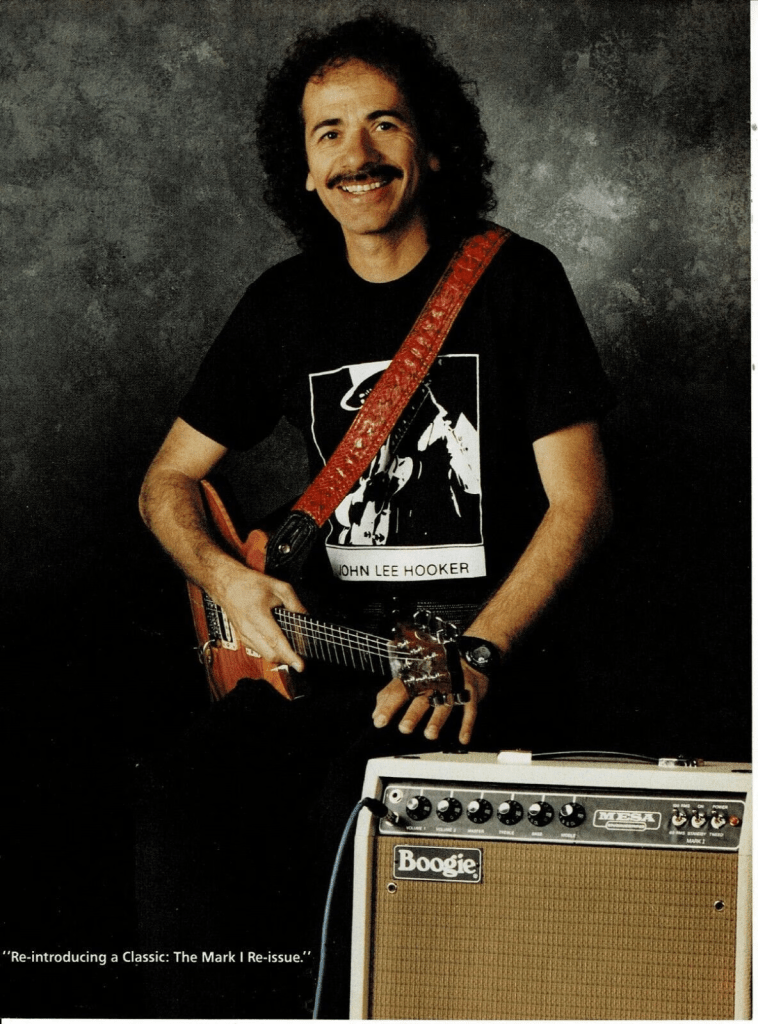
Santana’s endorsement of Mesa/Boogie amplifiers significantly boosted the company’s reputation. The amp became a key part of Santana’s signature sound, providing the creamy, sustaining overdrive that complemented his expressive playing style
PRS and Mesa/Boogie: The Backbone of Santana’s Sound
The Mesa/Boogie amplifiers, combined with Santana’s PRS guitars, became the backbone of his tone. The PRS guitars offered the sustain and tonal clarity Santana needed to deliver his melodic solos, while the Mesa/Boogie amps provided the creamy, overdriven sound that allowed him to explore the full dynamic range of his playing—from smooth, subtle passages to fiery, intense crescendos. His use of Mesa/Boogie amps was particularly influential in shaping the modern amplifier market, with many guitarists seeking out the brand for its unique ability to combine high gain with rich, musical overtones.
Iconic Tracks: Defining the Santana Sound
Carlos Santana’s career is marked by a collection of iconic tracks that not only demonstrate his mastery of the guitar but also his ability to fuse genres and introduce new sounds to mainstream music. These songs have become cornerstones of Santana’s legacy, each highlighting a different aspect of his unique musical blend.
“Black Magic Woman” – Originally written by Peter Green and first performed by Fleetwood Mac, Santana’s 1970 cover transformed this song into a Latin rock masterpiece. Santana reimagined the song with smooth, melodic guitar lines, and added a rhythm section driven by congas, timbales, and other Afro-Cuban percussion. His version not only became a staple of his live performances but also a defining track in the fusion of Latin and rock music. The song reached number four on the Billboard charts and became a permanent part of Santana’s identity.
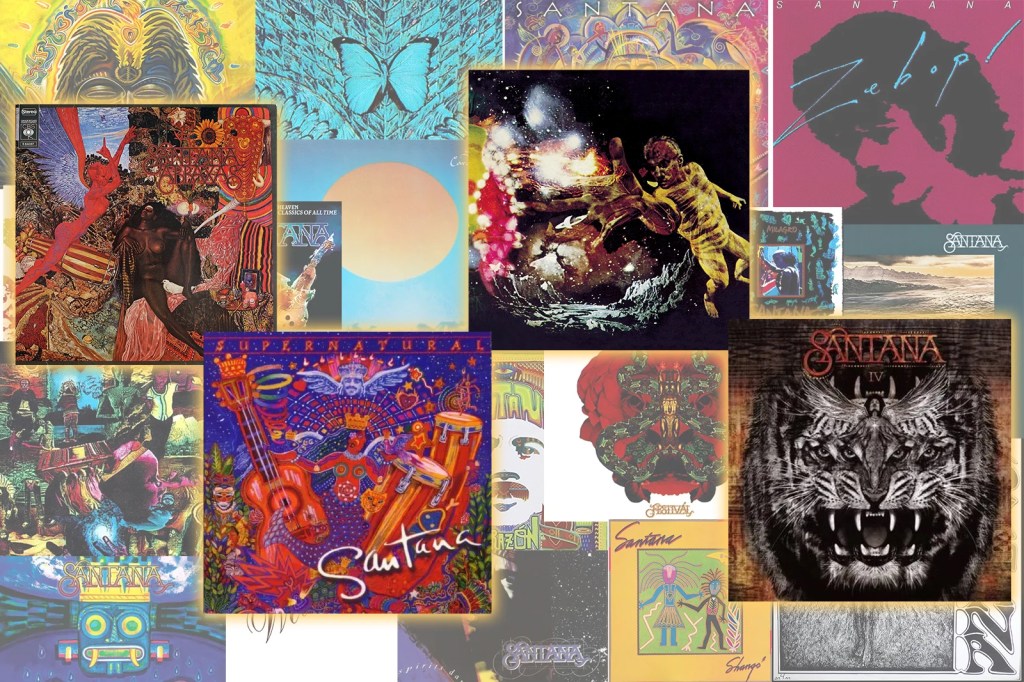
“Oye Como Va” – This cover of Tito Puente’s classic mambo tune solidified Santana’s ability to bridge Latin music and rock. Released in 1971 as part of the Abraxas album, the track showcases Santana’s unique guitar phrasing intertwined with Afro-Cuban rhythms, providing a fresh, electric spin on Puente’s original composition. Its simple yet infectious groove, driven by a percussive rhythm section, allowed Santana’s smooth, lyrical guitar tone to soar. The track became one of his signature songs, illustrating his deep connection to his Latin roots.
“Smooth” – Santana’s 1999 collaboration with Rob Thomas of Matchbox Twenty on the Supernatural album revitalized his career and introduced his sound to a new generation. “Smooth” became a cultural phenomenon, blending Latin rock with pop and earning Santana three Grammy Awards, including Record of the Year. Its infectious groove, Thomas’s gritty vocals, and Santana’s expressive, searing guitar lines made it one of the most successful singles of the late 1990s. The song topped the Billboard Hot 100 for 12 consecutive weeks, cementing Santana’s return to the mainstream.
“Maria Maria” – Another standout from the Supernatural album, “Maria Maria” combined Santana’s Latin rock style with elements of salsa, R&B, and hip-hop. Featuring The Product G&B, the song was a major hit, further showcasing Santana’s ability to evolve with contemporary trends while maintaining his signature sound. The song’s sultry guitar work, combined with modern production techniques, highlights Santana’s versatility and continued relevance in the evolving music landscape. “Maria Maria” spent 10 weeks at number one on the Billboard Hot 100, helping Supernatural sell over 30 million copies worldwide.
Beyond the Music: Collaborations and Ventures
Carlos Santana’s Supernatural (1999) marked one of the most remarkable comebacks in music history. After decades of success in the 1970s and 80s, Santana’s popularity had begun to wane by the 1990s.
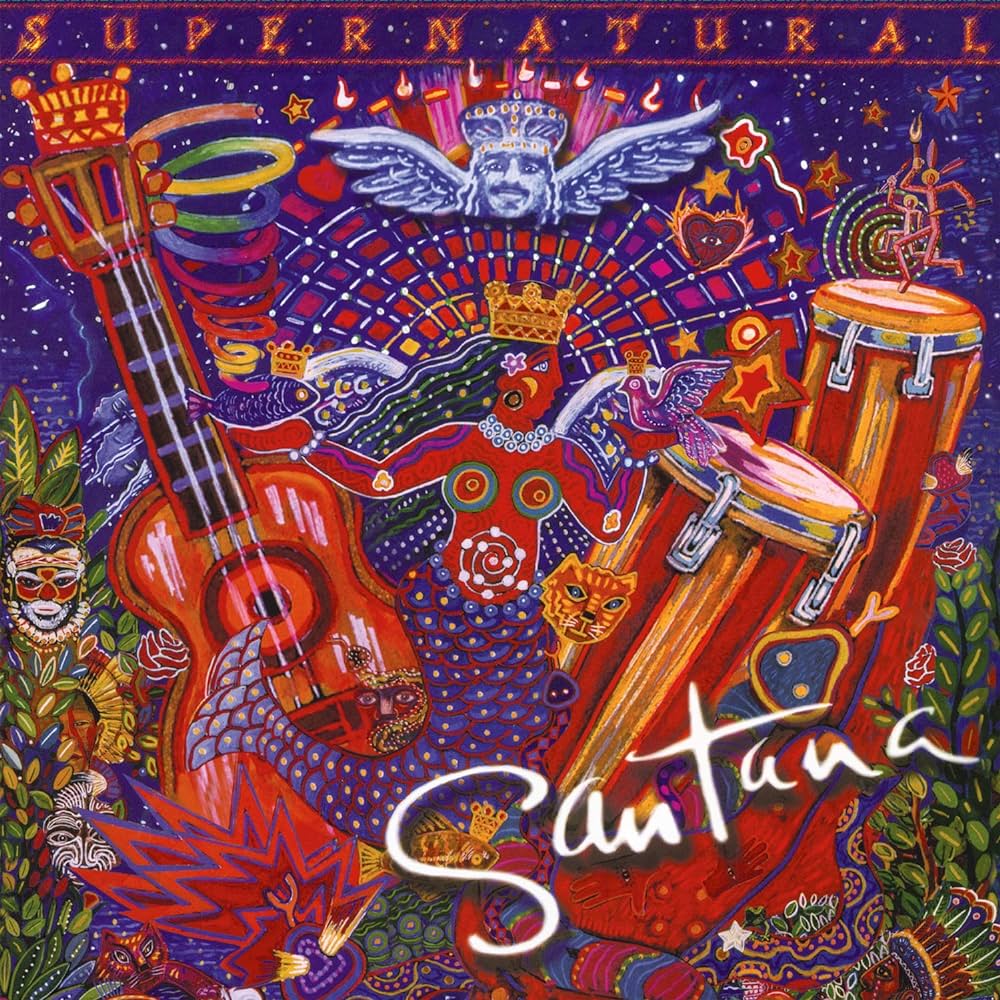
However, with Supernatural, Santana made an unprecedented return to the spotlight, driven by a star-studded roster of collaborators and a fresh fusion of genres that appealed to both longtime fans and a new generation.
The album featured a series of collaborations with contemporary artists that bridged the gap between classic rock, Latin music, and mainstream pop. One of the most iconic collaborations was with Matchbox Twenty’s Rob Thomas on the hit single “Smooth,” which dominated the charts and won multiple Grammy Awards. Other notable collaborations included Eric Clapton on “The Calling,” Lauryn Hill on “Do You Like the Way,” and Dave Matthews on “Love of My Life.” These partnerships allowed Santana to blend his signature Latin-infused guitar style with modern pop, rock, and R&B sounds, creating a fresh and universally appealing album.
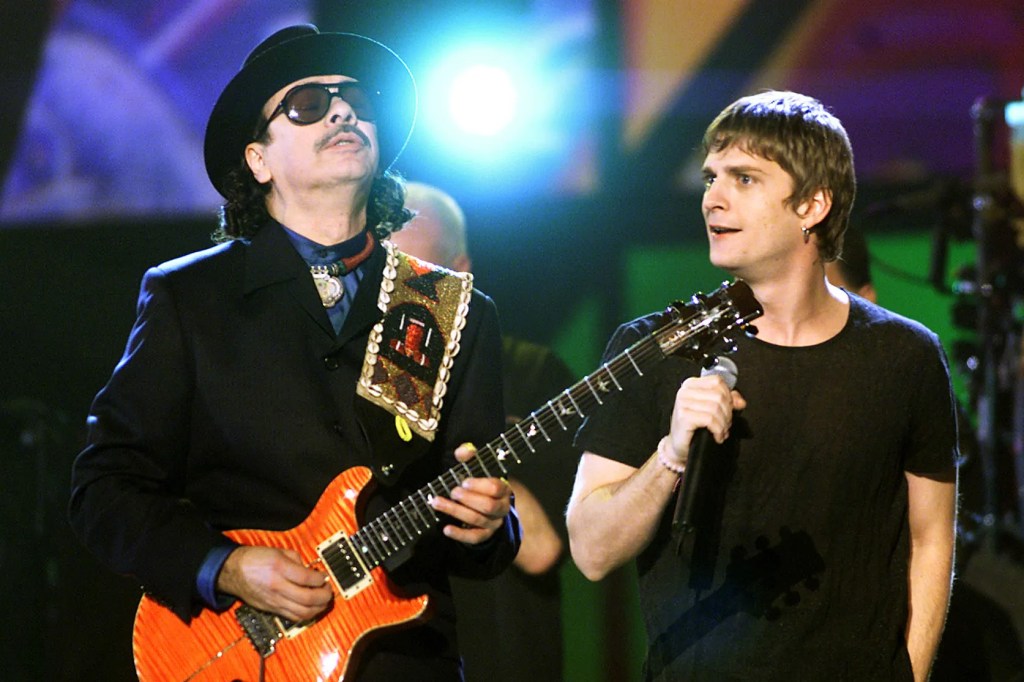
Supernatural was not just a commercial success—it was a cultural phenomenon. The album won nine Grammy Awards, including Album of the Year, and became a global bestseller, with over 30 million copies sold worldwide. Its success launched Santana back into the mainstream and re-established him as one of the most influential musicians in the world.
Following the success of Supernatural, Santana capitalized on the momentum by releasing a series of albums that continued the collaborative spirit. Albums like Shaman (2002), All That I Am (2005), and Corazón (2014) featured a similar formula of high-profile collaborations with artists from various genres. While none reached the colossal success of Supernatural, they helped sustain Santana’s relevance in the music industry and solidified his legacy as an artist who could transcend generations and musical styles
Legacy and Influence
Carlos Santana’s legacy extends far beyond his technical guitar skills—he has been a transformative figure in blending Latin and Afro-Cuban rhythms with rock, jazz, and blues, paving the way for a genre-defying sound that has influenced musicians for decades. His pioneering approach in the late 1960s and early 70s introduced mainstream audiences to the complexities of Latin percussion and rhythms, integrated seamlessly into the framework of rock music.
Santana’s influence can be seen not only in Latin rock but also in the broader fusion of world music elements with popular genres. His use of Afro-Cuban rhythms, mixed with improvisational jazz and the emotional expressiveness of the blues, has inspired generations of musicians across multiple genres, from rock and jazz to R&B and even hip-hop. The introduction of congas, timbales, and syncopated rhythms into rock was revolutionary and expanded the genre’s musical vocabulary.
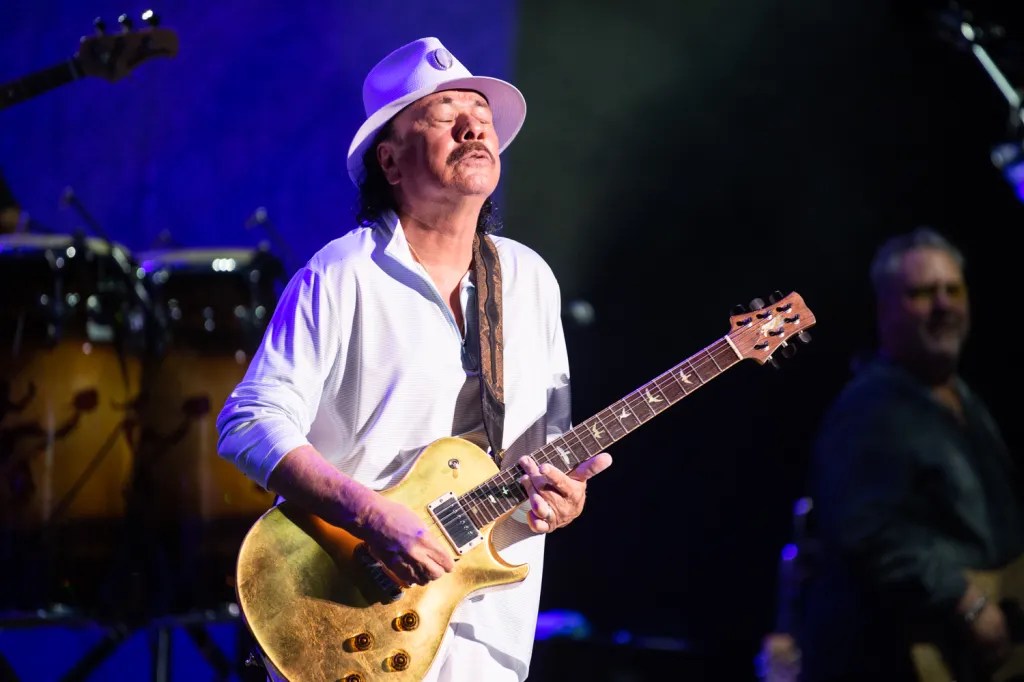
Equally important is Santana’s spiritual approach to music. Influenced by both his Mexican roots and a deep connection to Eastern philosophies, Santana sees music as a conduit for expressing universal love and spirituality. This philosophy is evident not only in his performances but also in the messages of peace, unity, and love that permeate his work. Santana has described music as a “vehicle for healing,” and this ethos has inspired musicians to view their craft as a means for deeper emotional and spiritual expression.
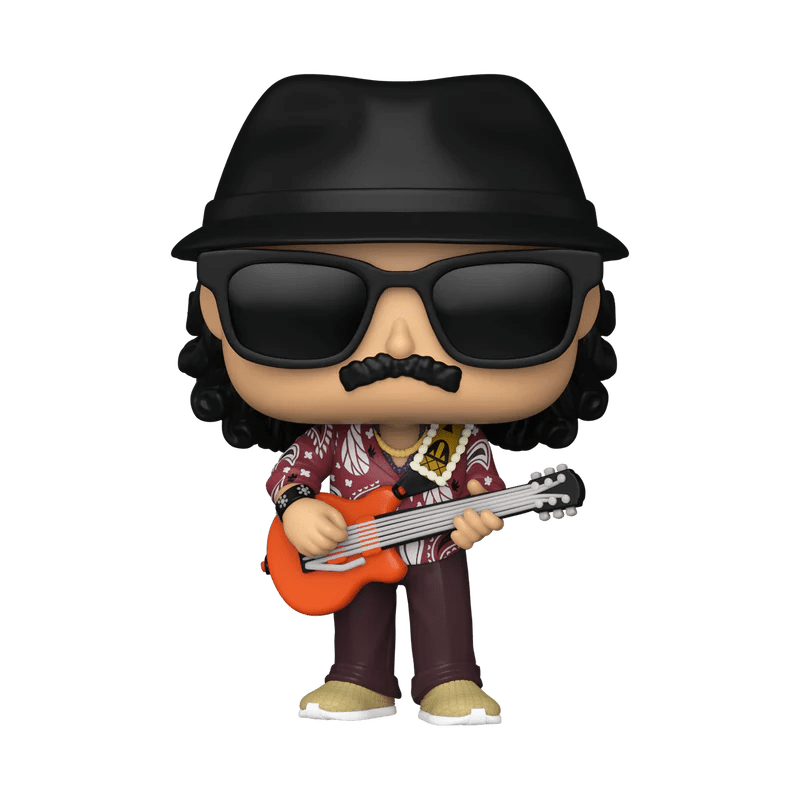
Conclusion: The Enduring Legacy of Carlos Santana
Carlos Santana’s musical journey is nothing short of extraordinary, a career that has spanned over five decades and has influenced countless musicians across multiple genres. From his early days blending Latin rhythms with rock and blues, to his groundbreaking collaborations on Supernatural, Santana has consistently pushed the boundaries of what guitar music can be. His unique fusion of genres—blending Latin, Afro-Cuban, jazz, blues, and rock—has not only expanded the sonic possibilities of popular music but also introduced global audiences to the richness of Latin music and culture.
Beyond his technical mastery and genre-defining style, Santana’s music carries a deeper, spiritual dimension that has become a hallmark of his artistic identity. His belief in music as a force for healing and unity resonates in every note he plays, and this ethos has inspired generations of musicians to approach their craft with a sense of purpose and connection to the world around them. Through his guitar, Santana channels a message of love, peace, and universal understanding, leaving an indelible mark on the world of music and beyond.
Santana’s influence remains strong, not just through his iconic songs, but also through his collaborations, gear innovations like the PRS Santana models, and his philanthropy. His work with the Milagro Foundation and his continued relevance through collaborations with younger artists highlight his lasting commitment to both music and social good. Santana’s legacy is one of innovation, passion, and spiritual exploration—one that will continue to inspire musicians and audiences for generations to come.
Bonus Track: 10 Santana Spirit Rhythms
- Woodstock Legend: Santana’s legendary Woodstock performance was famously improvised and played under the influence of LSD, which he has described as a deeply spiritual experience.
- Guitar Hero: Santana was ranked number 20 on Rolling Stone’s list of the 100 Greatest Guitarists.
- Grammy Glory: He has won 10 Grammy Awards, including a record-tying nine for a single project for Supernatural.
- Hall of Fame: Santana was inducted into the Rock and Roll Hall of Fame in 1998.
- Cultural Icon: His music is included in the Smithsonian collection as an essential part of American music history.
- Humanitarian Efforts: Through his Milagro Foundation, Santana has donated millions to support children and youth in the arts.
- Global Influence: Santana’s music is celebrated worldwide, influencing genres and musicians across the globe.
- Spiritual Guide: He often speaks about the spiritual and healing power of music.
- Fashionable Ventures: Santana has also launched a line of women’s shoes and a chain of upscale Mexican restaurants, blending his artistic and entrepreneurial spirit.
- Musical Innovator: Continuously experimenting with different musical styles, Santana has remained relevant in the changing landscape of the music industry.
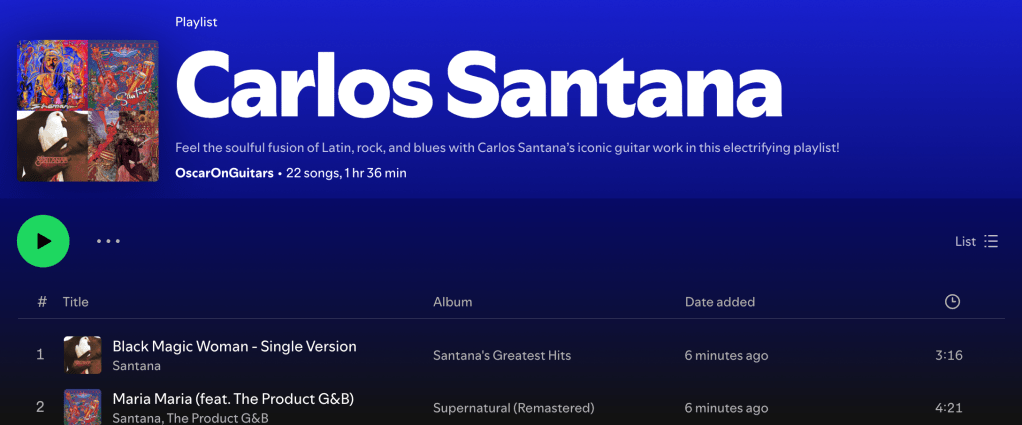
Feel the soulful fusion of Latin, rock, and blues with Carlos Santana’s iconic guitar work in this electrifying playlist!

 oscaronguitars.com
Leave a comment