
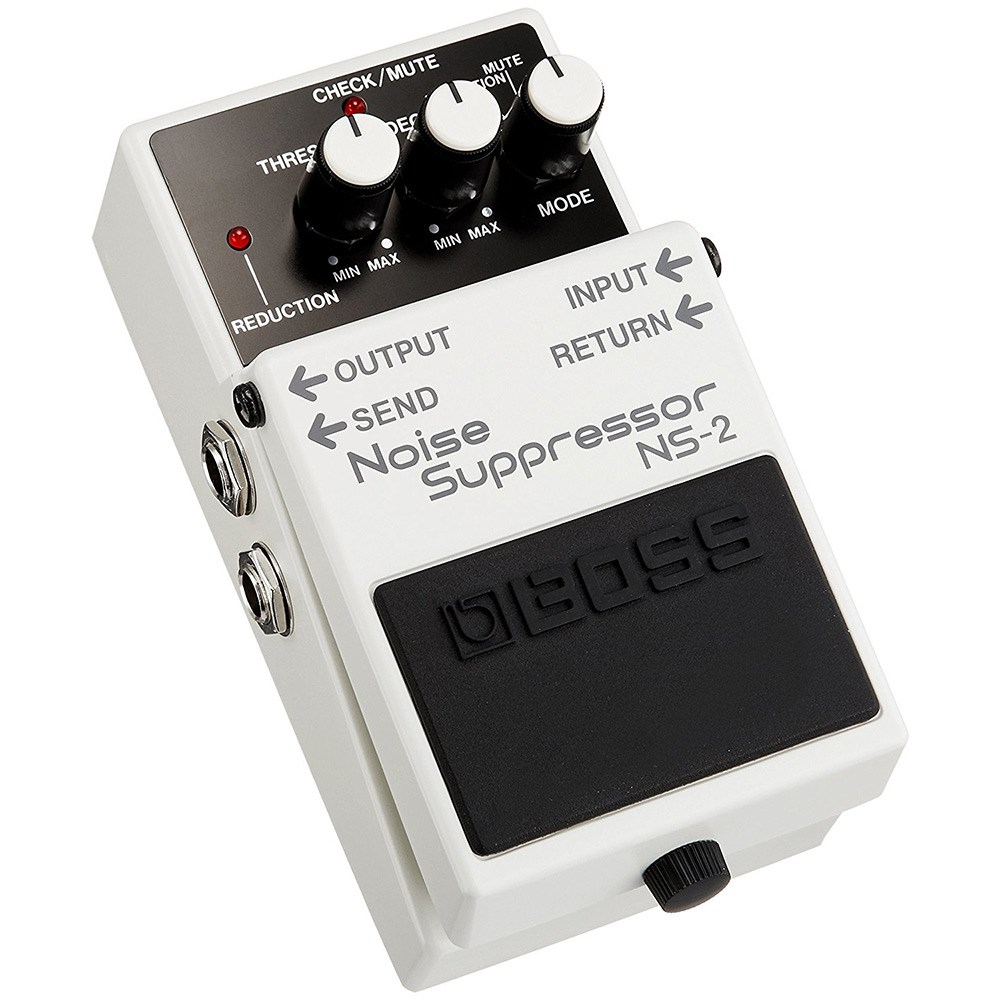
Let’s talk about something that every guitarist has to deal with at some point: noise. Whether it’s the hum of your single-coil pickups, the hiss from high-gain distortion, or the buzz from electrical interference, unwanted noise can be a real tone killer. But fear not—there are tools to help you keep your sound clean and your tone pure. Today, we’re diving into the world of noise gates and noise cancellation, two essential tools for guitarists who want to minimize the unwanted sounds and keep their playing as tight and professional as possible.
What’s the Deal with Noise?
Before we get into the solutions, let’s talk about the problem. Noise in your guitar signal can come from a variety of sources:
- Single-Coil Hum: If you’re playing a guitar with single-coil pickups, you’ve probably noticed that familiar hum, especially when you’re not playing. This 60-cycle hum is a common issue with single-coils, and while it adds character to your tone, it can be a nuisance in quiet or high-gain settings.
- High-Gain Hiss: Crank up the gain on your amp or distortion pedal, and you’ll often hear a hissing sound. This is the result of amplifying not just your guitar’s signal, but also any noise in the signal chain.
- Electrical Interference: Everything from fluorescent lights to computer monitors can introduce noise into your signal. This interference can create a variety of buzzes and hums that you definitely don’t want in your final tone.
- Ground Loop Hum: If you’ve got multiple pieces of gear connected to different power sources, you might experience a ground loop, which creates a low-frequency hum that’s tough to get rid of.
Noise Gates: The Silent Guardians
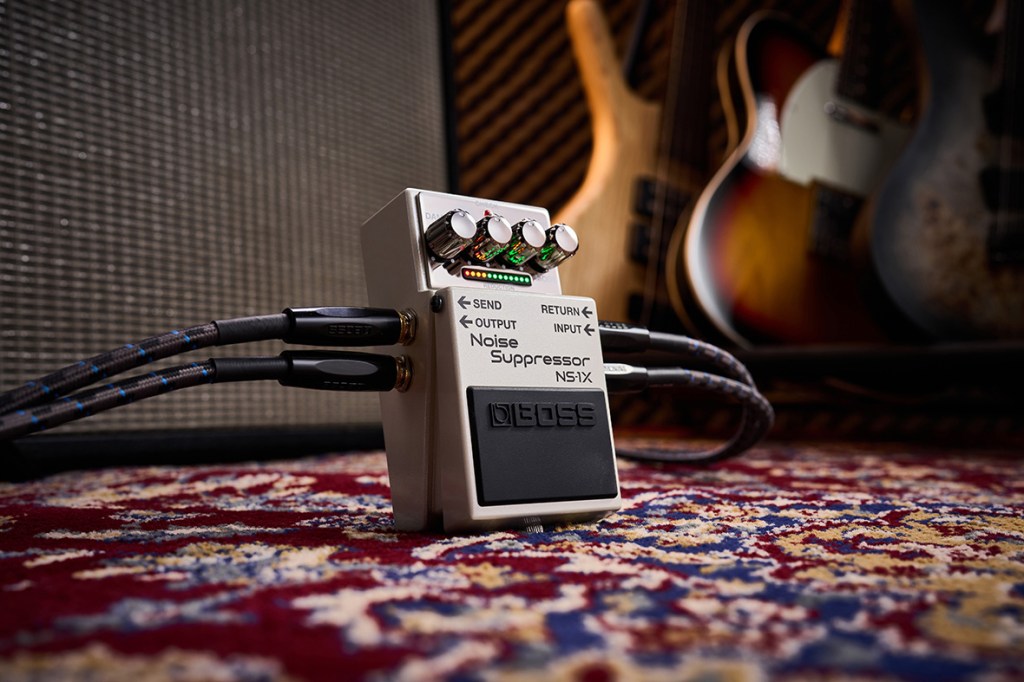
One of the most effective tools for managing unwanted noise is a noise gate. But what exactly is a noise gate, and how does it work?
- What is a Noise Gate?: A noise gate is a device (often a pedal) that automatically mutes your signal when it falls below a certain threshold. Think of it as a gatekeeper that only lets through the sounds you want—your playing—while blocking out the noise. When your signal is strong (like when you’re playing a note), the gate stays open, allowing the sound to pass through. But when the signal drops below the threshold (like when you’re not playing), the gate closes, silencing any unwanted noise.
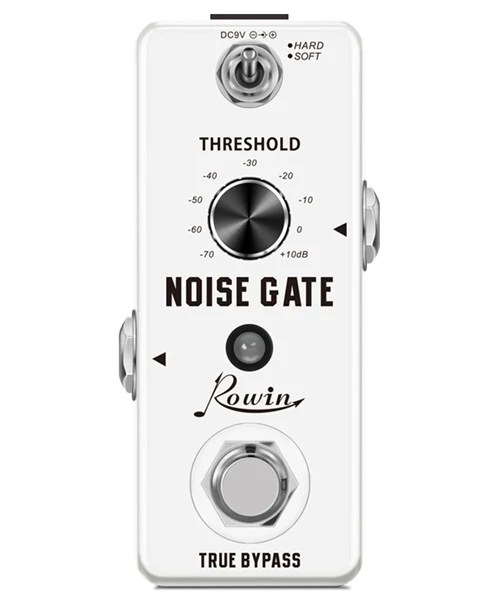
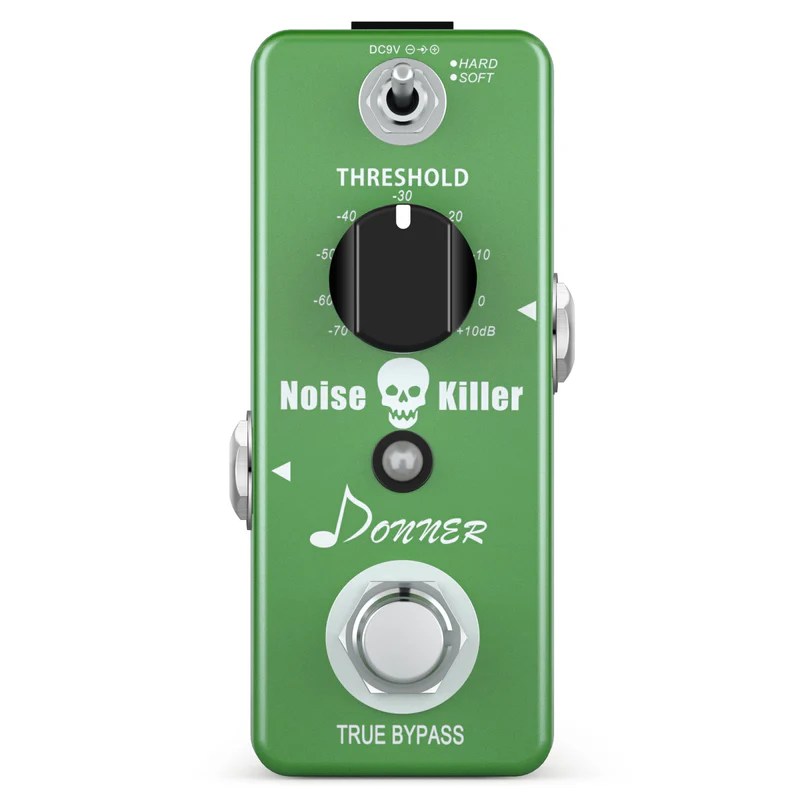
- How to Use a Noise Gate: Using a noise gate is pretty straightforward. Most noise gates have a few basic controls, including a threshold knob that lets you set the level at which the gate opens and closes. Some also include attack and release controls, which determine how quickly the gate reacts. To set up your noise gate, start by playing your guitar and gradually raising the threshold until the unwanted noise is silenced without cutting off your playing. It’s a bit of a balancing act, but with some tweaking, you can find the sweet spot that keeps your tone clean without affecting your dynamics.
- When to Use a Noise Gate: Noise gates are particularly useful in high-gain setups, where hiss and hum can easily overpower your sound. They’re also great for live performances, where you want to minimize noise between songs or during quiet sections. Keep in mind that while a noise gate can work wonders for reducing noise, it’s not a magic bullet—if the noise is part of your signal (like a ground loop hum), you’ll need to address the root cause to fully eliminate it.
Noise Cancellation: Advanced Solutions for a Cleaner Signal
While noise gates are fantastic for managing noise in your signal chain, sometimes you need a more advanced solution. That’s where noise cancellation comes in.
- What is Noise Cancellation?: Noise cancellation is a technology that actively reduces unwanted noise by using phase inversion. In simple terms, it works by detecting the unwanted noise in your signal and then creating an opposite sound wave to cancel it out. This technique is commonly used in noise-cancelling headphones, but it’s also available in some high-end guitar gear.
- How Noise Cancellation Works for Guitarists: For guitarists, noise cancellation can be a game-changer, especially in the studio. Some modern amplifiers, multi-effects processors, and audio interfaces include built-in noise cancellation features. These systems analyze the noise in your signal, like hum or hiss, and apply phase inversion to reduce or eliminate it, all without affecting your guitar’s tone.
- Noise Reduction Pedals: While not exactly the same as noise cancellation, noise reduction pedals work on a similar principle, reducing the overall noise in your signal chain. These pedals, like the Boss NS-2 or ISP Decimator, are popular among guitarists who need more than a basic noise gate. They’re especially useful in complex setups where multiple sources of noise might be present.
Tips for Reducing Noise in Your Rig
While noise gates and noise cancellation can be incredibly effective, there are a few other steps you can take to reduce noise in your setup:
- Use Quality Cables: Cheap or damaged cables are a common source of noise. Invest in high-quality, well-shielded cables to keep your signal clean.
- Isolate Your Power Supply: If possible, use isolated power supplies for your pedals to avoid ground loops and power-related noise. Daisy chaining multiple pedals on a single power supply can introduce noise, especially with digital pedals.
- Proper Grounding: Ensure your gear is properly grounded. Ground loops are a common cause of hum, and proper grounding can help eliminate this issue.
- Shield Your Guitar: If you’re using single-coil pickups, consider shielding your guitar’s cavities to reduce hum. Copper or aluminum tape can be used to line the control and pickup cavities, effectively reducing noise.
- Keep Your Distance: Keep your guitar and cables away from sources of electrical interference, like computers, fluorescent lights, and power supplies. Sometimes, simply moving a few feet away can make a big difference in reducing noise.

It might seem like $200 for a cable is excessive, but your sound—and lack of noise—starts the moment you plug in.
Conclusion: Keeping Your Tone Pure
Dealing with noise is part of being a guitarist, but with the right tools and techniques, you can keep your tone clean and your playing clear. Noise gates and noise cancellation are invaluable for managing unwanted sounds, whether you’re playing live, recording in the studio, or just practicing at home.
Remember, the key to great tone isn’t just about having the best gear—it’s about making sure your sound is as pure and focused as possible. So, take some time to experiment with noise gates, explore noise cancellation options, and clean up your signal chain. Your ears—and your audience—will thank you. Happy playing!
 oscaronguitars.com
Leave a comment