
Early Life: From Louisiana to Chicago
Buddy Guy, born George Guy on July 30, 1936, in Lettsworth, Louisiana, is widely regarded as one of the most influential figures in the history of Chicago blues. Raised in the heart of the Deep South during an era steeped in the traditions of acoustic Delta blues, Guy was deeply inspired by the blues giants of the time, including Muddy Waters, Howlin’ Wolf, and B.B. King. These legends not only shaped his musical sensibilities but also fueled his desire to carve out his own identity in the evolving blues landscape.
In search of broader opportunities and a chance to elevate his musical career, Buddy Guy moved to Chicago in the late 1950s, a city at the epicenter of the post-war blues boom. Upon his arrival, he quickly immersed himself in the city’s vibrant music scene, playing alongside many of his heroes and gaining recognition for his electrifying stage presence and innovative guitar techniques. His performances at renowned clubs, most notably the 708 Club, where he became a fixture, cemented his place in the heart of Chicago’s legendary blues circuit. Known for his fiery solos, emotional depth, and charismatic showmanship, Guy’s performances set him apart and made him a sought-after figure in the burgeoning Chicago blues movement.

A Pioneering Blues Career
Buddy Guy’s influence on the blues is nothing short of monumental, with a career that spans more than six decades. His contributions have shaped not only the evolution of the genre but also its crossover into mainstream rock music. Known for his electrifying showmanship and the raw intensity of his guitar playing, Guy bridged the gap between traditional blues and the burgeoning rock sound of the 1960s and ’70s. His high-energy performances, often characterized by his ability to seamlessly blend blistering solos with soulful, emotive phrasing, helped transform the role of the blues guitarist, making him a pioneering figure in both genres.
Guy’s groundbreaking albums, like Hoodoo Man Blues (1960) and A Man and the Blues (1968), are prime examples of his dynamic, emotive style. Hoodoo Man Blues is considered a classic of Chicago blues, showcasing his deep, rootsy guitar work and rich vocals, while A Man and the Blues displays his powerful transition into a more rock-infused sound, influenced by the high-energy, distorted guitar tones of the time. These albums not only reveal his technical prowess but also highlight his ability to emotionally connect with audiences, whether through a fast-paced, fiery riff or a slow, gut-wrenching blues ballad.
Beyond his iconic recordings, Guy’s ability to innovate within the traditional blues framework made him an influence on generations of guitarists. His aggressive yet soulful guitar style directly impacted future rock icons like Jimi Hendrix, Eric Clapton, and Stevie Ray Vaughan. Through his remarkable career, Buddy Guy has proven time and again that his music is not confined to one era or style, forever cementing his legacy as one of the most influential musicians in the history of blues and rock.
Iconic Tracks: A Legacy in Lyrics and Melody
Buddy Guy’s career is marked by numerous tracks that have left an indelible mark on the blues genre and rock music as a whole. Some of his most influential songs exemplify his virtuosity on the guitar, emotional depth in his vocals, and his ability to innovate within the blues tradition.
- “Damn Right, I’ve Got the Blues” (1991) – This track marked a powerful return to prominence for Buddy Guy in the early ’90s, solidifying his place as one of the top names in contemporary blues. With its gritty guitar riffs, fiery solos, and raw, impassioned vocal delivery, this song became an anthem for blues fans and a statement of Guy’s enduring influence. It’s a perfect encapsulation of his aggressive yet soulful guitar style and his unwavering commitment to keeping the blues alive in a modern context. The song’s success not only revitalized his career but also introduced his style to a new generation of listeners, further cementing his legacy.
- “Stone Crazy” (1961) – Widely regarded as one of Guy’s most intense tracks, Stone Crazy is a true testament to his blistering guitar technique. The song’s searing solos and deep emotional expression have earned it a place as one of the most iconic blues tracks of all time. Known for its fiery energy, Stone Crazy exemplifies Guy’s ability to blend technical proficiency with heartfelt intensity. This track also showcases his influence on the next generation of guitarists, including rock legends like Jimi Hendrix and Eric Clapton, who cited Guy as a major inspiration for their own playing styles.
- “First Time I Met the Blues” (1960) – A deeply personal and reflective track, First Time I Met the Blues is a masterclass in blues storytelling. The song offers a vivid narrative of Guy’s first encounter with the blues, capturing the emotional weight and history of the genre. His vocal delivery is tender and full of soul, while his guitar playing weaves through the lyrics with a sense of nostalgia and longing. The track is not just about musical technique; it is a poignant reflection on the roots of the blues and Guy’s personal connection to its transformative power.
- “Feels Like Rain” (1993) – This track stands out as one of Buddy Guy’s more soulful and introspective songs, demonstrating his ability to shift between different styles within the blues genre. Feels Like Rain features a slower, more mournful rhythm, with Guy’s guitar weaving soft, bluesy bends that perfectly complement the melancholic mood of the lyrics. It’s a testament to his versatility as a musician, showing that his prowess isn’t limited to high-energy, up-tempo blues. The song’s mood and tone also display Guy’s remarkable ability to convey deep emotional expression, proving that his musical range extends well beyond his fiery, rock-influenced performances.
These tracks not only highlight Buddy Guy’s exceptional guitar skills and vocal power but also showcase his range as a musician. Whether through blistering solos, heartfelt lyrics, or innovative blues structures, Guy’s influence can be felt in each of these songs, solidifying his reputation as a true blues legend.

Gear and Style: The Sound of a Blues Legend
Buddy Guy’s guitar playing is a signature blend of aggressive intensity and deep emotional expression, marked by his distinctive use of bends, vibrato, and long, sustaining notes that seem to sing with a raw, visceral quality. His style is rooted in the blues but infused with the energy and ferocity of rock, which helped to redefine the role of the blues guitarist in the modern era. Guy’s approach is highly physical; his aggressive bends and sharp, commanding vibrato give his solos a sense of urgency and emotion that captivates listeners. His ability to draw out long, resonant notes and make them sing with subtle nuances and unpredictable phrasing is a hallmark of his playing, making every note feel alive and charged with feeling.
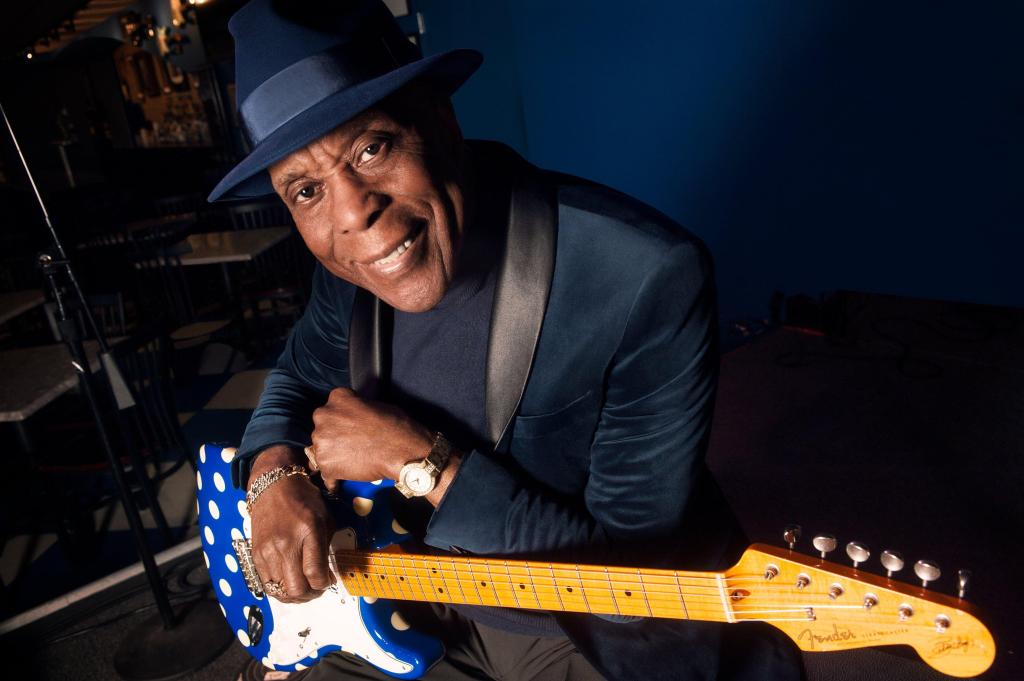
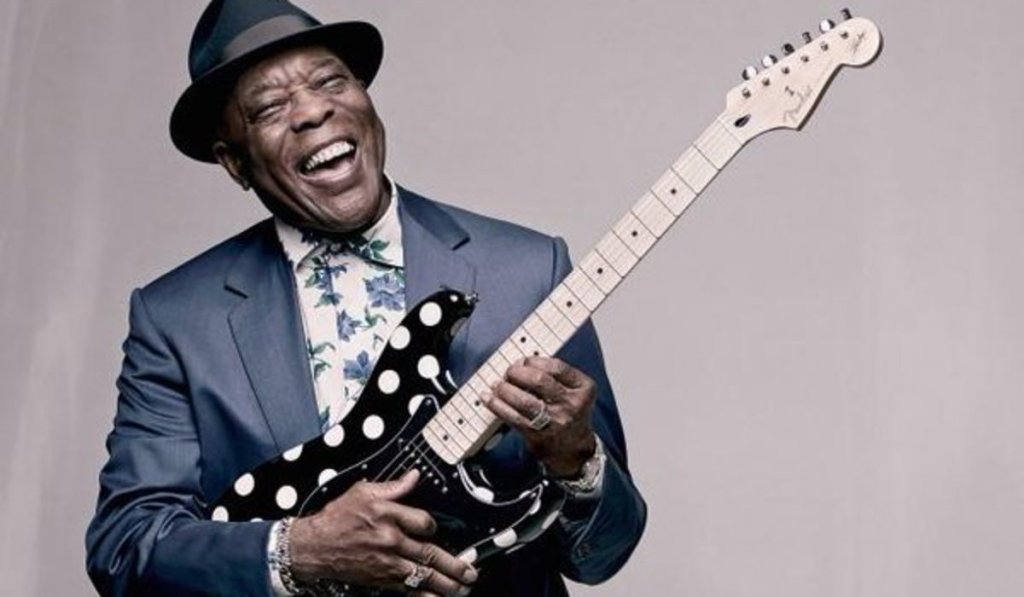
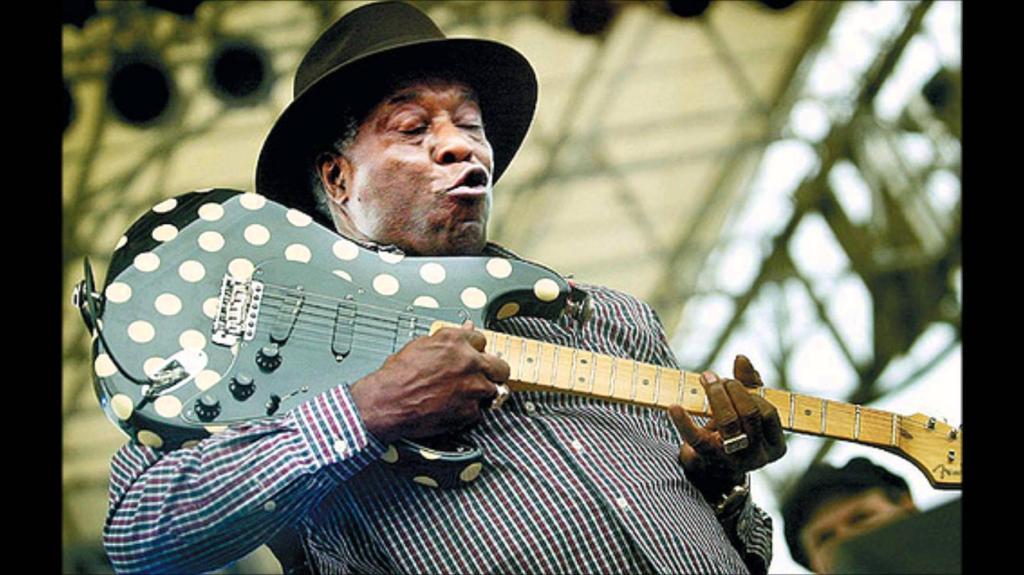
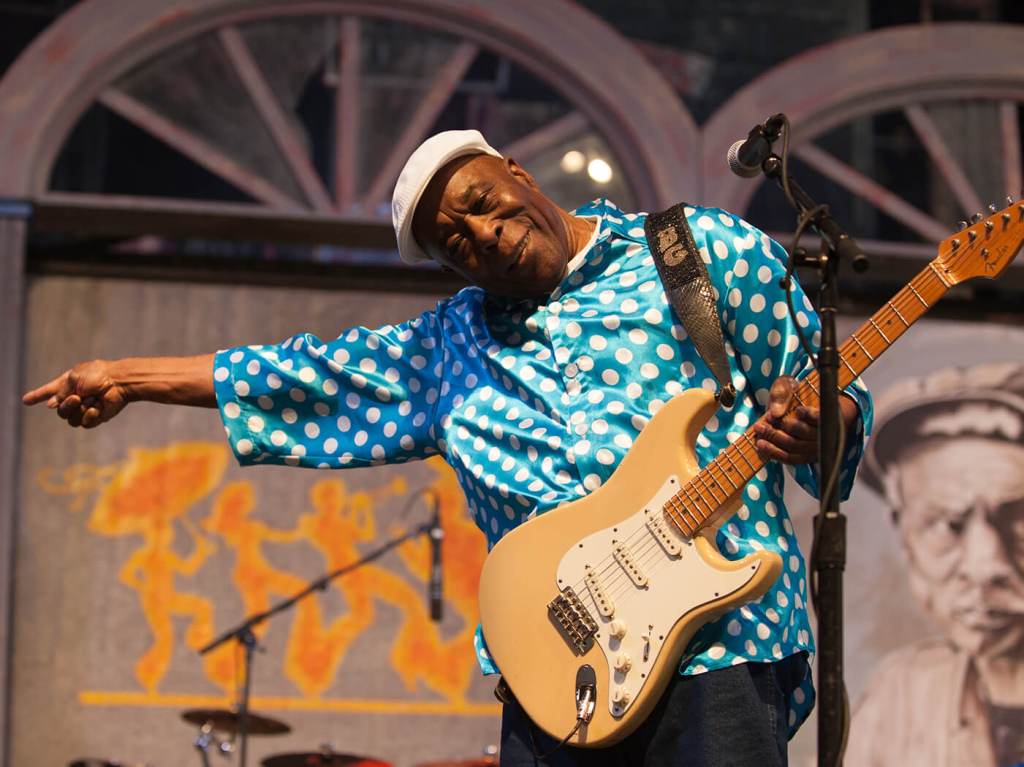
Primarily, Guy plays Fender Stratocasters, which are known for their bright, articulate tones and excellent response to expressive techniques like bending and vibrato. The Stratocaster allows Guy the freedom to explore his dynamic playing style—whether he’s shredding through blistering solos or creating lush, resonating chord progressions. The guitar’s sharp tonal clarity and smooth sustain complement his fiery style, making it the perfect instrument for his highly emotive performances. Guy is often seen using Stratocasters with single-coil pickups, which deliver a clear, cutting tone that can go from sparkling clean to ferociously overdriven.
His gear is typically simple yet highly effective. Buddy Guy relies heavily on vintage tube amplifiers, often from brands like Marshall or Fender, which provide a warm, rich tone that suits his expressive style. When played at high volumes, these amplifiers break up and compress in a way that creates a gritty, overdriven sound without losing clarity. This combination of vintage tubes and Guy’s technical prowess allows him to switch seamlessly from a smooth, clean sound to a raw, saturated tone that brings out the best in his solos and chordal rhythmic playing. The resulting tone is rich and full, with a distinctive edge that gives Guy’s playing its trademark blues-rock bite.
Through his choice of instruments and gear, Buddy Guy has created a sonic palette that not only suits his energetic, boundary-pushing guitar work but also enhances his ability to convey emotion and storytelling through music. His sound is dynamic, capable of soaring highs and gritty lows, making him one of the most recognizable and influential guitarists in blues history.
Influence and Impact
Buddy Guy’s influence on both rock and blues is immeasurable, as he has served as a mentor and inspiration to some of the greatest guitarists and musicians in history, including Eric Clapton, Jimi Hendrix, Stevie Ray Vaughan, and John Mayer. His contributions to the development of Chicago blues are foundational, and his impact extends far beyond the genre’s traditional boundaries. Guy is often credited with pushing the blues forward, infusing it with the fiery energy and virtuosity that helped bridge the gap between blues and rock music, and ultimately bringing the genre to a wider, more diverse audience.
From the early days of his career, Buddy Guy established himself as a bold innovator whose guitar playing would forever influence the next generation of musicians. His distinctive style—marked by blistering solos, emotional depth, and boundary-pushing techniques—was revolutionary for his time. Eric Clapton, often referred to as one of the most influential guitarists of all time, has spoken extensively about the profound effect Buddy Guy had on his own playing. Clapton has acknowledged that it was hearing Guy’s live performances that truly shaped his approach to the blues, inspiring him to explore new ways of playing with more intensity and emotional expression.
Jimi Hendrix, another legendary guitarist, was equally captivated by Buddy Guy’s playing, and it’s said that Hendrix once declared Guy to be “the best guitarist alive.” Hendrix admired Buddy Guy’s raw energy and the way he could make the guitar sing with emotion. Guy’s aggressive bending, fiery solos, and fluidity on the fretboard left a lasting impression on Hendrix’s own groundbreaking approach to the instrument, which in turn influenced the evolution of rock music as a whole.
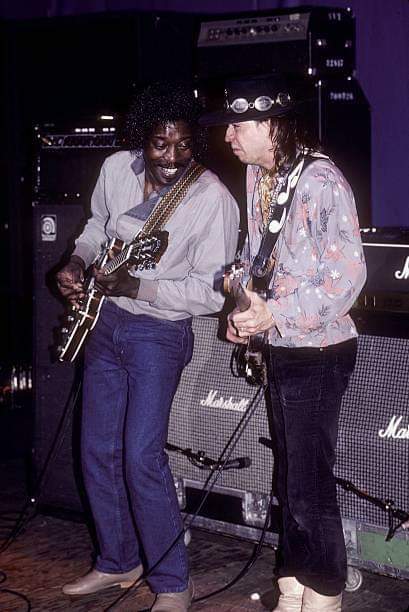
Stevie Ray Vaughan, who is often seen as the torchbearer for the blues revival in the 1980s, also drew heavily from Guy’s technique and performance style. Vaughan’s incendiary guitar playing and soulful delivery were directly influenced by Guy’s approach to bending notes and using the guitar as an emotional conduit. In fact, Vaughan frequently cited Buddy Guy as one of his primary inspirations, and their shared passion for the blues is evident in Vaughan’s own music.
John Mayer, a more contemporary artist, has also spoken about the profound impact Buddy Guy had on his musical journey. Mayer’s fusion of blues, pop, and rock elements owes much to Guy’s fearless innovation on the guitar. Mayer has credited Guy with teaching him about the emotional power of guitar playing, and the way a guitarist can communicate deeply personal stories through their instrument. In turn, Mayer has become a strong advocate for the blues, ensuring its continued relevance in modern music.

Beyond influencing individual guitarists, Buddy Guy’s contributions to the Chicago blues sound helped shape the entire genre. His pioneering techniques, which included the expressive use of bends, vibrato, and tone manipulation, transformed the blues from its traditional roots into a more electrified, high-energy form that resonated with younger generations. Guy’s incorporation of rock elements into his blues playing helped make the genre more accessible to broader audiences, and his high-energy stage presence, full of showmanship and passion, drew large crowds and further solidified the blues as an essential part of the American musical landscape.
Buddy Guy’s ability to connect with his audience on an emotional level, coupled with his innovative guitar techniques, has cemented his status as one of the most important figures in blues history. His influence stretches across generations of musicians and continues to inspire artists in both the blues and rock genres. Through his music, his mentorship, and his relentless dedication to the craft, Buddy Guy has not only shaped the evolution of the blues but also ensured its relevance and vitality in the modern musical world. His legacy will continue to resonate for generations to come.
Conclusion: The Living Legend of the Blues
Buddy Guy’s legacy transcends the boundaries of blues, making an indelible mark on both the genre and the wider world of rock and roll. His electrifying performances, innovative guitar techniques, and unrelenting passion for the music continue to inspire new generations of musicians. Guy’s ability to blend the deep emotional roots of blues with the fiery energy of rock has ensured that his influence remains as relevant today as it was when he first set foot in Chicago. More than just a bluesman, Buddy Guy is a living legend who has shaped the sound of modern music, ensuring that the blues will remain alive and well for generations to come. Through his artistry and dedication, he has firmly cemented his place as one of the most important musicians in the history of American music.
Bonus Track: 10 Facts About Buddy Guy
- Grammy Awards: Buddy Guy has won multiple Grammy Awards, highlighting his enduring talent and contribution to music.
- Blues Foundation Awards: He has received numerous awards from the Blues Foundation, recognizing his lifelong impact on the blues genre.
- Rock and Roll Hall of Fame: Inducted in 2005, acknowledging his role as one of the great guitarists who shaped modern music.
- Kennedy Center Honors: Received in 2012, this accolade celebrates his contributions to American culture through the performing arts.
- Influential Guitarist: Known for his pioneering guitar techniques that have influenced generations of musicians across various genres.
- Blues Education: Guy is committed to preserving the blues through education, often speaking about the importance of the genre’s history.
- Musical Collaborations: He has collaborated with a wide array of artists, from Muddy Waters to Rolling Stones to contemporary stars.
- Chicago’s Blues Ambassador: Long considered Chicago’s blues ambassador, he has helped keep the city at the forefront of the genre.
- Still Performing: Well into his 80s, Buddy Guy continues to perform, record, and tour, demonstrating his incredible stamina and dedication.
- Blues Club Owner: He owns the renowned Buddy Guy’s Legends in Chicago, a major hub for blues music and budding guitarists.
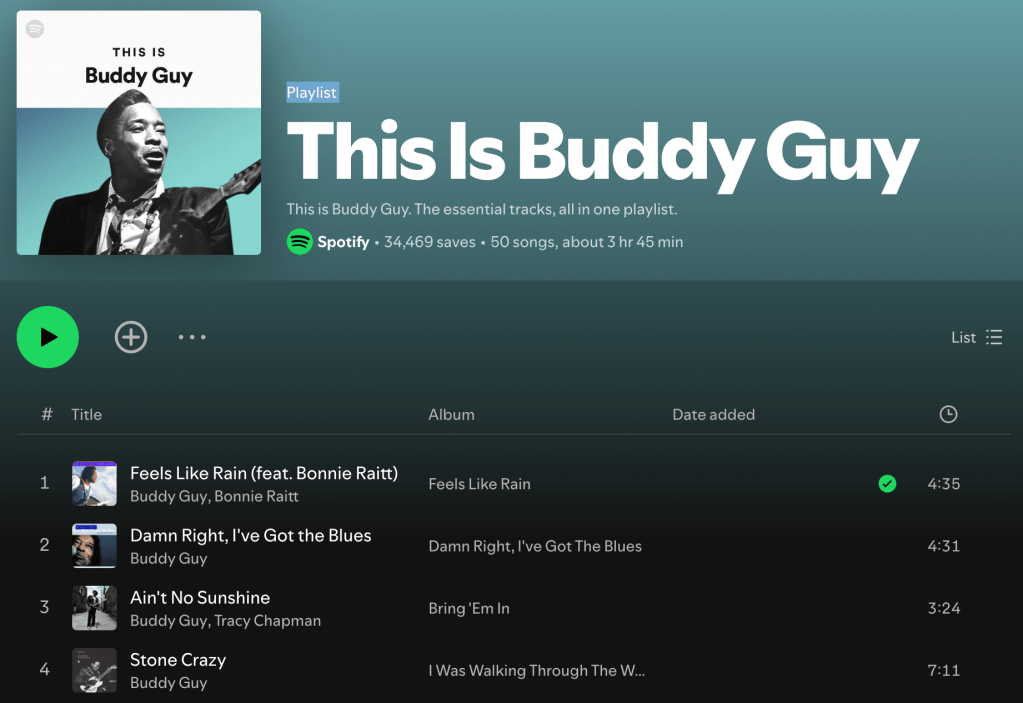
Listen to Buddy Guy in this Spotify Playlist.
 oscaronguitars.com
Leave a comment