

When it comes to choosing a guitar, players often weigh the appeal of a handmade instrument against the reliability and consistency of a mass-produced guitar. Handmade guitars, crafted with care by an artisan, carry a unique charm and sense of personalization. But what happens when that artisan lacks experience? On the other hand, mass-produced guitars—often aided by CNC (Computer Numerical Control) machines and overseen by experienced workers—are built with precision, consistency, and efficiency, though they lack the individual touch of a handmade guitar. This article explores the pros and cons of each, focusing on the experience of owning either a guitar made by an inexperienced craftsman or a guitar that’s mass-produced in a factory with CNC assistance.
Handmade Guitars: The Allure and Uncertainty of Artisan Craftsmanship
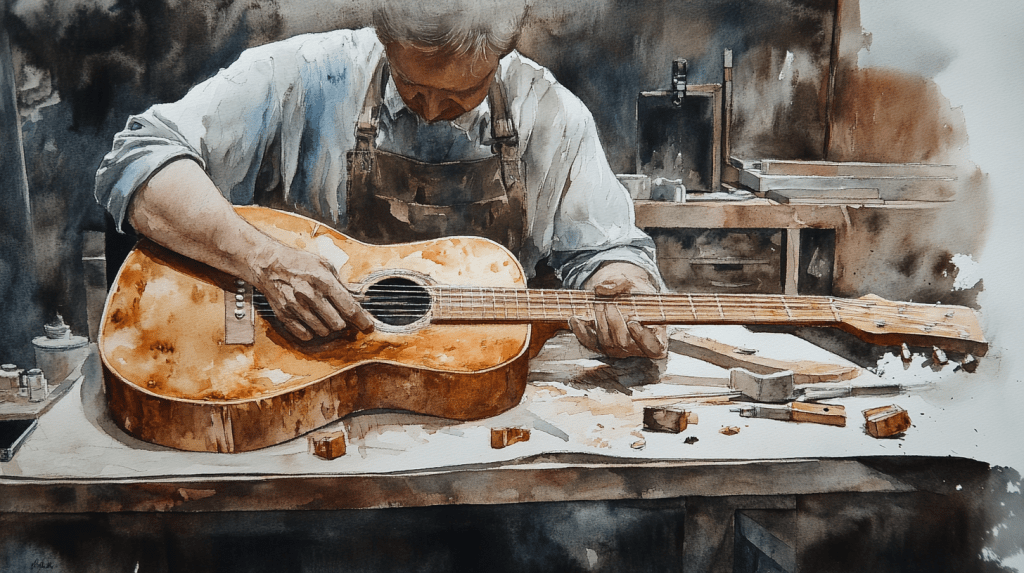
A handmade guitar offers something special. The idea of a craftsman selecting wood, cutting, sanding, and assembling the instrument, all with their hands, resonates deeply with musicians who value artistry and individuality. But when the luthier lacks the skill and experience of seasoned professionals, the result can be unpredictable.
Pros of a Handmade Guitar by an Inexperienced Craftsman:
- Unique, Personal Instrument: No two handmade guitars are the same, and even a less-experienced builder can create an instrument with character. The human touch leads to slight variations in tone, shape, and feel, which can be appealing if you’re looking for an instrument that stands out.
- Customizable Design: Handmade guitars offer a high level of customization. Even if the builder is still learning, they can work with you to tailor the guitar’s shape, materials, and features to suit your preferences. This personalized approach can result in an instrument that feels uniquely yours.
- Emotional Connection with the Process: Many guitarists love the idea of working closely with the builder, discussing preferences, and having a say in the creative process. This personal involvement can give you a deeper connection to your guitar, knowing that your input shaped its final form.
Cons of a Handmade Guitar by an Inexperienced Craftsman:
- Inconsistent Quality: Inexperience can lead to problems in the final product. A neck that’s not perfectly aligned, fretwork that’s uneven, or poorly finished details can all result from a lack of expertise. These issues can seriously affect the playability and sound of the instrument.
- Unpredictable Tone and Playability: Handmade guitars rely heavily on the skill of the builder to get the sound right. If the craftsman isn’t yet familiar with how wood types, bracing, and construction techniques affect tone, you may end up with a guitar that sounds lackluster or unbalanced.
- Higher Cost for Potentially Lower Quality: Handmade guitars can be expensive, as you’re paying for the builder’s time and effort. Unfortunately, with an inexperienced luthier, you might pay a premium for a guitar that doesn’t match the quality of a mass-produced one.
Mass-Produced Guitars: Precision and Reliability with CNC Assistance
Mass-produced guitars, while often seen as less “authentic,” benefit from modern production methods that include the use of CNC machines to ensure precise cuts and assembly. These guitars are built in factories where experienced workers oversee the process, ensuring that each instrument meets a consistent standard of quality. While they may lack the personal touch of a handmade guitar, they offer a different set of advantages.
Pros of a Mass-Produced Guitar:
- Consistency and Precision: CNC machines help mass-produced guitars achieve a high level of precision. The neck angle, fret placement, and body shaping are all exact, leading to consistent quality across every guitar. This means fewer issues with playability and setup, providing a reliable experience for most players.
- Affordable Pricing: Mass production allows factories to produce guitars more efficiently, lowering the cost per instrument. As a result, you can get a high-quality guitar for a fraction of the cost of a handmade one. This affordability is a significant advantage for players on a budget.
- Reliable Sound and Playability: Factories employ experienced workers who oversee the final assembly and finishing stages, ensuring that the guitars are not only precisely built but also tested for sound quality and playability. This leads to a guitar that performs well right out of the box.
- Durability and Longevity: Mass-produced guitars, especially from reputable brands, are built to withstand the demands of regular playing. These instruments are tested for durability, ensuring that they hold up over time and offer long-lasting performance.
Cons of a Mass-Produced Guitar:
- Lack of Personalization: While mass-produced guitars are consistent, they don’t offer the same level of personalization that a handmade guitar does. You’re limited to the models and designs that the factory produces, and any modifications usually have to be done after purchase, which can limit creative freedom.
- Potentially Less Character: For some players, mass-produced guitars feel less “alive” compared to handmade instruments. The uniformity of the manufacturing process can strip the guitar of the unique quirks and personality that come from hand-building. While they may play well, they may not inspire the same emotional connection that a handmade guitar can.
- Perceived as Less Authentic: Despite their technical precision, some guitarists view mass-produced guitars as lacking in soul. The absence of a human touch during key stages of the building process can make them feel more like “products” than pieces of art, which might be important for musicians who value tradition and craftsmanship.
Conclusion: Which Guitar is the Right Choice for You?
Deciding between a handmade guitar from an inexperienced craftsman and a mass-produced guitar depends on what matters most to you as a guitarist.
If you value the unique character and personalized nature of a handmade guitar, and you’re willing to take a chance on an inexperienced luthier, you might end up with an instrument that feels like an extension of your own creativity. However, this route comes with risks—there’s always the possibility that the guitar won’t live up to your expectations in terms of quality and playability.
On the other hand, mass-produced guitars offer a level of precision and reliability that’s hard to beat. Thanks to CNC machines and skilled workers overseeing production, these instruments provide consistent quality at a lower price. While they may lack the personal touch and character of a handmade guitar, they deliver excellent performance and durability, making them an excellent choice for most players.
Ultimately, the decision comes down to your priorities. Are you seeking an instrument with a personal story and unique feel, or are you more concerned with reliability, affordability, and consistent performance? Whichever path you choose, both types of guitars have something valuable to offer.
 oscaronguitars.com
Leave a comment