
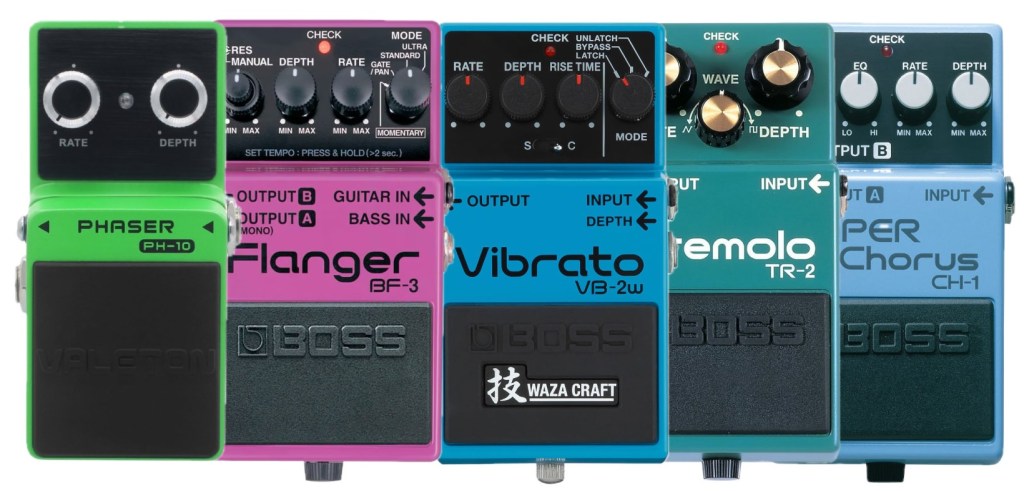
Hey there, gearheads and tone aficionados! If you’ve ever delved into the world of guitar effects, you’ve probably come across modulation effects. They’re those cool, shimmering sounds that can transform your guitar’s tone from standard to spectacular. But what exactly are modulation effects, and how do they work? Let’s break it down so you can get the most out of these sonic wonders.
What Are Modulation Effects?
Modulation effects are a category of guitar effects that alter your signal by varying certain aspects of the sound. Essentially, they manipulate the frequency or phase of your signal, adding movement, texture, and depth. These effects create a sense of motion or change in your tone, which can make your sound more dynamic and interesting by making changes in tone by altering aspects of the signal such as pitch, volume, or time.
Here’s a quick rundown of the most popular modulation effects you’ll encounter:
- Chorus: This effect creates a shimmering, “choral” sound by mixing your signal with a slightly delayed, pitch-modulated version of itself. It simulates the effect of multiple instruments playing together, giving your sound a lush, wide quality similar to a mini chorus of instruments, hence the name.
- Phaser: A phaser splits your signal into two paths, then shifts the phase of one path. When these paths are mixed back together, they create a swooshing, whooshing sound that can range from subtle to extreme. It’s great for adding a spacey or psychedelic vibe to your tone.
- Flanger: Similar to a phaser, a flanger also shifts the phase of your signal, but it does so with a shorter delay and often with more intense modulation. This results in a dramatic, jet-plane-like sweep that can be both powerful and ethereal.
- Tremolo: Tremolo effects modulate the amplitude of your signal, creating a rhythmic, pulsating effect. Unlike vibrato (which modulates pitch), tremolo affects the volume, giving your sound a “choppy” or “wavy” feel.
- Vibrato: Vibrato modulates the pitch of your signal, creating a pitch fluctuation effect. It adds a subtle warble to your tone, similar to the effect of a singer’s natural pitch variations.
How Do Modulation Effects Work?
Modulation effects work by taking your clean guitar signal and altering it in various ways. Here’s a closer look at how each effect achieves its distinctive sound:
- Chorus: A chorus effect typically involves a delay line and a modulation source, such as an LFO (Low-Frequency Oscillator). The LFO modulates the pitch of the delayed signal, creating a slight detuning effect that mimics the sound of multiple instruments.
- Phaser: A phaser uses a series of all-pass filters to shift the phase of your signal. By combining the phase-shifted signal with the original, it creates interference patterns that result in the characteristic sweeping sound.
- Flanger: A flanger combines a delayed version of the signal with the original, using a shorter delay time and an LFO to modulate the delay. This produces a series of notches and peaks in the frequency response, creating the swooshing sound.
- Tremolo: Tremolo effects use an LFO to modulate the volume of your signal. The speed and depth of the modulation determine the intensity and rhythm of the effect.
- Vibrato: Vibrato effects use an LFO to modulate the pitch of your signal. The depth and speed of the modulation control how wide and fast the pitch variations are.
When and How to Use Modulation Effects
Modulation effects can add a unique character to your sound, and knowing when and how to use them can make a big difference. Here are some tips for incorporating modulation into your playing:
- Chorus: Use chorus for a wide, spacious sound. It’s great for adding depth to clean tones and making solos stand out. Try it on clean passages to enhance the shimmer or on overdriven sounds for a richer texture.
- Phaser: Phaser is perfect for adding a psychedelic or spacey quality to your sound. Use it for solos or rhythm parts where you want to introduce some movement and drama. Experiment with different phase rates for varied effects.
- Flanger: Flanger can create dramatic, sweeping sounds. It works well for leads and can add a futuristic or experimental edge to your tone. Adjust the depth and rate to find the right balance for your playing style.
- Tremolo: Tremolo is excellent for adding rhythmic interest and dynamic variation. It’s particularly effective in creating a vintage vibe or adding texture to clean or lightly overdriven tones.
- Vibrato: Vibrato adds a subtle warble to your sound, perfect for adding nuance to solos or clean tones. It’s great for mimicking the vocal-like pitch variations and adding a bit of character to your notes.
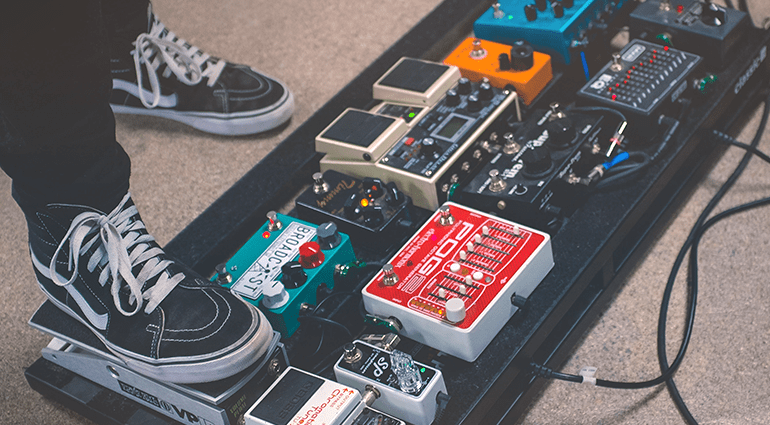
Experimenting with Modulation Effects
The beauty of modulation effects is their versatility. Don’t be afraid to experiment with different settings and combinations to discover what works best for your sound. Try using modulation effects in conjunction with other effects like delay or reverb to create complex, multi-layered tones.
Each modulation effect has its own flavor and can be used in a variety of ways, so play around with them and see how they can enhance your guitar tone. Whether you’re looking for subtle enhancements or dramatic shifts, modulation effects can add that extra touch of magic to your sound.
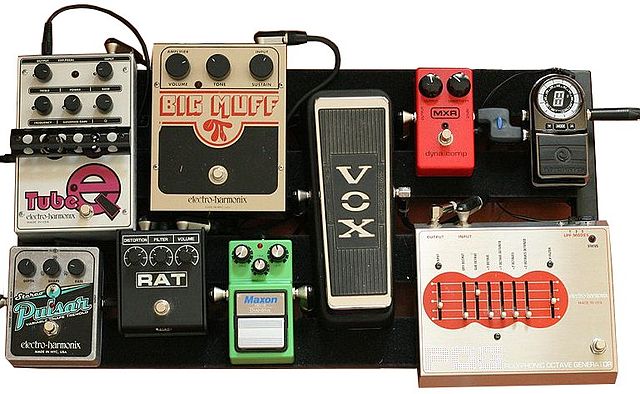
And Don’t Forget: Less is More
Modulation effects can undoubtedly elevate your guitar tone, adding depth and creativity. However, it’s essential to remember that effects are not a substitute for good playing technique. Mastering your timing, articulation, and expression is far more valuable than relying on effects to carry your sound. Adding too many effects can overwhelm your tone, drowning out the unique character of your guitar. Think of it like a meal: if you have a dish with subtle, delicious ingredients and smother it with barbecue sauce, Tabasco, and countless other condiments, the original flavors get lost. Similarly, a touch of chorus here and some tremolo there can enrich and enhance your tone, but overdoing it can obscure the essence of your sound. Balance is key—let your guitar’s voice shine through while using effects as a tasteful complement.
Conclusion: Embrace the Modulation Magic
Modulation effects are a fantastic way to add depth and character to your guitar sound. By understanding how each effect works and experimenting with different settings, you can unlock a world of sonic possibilities. In future articles I’ll tell you about the nuances and how to get more from these effect. By now, go ahead, dial in those modulation effects, and let your creativity shine!
 oscaronguitars.com
Leave a comment