
From Bedroom Practice to Small Gigs: Why I Chose the Boss Katana 50 Gen 3
For years, I was happy practicing quietly at home with a guitar, headphones, and digital emulators like Amplitube. My compact setup, including a Fender Mustang LT40, worked well for experimenting with tones without disturbing anyone. But playing live exposed its limitations—decent at home, the sound fell flat in open venues, lacking power and projection.
I needed an amp that offered excellent tone at various volumes, built-in effects to simplify my rig, and an affordable price. While testing a Cort X300 guitar at a local store, I paired it with a Boss Katana 50 MkIII. Having had positive experiences with Boss gear in the past and with all the hype surrounding the Katana, I was already curious. What started as a simple guitar purchase turned into an unexpected double acquisition—I left the store with both the Cort X300 and the Katana 50 Gen 3 in hand.
First Impressions of the Boss Katana 50
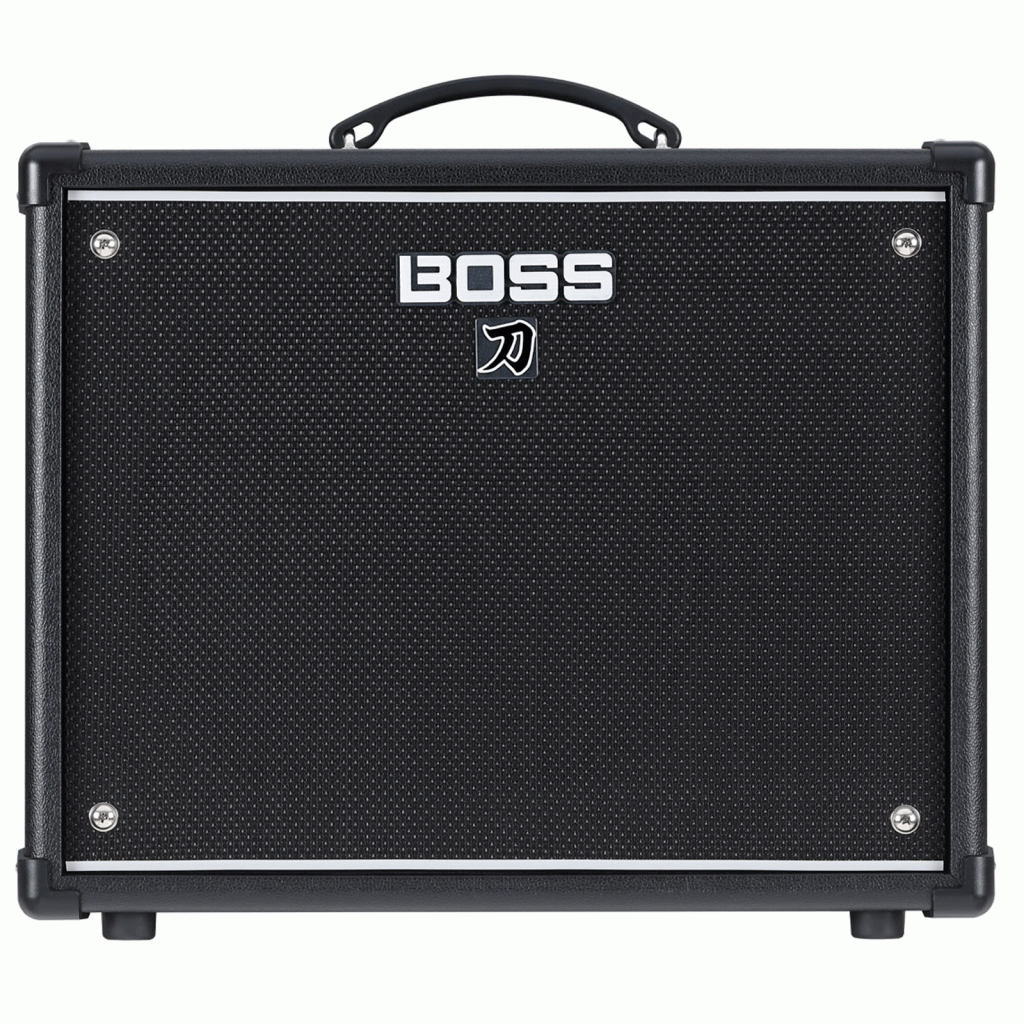
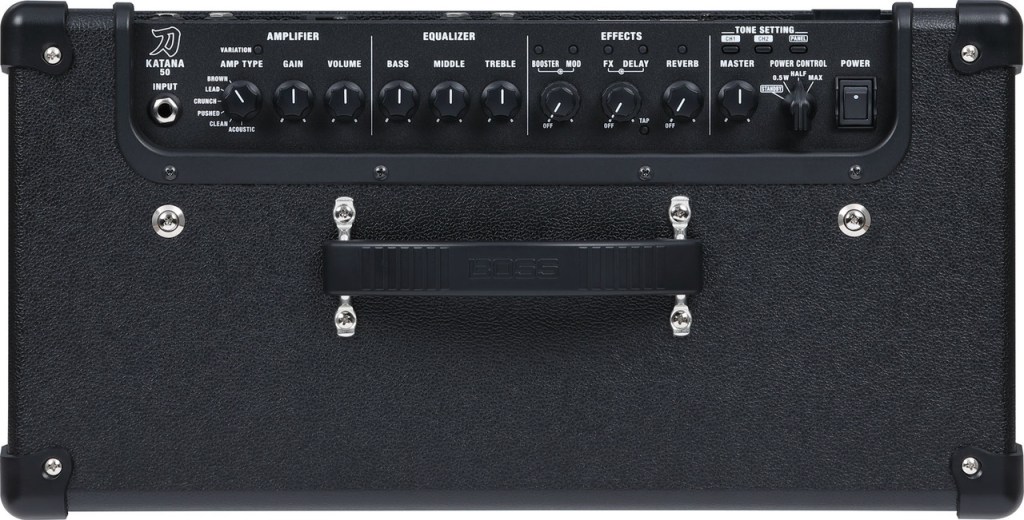
The first thing that stood out to me about the Katana 50 was its versatility. Unlike many amps that specialize in one or two styles, this amp feels equally at home in multiple genres. Whether I’m practicing clean passages, dialing in crunchy rock tones, or going full-on high-gain metal, the Katana handles it all with ease. It has six amp models—Acoustic, Clean, Pushed, Crunch, Lead, and Brown—each with two variations, giving a total of ten distinct tonal profiles to play with. This flexibility is invaluable for someone like me who plays a bit of everything, from blues to heavy metal.
Sound Quality: Refinement and Flexibility in Every Model
One of the first things that impressed me about the Boss Katana 50 was its overall sound quality. It’s evident that Boss has spent years perfecting the amp models, and the result is a lineup that’s both versatile and highly usable. Unlike some amps that bombard you with an overwhelming number of options, the Katana offers a well-thought-out selection of six primary amp models, each designed for specific tonal needs.
It starts with an Acoustic model, which is tailored for amplifying acoustic guitars. Next is the Clean channel, which delivers pristine, crystal-clear tones at low gain. And things get excellent when using the Pushed setting, as I’ve already mentioned. What makes it even more intriguing is that when you increase the gain, the channel starts to develop a sweet breakup that’s reminiscent of classic tube amps.
I’m particularly fond of the Pushed setting because of its remarkable sensitivity to playing dynamics. Whether you’re picking softly or digging in hard, or using low, mid, or high-output pickups, it responds beautifully. This setting gives you excellent control over how much gain you want, allowing for everything from subtle breakup to heavier saturation—all while retaining a dynamic, expressive tone. It’s perfect for achieving a sound that feels truly alive and reactive to your playing style.
Crunch, Lead, and the Iconic Brown Sound
Moving beyond the clean tones, the Katana offers Crunch and Lead modes, which are ideal for rock, blues, and more aggressive playing styles. The Crunch mode provides a classic overdriven tone with enough warmth and grit to cover a wide range of vintage and modern sounds. Meanwhile, the Lead mode kicks things up a notch, offering more gain and sustain—perfect for solos and high-gain rock riffs.
Then there’s the famous Brown Sound, a mode inspired by the iconic tones of hard rock and heavy metal. This setting is ideal for players who crave heavily saturated, distorted tones that cut through a mix with ease. Whether you’re playing thick rhythm parts or soaring leads, the Brown mode delivers that rich, harmonic-laden distortion without sounding overly compressed.
Each of these primary modes comes with a variation option, effectively doubling the tonal palette. With ten core tones and two additional acoustic variations, the Katana gives you a total of 12 distinct voices to explore. This balance of simplicity and depth is one of the amp’s greatest strengths—it offers enough tonal variety to keep things interesting without overwhelming you with endless, slightly different amp models.

Dialing in Santana’s Signature Tone with the Katana 50 Gen 3
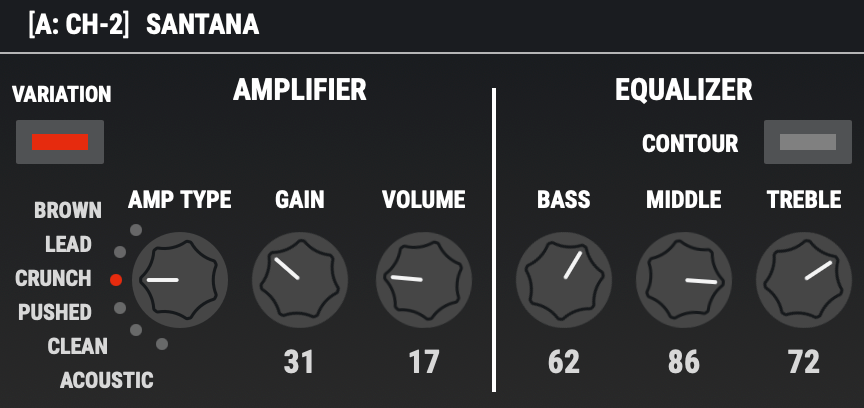
If you’ve been following my blog, you probably know I’m a huge Santana fan. Recreating his iconic tone—crafted through a meticulously dialed-in Mesa/Boogie amp—is a rewarding challenge for any rig. To get as close as possible to his signature sound, I rely on the ‘Crunch’ amp setting with the gain set around 30%. Below, you’ll find a screenshot of my amp and EQ settings:
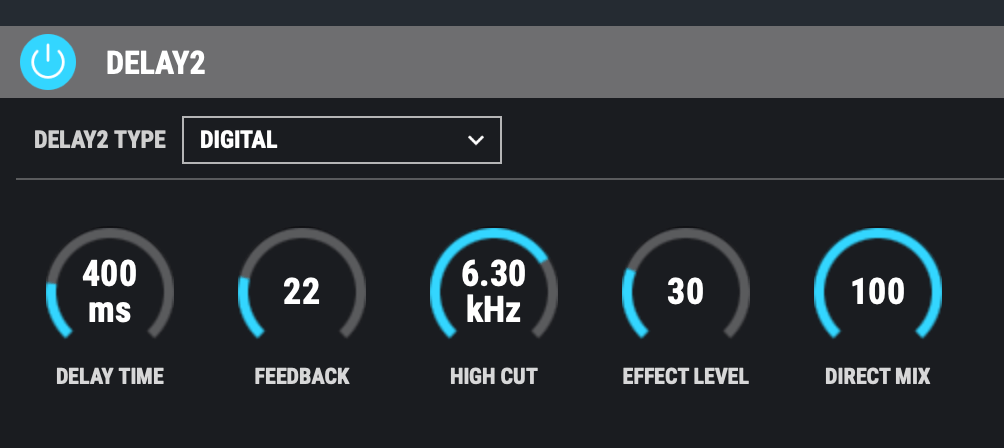
Also I use a tiny bit of delay and some compression to achieve that smooth, sustaining Santana sound:

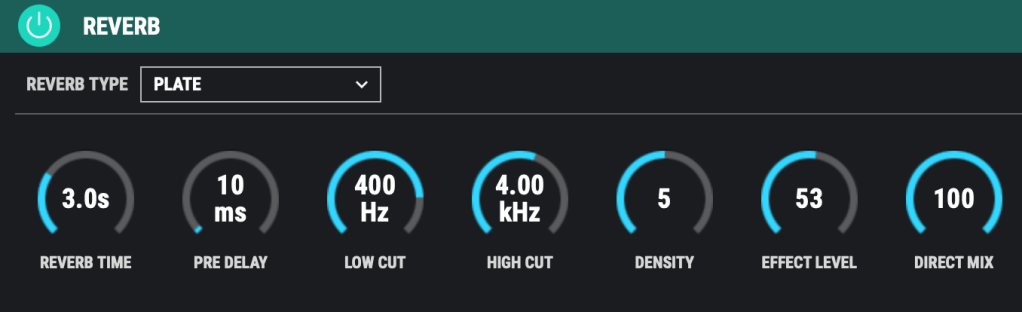
And the final touch is Plate Reverb:
For this particular setting, I skip additional effects like phasers, chorus, or flangers. And just like that—voilà! Capturing Santana’s legendary tone becomes effortless with the Katana 50.
Dynamic Response: Where Digital Meets Analog Feel
What truly sets the Katana apart from many other amps in its class is its dynamic response. Unlike fully digital processors that can sometimes feel sterile or unresponsive, the Katana reacts beautifully to changes in your playing dynamics. When you play softly, the amp produces clean, delicate tones. Dig in harder, and you’re rewarded with natural compression and increased harmonic richness—just like you’d expect from a high-quality tube amp.
This dynamic interaction makes the Katana feel more “alive” and analog-like compared to many digital competitors. It invites you to play more expressively, knowing that the amp will respond accordingly. Whether you’re fingerpicking soft arpeggios or strumming aggressively, the Katana’s ability to translate those nuances into tone elevates the playing experience significantly.
Power Control for Every Situation
One of the standout features of the Boss Katana 50 is its versatile power scaling function, which allows you to adjust the amp’s output power to suit different playing environments. It offers three distinct settings—100W, 50W, and 0.5W—giving you complete control over volume without sacrificing tone quality.
- 100W Mode: This setting unleashes the full power of the Katana, making it perfect for live performances, outdoor venues, or any situation where you need to cut through a mix with authority. It delivers plenty of headroom, ensuring your tone stays clean and articulate, even at higher volumes.
- 50W Mode: Ideal for smaller gigs, band rehearsals, or medium-sized venues, the 50W setting strikes a balance between power and volume. It provides enough punch to fill a room while keeping things manageable for close-quarters playing.
- 0.5W Mode: This is where the Katana truly shines for home practice. Unlike many amps that lose their character at low output levels, the Katana maintains its tonal richness and dynamic response even in this ultra-low power setting. You can crank the gain and push the amp into natural breakup without disturbing your neighbors—perfect for late-night sessions or quiet bedroom practice.
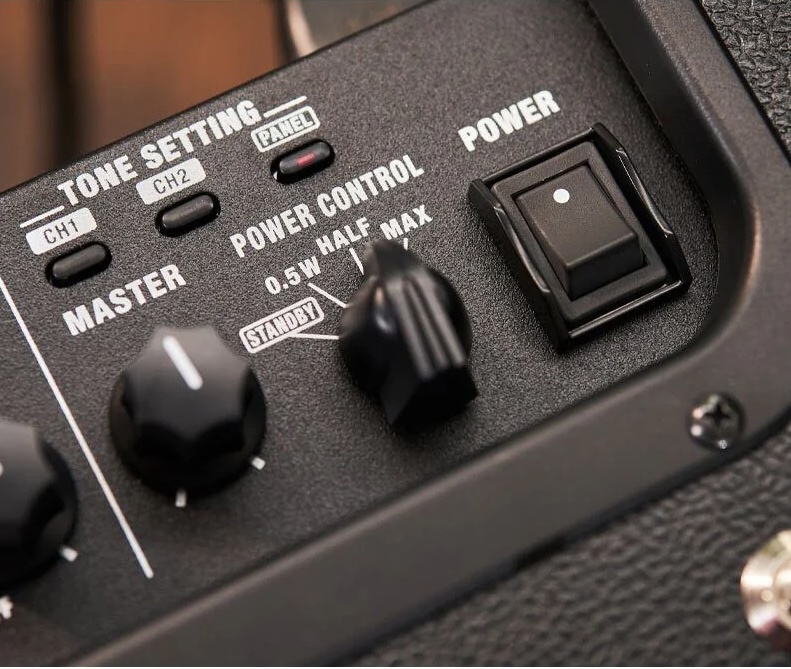
This power scaling feature is a game-changer because it means you don’t have to compromise on tone when playing at lower volumes. Many amps sound thin or lifeless when dialed down, but the Katana preserves its full-bodied sound across all power levels. Whether you’re jamming in your room or performing on stage, the Katana ensures consistent tone, making it a flexible solution for players who need one amp to do it all. This level of versatility is rarely found in amps within the Katana’s price range, giving it a distinct advantage over similarly priced competitors.
Onboard Interface and a Deep Effects Library
The Boss Katana 50 stands out for its intuitive front panel, offering easy-to-use controls for quick tone adjustments. However, if you want to unleash its full potential, the amp relies heavily on the Boss Tone Studio software or mobile app. While the basic interface is perfect for everyday use, in-depth tone shaping and advanced effects tweaking require connecting to a computer or using the app—adding flexibility but also a layer of complexity for those seeking deeper customization.
That said, one of the strengths of the Boss Katana 50 is its straightforward interface. On the front panel, you’ll find essential controls for shaping your tone, including a three-band EQ section (bass, mid, and treble), gain, volume, and master level knobs. The layout is clean, intuitive, and perfect for quick adjustments during practice or live performances. You also get a knob to select the amp model and a row of buttons dedicated to onboard effects, making it easy to add reverb, delay, modulation, and more without needing external pedals.
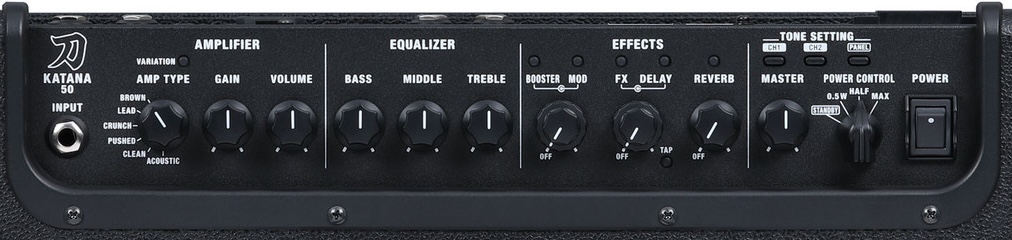
Where things get particularly interesting is in the effects department. Boss has a long history of producing some of the most iconic guitar pedals—think of the legendary DS-1 distortion or the CE-2 chorus—and they’ve brought that expertise to the Katana. The amp includes a range of high-quality effects such as delay, reverb, chorus, flanger, phaser, and even more experimental sounds. These effects can be used directly from the amp by pressing the corresponding buttons and adjusting their level with a dedicated knob. For quick jamming or rehearsals, this built-in flexibility is incredibly convenient.
However, while the onboard controls are simple and effective, they don’t offer deep customization. You can only access the full range of effects and fine-tune parameters by connecting the amp to a computer and using the Boss Tone Studio software.
Unlocking Full Potential with Boss Tone Studio
The Boss Tone Studio software is where the Katana truly shines. Once connected to a computer via USB, you unlock a whole new level of control over the amp’s features. Through the software, you can:
- Access over 60 effects: While only a few effects are accessible directly on the amp, the software allows you to load and configure a much broader range of Boss’s renowned effects. You can assign up to three effects simultaneously and fine-tune parameters like delay time, modulation depth, and reverb decay.
- Create custom patches: Boss Tone Studio lets you save and manage your custom tones. This is particularly useful if you play in multiple genres or need different tones for specific songs during live performances.
- Adjust advanced settings: Beyond effects, the software allows you to control features like the noise gate, EQ settings for different frequencies, and even global parameters such as cabinet resonance and output selection (for line out or speaker use).
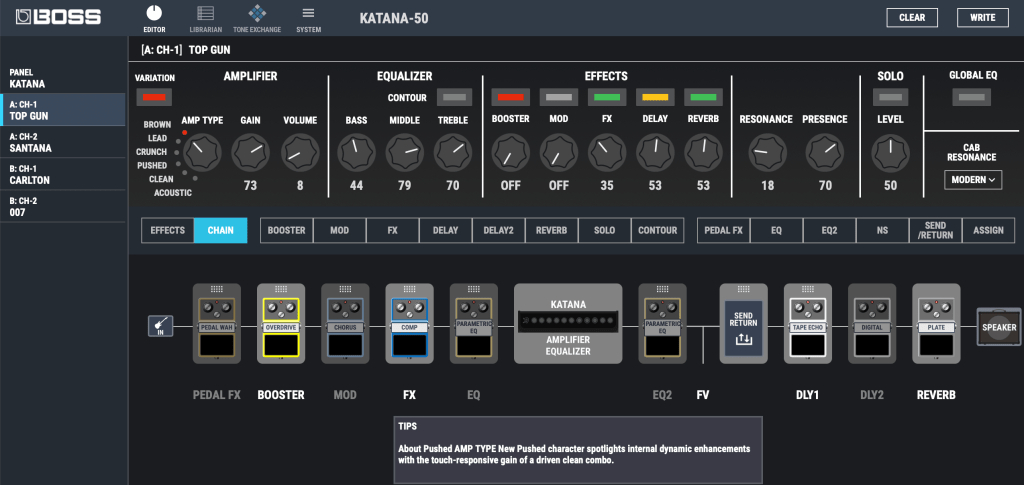
While the software is incredibly powerful, it does have a bit of a learning curve. For example, figuring out how to add and adjust a noise gate took me longer than expected, as the interface isn’t entirely intuitive for first-time users. However, once you get the hang of it, the customization options are impressive.
The combination of a simple physical interface for everyday use and the advanced digital control through the software makes the Katana suitable for both casual players and more demanding guitarists who need fine-grained tone control. Whether you’re dialing in a basic clean tone or creating complex patches with multiple layered effects, the Katana, with the help of Boss Tone Studio, offers a level of versatility that rivals much more expensive amps.
Limited Channels and Switching Issues
A key limitation of the Boss Katana 50 is its channel configuration. It offers two physical channels—Channel 1 and Channel 2—where you can save your preferred patches for easy recall. While this setup works well for home practice or casual rehearsals, it can be limiting in live situations where quick access to a broader range of tones is essential. Players who rely heavily on numerous presets, such as those performing in Top-40 cover bands, may find this setup inadequate for their needs.
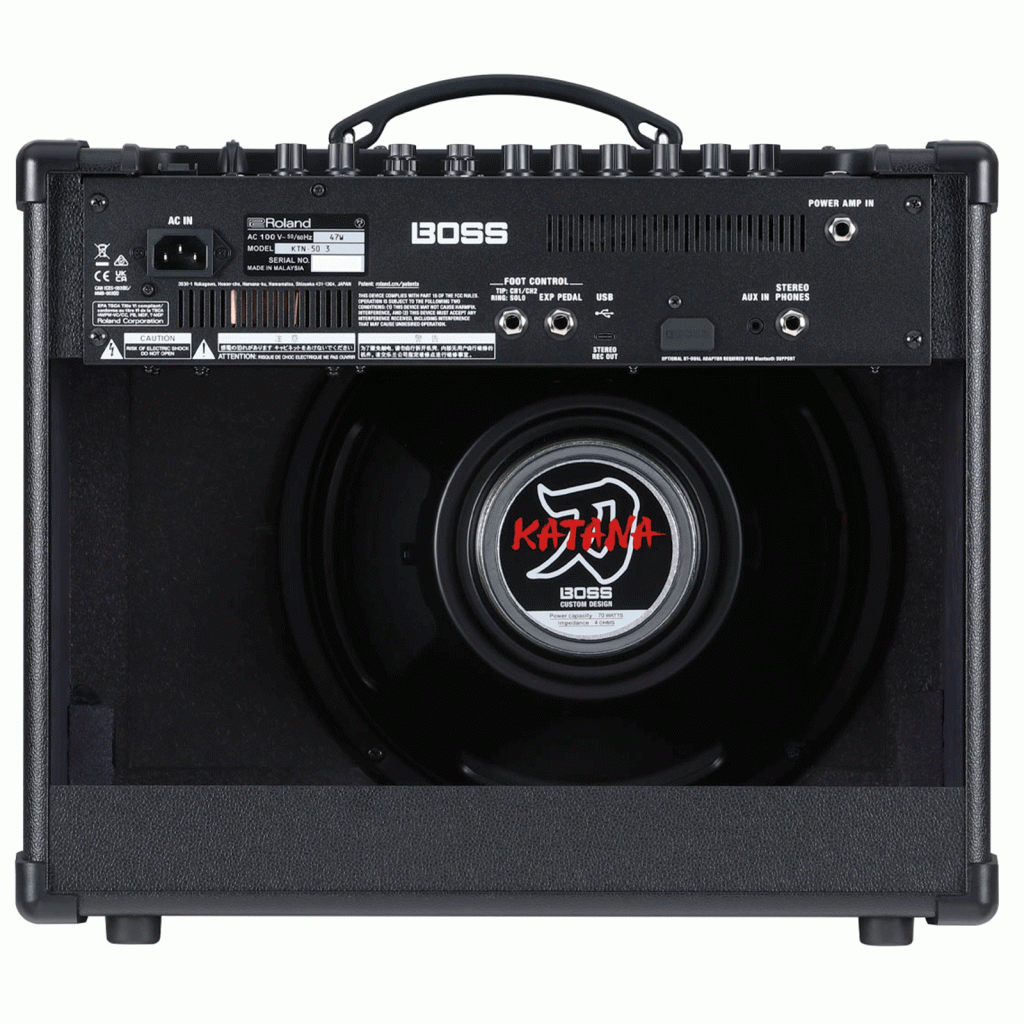
Using the Boss Tone Studio software, you can expand the number of available patches to four by adding Channel 1A, 1B, 2A, and 2B, effectively doubling the available presets. This can be a helpful feature if you want to store alternate versions of your primary tones, such as a clean tone with and without delay or a lead tone with different levels of gain. The downside is that switching between these additional patches during a live performance isn’t seamless—there’s no dedicated button to toggle between the “A” and “B” variants of each channel. This means you either need to use the software beforehand to prepare your set or purchase an additional footswitch, which adds to the overall cost.
For guitarists who require on-the-fly switching between multiple tones during a gig, this limitation can be frustrating. The more expensive Katana 50 EX and Katana Artist models offer better solutions by including more channels and easier patch switching, but at a higher price point.
That said, if you’re like me and don’t rely on a large number of patches, the two primary channels plus their alternates have been sufficient for most situations. I typically set one channel for clean tones and the other for overdriven or lead sounds, which covers a wide range of my needs. However, during live performances where quick tonal changes are essential, the lack of an intuitive patch-switching mechanism can become a hassle, especially under pressure.
For players who want to get the most out of the Katana in a live setting without constantly bending down to switch patches, investing in an external GA-FC foot controller or a MIDI switcher is highly recommended. While this adds an extra layer of flexibility, it also increases the overall cost, making it something to consider if budget is a concern.
Using the Katana as an Audio Interface
One of the most convenient features of the Boss Katana 50 is its ability to function as a USB audio interface. By simply connecting the amp to a computer via USB-C, you can play, record, and monitor your guitar without needing additional gear like external audio interfaces or DI boxes. This makes it an excellent tool for home recording, practice, and even virtual collaborations.
Before owning the Katana, I primarily used Amplitube, a popular guitar amp emulator. While Amplitube offered decent tones and flexibility, it required an audio interface to connect my guitar to the computer, adding an extra layer of complexity. With the Katana, everything is streamlined—the amp itself serves as both the tone generator and the audio interface, eliminating the need for extra hardware.
Audio Interface: Sound Quality and Ease of Use
The Boss Katana excels at home recording, delivering high-quality sound with minimal fuss. Its USB output provides a clean, latency-free signal, perfect for direct recording without noise or unwanted artifacts. Whether tracking clean tones or high-gain solos, the Katana offers consistent, professional-grade sound. Its dual-monitoring capability allows simultaneous output through the onboard speaker and computer, making recording seamless. The integrated USB interface simplifies setup—just plug in, open your DAW, and start recording. Plus, the Boss Tone Studio software offers real-time tone adjustments and effect customization. For home recordists seeking versatility and ease, the Katana is a game-changer.
Optional Bluetooth and PA Connectivity
While the Katana 50 doesn’t include Bluetooth connectivity by default, Boss offers an optional Bluetooth module for wireless control via the Boss Tone Studio app on your smartphone or tablet. This add-on lets you adjust settings remotely, which can be convenient during rehearsals or live gigs when quick tweaks are necessary without walking over to the amp. It also enables wireless playback of backing tracks, making it a great tool for solo practice or jam sessions.
That said, the amp already features a 3.5mm AUX-IN connection, allowing you to connect your phone or other devices directly for playing backing tracks. Personally, I haven’t found the need to invest in the Bluetooth module, as the AUX-IN option works perfectly for my practice needs.
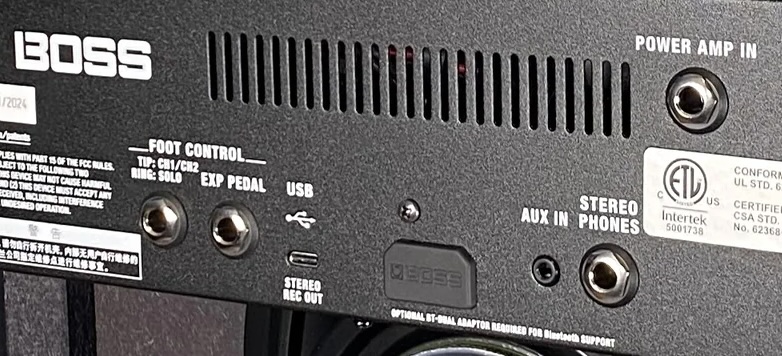
Another standout feature is the Katana’s PA connectivity. You can connect the amp to a PA system using the line-out jack, which sends a processed, speaker-emulated signal directly to the mixer. What’s great about this setup is that the amp’s built-in speaker remains active, allowing you to use it as a personal monitor while simultaneously sending your sound to the venue’s PA system. This flexibility ensures that you always have a consistent tone, whether you’re playing in a small club or a larger venue, without the need for an external mic or complex signal routing.
Downsides and Room for Improvement
As impressive as the Boss Katana 50 is, it does come with a few downsides and areas for improvement. Right out of the box, the default sound is solid but not particularly awe-inspiring—you’ll need to invest time tweaking settings, experimenting with amp models, and adjusting effects to unlock its true potential.
When I first tried it at the store, the sound was decent—nothing extraordinary—but I bought it largely because of the hype surrounding the amp. Once I got home and plugged it in, I have to admit the initial sound was underwhelming, leaning more toward “meh” than impressive. However, after installing the software and dedicating some time to fine-tuning the settings, I was able to dial in the exact tone I wanted. It wasn’t a quick or effortless process, though—it took patience and experimentation. Now, I understand why some reviewers haven’t been overly impressed; this isn’t the kind of amp you can fully appreciate with just a quick trial. You really need to invest time to unlock its full potential.
While this level of customization is a treat for tone enthusiasts, it might be a bit much for total beginners. I wouldn’t recommend the Katana as a first amp, since getting great tones requires not only a good understanding of tone shaping and effects but also navigating the process of installing drivers, setting up the software, and fine-tuning your sound. For someone just starting out, that steep learning curve can feel daunting and potentially frustrating.
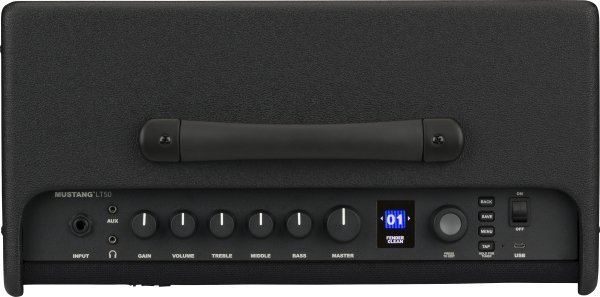
One of the biggest drawbacks is the lack of a built-in screen or advanced interface on the amp itself. Unlike amps such as the Fender Mustang LT series, which feature small screens for easier navigation and more intuitive control, the Katana relies entirely on physical knobs and buttons for basic operation. For deep customization—such as fine-tuning effects, adjusting EQ settings, or creating complex patches—you’ll need to connect the amp to a computer and use the Boss Tone Studio software or Mobile App. While the software offers powerful features, being dependent on it for advanced controls can be inconvenient, especially if you want to make quick changes on the fly during a rehearsal or performance.
Additionally, while the simple physical interface works well for everyday use, it limits on-the-spot versatility compared to amps with built-in displays. This is something that players accustomed to more modern amps with onboard screens might miss.
While the Katana excels in sound quality and versatility, it could benefit from a more intuitive interface for fine-tuning effects and a better out-of-the-box tone. For players who don’t mind investing time in learning the software and tweaking their sound, the Katana offers excellent value. However, for those who prefer plug-and-play convenience, other amps in the same price range might be more appealing.
Portability and Size
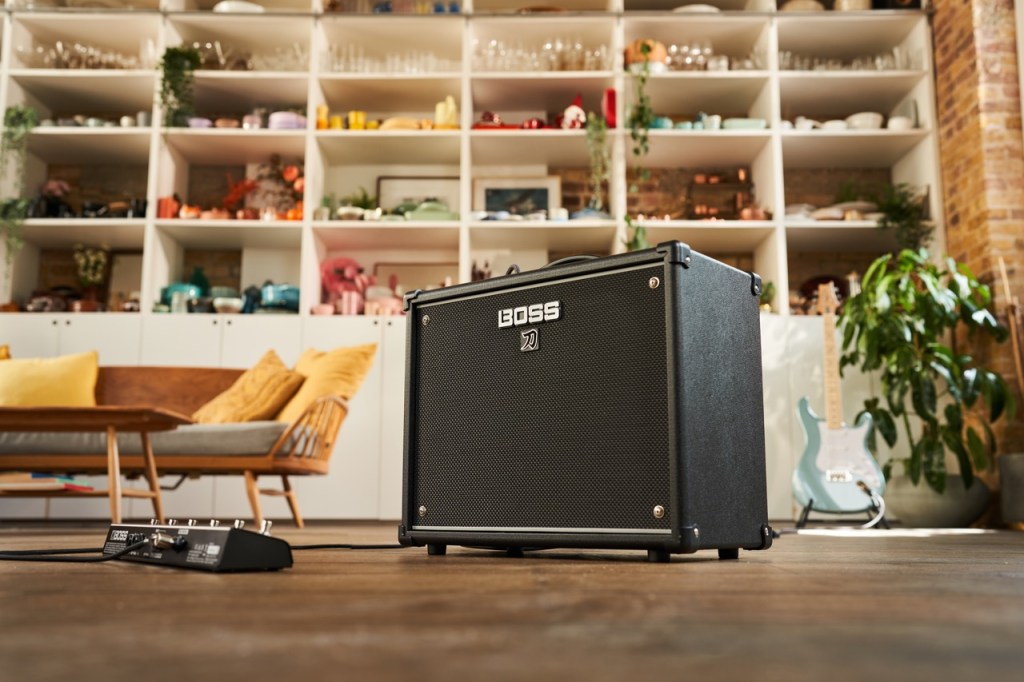
When it comes to portability, the Boss Katana 50 strikes a balance between power and convenience, but it’s not the most compact amp out there. In terms of size, it’s medium-sized, measuring approximately 18.5 x 15.7 x 9.8 inches and weighing around 25 pounds (11.6 kg). While it’s relatively light for a 50-watt amp with a 12-inch speaker, it’s still bulky enough to make frequent transport a bit of a chore.
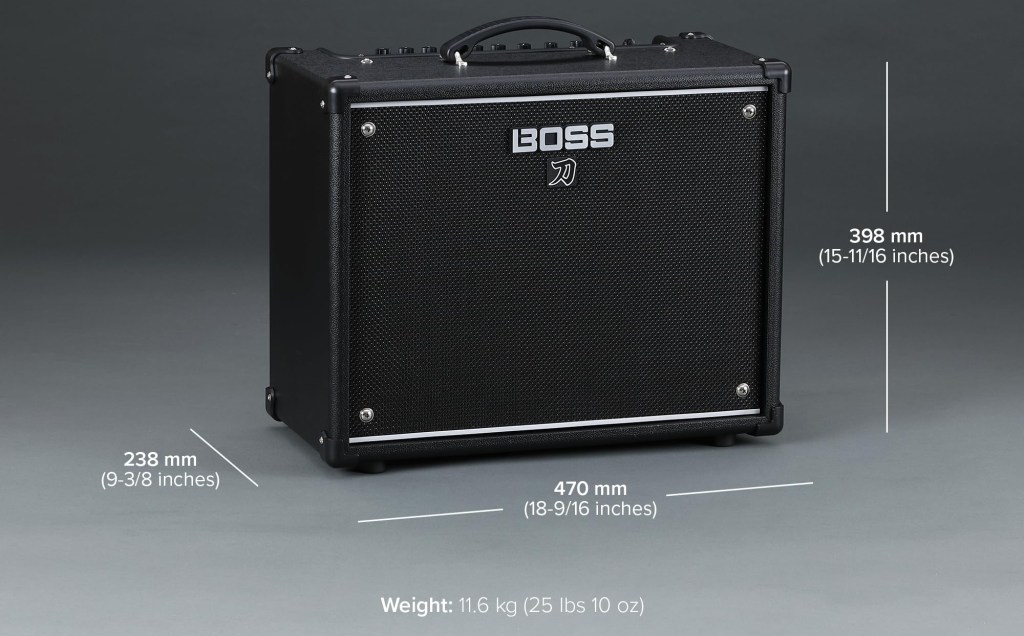
For home use, the Katana 50 is perfectly fine if you have a dedicated space for it. However, if you’re looking for something that can easily fit on a desk or be tucked away when not in use, it may feel too large. In this case, a smaller amp like the Fender Mustang LT or the Boss Katana Mini might be a better fit.
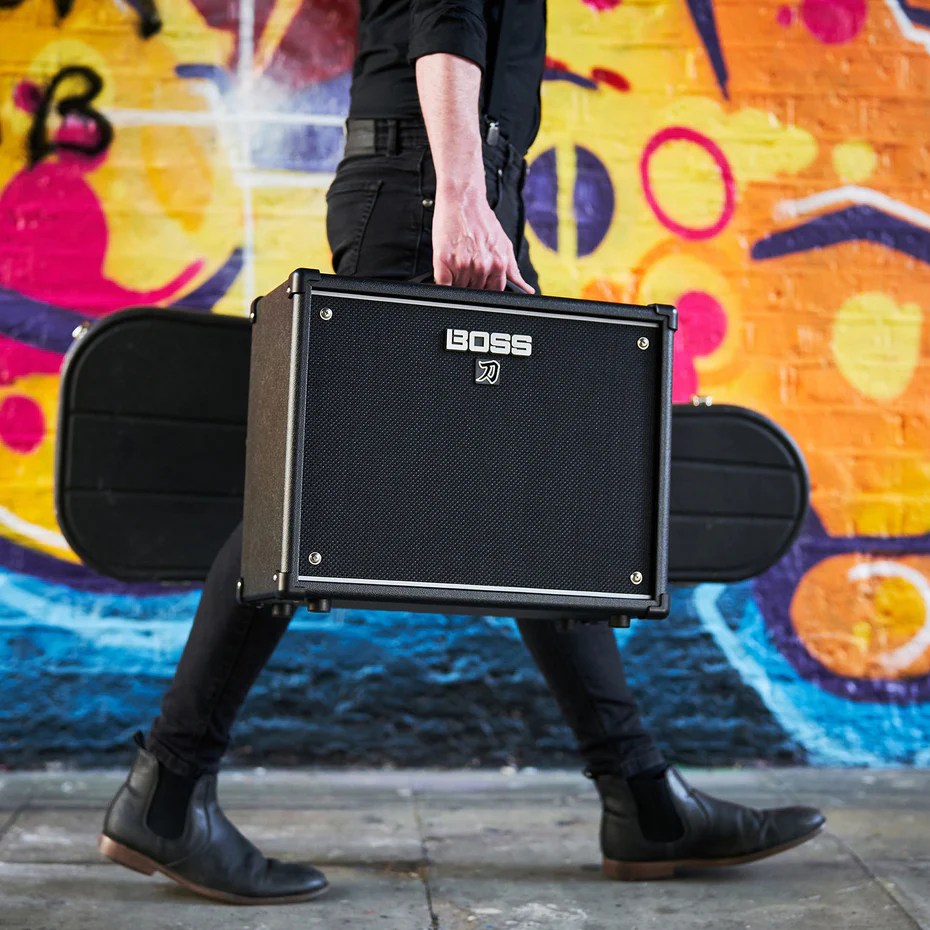
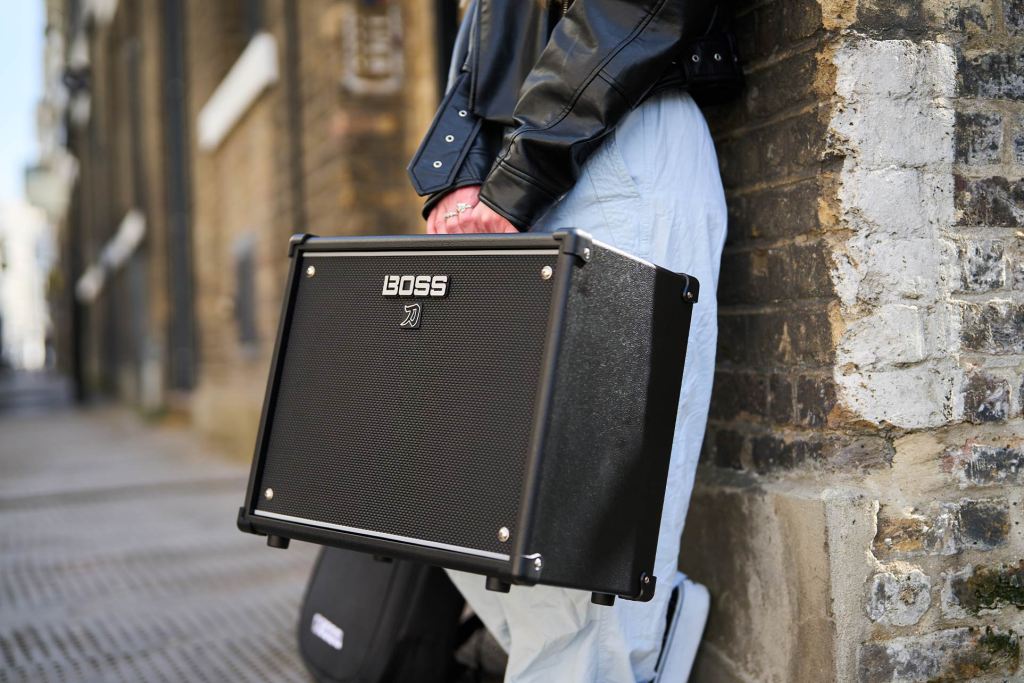
On the flip side, the Katana 50’s size is a clear advantage for live gigs and rehearsals. Its larger cabinet and 12-inch speaker deliver a fuller, more robust sound with improved low-end response compared to smaller amps. It’s powerful enough to handle small to medium-sized venues without requiring additional amplification, yet light and portable enough to carry around with ease. The built-in handle adds to its convenience, though if you’re constantly on the move, you might still prefer something more compact. That said, for an amp offering this level of power, tonal presence, and versatility, the Katana 50 strikes an excellent balance between portability and performance.
Ultimately, while the Katana 50 isn’t the most portable amp on the market, it offers a good compromise between size, power, and versatility. For players who need an amp that can handle both bedroom practice and live performance, it’s a practical choice—just don’t expect it to be as portable as a desktop amp or micro combo.
Value and Price of the Katana 50
Offering features that rival pricier amps, the Boss Katana 50 shines as an exceptional value, typically priced between $230 and $270 USD. The Katana 50 delivers truly great value, making it a go-to option for reliable, high-quality sound without breaking the bank.
Boss Katana 50 MkIII vs. Fender Mustang LT50 vs. Line 6 Spider V 60 MkII
If you’re in the market for a versatile amp under $300, the Boss Katana 50 MkIII, Fender Mustang LT50, and Line 6 Spider V 60 MkII are top contenders. Here’s a brief comparison of their key differences and similarities:
| Feature | Boss Katana 50 MkIII | Fender Mustang LT50 | Line 6 Spider V 60 MkII |
|---|---|---|---|
| Power Output | 100W / 50W / 0.5W | 50W | 60W |
| Speaker Size | 12″ | 12″ | 10″ |
| Amp Models | 6 amp types (12 variations) | 30 amp presets | 78 amp models |
| Effects | 60+ via Boss Tone Studio | 20 built-in | 100+ built-in |
| Power Scaling | Yes (100W, 50W, 0.5W) | No | No |
| Software Integration | Boss Tone Studio | Fender Tone App | Line 6 Spider Remote |
| Bluetooth | Optional (with add-on module) | No | Built-in |
| USB Recording | Yes | Yes | Yes |
| Price Range | $250-$270 USD | $230-$250 USD | $250-$280 USD |

Quick Comparison
- Boss Katana 50 MkIII:
Offers power scaling (100W, 50W, 0.5W), making it perfect for both quiet practice and live gigs. Its dynamic tone response and access to 60+ effects via Boss Tone Studio give it a professional edge. While it lacks a built-in screen, the tone quality and versatility more than make up for it. - Fender Mustang LT50:
A great option for players who want a plug-and-play experience. With 30 amp models, 20 effects, and a built-in screen, it’s intuitive and beginner-friendly. However, it lacks power scaling and advanced dynamics compared to the Katana. - Line 6 Spider V 60 MkII:
Ideal for players who love experimenting, offering 78 amp models and 100+ effects. It includes built-in Bluetooth and wireless compatibility for added convenience. However, it lacks power scaling, and the smaller 10″ speaker may not deliver as full a sound as the Katana or Mustang.
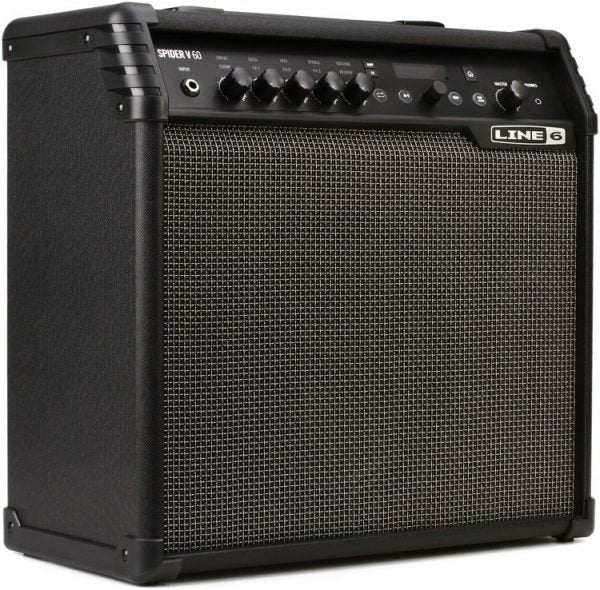
For flexibility and consistent tone at all volume levels, the Boss Katana 50 MkIII stands out, especially if you need an amp that works well for both home practice and live performances. The Fender Mustang LT50 is best for ease of use and quick tone switching, while the Line 6 Spider V 60 MkII offers the most variety in tones and effects but sacrifices dynamic response and power control.
Pros and Cons of the Boss Katana 50 Gen 3
Pros:
- Versatile amp models: Six primary amp models with two variations each, covering a wide range of styles from acoustic to high-gain metal.
- Power control feature: Switchable between 100W, 50W, and 0.5W, offering excellent tone at any volume level, perfect for home practice and live gigs.
- High-quality onboard effects: Includes over 60 effects, leveraging Boss’s expertise in pedals, with options for delay, modulation, reverb, and more.
- Dynamic response: Offers a natural, analog-like feel, responding well to playing dynamics and volume changes.
- USB audio interface: Functions as a reliable, noise-free audio interface for direct recording and monitoring without additional gear.
- Expandable features: Optional Bluetooth connectivity and PA system compatibility add extra flexibility for live performance and remote control.
- Affordable price: Outstanding value for its feature set, rivaling more expensive amps with similar capabilities.
Cons:
- No built-in screen: Lacks an onboard display, making tone editing less intuitive compared to amps like the Fender Mustang LT.
- Limited physical channels: Only two physical channels, with additional patches accessible via software but difficult to switch quickly during live gigs.
- Software dependency: Full access to advanced effects and tone customization requires the Boss Tone Studio software, which has a learning curve.
- Portability: While relatively light for its power, its size makes it less portable than smaller desktop amps or micro combos.
- Out-of-the-box sound: Default tones require tweaking to achieve optimal sound quality, which can be time-consuming for beginners.
Conclusion: A Reliable, Versatile Amp for All Occasions
The Boss Katana 50 proved to be the perfect upgrade from my home-practice setup to a more versatile amp capable of handling live gigs and recording. Its combination of great tone, dynamic response, and built-in effects makes it a well-rounded amp that adapts to various playing environments—whether it’s quiet bedroom sessions, rehearsals, or performances in larger venues.
While it has some limitations, like the lack of a built-in screen and dependency on software for deep customization, these are easy to overlook once you experience its rich sound and flexibility. The power control feature and USB audio interface add even more value, making it a fantastic tool for both practice and production.
Overall, the Katana 50 strikes an impressive balance of price, features, and performance, making it a solid choice. However, its advanced tone-shaping capabilities and reliance on software for deep customization may appeal more to experienced players who enjoy tweaking their sound.
Whether you’re just starting to play live or need an all-in-one amp that covers a range of styles without breaking the bank, the Katana is a very reliable solution.
Would I recommend it? Well, that depends on what you’re looking for. Despite some of the quirks and minor inconveniences, the Katana’s sound quality and versatility make it worth considering. It might take some work to dial in your perfect tone, but once you do, it delivers fantastic results. I understand why it’s become so popular and why some even call it a modern classic.
 oscaronguitars.com
Leave a comment