
From Quiet Guitarist to Metal Icon
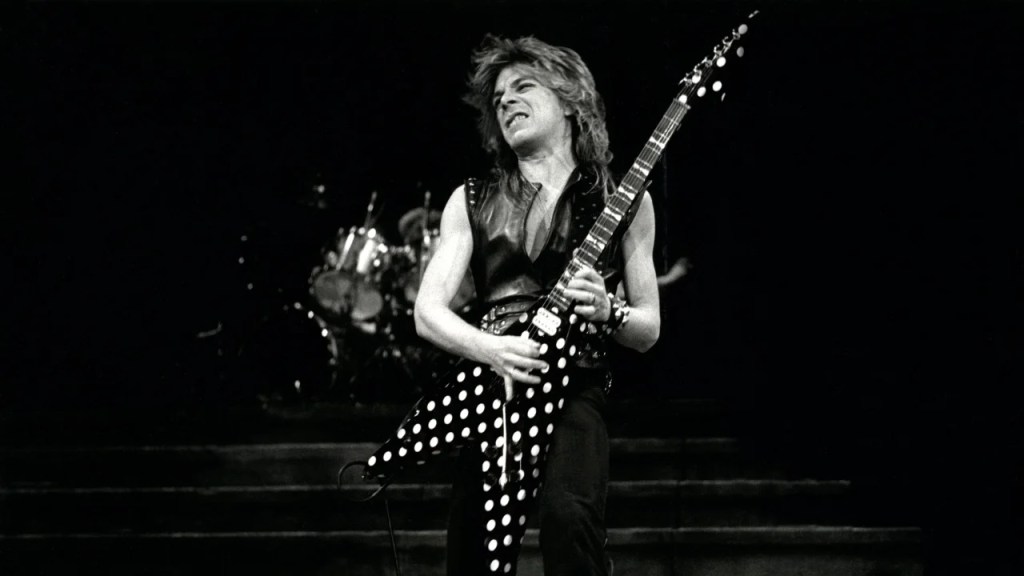
Few guitarists have achieved legendary status in such a brief period as Randy Rhoads. Born on December 6, 1956, in Santa Monica, California, Rhoads revolutionized the heavy metal genre with his groundbreaking style, blending classical music with raw metal energy. Though his career was tragically cut short at the age of 25, his influence continues to shape modern guitar playing, inspiring countless musicians to this day.
Early Life and Musical Beginnings
Randy Rhoads was born into a musically inclined family. His mother, Delores Rhoads, was a music teacher and founder of the Musonia School of Music in North Hollywood. Growing up surrounded by instruments and lessons, Randy was introduced to music at an early age. His classical training began when he was just a child, focusing primarily on guitar. By the time he was 14, he was already teaching at Musonia, showcasing not only his technical prowess but also his deep understanding of musical theory.
From the start, Rhoads exhibited a passion for blending different styles. His early exposure to classical music profoundly influenced his approach to the guitar, setting him apart from other young players of his era who leaned heavily on blues-based rock.
Formation of Quiet Riot
In 1975, Rhoads co-founded Quiet Riot with vocalist Kevin DuBrow. The band quickly gained a strong local following in Los Angeles. Their stage performances were known for their high energy, and Randy’s virtuosic playing became a focal point of their shows. Although Quiet Riot’s early albums (Quiet Riot and Quiet Riot II) were only released in Japan, they served as a crucial platform for Rhoads to develop his signature style—a fusion of flamboyant showmanship and technically advanced guitar work.
During his time with Quiet Riot, Rhoads began experimenting with more complex compositions, drawing heavily from his classical training. This period laid the groundwork for the neoclassical metal style he would later pioneer.
Joining Ozzy Osbourne: A Defining Moment
Randy’s big break came in 1979 when he auditioned for Ozzy Osbourne, who was seeking to form a new band after his departure from Black Sabbath. According to Ozzy, Randy didn’t even play a full song during the audition—just a few warm-up scales—but it was enough to leave a lasting impression.
With Randy on board, Ozzy Osbourne’s solo career skyrocketed. Together, they recorded two groundbreaking albums: Blizzard of Ozz (1980) and Diary of a Madman (1981). These records were more than just successful releases; they were genre-defining works that elevated heavy metal to new artistic heights.

The Rhoads Sound: A Fusion of Classical and Metal
What made Randy Rhoads truly unique was his ability to blend classical music techniques with heavy metal. His solos were not just fast and technically impressive—they were melodic, structured, and emotionally compelling. Tracks like “Crazy Train,” “Mr. Crowley,” and “Diary of a Madman” showcased his ability to craft memorable riffs and intricate solos that elevated the entire song.
Rhoads’ use of harmonic minor scales, diminished arpeggios, and complex chord progressions demonstrated a deep understanding of classical music theory. He often employed techniques such as tapping, sweep picking, and fast alternate picking, but unlike many of his contemporaries, he used these techniques with precision and purpose, ensuring that every note served the composition.
Signature Gear and Tone
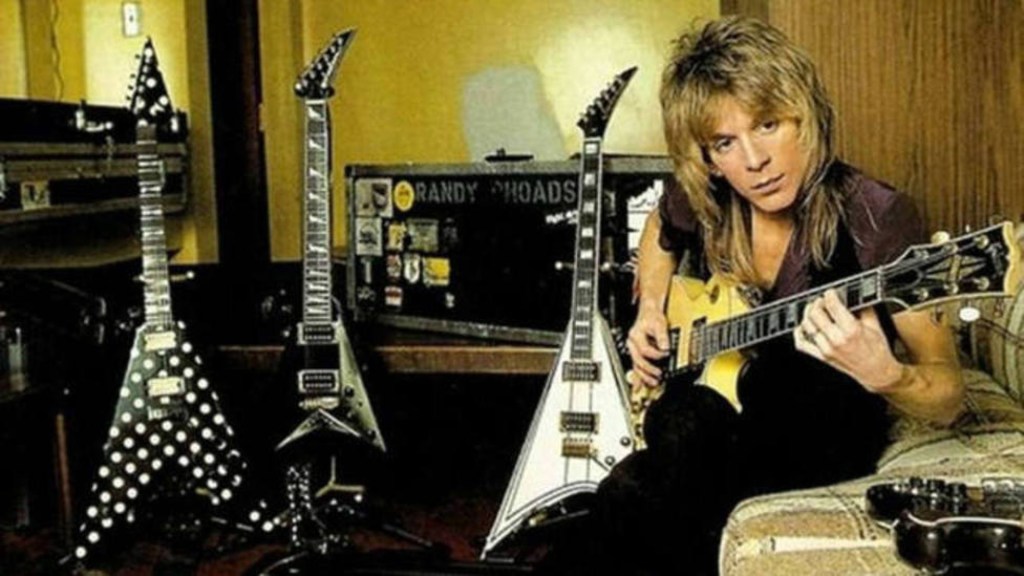
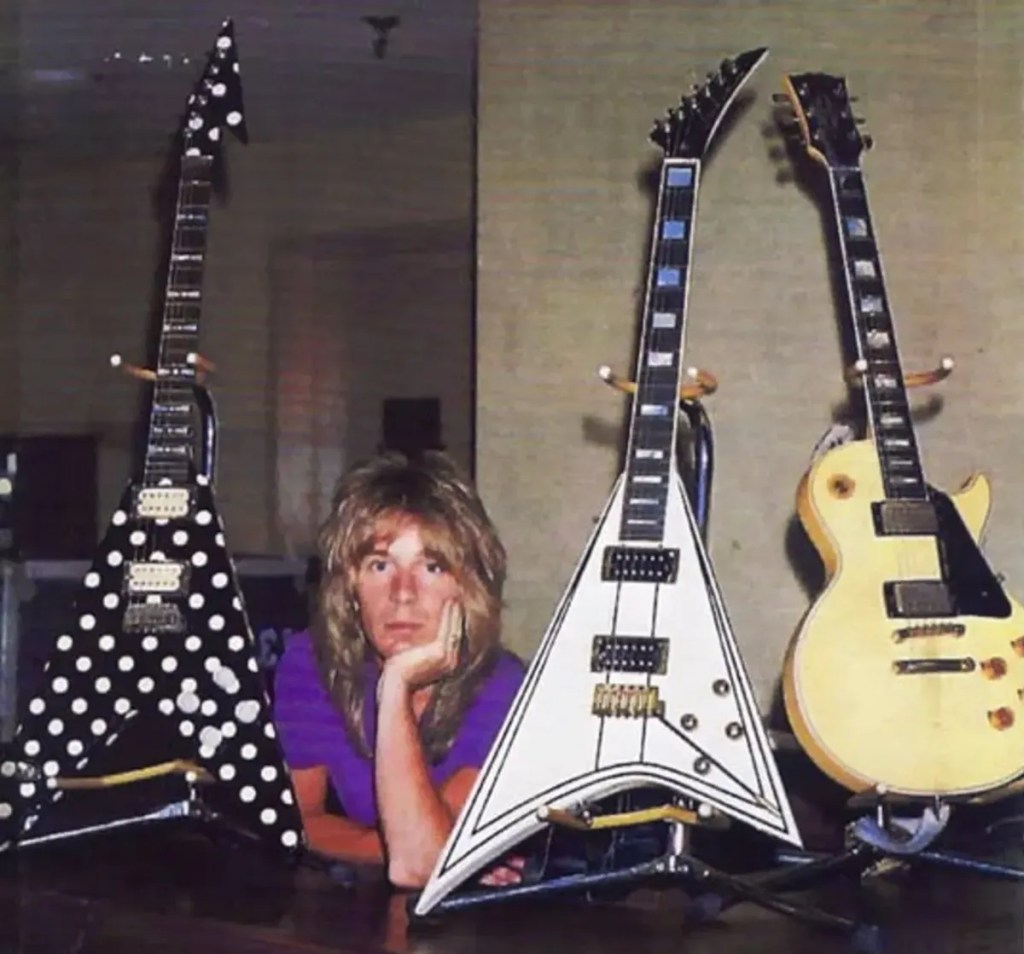
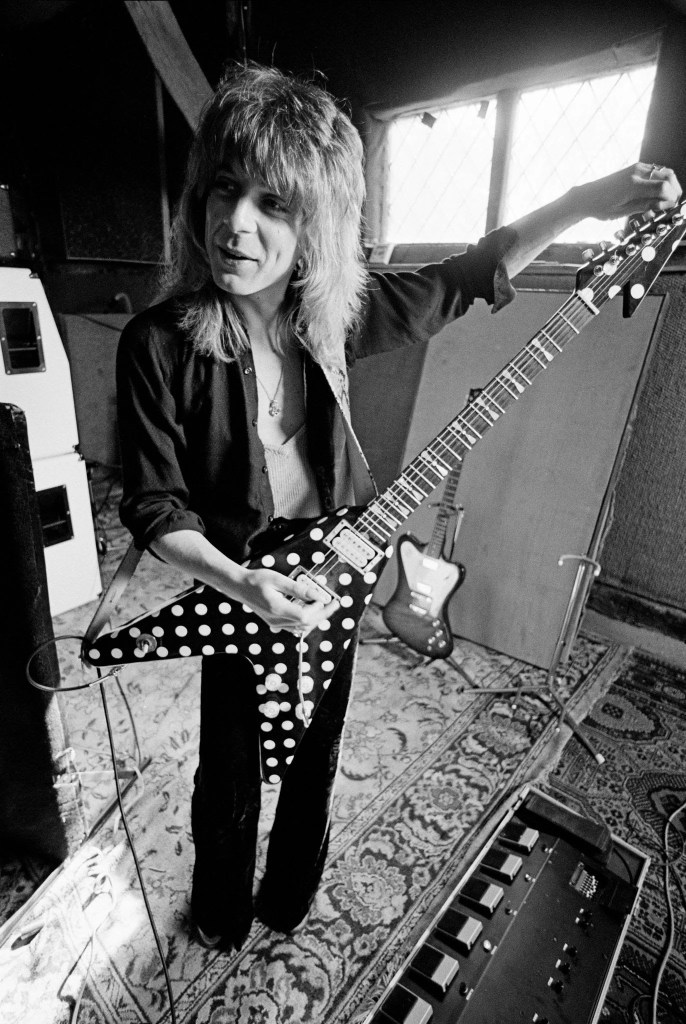
Randy Rhoads’ signature sound was a remarkable fusion of his advanced technique and a meticulously crafted gear setup. His choice of instruments played a central role in shaping his tone. Chief among them was his iconic white 1974 Gibson Les Paul Custom, known for its warm, thick tone and long sustain, which provided the foundation for many of his most memorable riffs and solos. Equally distinctive was his custom-built polka-dotted Flying V, created by luthier Karl Sandoval. This guitar featured a maple neck, a tremolo bridge, and a flashy polka-dot finish that matched Randy’s flair for showmanship while delivering a sharp, bright tone perfect for metal.
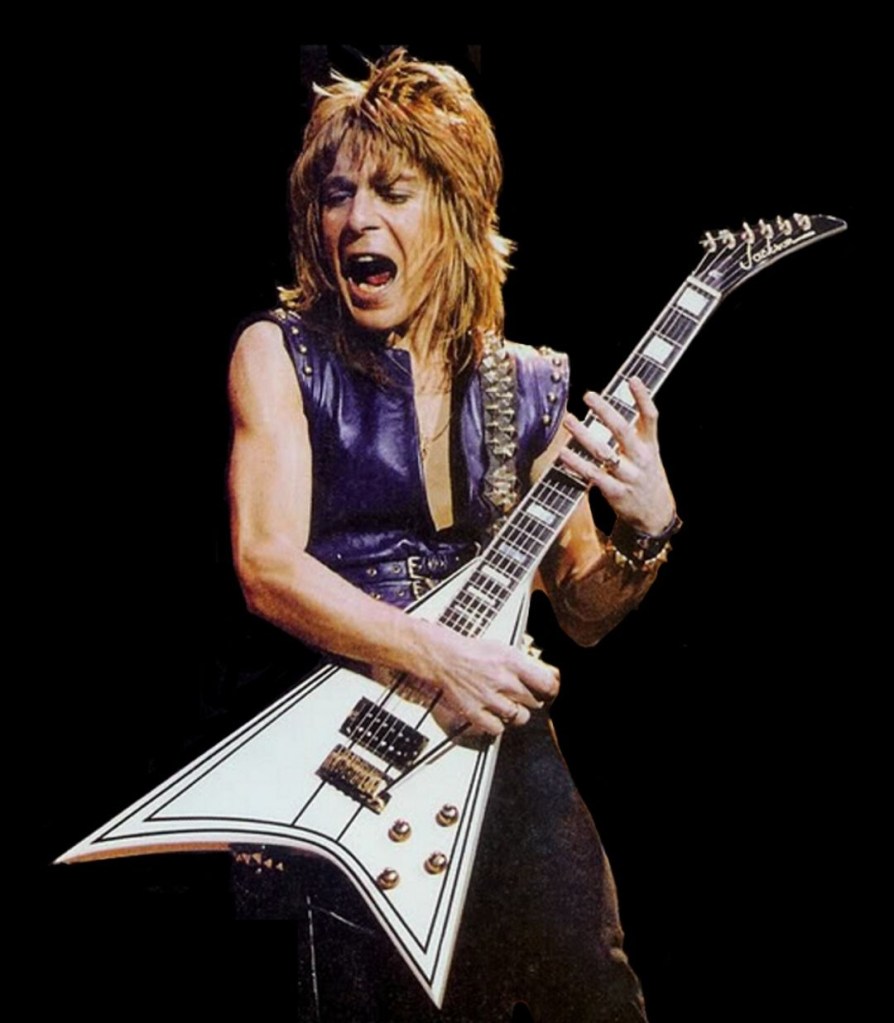
However, one of the most significant milestones in Randy’s gear evolution came with the development of the Jackson Randy Rhoads guitar—an instrument that would become legendary in its own right. In 1980, Rhoads collaborated with Grover Jackson, founder of Charvel/Jackson guitars, to create a custom V-shaped guitar. The result was the now-famous “Concorde” prototype, a radical take on the Flying V design. It featured sharper, asymmetrical body wings, with the upper wing shorter than the lower for better balance and a more aggressive look. This guitar was not only a visual icon but also a technical powerhouse, built with Randy’s specific playing needs in mind.

The Jackson Randy Rhoads guitar was equipped with a maple neck-through-body design, ebony fingerboard, and jumbo frets, allowing for unparalleled sustain and playability. It featured dual humbuckers—typically a Seymour Duncan Distortion in the bridge and a vintage-style pickup in the neck position—providing a wide tonal range that could go from searing high-gain leads to warm, expressive cleans. The guitar’s hardware included a fixed bridge on some models and a tremolo system on others, giving Randy the flexibility to perform his signature dive-bombs and pitch-shifting effects.
For amplification, Rhoads consistently used Marshall Super Lead 100-watt heads paired with 4×12 cabinets loaded with Celestion speakers. These amps were known for their high output and dynamic response, which Randy expertly controlled to create a tone that was both raw and articulate. His typical settings involved cranking the gain and mids while keeping the bass tight, resulting in a sound that could punch through any mix with authority.
In terms of effects, Rhoads kept his setup relatively straightforward but highly effective. His core pedals included a MXR Distortion+ for additional gain, an MXR 10-Band EQ to fine-tune his tone, a Roland RE-201 Space Echo for delay and reverb, and a MXR Stereo Chorus, which added depth and shimmer to his clean tones. Occasionally, he used a flanger for specific tracks, such as “Flying High Again.”
Randy’s approach to tone went beyond merely using great gear—he had a deep understanding of how every component of his rig interacted. He spent countless hours tweaking his amps and experimenting with pickup heights, string gauges, and even pick materials to achieve a tone that was both precise and powerful. His tone was not just about high-gain shredding; it was melodic, nuanced, and always served the music.
The Jackson Randy Rhoads guitar, which became a production model after his passing, remains one of the most sought-after instruments in the world of rock and metal. It set a new standard for metal guitars, inspiring countless players with its unique design and exceptional playability. Today, the Jackson Rhoads line continues to honor Randy’s legacy, with various models replicating the original specs of his custom guitar.
Randy’s relentless pursuit of perfection in both playing and tone made him a standout guitarist in a crowded scene. His innovative use of classical scales, combined with his pioneering neoclassical metal sound, left an indelible mark on the world of guitar. Whether wielding his trusted Les Paul, his custom Sandoval Flying V, or the now-legendary Jackson Rhoads, he created a sound that was uniquely his own—sharp, melodic, and emotionally compelling. His gear wasn’t just a collection of tools; it was an extension of his musical vision, enabling him to craft some of the most enduring and influential music in metal history.
A Relentless Pursuit of Excellence
Despite his growing fame, Randy remained humble and dedicated to his craft. He continued to take classical guitar lessons even while touring with Ozzy, always seeking to improve his playing. Friends and bandmates often described him as a perfectionist who was never satisfied with merely being good—he strived to be exceptional.
Rhoads was also known for his kindness and professionalism. Unlike many rock stars of his era, he avoided the excesses of the rock-and-roll lifestyle, focusing instead on music and personal growth. He even considered leaving the rock scene to pursue a degree in classical guitar, further highlighting his dedication to musical excellence.
Tragic End and Lasting Legacy
On March 19, 1982, tragedy struck when Randy Rhoads died in a plane crash while on tour with Ozzy Osbourne. He was only 25 years old. The loss of such a talented musician at such a young age sent shockwaves through the music world.
Despite his short career, Randy Rhoads left an indelible mark on heavy metal. His innovative style paved the way for the neoclassical metal genre and inspired countless guitarists, including legends like Yngwie Malmsteen, Steve Vai, and Zakk Wylde. His work with Ozzy Osbourne remains a cornerstone of heavy metal, and songs like “Crazy Train” and “Mr. Crowley” continue to be staples in the repertoire of aspiring guitarists.
In recognition of his contributions to music, Rhoads was posthumously inducted into the Rock and Roll Hall of Fame in 2021. His legacy lives on not only through his recordings but also through the countless musicians he inspired to push the boundaries of guitar playing.
Conclusion: The Eternal Flame of Randy Rhoads
Randy Rhoads was more than just a guitar virtuoso; he was a visionary who redefined what it meant to be a heavy metal guitarist. His blend of classical technique, melodic sensibility, and metal intensity created a sound that was both technically brilliant and emotionally powerful. Though his life was tragically short, his influence on the world of music is timeless.
Randy’s story is one of passion, dedication, and relentless pursuit of excellence. Whether you’re a seasoned guitarist or just picking up the instrument for the first time, there’s something to learn from his approach to music. His legacy reminds us that greatness isn’t just about talent—it’s about heart, discipline, and an unyielding desire to create something extraordinary.
Bonus Track: 10 Randy Rhoads Facts
- Classical Training: Rhoads combined his self-taught rock skills with formal classical guitar training.
- Innovative Composer: He pushed the boundaries of rock composition, integrating classical elements in ways seldom seen before in heavy metal.
- Dedicated Teacher: Even after achieving fame, Rhoads continued to teach guitar during his tours.
- Musical Precision: Known for his meticulous attention to detail and insistence on perfecting his parts in both live and studio settings.
- Iconic Instruments: His distinctive white Gibson Les Paul Custom became as iconic as the man himself.
- Influential Style: Rhoads’ playing style is studied in music schools around the world for its technique and creativity.
- Posthumous Honors: Inducted into the Rock and Roll Hall of Fame posthumously.
- Legacy in Recording: His guitar work on Osbourne’s first two solo albums set new standards for the genre.
- Continued Recognition: Continues to be revered in guitar publications and music history discussions.
- Tributes and Memorials: Numerous tribute albums and concerts have been dedicated to his memory, demonstrating his lasting impact on music.


 oscaronguitars.com
Leave a comment