
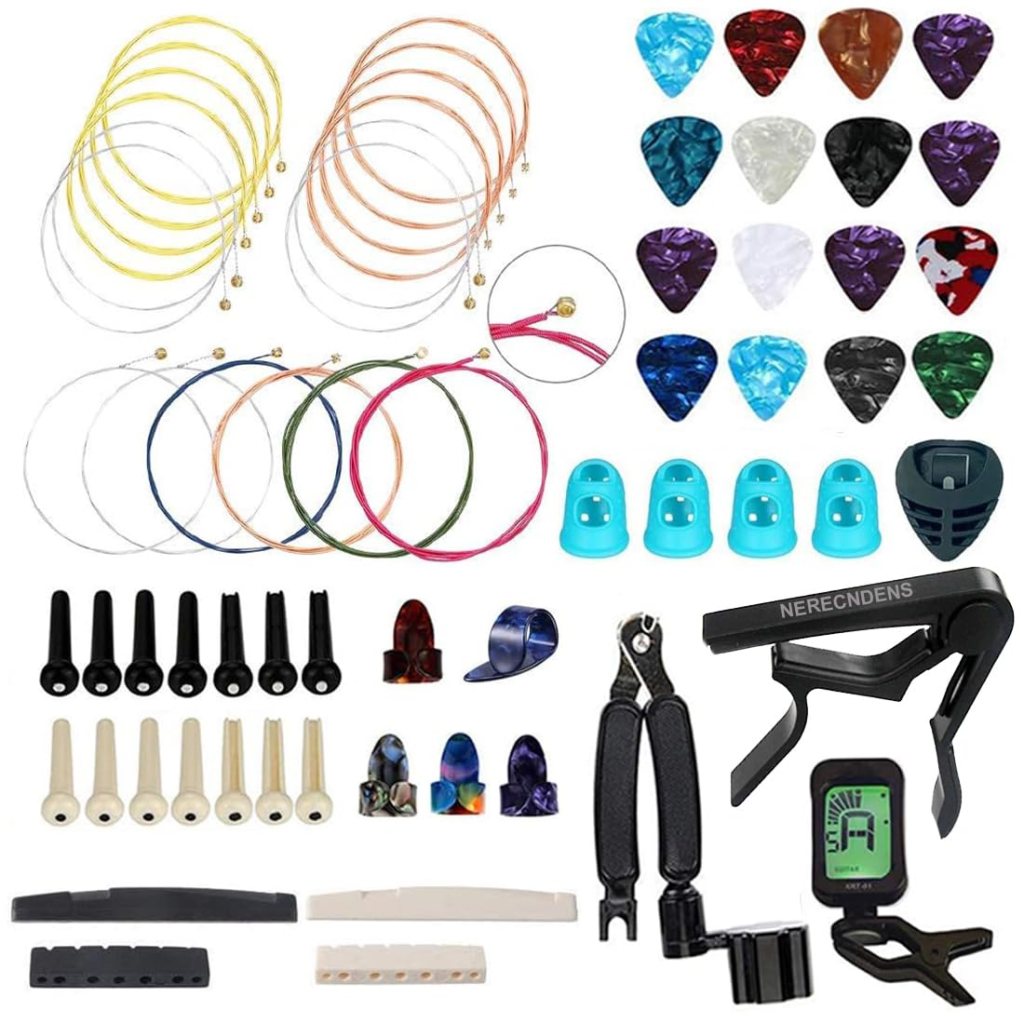
When buying a guitar, it’s not just about the instrument—it’s about the whole package. Accessories like cases, straps, and tuners can make all the difference in protecting your investment, improving your comfort, and enhancing your playing experience. If you are buying your first (or 10th) guitar, remember to include some (or all, depending on your particular needs) of these:
1. Protect Your Investment with a Quality Case
One of the most important accessories you’ll need is a good guitar case. Your guitar is an investment, and the last thing you want is for it to get damaged due to lack of protection.
Why a Case Is Essential:
- Protection: A sturdy case protects your guitar from physical damage, such as bumps, scratches, and drops. Whether you’re transporting your guitar to gigs, lessons, or just storing it at home, a case is your first line of defense.
- Climate Control: A case helps shield your guitar from changes in temperature and humidity, which can cause warping, cracking, or other issues, especially in acoustic guitars.
- Ease of Transport: A case makes it easier to carry your guitar around, especially if you opt for a gig bag with shoulder straps or a hard case with a handle.
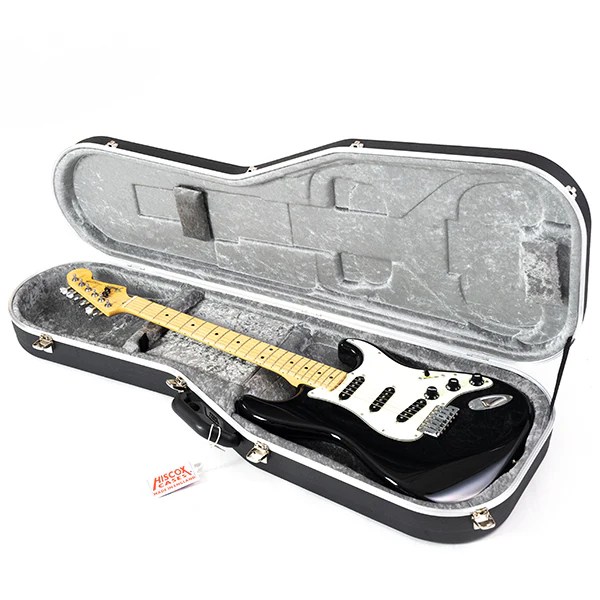
Types of Cases:
- Gig Bags: Lightweight and portable, gig bags are ideal for casual use and short trips. Look for padded gig bags that offer decent protection without the bulk.
- Hard Cases: For more serious protection, a hard case is the way to go. These cases are typically more durable and offer better protection against impact and environmental factors.
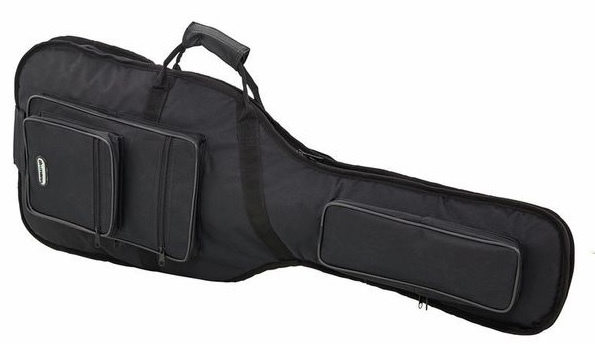
Tip: When buying a guitar, consider adding a case to your purchase if it doesn’t come with one. It’s a small investment that can save you from costly repairs down the road.
2. Play in Comfort with the Right Guitar Strap
If you plan on playing your guitar while standing, a comfortable strap is a must-have. A good strap not only supports the weight of your guitar but also helps you play more comfortably and confidently.
Why a Strap Is Important:
- Comfort: A well-padded, adjustable strap helps distribute the weight of your guitar evenly across your shoulder, reducing strain and allowing you to play longer without discomfort.
- Stability: A strap keeps your guitar securely in place while you’re playing, preventing it from slipping or moving around, which can affect your performance.
- Personal Style: Straps come in a wide range of styles, materials, and colors, allowing you to express your personality and match your guitar’s aesthetic.
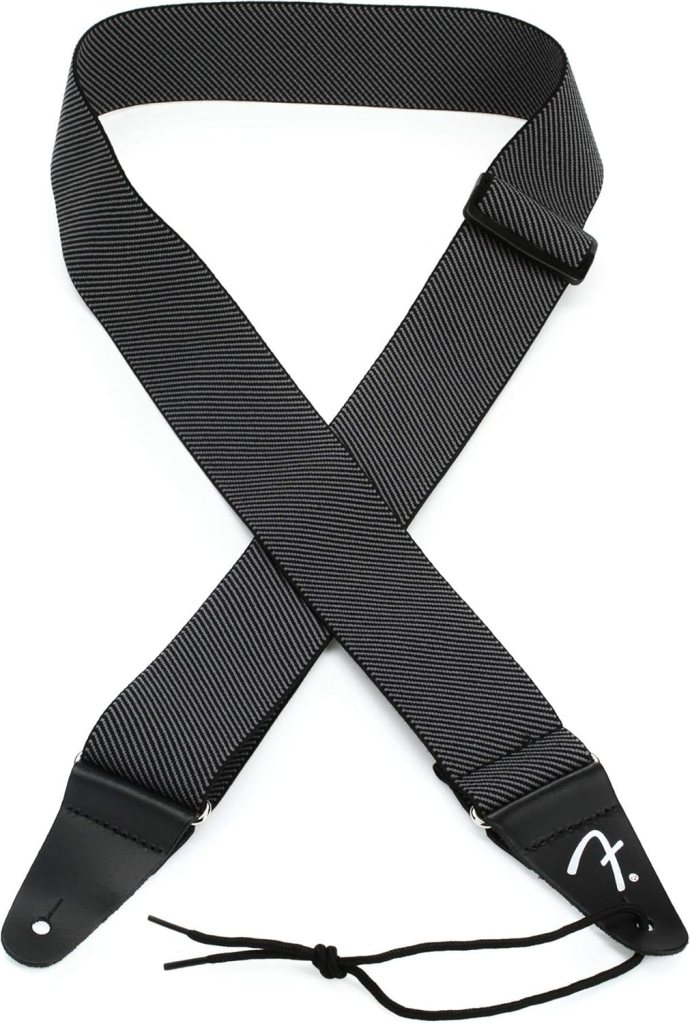
Tip: Look for a strap that’s adjustable and made from durable materials like leather or high-quality nylon. If you’re playing a heavier guitar, consider a wider strap with extra padding for added comfort.
3. Keep Your Guitar in Tune with a Reliable Tuner
Staying in tune is crucial for any guitarist, whether you’re a beginner or a pro. A reliable tuner ensures that your guitar always sounds its best, no matter where or when you’re playing.
Why a Tuner Is a Must-Have:
- Accurate Tuning: A good tuner helps you quickly and accurately tune your guitar, ensuring that each string is at the correct pitch.
- Portability: Many tuners are compact and portable, making them easy to carry in your gig bag or pocket for on-the-go tuning.
- Versatility: Some tuners offer additional features, like alternate tuning modes or metronomes, which can be helpful for more advanced players.
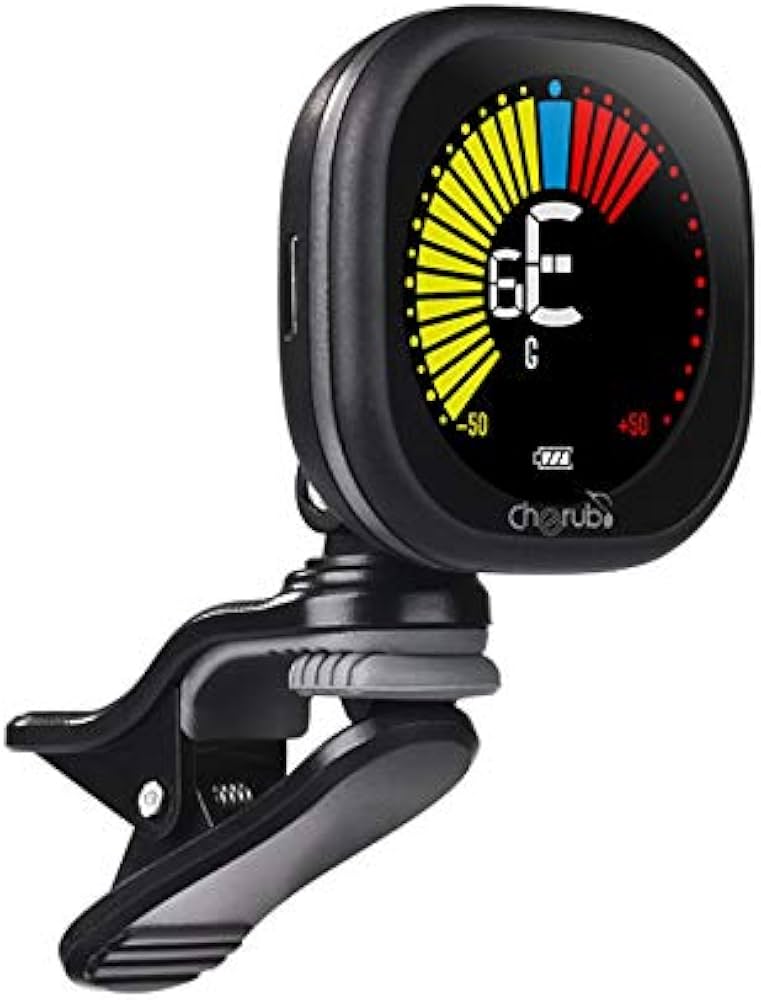
Types of Tuners:
- Clip-On Tuners: These attach to the headstock of your guitar and detect vibrations, making them ideal for noisy environments.
- Pedal Tuners: Popular with electric guitarists, pedal tuners sit on your pedalboard and offer hands-free tuning with a simple stomp.
- App-Based Tuners: Many smartphone apps offer tuning functionality, which can be convenient, but may not be as accurate as dedicated tuners.
Tip: If you’re just starting out, a clip-on tuner is a great, affordable option that’s easy to use and very effective.
4. Maintain Your Guitar with the Right Tools
Regular maintenance is key to keeping your guitar in top shape. Having the right tools on hand will help you perform basic upkeep, like changing strings, cleaning, and making minor adjustments.
Essential Maintenance Tools:
- String Winder: This handy tool speeds up the process of changing strings and often includes a built-in cutter for trimming excess string.
- Guitar Cleaner and Polish: Keep your guitar looking shiny and new with a good-quality cleaner and polish. These products help remove dirt, dust, and grime without damaging the finish.
- Fretboard Conditioner: Fretboards can dry out over time, especially if they’re made from wood like rosewood or ebony. A fretboard conditioner helps keep the wood hydrated and smooth.
- Microfiber Cloth: Use a microfiber cloth to gently wipe down your guitar after each use, removing oils and sweat that can accumulate and cause damage over time.
- Truss Rod Wrench: For more advanced players, a truss rod wrench allows you to adjust the neck’s relief, ensuring optimal playability.
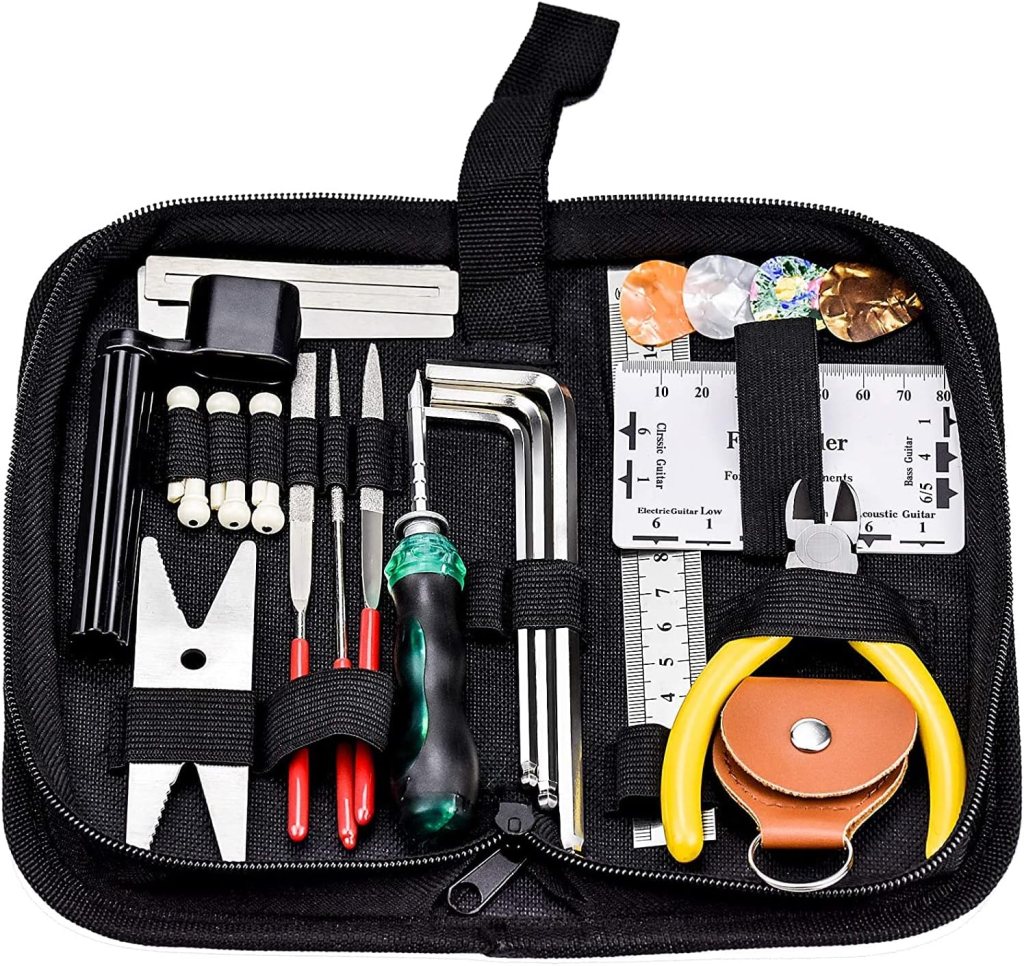
Tip: Consider buying a maintenance kit that includes these essential tools. It’s a convenient way to ensure you have everything you need to take care of your guitar.

5. Don’t Forget About Picks, Capos, and Stands
While they may seem small, accessories like picks, capos, and stands play a big role in your overall guitar experience.
Picks:
- Picks come in various thicknesses and materials, affecting how they feel and sound. Experiment with different picks to find one that suits your playing style.
- Tip: Buy them by the dozen. Always have a few picks on hand, as they’re easy to lose!

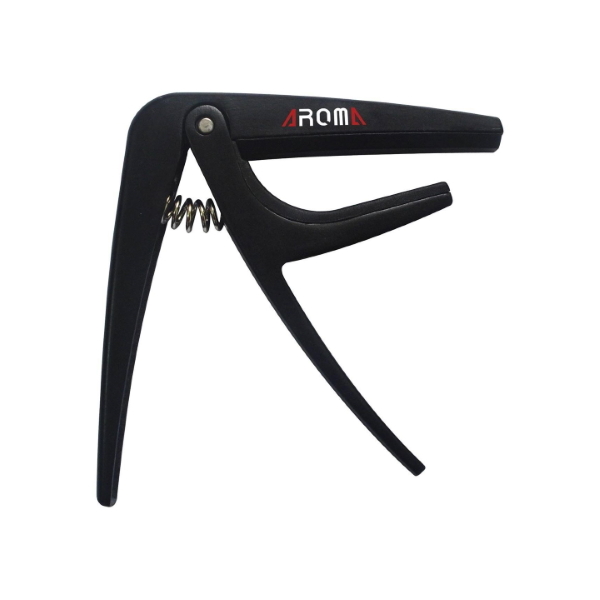
Capos:
- A capo allows you to change the key of a song without needing to retune your guitar. It’s especially useful for playing along with others or experimenting with different sounds.
- Tip: Look for a capo that’s easy to use and doesn’t throw your guitar out of tune.
Guitar Stands:
- A guitar stand provides a safe place to rest your instrument when you’re not playing. It keeps your guitar off the floor and reduces the risk of accidental damage.
- Tip: If you have multiple guitars, consider a multi-guitar stand to keep them all organized and accessible.

6. Factor Accessories into Your Budget
When planning your guitar purchase, don’t forget to factor in the cost of accessories. While it might be tempting to spend your entire budget on the guitar itself, having the right accessories will enhance your playing experience and protect your investment.
Tip: If you’re on a tight budget, prioritize essential accessories like a case, tuner, and strap. You can always add other accessories later as your needs and playing style evolve.
Conclusion: The Right Accessories Complete the Package
When buying a guitar, it’s easy to get caught up in the excitement of choosing the perfect instrument. But remember, the right accessories are just as important. From protecting your guitar with a quality case to ensuring it sounds great with a reliable tuner, accessories can significantly enhance your playing experience.
So, before you make your purchase, take a moment to consider the accessories you’ll need to get the most out of your new guitar. Investing in these essentials will help you play more comfortably, keep your guitar in top condition, and ultimately, enjoy your musical journey even more.
 oscaronguitars.com
Leave a comment