

Early Career and Rise to Fame
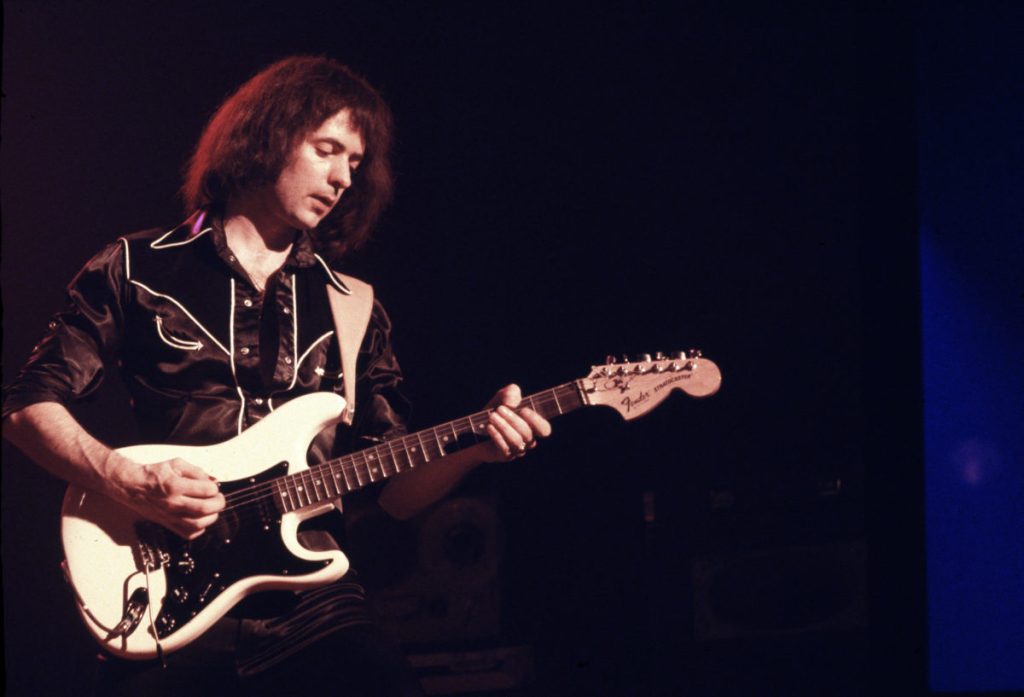
Born on April 14, 1945, in Weston-super-Mare, England, Ritchie Blackmore began his career as a session musician before skyrocketing to fame as the lead guitarist of Deep Purple. Known for his virtuosic guitar solos and pioneering contributions to hard rock and heavy metal, Blackmore’s playing on Deep Purple classics like “Smoke on the Water” and “Highway Star” cemented his reputation as one of the genre’s most influential figures.
Deep Purple and Beyond
With Deep Purple, Blackmore helped define the sound of hard rock, especially with albums like Machine Head and In Rock. His aggressive playing style and innovative use of guitar effects made a lasting impact on rock music. In 1975, Blackmore left Deep Purple to form Rainbow, further showcasing his skill as a guitarist and songwriter. Rainbow’s music, particularly songs like “Man on the Silver Mountain” and “Stargazer,” displayed his ability to blend hard rock with elements of classical music, setting the stage for what would later be known as neoclassical metal.
Iconic Tracks: Guitar Mastery in Action
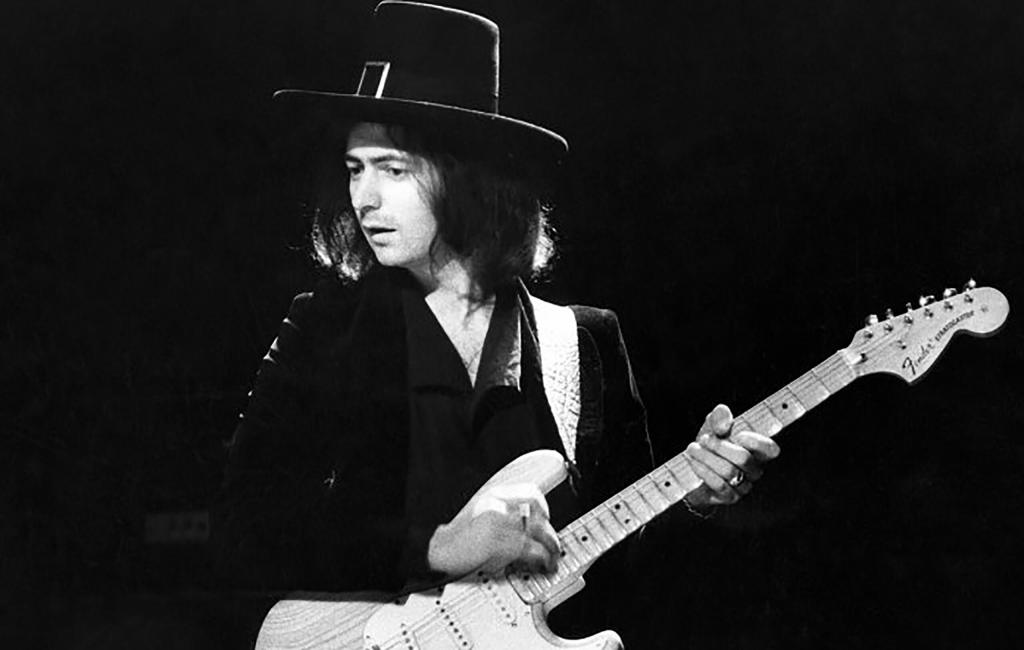
Ritchie Blackmore’s influence is evident in several key tracks:
- “Smoke on the Water” – Featuring one of the most recognizable guitar riffs in rock history, this song is a staple of Blackmore’s legacy.
- “Highway Star” – A showcase of his rapid-fire soloing technique and classical influences.
- “Man on the Silver Mountain” – A cornerstone of the Rainbow catalog that highlights Blackmore’s ability to fuse melodic hard rock with mystical lyrics.
- “Stargazer” – From the Rising album, this epic track features a powerful blend of heavy metal and symphonic elements, underscoring Blackmore’s innovative approach to composition and arrangement.
Gear and Style: The Blackmore Setup
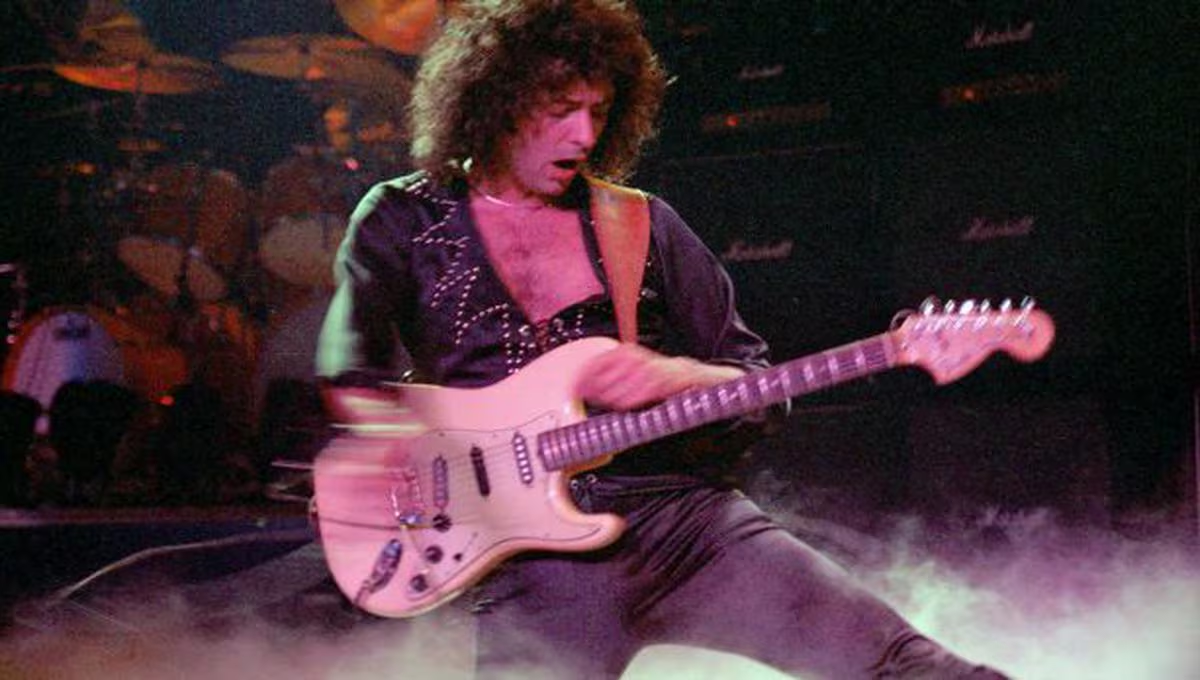
Blackmore is famously associated with the Fender Stratocaster, often modified with a scalloped fretboard, which he claims enhances his ability to bend notes and add vibrato. His sound is characterized by the extensive use of minor scales and arpeggios, which give his music a dark, medieval flavor. Blackmore often used a combination of Marshall amplifiers and various effects to create his distinctive tone, known for its screaming highs and deep, melodic lows.
Influence and Impact
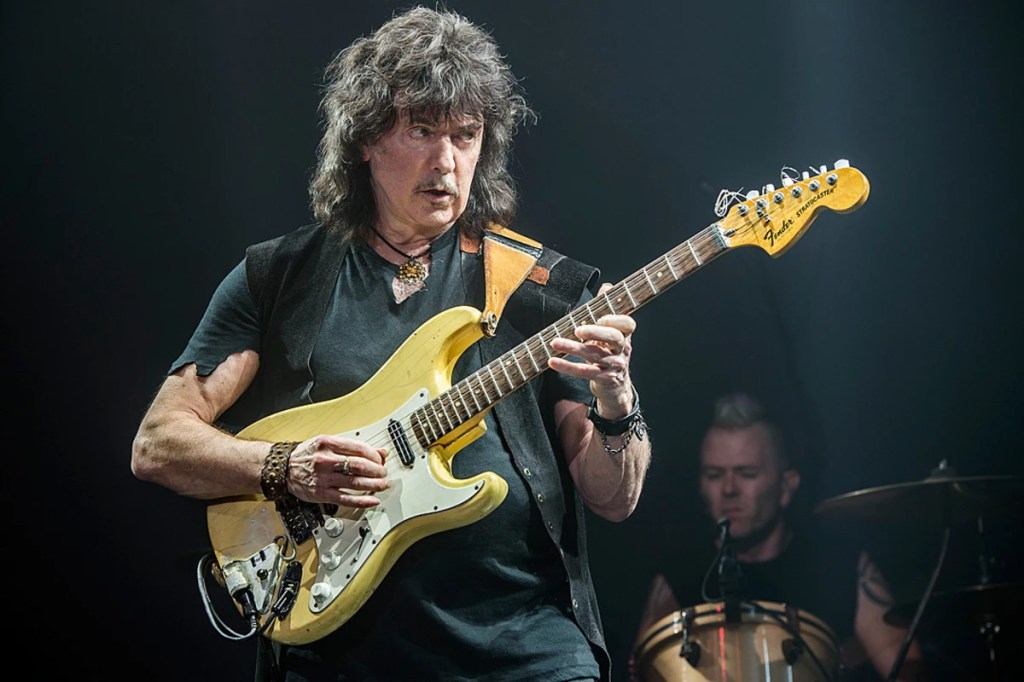
Ritchie Blackmore’s playing has influenced countless guitarists across multiple genres, from hard rock to heavy metal. His integration of classical music elements into rock guitar playing paved the way for the development of neoclassical metal and influenced players like Yngwie Malmsteen. Beyond his technical abilities, Blackmore’s theatrical stage presence and mysterious public persona have added to his legendary status in the rock world.
Conclusion: The Lasting Legacy of Ritchie Blackmore
Even after transitioning to Renaissance and medieval folk music with Blackmore’s Night, his impact on the music world remains profound. His career exemplifies a relentless pursuit of musical evolution and expression, making him a pivotal figure in the history of rock and metal.
Bonus Track: 10 Ritchie Blackmore Facts
- Early Influences: Originally influenced by classical music and guitarists like Hank Marvin of The Shadows.
- Session Musician: Worked as a session player before achieving fame, playing with a variety of artists and gaining valuable experience.
- Neoclassical Pioneer: Helped pioneer the integration of classical music techniques into rock guitar playing.
- Reputation for Spontaneity: Known for his unpredictable behavior and spontaneous decisions in both his career and performances.
- Musical Shifts: Formed Blackmore’s Night in the late 1990s, exploring Renaissance and medieval music, demonstrating his versatility as a musician.
- Distinctive Techniques: Famous for his use of the scalloped fretboard, which allows for more expressive bends and vibrato.
- Rock and Roll Hall of Fame: Inducted as a member of Deep Purple, recognizing his contributions to rock music.
- Innovative Composer: Composed music that blended rock, classical, and later, folk influences, creating unique soundscapes.
- Influential Legacy: Continues to influence guitarists and musicians in rock, metal, and beyond.
- Cultural Icon: Remains a figure of fascination within the rock community for his musical genius and enigmatic personality.
 oscaronguitars.com
Leave a comment