
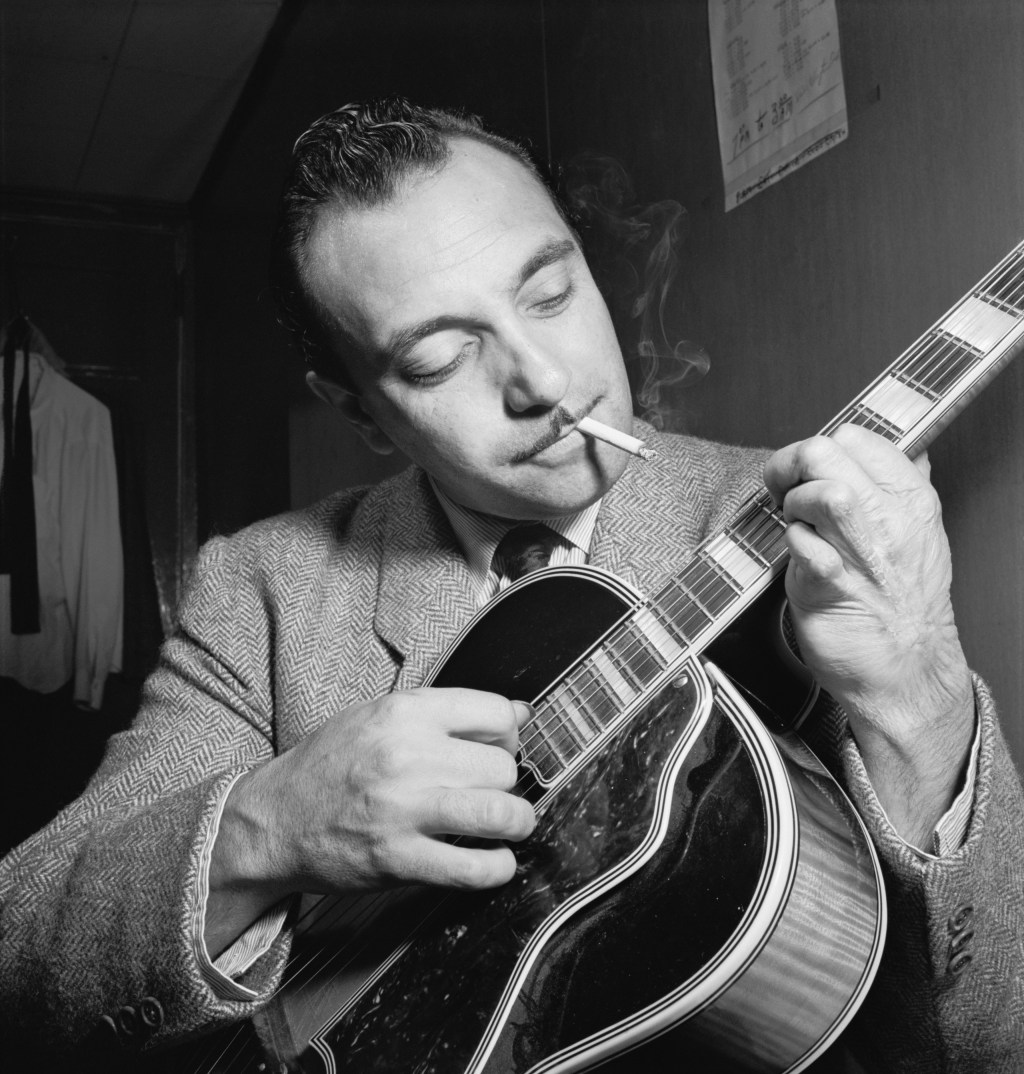
Django Reinhardt, a name synonymous with jazz guitar, is revered for his extraordinary talent and unique style. Born on January 23, 1910, in Liberchies, Belgium, Reinhardt’s life story is as compelling as his music. He overcame incredible challenges to become one of the most influential guitarists in the history of jazz. This article delves into his life, his contributions to music, notable works, and his enduring impact on jazz guitar.
A Journey Through Django Reinhardt’s Life
Django Reinhardt was born into a Romani family, and music was an integral part of his upbringing. His early exposure to gypsy music shaped his artistic sensibilities. By the age of 12, he had already started playing the violin and guitar, quickly developing a unique style influenced by both gypsy folk and jazz.
Tragedy struck in 1928 when a fire severely burned Django’s left hand, leaving him with limited use of two fingers. Undeterred, he adapted his playing style, using only the remaining two fingers to create a sound that was both distinctive and mesmerizing. This adaptability and determination not only defined his career but also became a testament to his resilience.
Contributions to Music
Django Reinhardt is best known for founding the genre known as “Gypsy Jazz” or “Jazz Manouche.” His innovative blend of swing jazz and Romani music created a new musical idiom that captivated audiences worldwide. Reinhardt’s compositions often featured intricate melodies and harmonies, showcasing his virtuosity and deep understanding of music theory.
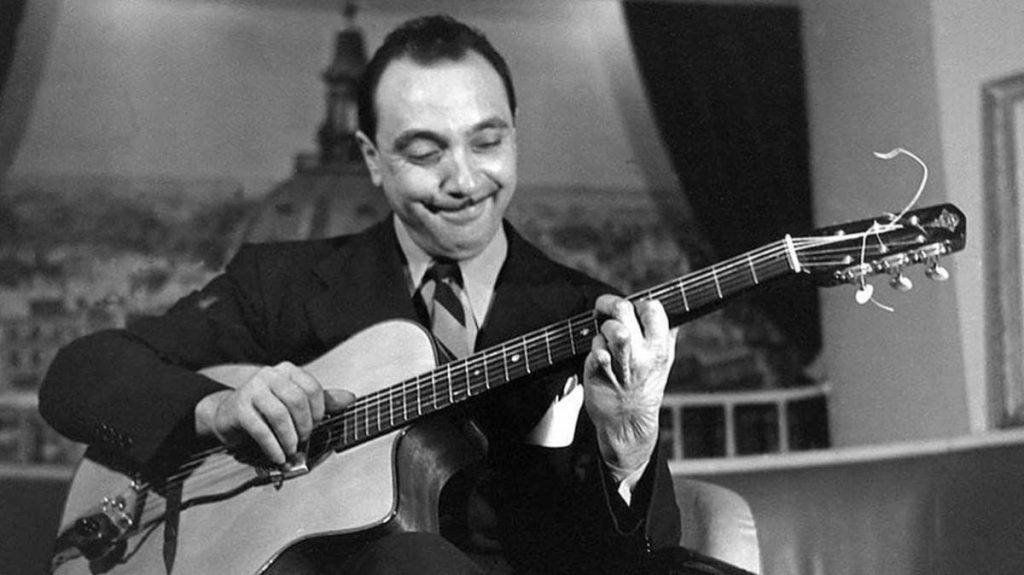
One of his key contributions to jazz was his ability to improvise with a fluidity that seemed effortless. He often collaborated with renowned musicians, including violinist Stéphane Grappelli, and together they formed the Quintette du Hot Club de France, a group that helped popularize gypsy jazz.
Notable Works
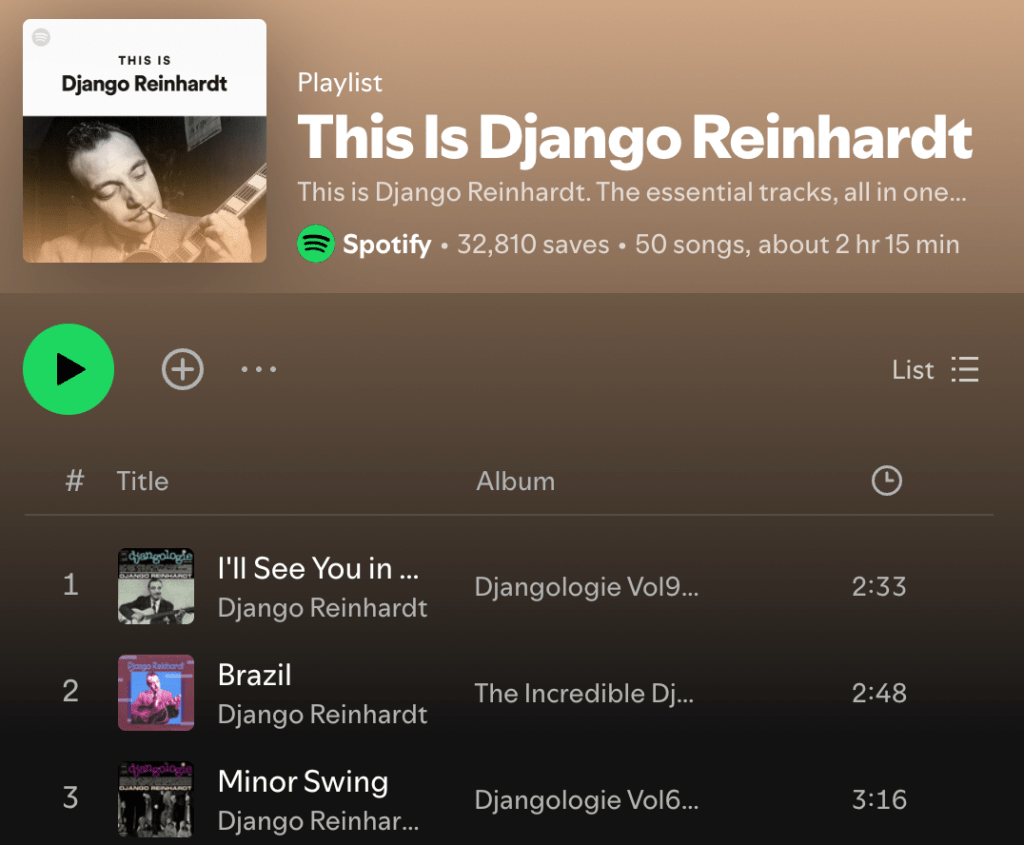
Django Reinhardt’s discography is filled with timeless classics that continue to inspire musicians. Some of his most notable works include:
- “Minor Swing”: Perhaps his most famous composition, “Minor Swing” is a staple in jazz repertoire. Its catchy melody and rhythmic drive have made it a favorite among guitarists and jazz musicians alike.
- “Nuages”: This poignant piece, meaning “Clouds” in French, showcases Reinhardt’s lyrical playing style and emotional depth. It has been covered by countless artists across various genres.
- “Djangology”: Co-composed with Grappelli, this tune exemplifies the seamless interaction between guitar and violin, demonstrating their chemistry and mastery of their respective instruments.
Influence on Jazz Guitar
Django Reinhardt’s impact on jazz guitar is profound. He was one of the first guitarists to establish the guitar as a lead instrument in jazz, paving the way for future generations of musicians. His innovative fingerstyle technique and improvisational skills inspired countless guitarists, including legends like Charlie Christian, Les Paul, and later, modern players such as John McLaughlin and Bireli Lagrene.
Reinhardt’s fusion of gypsy music and jazz opened doors for the guitar within jazz ensembles, encouraging musicians to explore its possibilities beyond traditional roles. His unique sound and style have become a blueprint for jazz guitarists seeking to blend genres and push creative boundaries.
Conclusion
Django Reinhardt’s legacy is a testament to the power of talent, creativity, and resilience. His ability to transform adversity into artistry has inspired generations of musicians and continues to resonate within the jazz community. As a pioneer of gypsy jazz, Reinhardt not only left an indelible mark on the guitar but also enriched the world of music with his innovative spirit. For anyone who appreciates the beauty and intricacies of jazz guitar, Django Reinhardt remains a towering figure, embodying the essence of musical freedom and expression.
 oscaronguitars.com
Leave a comment