

Charlie Christian was a groundbreaking guitarist whose innovative approach to the electric guitar helped shape the sound of jazz and rock music. His style not only transformed the role of the guitar in jazz ensembles but also laid the groundwork for countless musicians who followed in his footsteps. In this article, we’ll explore Charlie Christian’s journey, his influences, iconic recordings, signature equipment, techniques, and lasting legacy.
How He Began
Born on July 29, 1916, in Bonham, Texas, Charlie Christian grew up in a musical family. His mother was a talented pianist, and his father played various instruments, which encouraged Christian’s early interest in music. He began playing the guitar at the age of 12, initially influenced by the country music and blues that permeated his environment. However, it was his move to Los Angeles in the late 1930s that significantly shaped his career.
Influences
Christian was heavily influenced by the music of his time, particularly the swing jazz of the big band era. Guitarists such as Eddie Durham and Django Reinhardt left a significant mark on his playing style. The innovative sounds of jazz musicians like Benny Goodman, with whom Christian would later perform, also inspired him. His ability to blend blues and jazz elements into his playing would set him apart from his contemporaries.
Iconic Albums and Tracks
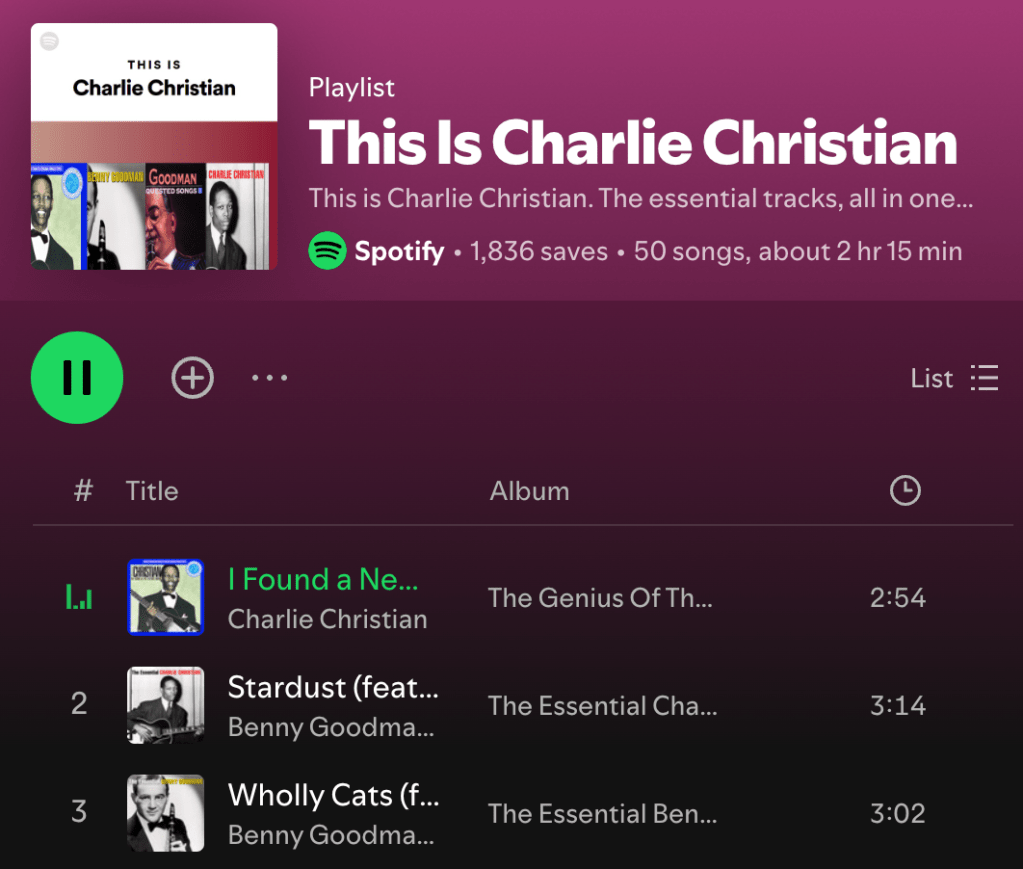
Christian’s tenure with the Benny Goodman Sextet in 1939 marked a turning point in his career. His performances on tracks such as “Swing to Bop” and “Solo Flight” showcased his incredible improvisational skills and unique phrasing. His work on the album “The Genius of Charlie Christian” features several noteworthy tracks, including “Air Mail Special” and “Route 66,” which remain essential listening for any guitarist.
Type of Guitar and Amp
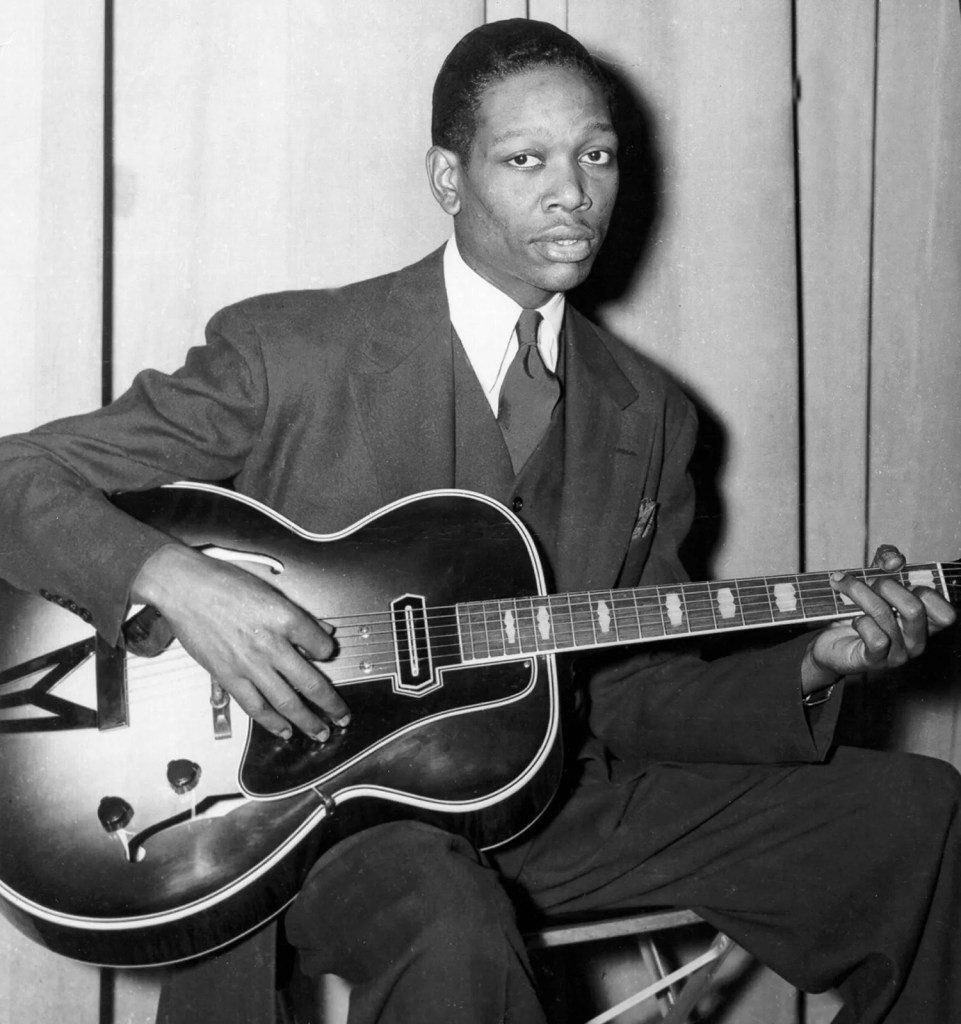
Charlie Christian is often associated with the Gibson ES-150, a pioneering electric guitar that allowed him to project his sound in a big band setting. The guitar’s warm tone and distinctive style became synonymous with his playing. He typically paired it with a Gibson Amplifier, which helped him achieve his signature smooth, clean tone that was both melodic and expressive.

Important Technique: Use of Single Notes and Phrasing
One of Christian’s defining techniques was his mastery of single-note lines, often playing melodic phrases that mimicked the human voice. He employed a unique blend of syncopation and swing rhythms, making his playing fluid and expressive. His innovative use of chord-melody style further demonstrated his ability to harmonize and add depth to his solos, inspiring generations of guitarists to explore similar techniques.
Legacy
Charlie Christian’s influence extends far beyond his relatively short career, which ended when he died at the age of 25 from tuberculosis. He is often credited as one of the first guitarists to successfully integrate the guitar into jazz ensembles as a lead instrument. His innovative approach paved the way for later guitar legends such as Wes Montgomery, Johnny Smith, and B.B. King, and his legacy continues to inspire musicians today.
Conclusion
Charlie Christian’s pioneering spirit and remarkable talent changed the landscape of jazz guitar forever. His contributions helped elevate the electric guitar to new heights, establishing it as a vital part of jazz music. Although his life was tragically cut short, the music he left behind serves as a testament to his genius and passion for the instrument.
Bonus Track: 10 Lesser-Known Facts About Charlie Christian
- Charlie Christian was a self-taught musician who learned by ear.
- He often played his guitar through a clarinet amplifier to achieve his desired sound.
- Christian was known for his distinctive use of the “Charlie Christian” pickup, which contributed to his unique tone.
- He was heavily influenced by the blues and often incorporated those elements into his jazz playing.
- Christian was a pioneer in using the electric guitar as a solo instrument in jazz.
- He recorded extensively with the Benny Goodman band, helping to popularize the electric guitar.
- His composition “Swing to Bop” is considered one of the defining tracks of the bebop movement.
- Charlie Christian had a close friendship with the legendary jazz pianist Thelonious Monk.
- He performed at the famous Minton’s Playhouse, a hotspot for the development of bebop jazz.
- Christian’s music has influenced not only jazz guitarists but also rock and pop musicians, making him a lasting figure in music history.
 oscaronguitars.com
Leave a comment