

From Obscurity to Rock Immortality: The Jimi Hendrix Story
A Revolutionary in the Making
Jimi Hendrix, born Johnny Allen Hendrix on November 27, 1942, in Seattle, Washington, was not just a guitarist—he was a sonic architect who forever changed the landscape of rock music. From his earliest days, Hendrix was drawn to music, often imitating blues legends like Muddy Waters and B.B. King. His raw talent and deep curiosity about sound led him on a journey that would redefine what was possible with an electric guitar.
After a brief and reluctant stint in the U.S. Army’s 101st Airborne Division, Hendrix honed his skills in the chitlin’ circuit, backing artists like Little Richard, the Isley Brothers, and King Curtis. Though immensely talented, he remained relatively unknown, relegated to the shadows of the more famous artists he supported. However, everything changed when he made his way to London in 1966. Introduced to the British music scene by bassist Chas Chandler of The Animals, Hendrix’s career exploded. Within months, he went from playing small club gigs to becoming one of the most electrifying performers in the world.
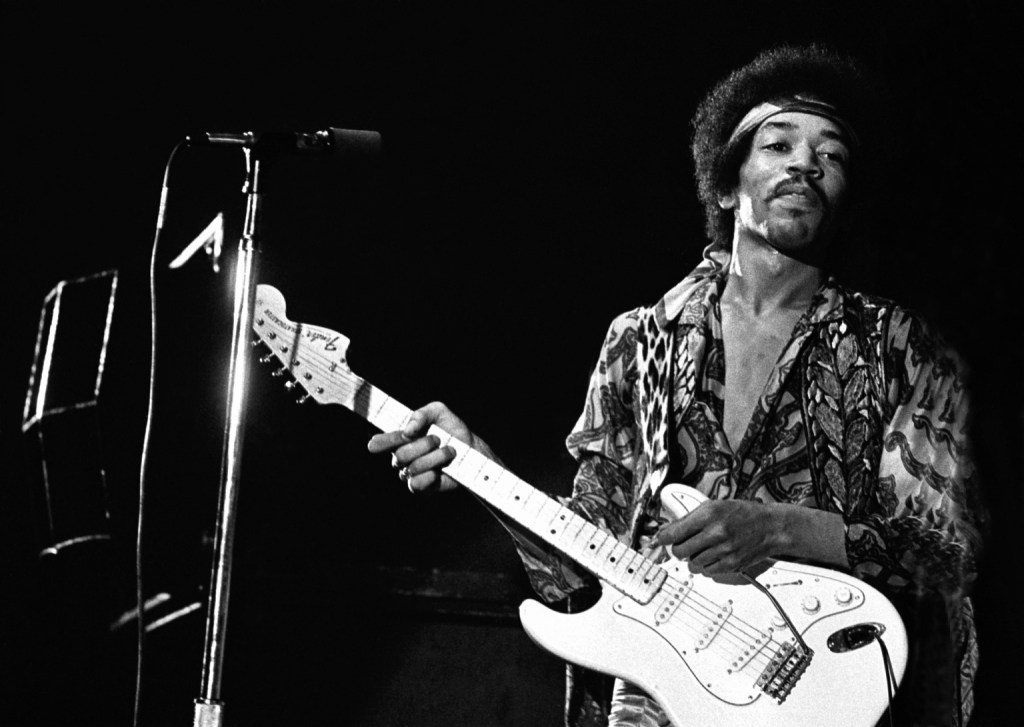
The Jimi Hendrix Experience: Redefining Rock Music
With the formation of The Jimi Hendrix Experience, alongside bassist Noel Redding and drummer Mitch Mitchell, Hendrix unleashed a sound that was unlike anything heard before. His debut album, Are You Experienced (1967), was a groundbreaking fusion of psychedelic rock, blues, and experimental soundscapes. Tracks like “Purple Haze,” “Foxey Lady,” and “Manic Depression” introduced audiences to his revolutionary use of feedback, distortion, and effects, elevating rock music into uncharted territory.
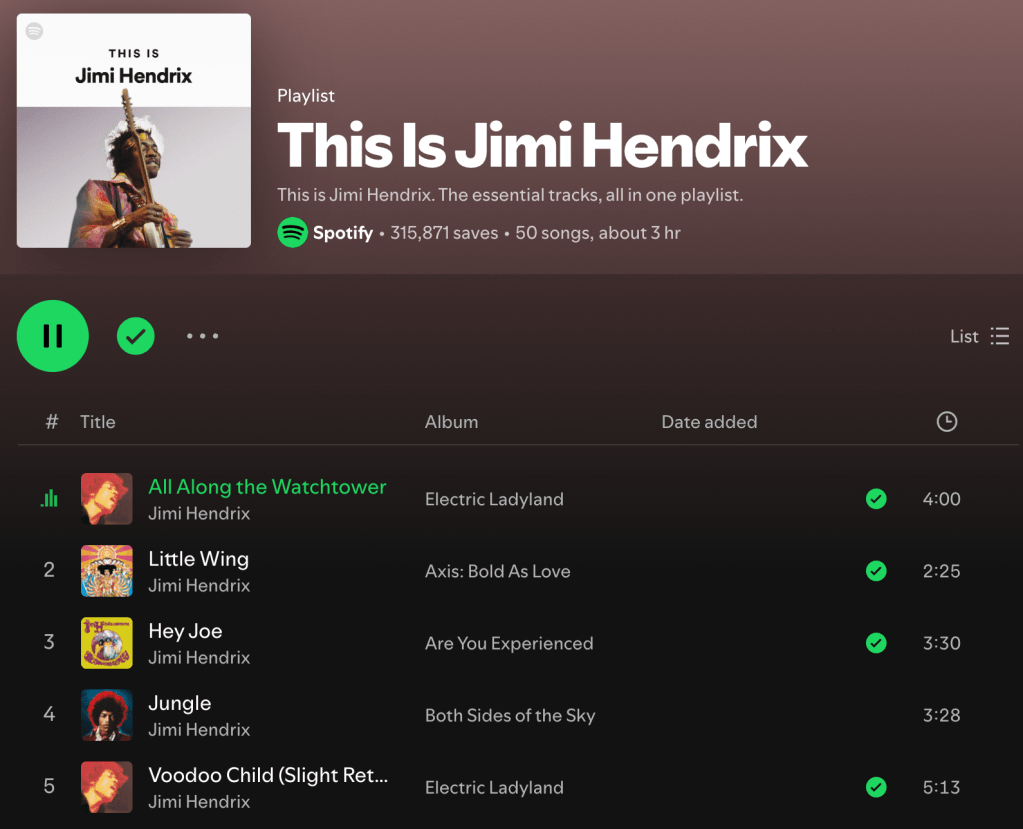
His follow-up albums, Axis: Bold as Love (1967) and Electric Ladyland (1968), further solidified his genius. Axis displayed his softer, more soulful side with tracks like “Little Wing,” while Electric Ladyland pushed sonic boundaries with the epic “Voodoo Child (Slight Return),” the ethereal “1983… (A Merman I Should Turn to Be),” and his legendary cover of Bob Dylan’s “All Along the Watchtower.” Hendrix was not just playing music—he was painting with sound.
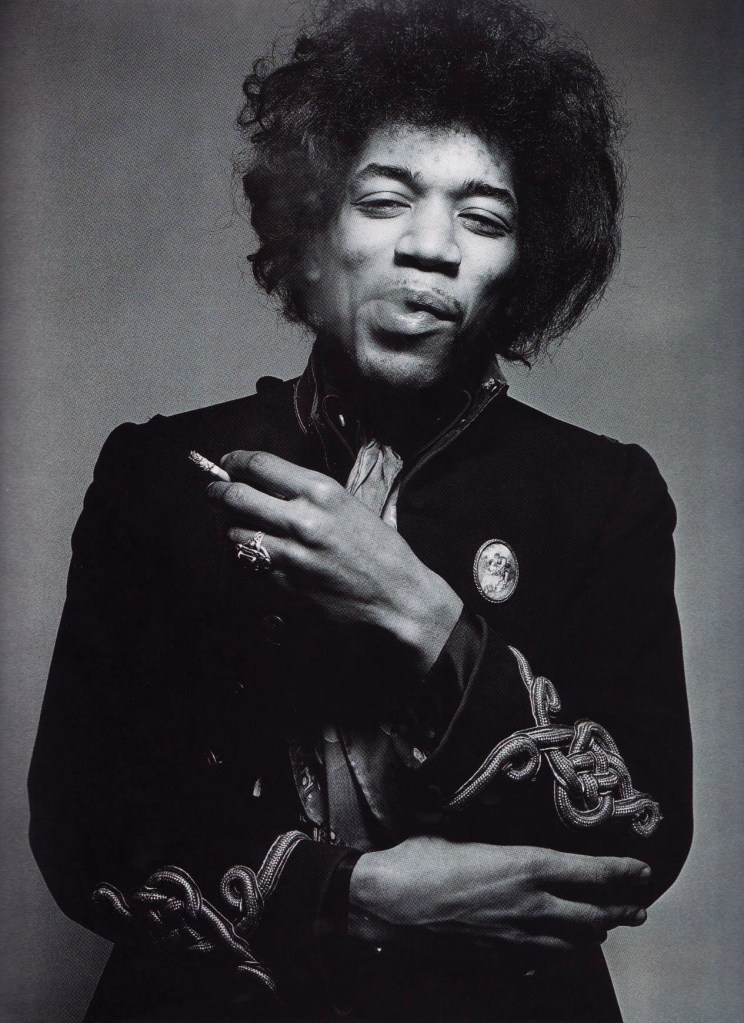
The Performance That Defined a Generation
Two performances cemented Hendrix’s legendary status: the Monterey Pop Festival in 1967 and Woodstock in 1969. At Monterey, he set his guitar on fire, symbolically sacrificing it to the gods of rock. At Woodstock, his rendition of “The Star-Spangled Banner” became an electrifying, distorted protest against the Vietnam War, reflecting the turbulence of the late 1960s. Both moments encapsulated his ability to channel raw emotion through his instrument, making music an almost spiritual experience.
Signature Sound: Gear, Technique, and Innovation
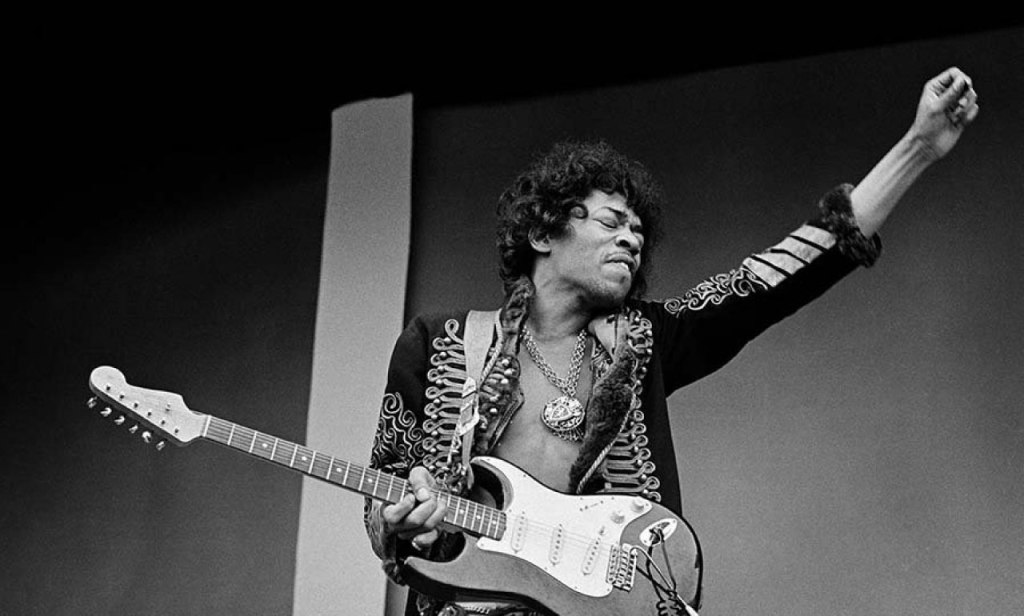
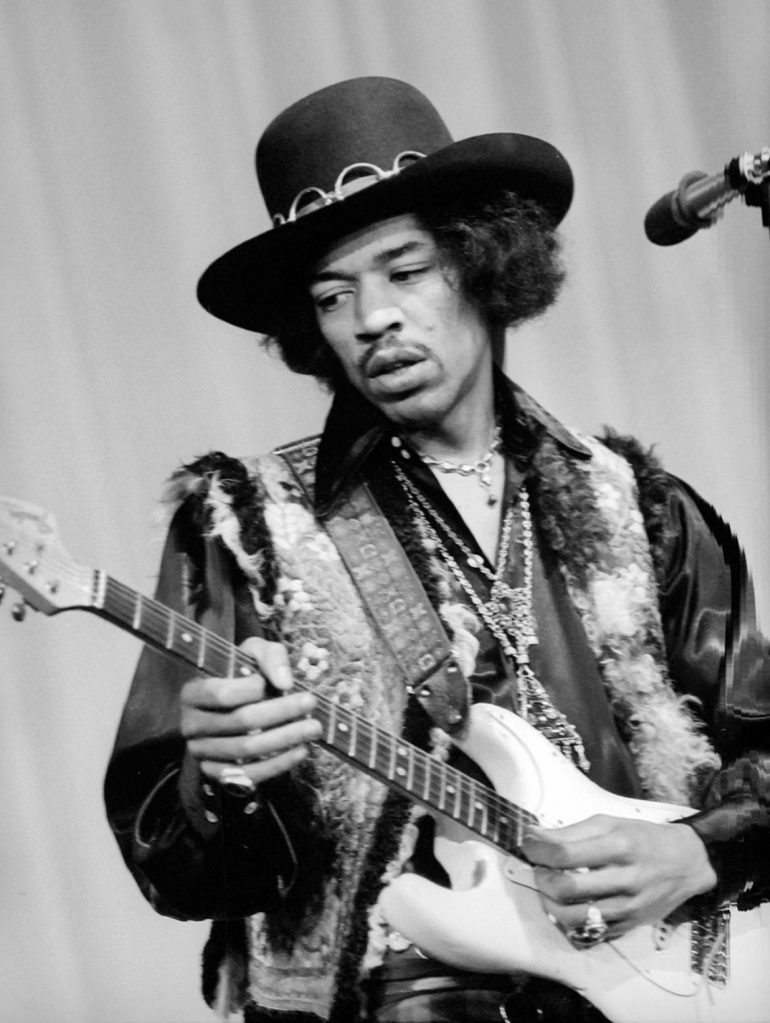
Hendrix’s sound was a carefully crafted blend of innovation and raw expression. His weapon of choice was the Fender Stratocaster, which he famously played upside-down and restrung for left-handed use. This unconventional approach gave his playing a distinctive feel, allowing him to pull off unique bends and vibrato techniques. His signature style was also shaped by:
- Wah-wah pedal: Used extensively in songs like “Voodoo Child (Slight Return),” Hendrix popularized the expressive, vocal-like quality of the wah pedal.
- Fuzz distortion: His use of the Dallas-Arbiter Fuzz Face created a thick, aggressive tone that defined tracks like “Purple Haze.”
- Octavia pedal: Developed by Roger Mayer, this effect gave his solos an otherworldly quality, heard in “Purple Haze” and “Fire.”
- Studio experimentation: Hendrix was a pioneer of recording techniques, using phasing, tape delay, and stereo panning to create immersive soundscapes.
His amplifiers were as crucial as his guitar. By cranking Marshall stacks to their limits, he pushed tube saturation to its breaking point, crafting an explosive yet controlled chaos that became his signature sound.
Legacy: The Eternal Impact of Jimi Hendrix
Jimi Hendrix was more than a musician—he was a visionary who expanded the vocabulary of rock and blues. His influence is immeasurable, shaping genres like hard rock, heavy metal, funk, and even hip hop. Artists from Stevie Ray Vaughan to Prince, Eddie Van Halen to John Mayer, cite Hendrix as a defining influence.
Though his career was tragically short—he died on September 18, 1970, at just 27—his impact remains timeless. His recordings, live performances, and the innovations he brought to the electric guitar continue to inspire generations of musicians and fans alike.
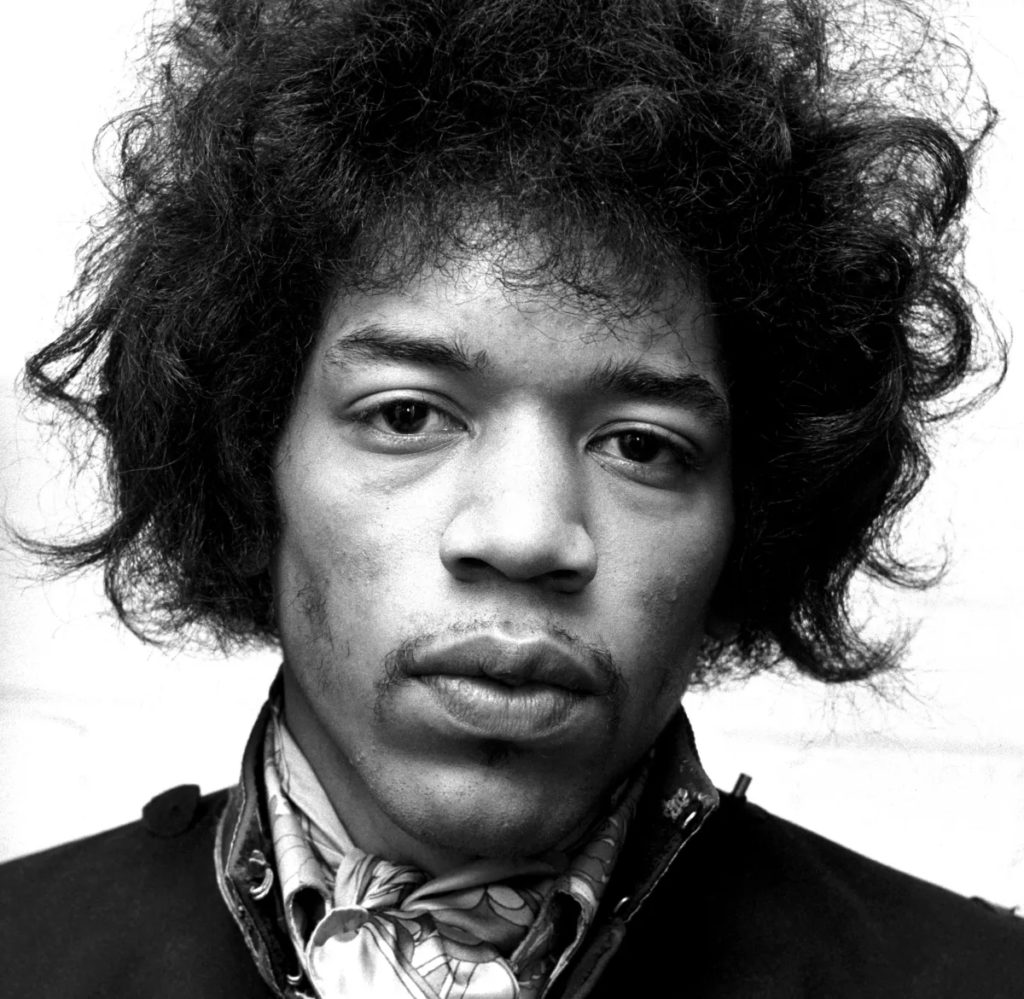
10 Fascinating Facts About Jimi Hendrix
- Military Service: Hendrix served as a paratrooper in the U.S. Army’s 101st Airborne Division but was honorably discharged after an injury.
- First Guitar: His first guitar was a $5 acoustic he found in a junk shop.
- Stage Name: His real name was James Marshall Hendrix, changed from Johnny Allen Hendrix after his father renamed him.
- Monterey Pop Festival: His flaming guitar stunt at Monterey cemented his reputation as a rock icon.
- Electric Lady Studios: Hendrix built his own recording studio in New York, which still operates today.
- Dylan Devotion: Bob Dylan, who originally wrote “All Along the Watchtower,” stated that Hendrix’s version was the definitive one.
- Unfinished Business: At the time of his death, Hendrix was working on a concept album titled First Rays of the New Rising Sun.
- Influences: His playing was heavily influenced by blues legends like B.B. King, Howlin’ Wolf, and Albert King.
- Rarely Used Picks: Hendrix often played with his fingers, adding a unique dynamic to his sound.
- Final Performance: His last live performance was on September 6, 1970, at the Isle of Fehmarn Festival in Germany.
Conclusion: The Eternal Flame of Hendrix’s Genius
Jimi Hendrix was not just a musician; he was an alchemist of sound, transforming the electric guitar into an instrument of limitless possibility. His artistry, both on stage and in the studio, was driven by a relentless pursuit of new sounds and emotional depth. Though he left the world too soon, his spirit lives on in every searing solo, every screaming amp, and every aspiring guitarist who picks up a Stratocaster. Hendrix wasn’t just a legend—he was, and remains, the very essence of musical revolution.
 oscaronguitars.com
Leave a comment