
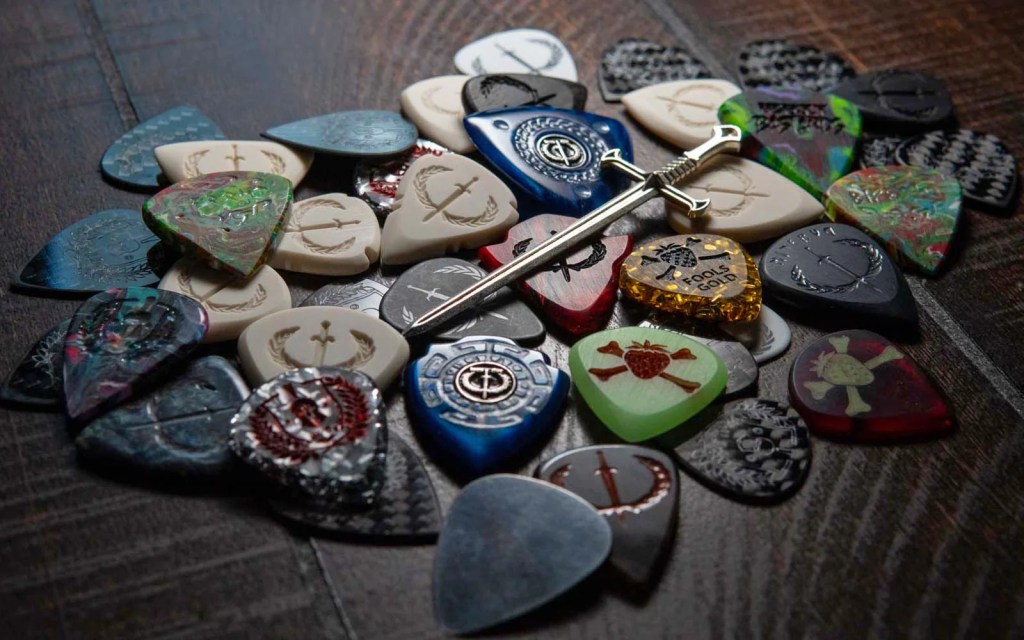
Guitar picks, or plectrums, may be small, but they are essential tools that have a significant impact on your guitar tone and playing feel. Often overlooked, they are arguably the most important accessory in your guitar arsenal. After all, no other accessory makes such close contact with both your hand and the strings. While they’re inexpensive, guitar picks come in a wide variety of materials, shapes, and sizes, each offering a unique playing experience. Understanding their history and uses will help you choose the best pick for your playing style.
A Brief History of Guitar Picks
Believe it or not, guitar picks date back to ancient times, though they weren’t always as refined as the ones we use today. Early guitar players likely used materials like bone, tortoiseshell, or even feathers. It wasn’t until the 20th century that modern guitar picks started to take shape, with plastic picks becoming widely popular due to their durability and cost-effectiveness. The evolution of the pick has allowed for better precision and control, making it an essential tool for any guitarist.
Materials: What’s Your Pick Made Of?
The material of your pick greatly influences how it feels and sounds. Some common materials include:
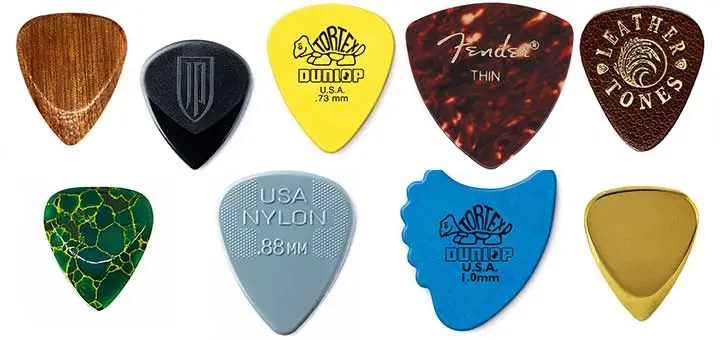
- Plastic: The most common material, offering a balance of flexibility and durability. It’s ideal for general playing and versatile across styles.
- Celluloid: Known for its smooth feel and bright tone, popular in vintage-style guitars and classic rock.
- Tortex: Made by Dunlop, this material is durable and has a nice grip, great for fast playing and heavy strumming.
- Delrin: Known for its high durability and smooth, bright tone, it’s commonly used in medium-to-heavy picks.
- Metal: For a sharper attack and brighter sound, metal picks (like stainless steel or brass) are great for shredders and players who want a more aggressive tone. Brian May is famous for using a coin as a pick.
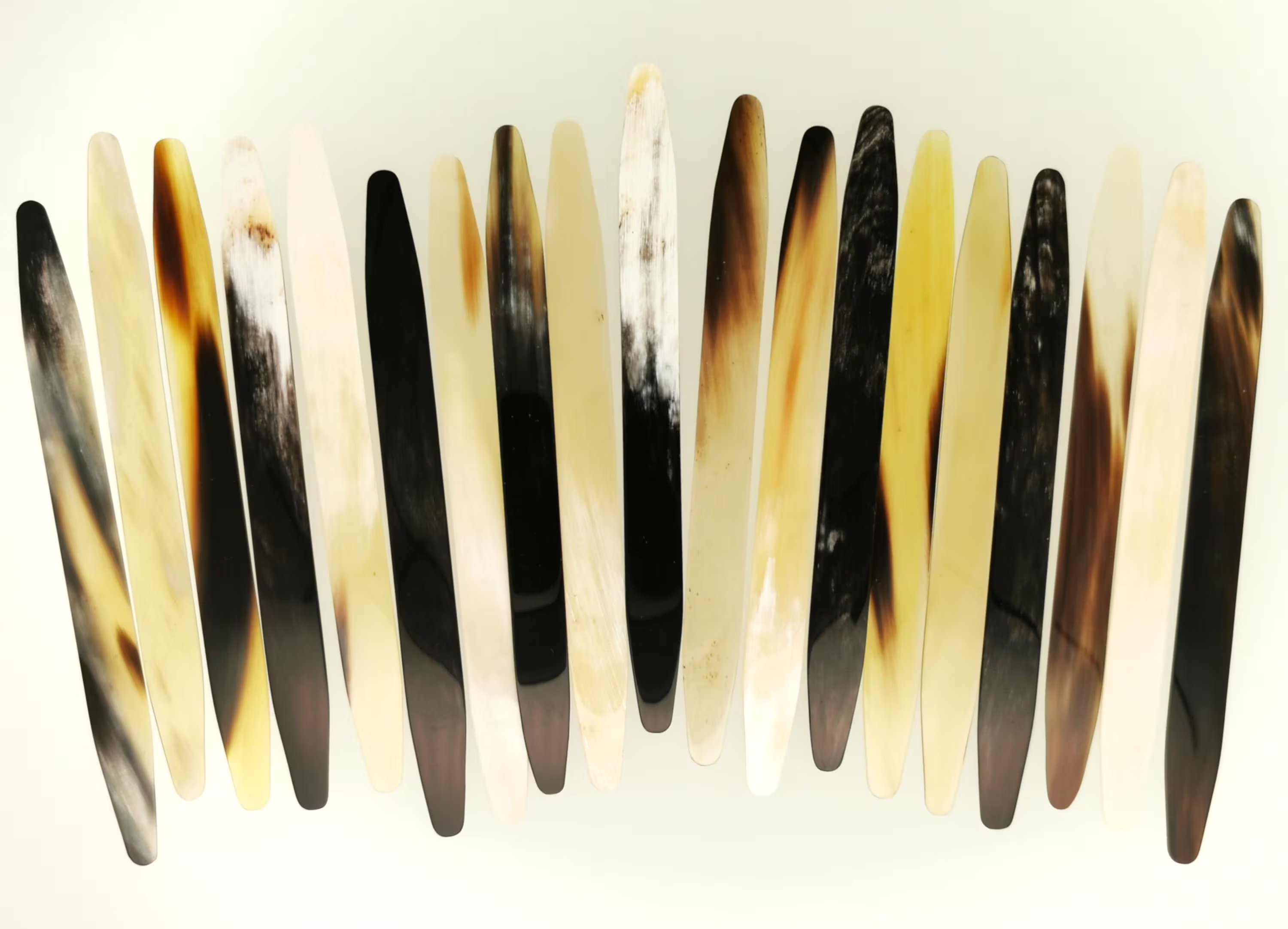
- Wood: Rare but offering a unique, warm sound with a softer attack. Used by players seeking a more vintage, mellow tone.
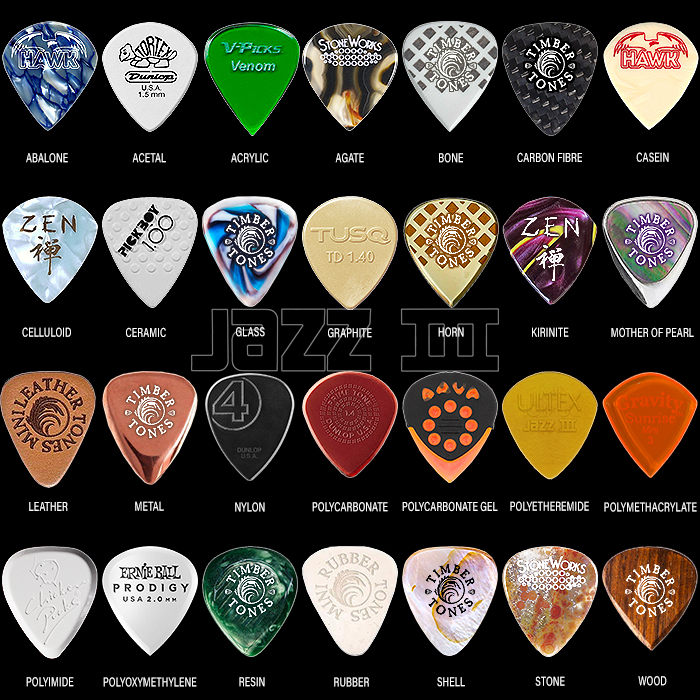
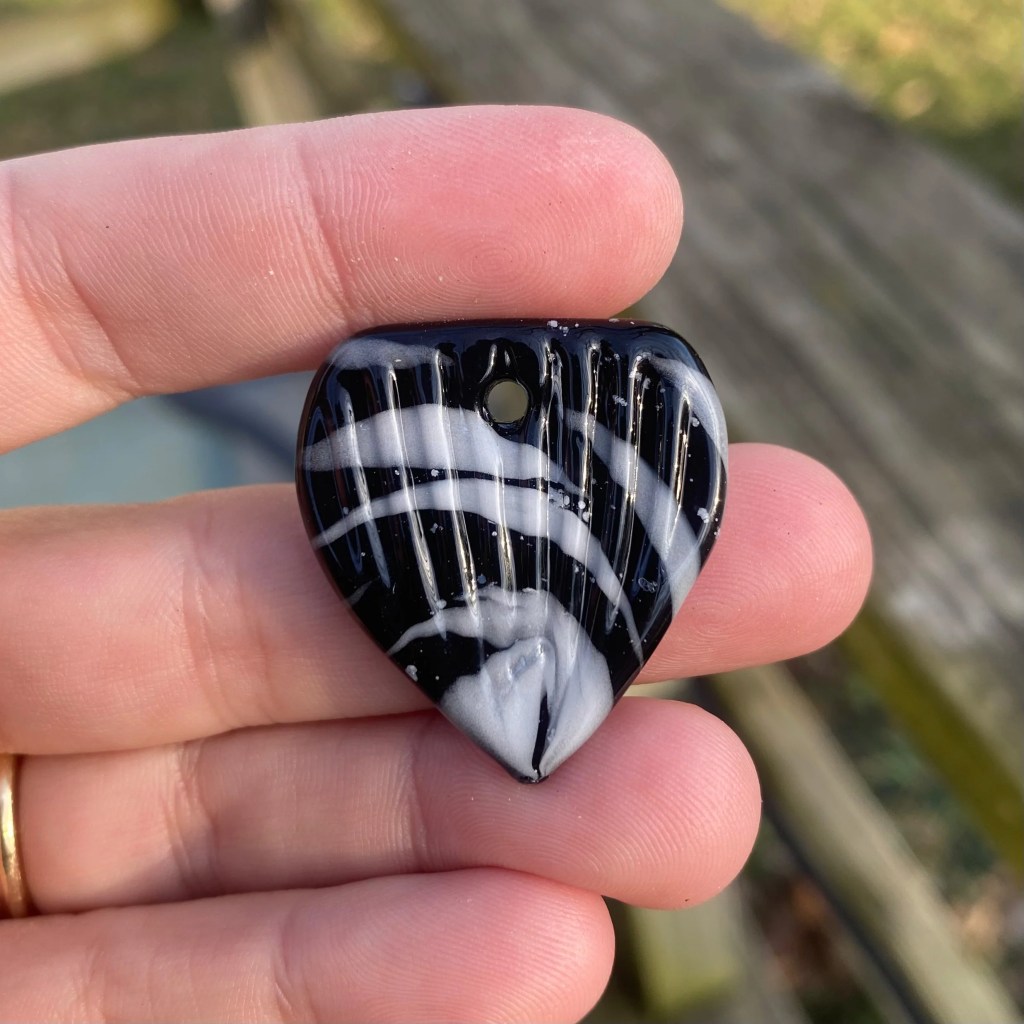
- Other materials. The list is endles: abalone, acetal, acrylic, agate, bone, carbon fiber, casein, ceramic, glass, horn, kirinite, mother of pearl, leather, polycarbonate, polyetheremid, polymethacrylate, polymide, polyoxymethilene, resin, rubber, shell, stone…
Shapes: Picking the Right Fit for Your Playing Style
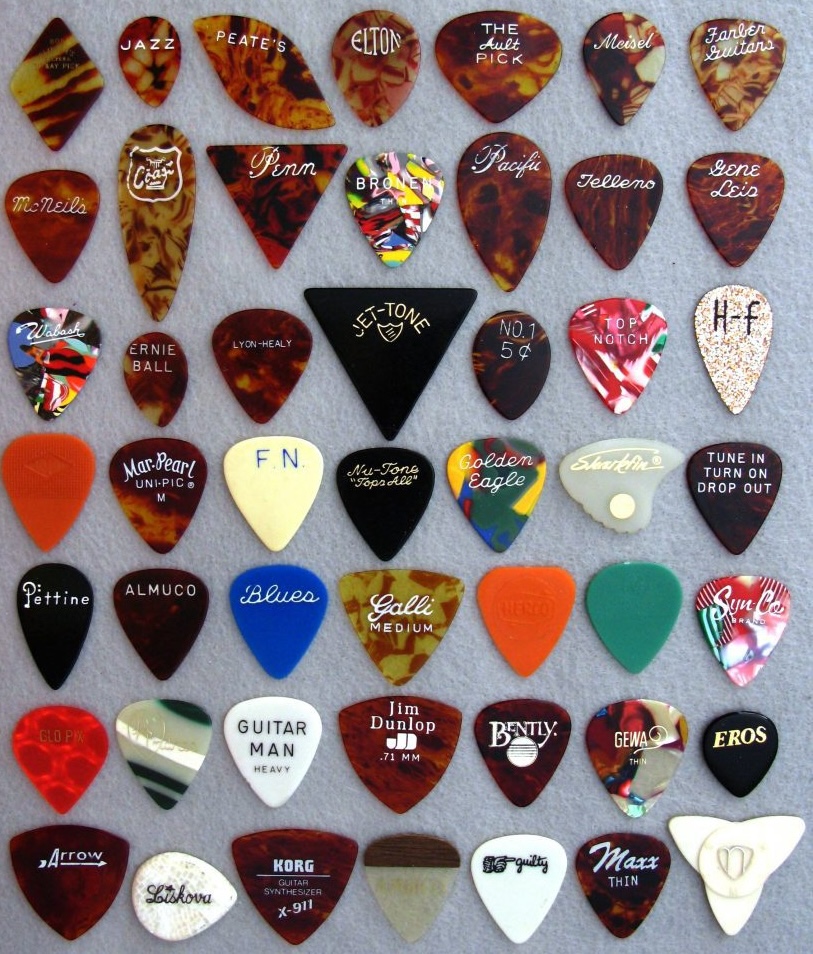
Picks aren’t just about material and thickness—they also come in various shapes, which can make a big difference in your playing. Here are some common shapes:
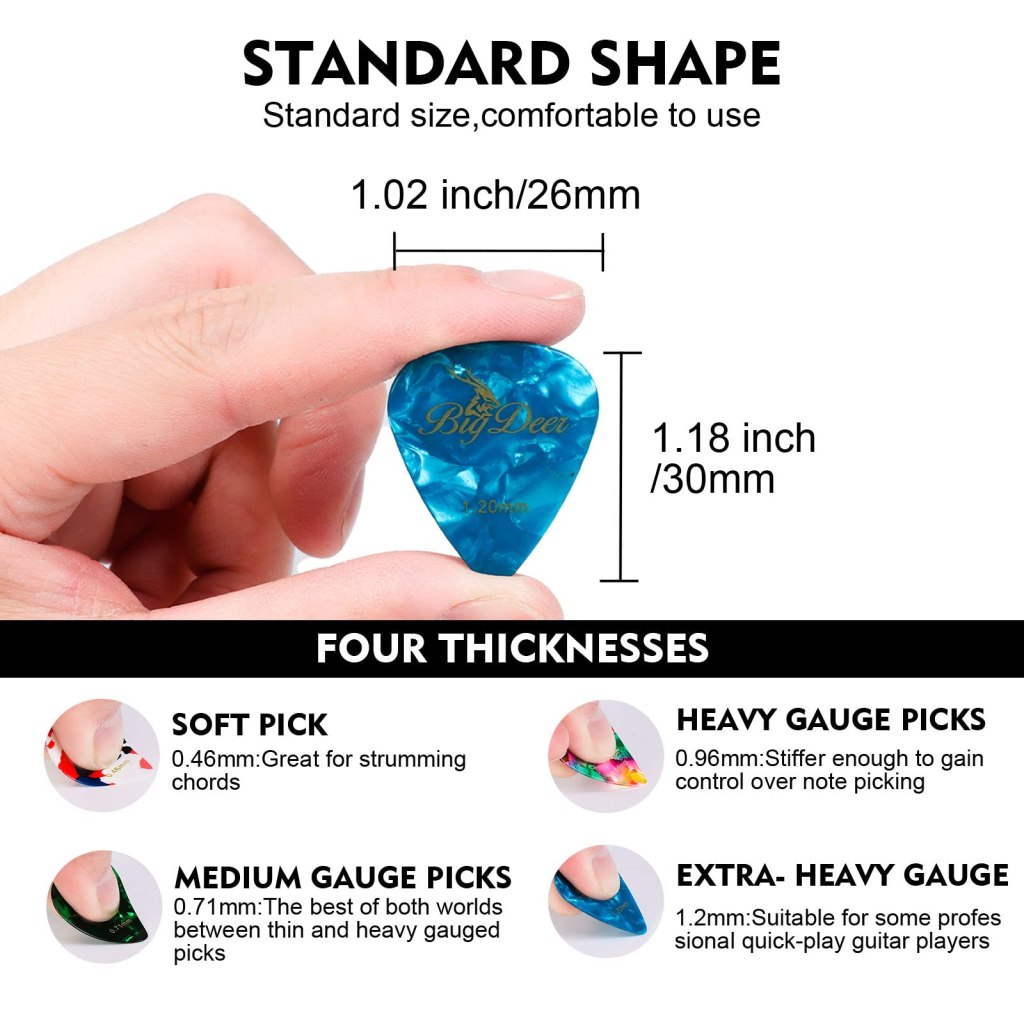
- Standard: The most common and versatile pick shape, usually with a rounded tip. It’s great for general use, from strumming to picking single notes.
- Triangular: Players like Carlos Santana often use triangular picks due to their extra surface area and improved control, particularly for strumming. They provide a larger grip and more stability for intricate rhythm playing, but they’re also excellent for lead work. Some players, myself included, find them too big and somewhat cumbersome.
- Jazz/Sharp: Smaller and with sharper tips, these picks are great for fast, precise picking, especially in genres like jazz and shredding. Their compact size allows for quick, clean attacks on the strings.
- Teardrop: This shape provides a more pointed tip for more precise picking, commonly used for solos and fast, intricate picking. Its smaller size makes it great for players who need quick, accurate movement, particularly in shred-heavy styles.
- Exotic. Exotic pick shapes, like the shark-fin pick, are designed to offer unique playing experiences. The sharp edges and angled contours provide more precision for fast picking and intricate techniques, making them popular among shred guitarists. These picks can help with accuracy and speed, offering a more customized feel for players looking to experiment with different textures and grips. While less common, they can add a distinctive touch to your playing style, especially for those who enjoy exploring new gear and sounds.
Gauges: The Thickness Factor
The gauge, or thickness, of your pick is another key factor that can drastically affect your playing style. Here’s a breakdown:
- Thin Picks (0.38mm – 0.60mm): Great for light strumming, quick riffing, and funk guitar. These picks give you a lot of flexibility, allowing for faster movements, perfect for rhythm playing and funky, percussive strumming.
- Medium Picks (0.60mm – 0.80mm): A good all-around pick, balancing strumming and lead playing. It’s perfect if you like a bit of both worlds.
- Heavy Picks (0.80mm – 1.2mm): These are great for lead playing, providing better control and attack, especially for solos and intricate picking. They’re often favored by rock and metal players.
- Extra Heavy Picks (1.2mm and above): Favored by players who do a lot of heavy strumming or fast picking, such as in metal or punk music. These provide maximum control and minimal flex.
What’s Used for What?
Different genres call for different picks. Here’s a quick guide to help you choose the right one for your style:
- Funk: Light picks (0.38mm – 0.60mm) are perfect for funky rhythms, providing the flexibility and quick movement needed for percussive strumming. Play near the bridge for a more percusive tone.
- Rock & Pop: Medium picks (0.60mm – 0.80mm) give you the best of both worlds—smooth enough for rhythm playing but still firm enough for lead solos.
- Metal: Heavy or extra heavy picks (0.80mm and above) are the go-to for metal players. They give you the precision needed for fast, aggressive picking and palm muting.
- Jazz: A lighter pick (around 0.60mm) can be great for jazz players looking for smooth, intricate picking while still maintaining control.
- Blues: A medium to heavy pick (0.70mm – 1.0mm) is perfect for those smooth bends and expressive solos typical of blues music.
Tips for Finding Your Perfect Pick
- Experiment with different gauges: Start with a medium pick and experiment with lighter and heavier ones to see how they change your tone and playing feel.
- Try different materials: If you’re unsure, try out picks made from different materials. You might discover that a plastic pick works best for your style or that a tortex pick gives you the tone you’ve been missing.
- Consider grip: If you sweat a lot while playing, look for picks with a textured surface or rubber grip to help you maintain control.
- Don’t be afraid to try new shapes: Picks come in a variety of shapes, from standard to triangular or even sharp-edged. A different shape might offer more comfort or precision for your playing style.
- Get a pick sampler: Many companies offer pick samplers with a variety of gauges and materials. This is a great way to figure out what works for you before committing to a specific type.
My Personal Take
I usually play with a Dunlop Tortex Gator-Grip 1.5mm pick. I love its texture, feel, tone, and grip. While I don’t sweat much, it’s perfect for both soloing and rhythm playing.

For funk and funky rhythms, I prefer a Dunlop Max-Grip 0.6mm pick. It’s light, but the textured surface ensures I maintain a firm hold, even when I start sweating after a while.

Conclusion
Choosing the right guitar pick is a personal decision that can significantly impact your playing experience. Whether you’re strumming funky rhythms or shredding solos, finding the pick that suits your style, technique, and tone is essential for getting the most out of your guitar. Don’t be afraid to experiment with different materials, gauges, and shapes—there’s a perfect pick out there for everyone!
 oscaronguitars.com
Leave a comment