
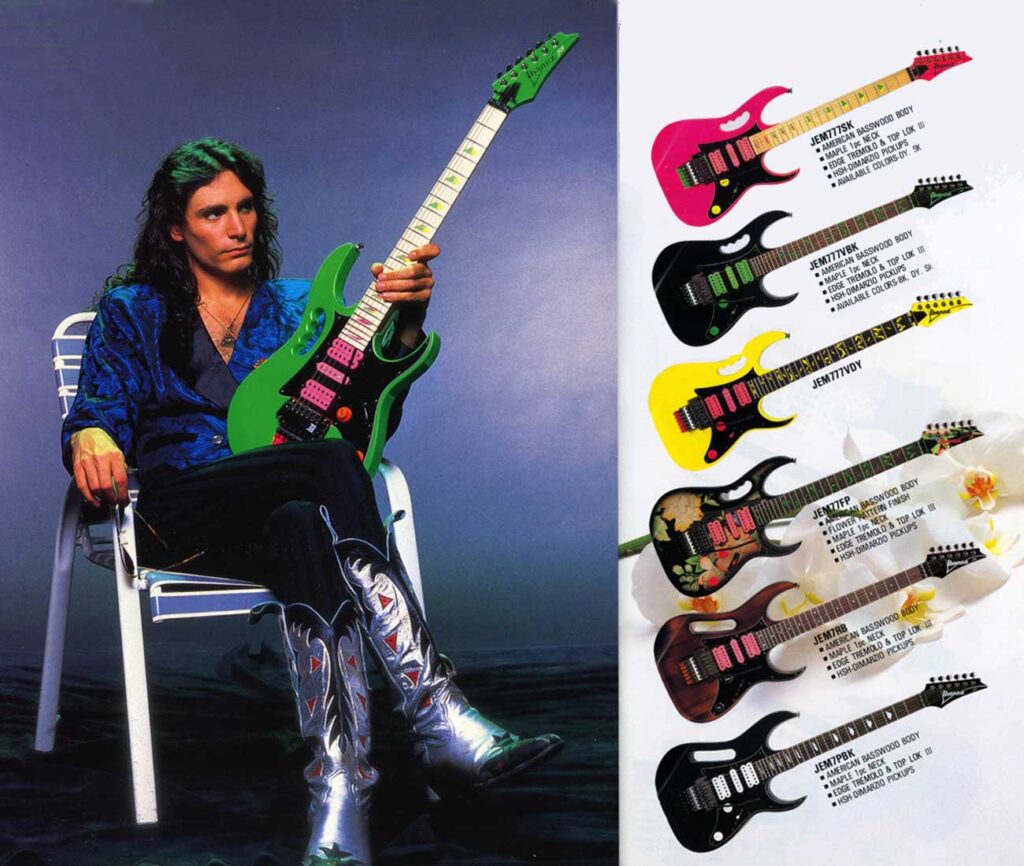
If you’re into rock or metal guitar, you’ve probably heard of the Ibanez JEM—and if not, you’ve almost certainly seen one. This rig is the flashy, high-performance instrument that guitar virtuoso Steve Vai helped design in the late 1980s, complete with wild colors, screaming pickups, and that unique (for some a little bizarre) handle hole cut right through the body (the famous “Monkey Grip”). The Ibanez JEM is not just another guitar; it’s a legendary Superstrat that redefined what a signature model could be. Indeed, many hailed it as “the shred guitar that shook the world” upon its debut in 1987. And after the Gibson Les Paul, the JEM is arguably the second-best-selling signature guitar of all time—not an easy feat considering the tons of artist-endorsed instruments boom after Eric Clapton was paid a 7-figure sum for leaving behind his Gibson SG for a Fender Stratocaster.
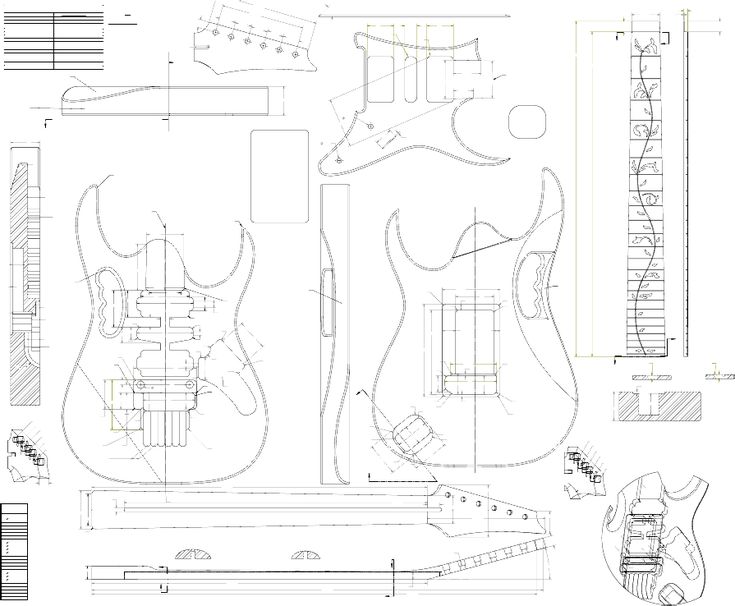
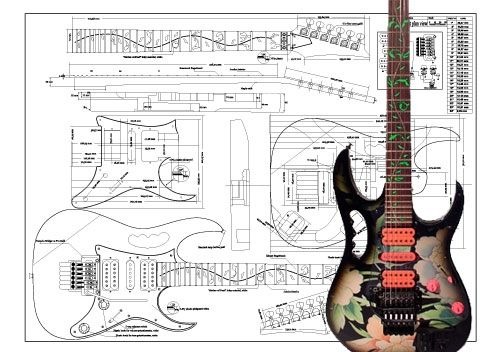
With its iconic Monkey Grip handle, sleek Wizard neck, 24-fret scale, versatile HSH pickup layout, and distinctive “Lion’s Claw” tremolo cavity, the JEM was built to Vai’s exact specifications—a bold departure from conventional guitar designs of its time.
These eccentric features not only made the JEM unique but also massively appealing to rock and metal players, proving that an unconventional design could stand the test of time. Simply put, the Ibanez JEM is a guitar like no other, and its legacy is just as thrilling as the instrument itself. After 40 years of uninterrupted success, the JEM remains an icon, and today, it’s more accessible than ever with the $499 JEM JR bringing this legendary design to a wider audience.
Maybe you and I are nowhere near mastering Vai’s intricate shredding and wild whammy bar tricks. But that doesn’t take away from the JEM’s status as an incredibly versatile guitar. It stands out among the countless superstrats that emerged in the ’80s, offering just the right set of unique features. In many ways, it represents the pinnacle—the ultimate superstrat: super powerful, super comfortable, and super versatile (yes, that’s a lot of “supers,” but they’re well deserved). This guitar’s enduring success over 40 years proves its versatility, transcending the hair-metal era to find a place in the hands of modern djenters, Polyphia-style shredders, and nostalgic, once-long-haired veterans like myself.
History
So how did this crazy guitar come to be? The tale begins in 1986, when Ibanez was desperately trying to break into the booming “superstrat” market – the hot-rodded Strat-style guitars favored by ’80s rock and metal shredders. At that time, brands like Kramer (boosted by Eddie Van Halen’s endorsement) were dominating the scene, and Ibanez realized they needed their own superstar guitarist to turn heads.
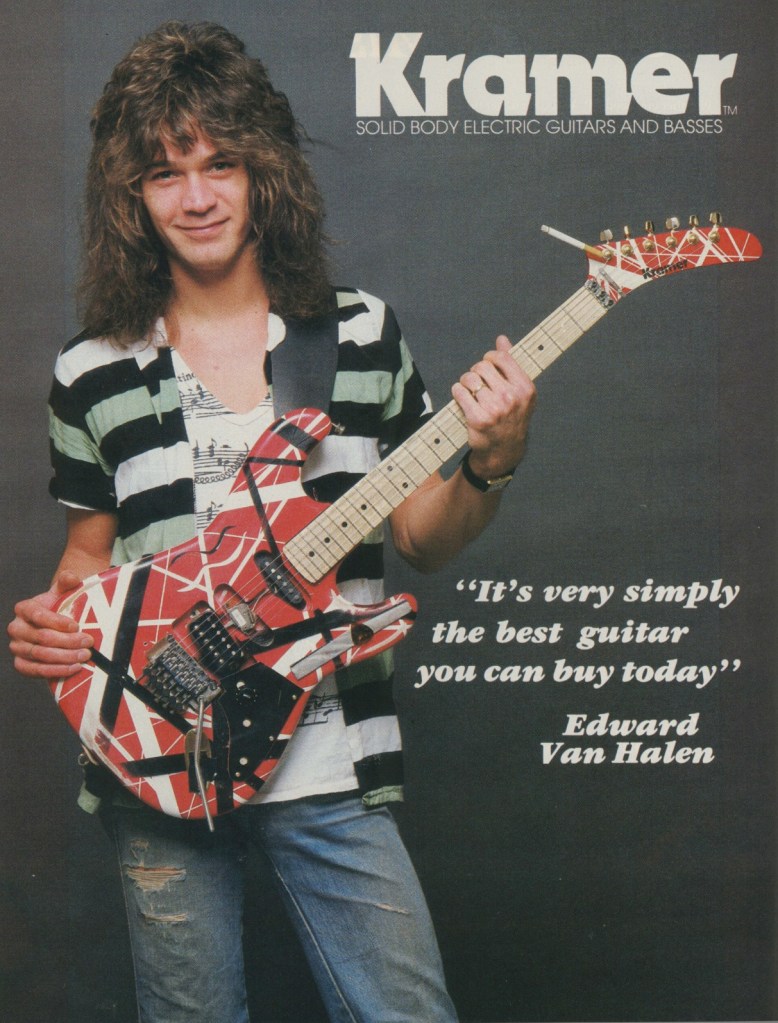
In a pivotal Ibanez meeting that year, the team essentially said, “We need our own Eddie Van Halen” – and the answer came quickly: Steve Vai was the guy for the job
Vai was a young New York-born guitar prodigy who had made a name for himself playing impossibly difficult music with Frank Zappa and, by 1985, had joined David Lee Roth’s post-Van Halen supergroup. He was exactly the kind of flashy, technically brilliant player Ibanez needed.
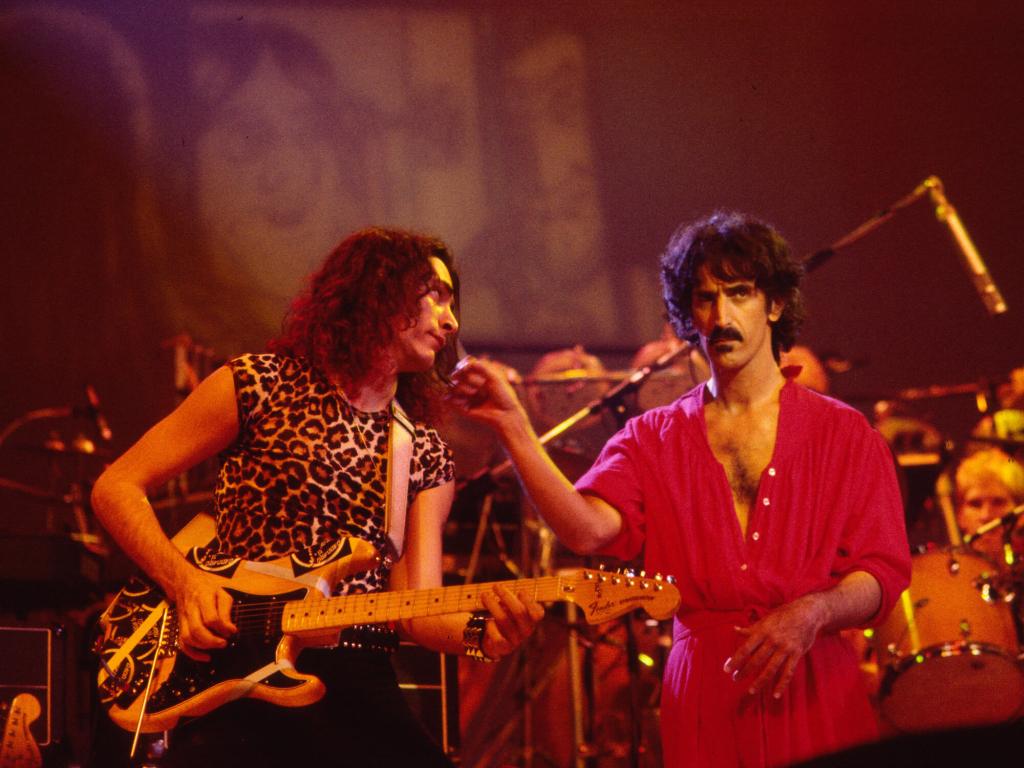
Ibanez approached Steve Vai with a proposition to create a brand-new signature guitar, and Vai, who was already something of a tinkerer, was very interested. Vai had learned from Frank Zappa that he didn’t have to settle for stock guitars – he could modify and “squeeze” gear until it screamed for mercy, as Zappa taught him. By the mid-’80s, Vai had been hacking up his own instruments to suit his style. His main guitar at the time was a heavily modified Charvel Strat he called the “Green Meanie,” which he’d outfitted with unusual features to survive his whammy-bar abuse and onstage acrobatics. Vai even had a custom-made guitar built by Performance Guitar in Los Angeles, incorporating many of his ideas (such as a 24-fret neck and a handle cut in the body). In other words, Vai already had a clear vision of his dream guitar – he just needed a company daring enough to build it.
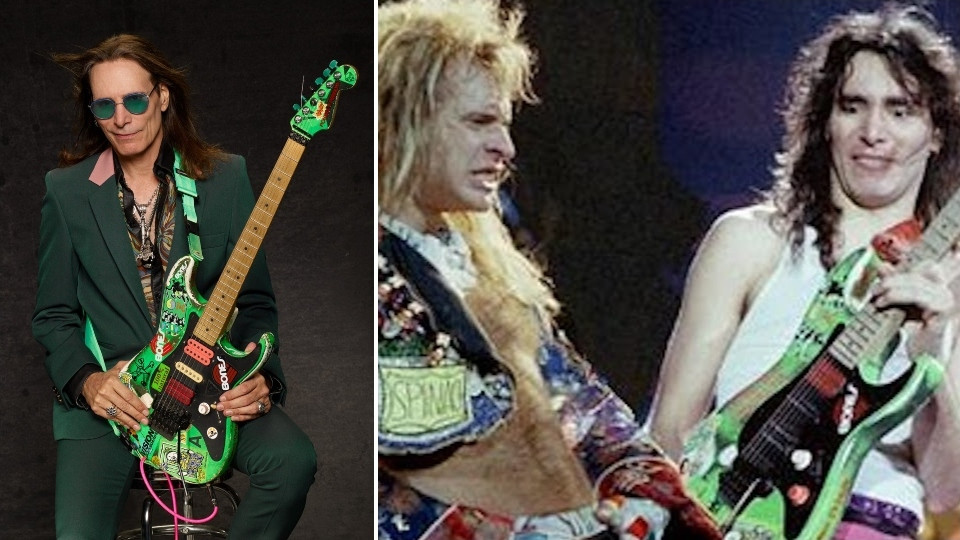
When both parties agreed to work with him, Vai came to the table with lots of ideas. Vai was very specific about what he wanted and didn’t want in his instrument. Ibanez’s design team (including builders like Rich Lasner, Nick Sugimoto, and others) collaborated closely with Vai to refine these ideas into a working guitar. Incredibly, they went from concept to a finished guitar in less than a year, revealing the first Ibanez JEM at the 1987 NAMM music trade show.
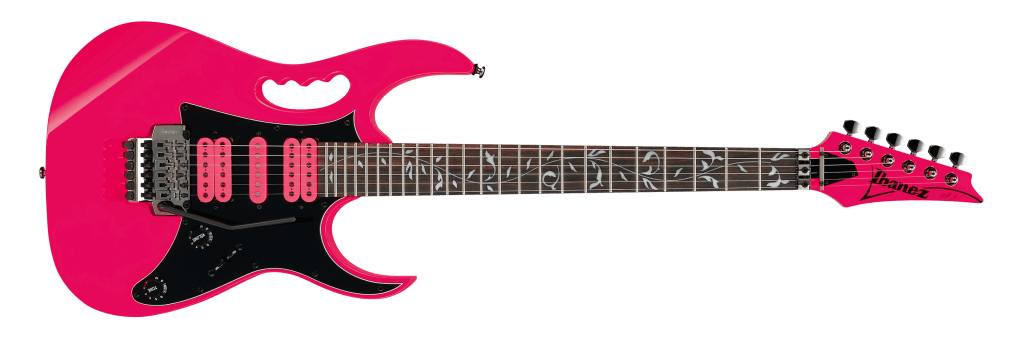
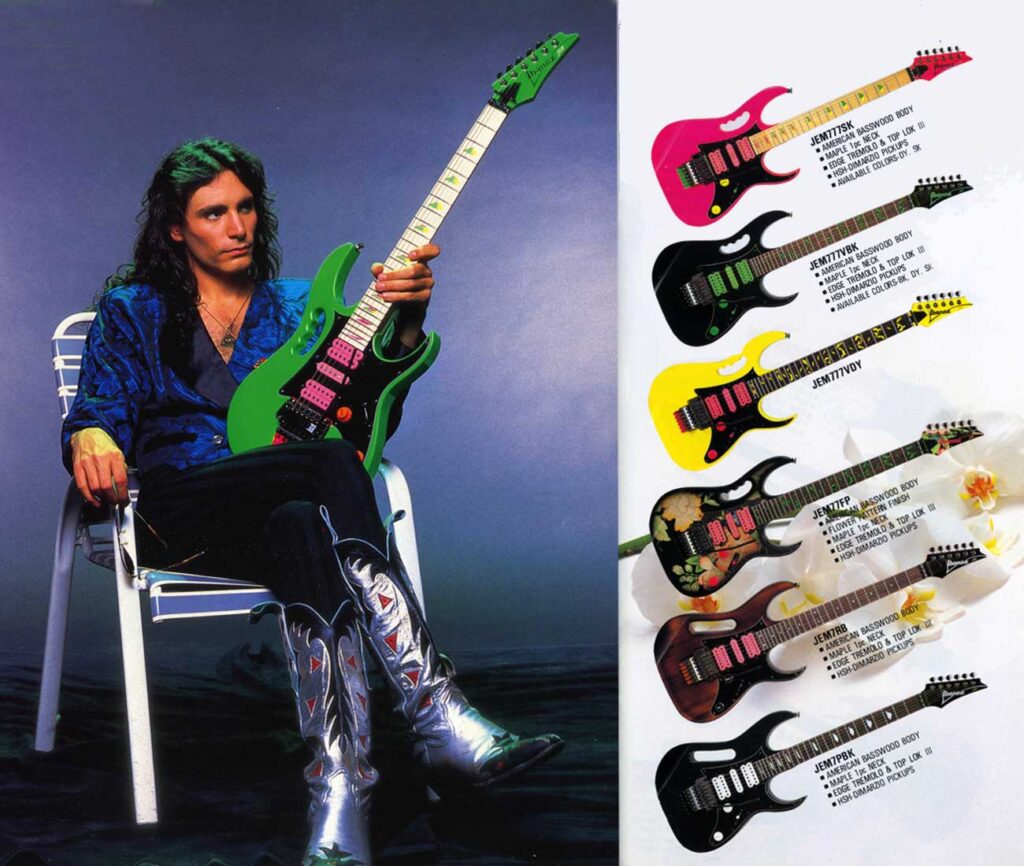
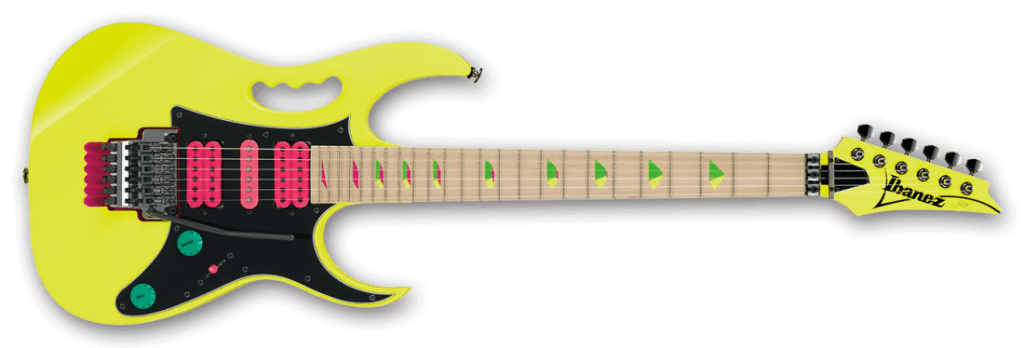
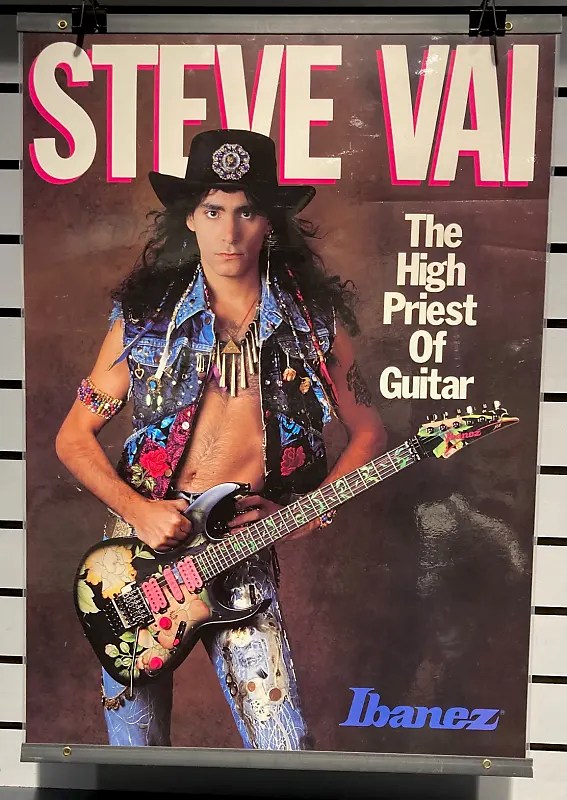
The debut models – dubbed the Ibanez JEM777 series – came in eye-popping colors: Shocking Pink, Desert Sun Yellow, and a limited run of Loch Ness Green (only 777 of the green ones were made, each signed by Vai). These guitars weren’t cheap – the JEM listed for around $1,299–$1,599 in 1987, notably pricier than a Gibson Les Paul or Fender Strat of the era. But the hype was real: Vai’s appearance at NAMM with his wild new guitar caused a sensation. One Ibanez exec recalled that at the NAMM booth, “all eyes were on Vai and the JEM”, as if the whole show were about that one guitar. When the JEM finally hit stores, the limited green model sold out immediately (all 777 were gone almost at once). Steve Vai had delivered: virtually overnight, the JEM was a smash hit and gave Ibanez the cred it had been seeking.

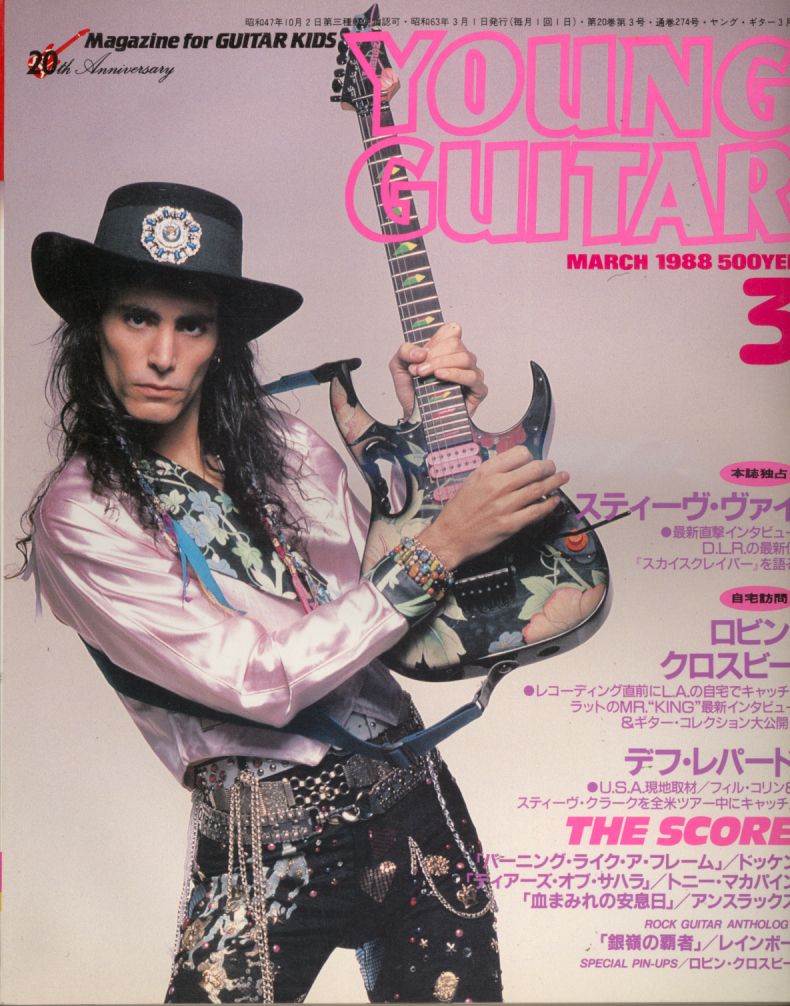
With the JEM’s success, Ibanez didn’t stop. They knew they had a winner and began offering new variations to keep things fresh. In 1988, Vai showed up with a JEM that had a bold floral pattern finish – literally fabric from curtains (from Vai’s own house!) fused onto the guitar’s body. What started as a one-off idea for Steve quickly turned into another production model due to high demand – thus the JEM77FP “Floral Pattern” was born a bit later, after Ibanez figured out how to mass-produce those fabric-top guitars.
Over the years, the JEM line expanded with various limited editions and tweaks (more on those in the Models section), but the core of the guitar – Steve Vai’s original recipe – has remained surprisingly unchanged. By the early ’90s, the JEM’s influence even led Ibanez to create the RG series (essentially a mass-market cousin of the JEM without the signature bells and whistles) to capitalize on the demand for hot superstrats. The JEM had given Ibanez a new identity and confidence; it was now seen as a leading innovator in the rock guitar world, and competitors like Kramer were left in the dust (Kramer actually went bankrupt around the end of the ’80s, after the JEM and RG helped shift the market). In short, Steve Vai and Ibanez struck gold with the JEM – and they knew it.
Features
Explaining the features of the Ibanez JEM is like describing a list of a shred guitarist’s dreams come true. Vai essentially took a Strat-style guitar and hot-rodded everything to his liking. Let’s break down some of the JEM’s signature design elements and why they’re special:
- Monkey Grip: This is probably the first thing you notice – a handle-shaped hole cut right through the body of the guitar. It looks crazy (and it is)! Steve Vai insisted on the Monkey Grip purely as a cool aesthetic and practical gimmick. It doesn’t change the sound at all; it just gives you a handy place to grab the guitar (useful for swinging it around on stage, which Vai definitely does). Vai has admitted there was no deep functional reason for it – he just wanted something unique even if other manufacturer would dare copy it. And indeed, the Monkey Grip became the JEM’s unmistakable trademark. From an audience’s perspective, the moment you see a guitar with a big handle hole, you know it’s Vai’s weapon of choice.

- Lion’s Claw Tremolo Cavity: The JEM is built for extreme whammy-bar action. To achieve the outrageous dive-bombs and pull-up tricks Vai uses, the guitar features a recess under the bridge nicknamed the Lion’s Claw (sometimes also called a “bear claw”). This is essentially a deeper rout cut into the body behind the tremolo, which allows the bridge to tilt back further. In practice, it means Vai can yank the whammy bar upward to raise the pitch dramatically without the bridge hitting the wood. This idea came from Vai’s old “Green Meanie” guitar, where he had literally carved out wood to get more range. On the JEM, Ibanez made it a clean, engineered feature. Paired with the Ibanez Edge double-locking tremolo (Ibanez’s improved take on a Floyd Rose system), the Lion’s Claw cavity lets Vai do silly things with the whammy bar (like making the guitar “flutter” or scream) while keeping the guitar in tune.

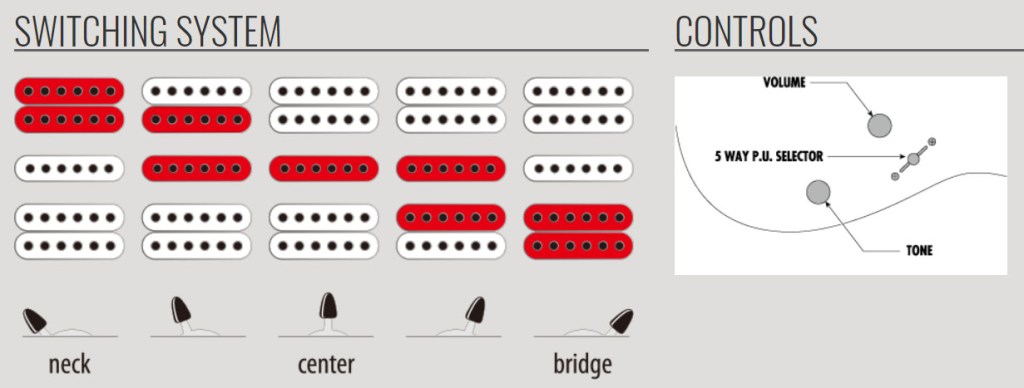
- HSH Pickup Configuration with Coil Splitting: Most traditional guitars had either two pickups (like a Fender Strat’s three single-coils or a Gibson’s two humbuckers). Vai wanted the best of all worlds: the fat sound of humbuckers and the quacky tones of single-coils. The JEM was equipped with three DiMarzio pickups in an HSH layout (humbucker – single – humbucker), and wired in a very clever way: in the 5-position switch, the 2nd and 4th positions actually split the humbuckers to act like single-coils, combined with the middle pickup. This wiring, devised with DiMarzio’s engineer Steve Blucher, meant the JEM could produce those Strat-like “in-between” tones (great for clean and funky sounds) and the full humbucker roar when needed. Curiously, Vai admits that he never uses the middle-single coil pickup alone. Originally, the pickups were DiMarzio PAF Pros (for a balanced vintage-voiced crunch) and a custom single-coil. Over time, Vai has also used his signature DiMarzio Evolution pickups and others in various JEM models, but the concept remains: the JEM is tonally versatile despite being built for high-octane playing. As a bonus, early JEMs even included a high-pass filter on the volume knob, so when you roll the volume down, you don’t lose treble – a thoughtful touch for maintaining clarity at lower volumes.

- Fast “Wizard” Neck and 24 Scalloped Frets: The Ibanez JEM has a neck made for speed. It’s thin, flat, and slick – Ibanez calls this shape the Wizard neck. Early JEM necks were about 19mm thick at the 1st fret (super slim!) with a wide 43mm nut, making it very easy to shred on. The scalloped frets are not featured on the JEM JR model.
- Vai wanted a full two-octave fretboard (24 frets) to hit those soaring high notes with ease. On the JEM, the last four frets (21–24) are scalloped, meaning the wood is carved out beneath the string. This allows for better grip, greater control, and smoother vibrato since your finger contacts only the string, not the fretboard. While scalloped frets are often found on classical instruments and famously on Yngwie Malmsteen’s guitars, Ibanez incorporated them into the JEM to enhance Vai’s high-register pyrotechnics.
A 24-fret neck wasn’t unheard of, but in the late ’80s, it wasn’t all that common either. More importantly, Steve wanted those 24 frets to be easily accessible. To achieve this, Ibanez contoured the neck joint with a crescent-shaped scoop, allowing for effortless access to the highest frets without your hand getting caught on the body—a crucial detail for a player as acrobatic as Vai.
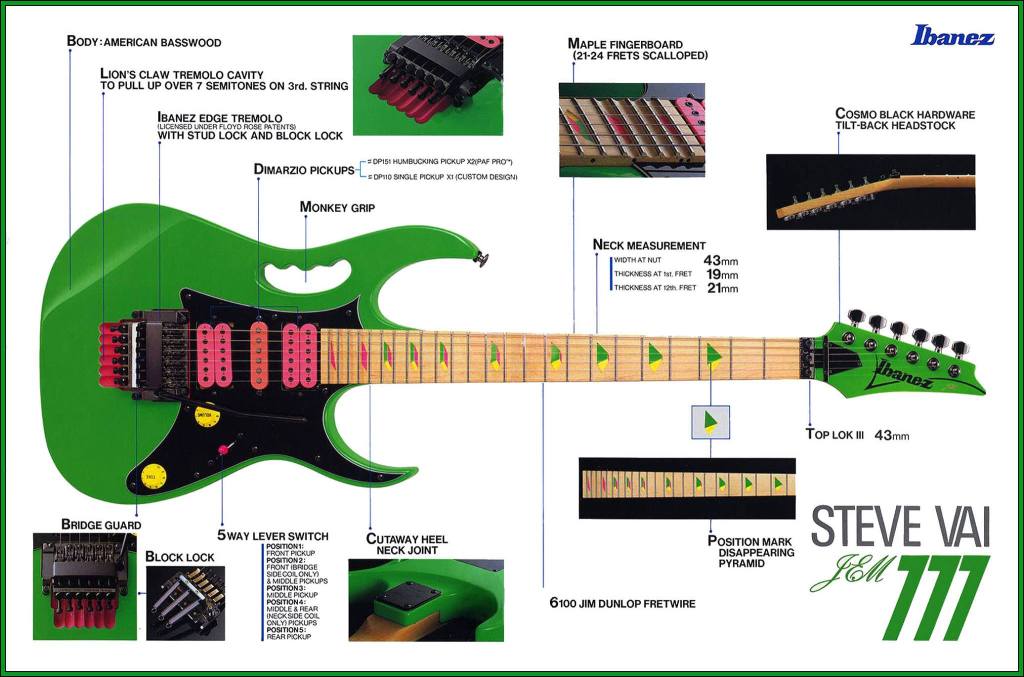
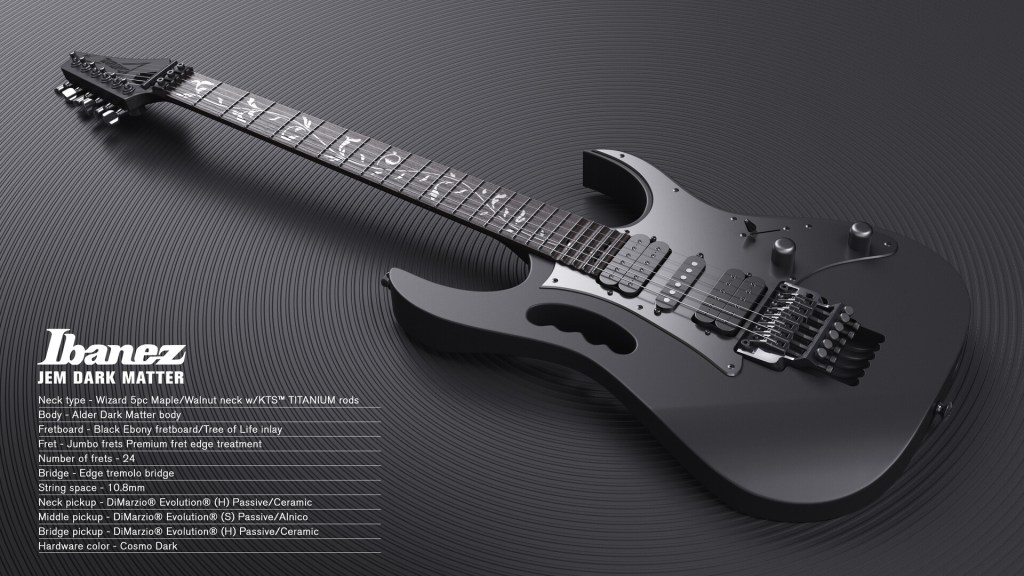
- Distinctive Aesthetics (Inlays and Colors): If the Monkey Grip didn’t clue you in, the look of the JEM screams for attention. The earliest JEM777 models came in neon Day-Glo colors (shocking pink, bright yellow, etc.), complete with matching colored pickups and knobs – a real 80s flashbulb for the eyes. On the fretboard, Vai introduced creative inlays: the first JEMs had the disappearing pyramid inlays – funky green/pink/yellow pyramids that actually matched the body colors available. By 1993, one of Vai’s most famous JEMs (the JEM7VWH, the white model) sported the gorgeous “Tree of Life” vine inlay that curls up the entire fretboard. That Tree of Life inlay has since become a hallmark of many JEM models. Little details like golden hardware on some models, or even swirled paint jobs (more on those special editions soon), gave the JEM a level of visual flair seldom seen on production guitars. It was the opposite of subtle – and that was the point. Steve Vai’s whole vibe was otherworldly and over-the-top, and the JEM embodied that perfectly, both in form and function.
All these features combined made the Ibanez JEM a groundbreaking instrument for its time. It took the essence of a Stratocaster, supercharged it with high-performance features, drenched it in neon, and infused it with Vai’s unmistakable flair. But the JEM wasn’t just about flashy aesthetics—it was a meticulously designed, high-performance machine. Every seemingly eccentric detail had a purpose, fine-tuned for playability and tone. Even the Monkey Grip, while visually striking, became an iconic hallmark of the guitar’s identity.
In many ways, the JEM was like a custom shop masterpiece made accessible to the public. When it hit the market in 1987, nothing else in music stores could compare. More impressively, its design has stood the test of time, remaining largely unchanged for four decades. If the Stratocaster is the original classic, the JEM has earned its place as a modern classic—a true testament to its enduring success.
Models
Over the decades, Ibanez has released many versions of the JEM, including various production models, limited editions, and anniversary specials. Let’s take a quick tour through some of the notable JEM models and milestones over time:
- JEM777 (1987) – The one that started it all. These were the original JEMs introduced at NAMM 1987 in the three signature colors: Shocking Pink (SK), Desert Sun Yellow (DY), and Loch Ness Green (LNG). The Loch Ness Green version was limited to 777 pieces worldwide (each one hand-signed by Steve Vai on the back plate). The JEM777 featured the disappearing pyramid inlays and all the classic features described above. Fun fact: Despite the premium price, the entire run of green LNG guitars sold out instantly – a pretty strong sign of the JEM’s success from day one.
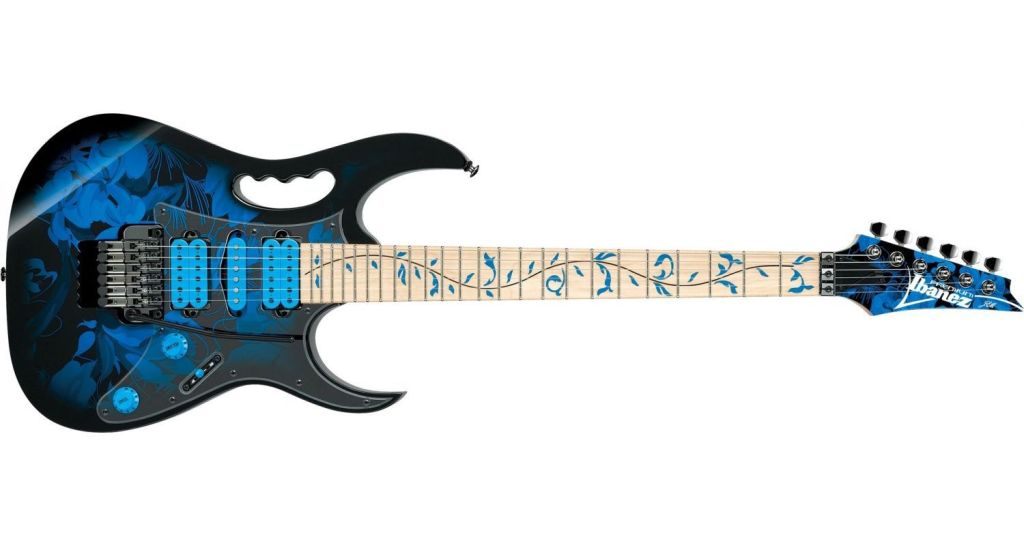
- JEM77 FP (Floral Pattern, 1988) – Steve’s floral JEM is the stuff of legend. As Vai has cheerfully confirmed, the pattern came from actual floral curtains from his home, chosen by his wife! The JEM77FP had a black base with colorful flower-pattern cloth laid under a clear coat, giving each guitar a bold, artful look. Initially, Ibanez thought it would just make a single custom guitar for Steve with this finish, but after Vai showcased it, guitar stores everywhere wanted them. Ibanez had to scramble to figure out how to mass-produce the bonded-fabric finish (which delayed its release by several months). The Floral JEM became one of the most beloved variants. Ibanez would later issue updated floral patterns (for example, the blue floral JEM77FP2 in the 2010s), but the original 1988 floral is an iconic model in the series.
- Universe UV7 (1990) – While technically not called a “JEM,” the Ibanez Universe is Steve Vai’s other famous Ibanez design – it’s basically the 7-string version of the JEM. Introduced in 1990, the Universe was the first ever mass-produced 7-string electric guitar on the market. It kept many of the JEM’s features (HSH pickups, locking trem, etc.) but with seven strings, allowing lower notes. Vai used Universes during his time with Whitesnake and on his Passion and Warfare album. The Universe later influenced a generation of players (like Korn and other ’90s bands) to adopt 7-string guitars. It’s a significant part of Vai’s legacy with Ibanez and worth mentioning in the JEM story, as it was another milestone for the brand and for extended-range guitars.
- JEM7V WH (“Vai White”, 1993) – Steve’s main workhorse through the ’90s and beyond was the JEM7VWH. This model introduced the white and gold aesthetic: white body, gold hardware, Tree of Life fretboard inlay, and DiMarzio Evolution pickups. Vai often simply calls his personal guitar from this line “Evo,” and it’s perhaps the most recognized JEM in Steve’s hands on stage. First released in the early ’90s, the JEM7V (often just called the “JEM7VWH”) stayed in production for a long time, becoming a flagship model. It had an alder body (different from the basswood of earlier JEMs) and really represented the refined, matured form of the JEM for Vai’s ongoing needs. (In fact, Ibanez even made a limited run relic replica of “Evo” in 2012, called the JEM-EVO, complete with all the wear and tear, strictly for collectors.)

- Anniversary and Special Editions: Ibanez loves celebrating the JEM’s milestones with crazy limited editions:
- In 1997, to mark 10 years of the JEM, they released the JEM10TH, a limited-edition black JEM with ornate vine inlay (mother-of-pearl and abalone) and engraved silver pickguard. Only 824 made, it’s highly collectible.
- Around 1999–2000, they released the JEM2KDNA model. This one is especially wild – it had swirl paint finishes and, unbelievably, Steve Vai’s actual blood mixed into the red swirl of the fretboard inlay! Vai donated vials of his blood, which were chemically mixed into the paint of the DNA models’ fingerboards. Only 300 of these blood-tinted guitars were made, making them one of the most outrageous (and vampiric) pieces of Vai memorabilia.
- In 2007, for the 20th anniversary of the JEM, Ibanez went futuristic with the JEM20th. This model had a transparent acrylic body with multicolor paint swirls inside the acrylic, and internal green LEDs that could light up the whole guitar from within. It looked like something out of a sci-fi art gallery – and when you pulled up on the volume knob, the guitar glowed neon green! This 20th-anniversary JEM demonstrated that Ibanez and Vai were still willing to push the envelope on design just for the fun of it.
- In 2017, the 30th anniversary, Ibanez did reissues of the classic 1987 JEM777 colors (LNG, SK, DY) in limited numbers, letting a new generation experience the JEM in its original fluorescent glory.
- There have also been various other editions: BFP (Blue Floral Pattern) JEM77BFP in the early ’90s, the PMC/GMC multicolor swirl JEMs (1992’s Passion and Warfare anniversary models in purple/green multi swirls), the burnt stained blue JEM7BSB, etc. Each has its own cult following among fans.
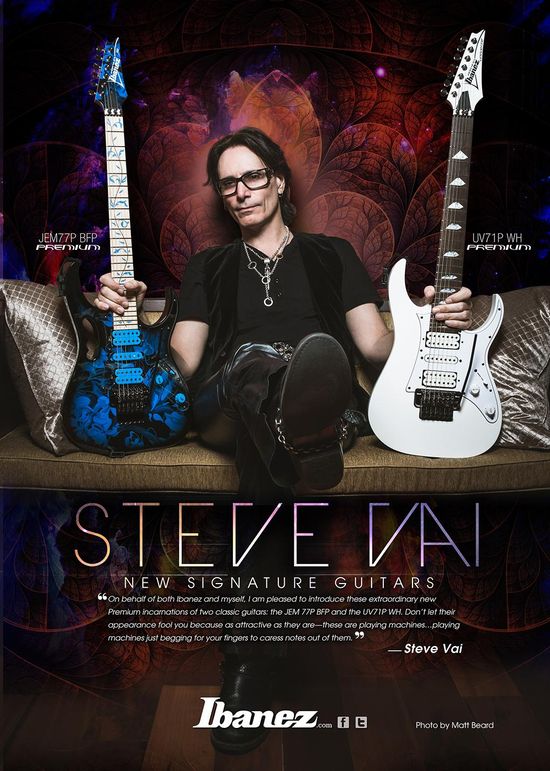
- JEM Jr and Premium Lines (2010s–present): Not everyone can afford a high-end JEM, so Ibanez introduced more budget-friendly versions over the years. The JEM-JR (also known as the JEM333 at one point) is a more affordable, made-in-Indonesia model that retains the iconic Monkey Grip, Lion’s Claw tremolo cavity, and vine inlay. However, to keep costs down, it features more economical alternatives in terms of woods and hardware while still capturing the essence of the legendary JEM design.As of the late 2010s, Ibanez’s catalog actually splits the JEM into three tiers: The entry-level JEMJR (in white, black and variants like the JEMJRSP in yellow or pink), a mid-tier Premium line (e.g. the JEM77P in blue floral and the JEM7VP in white, built in Indonesia with DiMarzio pickups and somewhat higher specs), and the top-tier JEM7V (made in Japan, with all the prestige components). This means there’s a JEM available at multiple price points, which is great for younger players who want the Vai vibe without breaking the bank. Regardless of tier, all JEMs include the key features that define the model.
- The PIA (2020) – Although not technically a “JEM,” it’s worth noting that in 2020 Steve Vai and Ibanez launched the PIA (Paradise In Art) model as a sort of next-generation evolution of the JEM. The PIA has tweaks like a new handle design (styled as petals), new pickups, and other aesthetic changes, but it’s essentially the successor to the JEM in Steve’s lineup. Vai still plays his old JEMs, but going forward the PIA will be his main signature model. The introduction of the PIA shows how enduring the concept of the JEM is – even after 35+ years, Vai is refining the formula, not abandoning it. Meanwhile, the original JEM guitars remain in production alongside the PIA, which is a rarity in the guitar world (few designs outside of the 1950s Strat/Les Paul era have that kind of staying power).
As you can see, the Ibanez JEM has a rich family tree. Collectors cherish the limited editions (like the swirls and anniversary models), while many players simply love the workhorse regular models for what they offer. Through all its iterations, a JEM is easy to spot and hard to forget. It’s quite neat that you can buy a brand-new JEM today that is fundamentally very similar to the one Vai debuted in 1987, proving how forward-thinking the design was.

Cultural Impact
The Ibanez JEM did more than just give Steve Vai a cool new toy – it changed the guitar industry and influenced the direction of rock/metal guitar in a big way. When Vai’s JEM was unveiled in 1987, it was as if the entire guitar world took a step forward. One famous scene describes how executives from rival companies stood in awe (and maybe horror) at the Ibanez booth during the JEM’s debut, realizing this instrument was a game-changer. The JEM basically reshaped the entire guitar landscape at that moment. By securing Steve Vai and bringing his vision to life, Ibanez leapfrogged many competitors in the late ’80s. Ibanez suddenly found itself at the peak of the guitar world, looking down at former industry leaders like Kramer. The JEM’s success was a huge coup for Ibanez, establishing the company as the prime maker of high-performance guitars for virtuosos at a time when shred guitar was at its peak.
One major impact of the JEM was how it validated the idea of the super-strat signature guitar. Before the JEM, Ibanez had tried signature models with other artists, but none had the explosive effect of Steve Vai’s model. The JEM showed that a signature guitar could be extremely personalized (even borderline crazy in design) yet still appeal to a broad audience of players. It defied the notion that guitarists only wanted the same old classics. In an era when many guitarists were (and still are) stuck on ’50s designs like Strats and Les Pauls, the JEM proved that an innovative design could become a long-term success. It’s an outlier in that sense – many radical guitar ideas have flopped or faded (remember Gibson’s self-tuning robot guitars, or odd experiments like that?), but the JEM thrived. The JEM was a bold and unconventional design that not only endured the test of time but also built a legacy of its own.
The JEM’s influence can be seen in several ways:
- Ibanez’s Rise and the RG Series: Thanks to the JEM, Ibanez’s image got a serious boost among rock and metal players. The company quickly capitalized by releasing the RG550 and related models, which were essentially JEM-inspired guitars for the masses (same basic shape and features minus the Vai-specific styling). The RG series became one of the best-selling lines of rock guitars ever, used by countless players in genres from metal to prog to shred. It’s not a stretch to say that without the JEM drawing attention, the RG might not have taken off as it did. The late ’80s and early ’90s saw Ibanez become the brand for virtuoso guitarists (not just Vai, but guys like Joe Satriani, Paul Gilbert, etc., also came on board). Meanwhile, previous market leaders like Kramer literally went out of business by 1990. The torch had been passed, with Ibanez largely having the JEM to thank.
- Shred Guitar Culture: The Ibanez JEM became a coveted instrument for the shred-hungry masses. Aspiring virtuosos saw Steve Vai with this insane guitar and wanted a piece of that magic. The JEM (and the more affordable offshoots like the RG) equipped a generation of shred guitarists with the tools to push technical boundaries. Features that the JEM popularized – like super-slim necks, 24-fret fingerboards, high-output pickups, locking trems – became standard features in the arsenal of rock/metal guitar design going forward. Nowadays it’s common to see guitars with those elements, but the JEM was one of the first to bundle all of them in a production instrument.The “super strat” style guitars that dominate the metal genre (from various brands) all owe a little debt to the trail blazed by the JEM.
- Visual Boldness: Culturally, the JEM also gave permission for guitars to be fun and flamboyant in appearance. In the 1970s and early ’80s, you’d mostly see guitars in sunburst, black, white, maybe red – pretty basic colors. Vai’s JEM came out swinging in hot pink and bright yellow with sparkly inlays! This encouraged other guitar makers to experiment with eye-catching designs and finishes. The whole late ’80s aesthetic of neon guitars (think of Gibson’s neon series, or Jackson and Charvel’s colorful graphics) was reinforced by the popularity of Vai’s instruments. Even today, the JEM’s look is instantly recognizable and brings a smile to fans of ’80s rock – it’s become an iconic image of that era’s excess and creativity.
- Community and Mods: The JEM also spawned a devoted community of fans and modders. Some people take more affordable Ibanez models and turn them into “JEM projects” – carving their own monkey grips, refinishing in wild colors, etc. For instance, Ibanez RG550 guitars (cheaper cousins to the JEM) are often used as platforms to create DIY JEM replicas or tributes. There’s even a whole cottage industry around swirled paint jobs (inspired by those ’90s swirl JEMs and Universes) where artists create custom swirl finishes for fans. In a way, the JEM fostered a subculture of guitar customization: it showed players that guitars could be personalized artworks as well as musical tools. Steve Vai even ran a “Design a JEM” contest in 2010, illustrating how the JEM invites creativity and fandom (the winning design from a fan got turned into a real one-off guitar).
- Longevity and Legacy: Perhaps the biggest impact of the JEM is simply its staying power. Decades after its introduction, the JEM is still in production and still sought after. Steve Vai himself famously stated, “I’ve never wanted to play anything else. Still, to this day, I reach for my JEMs, because nothing else is as comfortable” (Bacon, 2019)That sentiment is echoed by many players who consider the JEM a pinnacle of guitar design. For an instrument born in the flashy ’80s to remain relevant into the 2020s is a significant cultural feat. It’s become a classic in its own right, mentioned in the same breath as Stratocasters and Les Pauls among guitars that made a difference – except the JEM is a modern (relatively) design, which is rare. Its success paved the way for other artist signature models and showed companies that sometimes crazy ideas do work out. In the end, the JEM’s influence is evident every time you see a colorful, mean-looking guitar built for extreme whammy antics and lightning-fast solos. As one guitar writer quipped, Vai and the JEM’s debut put everyone on notice and “the brand hasn’t looked back since”.
Conclusion
Talking about the Ibanez JEM is a bit like talking about a legend. It started as Steve Vai’s ambitious attempt to build his dream guitar, and over the years it became a benchmark for what a modern electric guitar can be. To this day, if you pick up an Ibanez JEM, you’re holding a piece of guitar history that still feels completely at home on a stage or in a studio. Steve Vai’s fingerprints (quite literally, in the case of the DNA model!) are all over the JEM’s design, and that close artist collaboration resulted in an instrument that has stood the test of time. The JEM’s legacy is seen not just in the famous players who use it or the albums it’s been featured on, but in the very concept of the “shred guitar” which it helped redefine.

Even as music trends have come and gone, the JEM remains relevant and revered. Ibanez has continued to celebrate it with new editions and updates (the recent PIA model shows that Vai’s spirit of innovation is still alive, taking the JEM concept into the future). Yet, the classic JEM is still essentially the same monster it was in 1987 – proving that they got it right on the first try..
In the end, the Ibanez JEM is more than just a signature model for a famous guitarist. It’s a symbol of a bold era in guitar making, a marriage of flamboyant style and high-performance substance. It’s the guitar that invited us all to “dream a little bigger” when it comes to what an electric guitar could look like and do. And for that reason, the JEM will always hold a special place in the pantheon of influential guitars. Whether you’re a Vai fan or not, it’s hard not to appreciate the audacity and artistry of this instrumen
References
Bacon, T. (2019, July 31). The Story of the Ibanez JEM: How Steve Vai’s Superstrat Reinvented the Signature Guitar. Reverb News. https://reverb.com/news/the-story-of-the-ibanez-jem-steve-vai-superstrat-signature
Colic, J. (2024, December 2). Ibanez JEM: A controversial classic. Mixdown Magazine. https://mixdownmag.com.au/features/ibanez-jem-a-controversial-classic/
guitarguitar. (2024, August 23). The Definitive Story of the Ibanez JEM, as Told by Steve Vai [Interview]. guitarguitar News. https://www.guitarguitar.co.uk/news/142185/
Hodgson, P. (2012, August 8). How Steve Vai’s Ibanez JEM Revolutionized the “Super Strat”. Premier Guitar. https://www.premierguitar.com/gear/how-steve-vais-ibanez-jem-revolutionized-the-super-strat
McAllister, M. (2025, March 5). A Guide to the Ibanez JEM. Guitar Center Riffs. https://www.guitarcenter.com/riffs/buying-guides/guitars/ibanez-jem-buying-guide-history
Yates, H. (2017, August 31). Steve Vai tells the story of the Ibanez JEM. MusicRadar. https://www.musicradar.com/news/the-story-of-the-ibanez-jem
 oscaronguitars.com
Leave a comment