
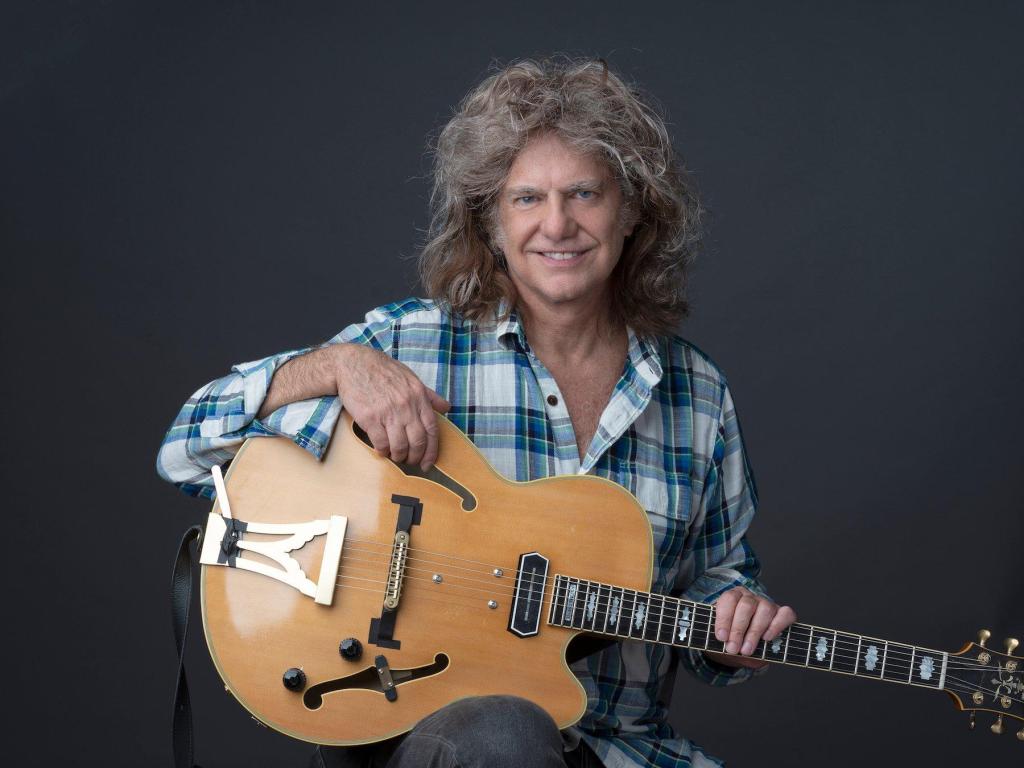
Pat Metheny is a giant in the world of jazz guitar, known for his genre-bending compositions, innovative approach, and unmatched dedication to his craft. Across a career spanning nearly five decades, Metheny has consistently pushed the boundaries of jazz, incorporating elements of rock, world music, and avant-garde into his work. This article explores Metheny’s journey, his influences, iconic albums, unique gear, signature techniques, and the legacy he’s carved into jazz history.
How He Began
Born on August 12, 1954, in Lee’s Summit, Missouri, Pat Metheny discovered his passion for music at a young age. Initially, he started on the trumpet, but by age 12, he had switched to guitar. Metheny showed exceptional talent, and his dedication led him to immerse himself in jazz early on. By 15, he was already performing professionally with older jazz musicians in Kansas City, gaining experience that would serve him well.
Metheny’s career took a leap when he attended the University of Miami at 18 and became the youngest teacher in the school’s history. Shortly after, he moved to Boston, where he joined the faculty at Berklee College of Music and began working with vibraphonist Gary Burton, whose band provided him with his first touring and recording experience.
Who Were His Influences?
Pat Metheny’s influences are varied, drawing from both traditional and contemporary sources. Early on, he was deeply inspired by jazz greats such as Wes Montgomery and Jim Hall, whose melodic sensibilities and harmonic depth shaped his approach to jazz guitar. Metheny has often cited Ornette Coleman as a major influence, especially for his open-ended improvisational style that encouraged Metheny to explore free expression.
Rock artists like The Beatles and Jimi Hendrix also played a significant role in Metheny’s development, as he found ways to blend rock energy with jazz sophistication. The diverse range of Metheny’s influences can be heard in his expansive sound, which effortlessly moves between genres.
Iconic Albums and Tracks
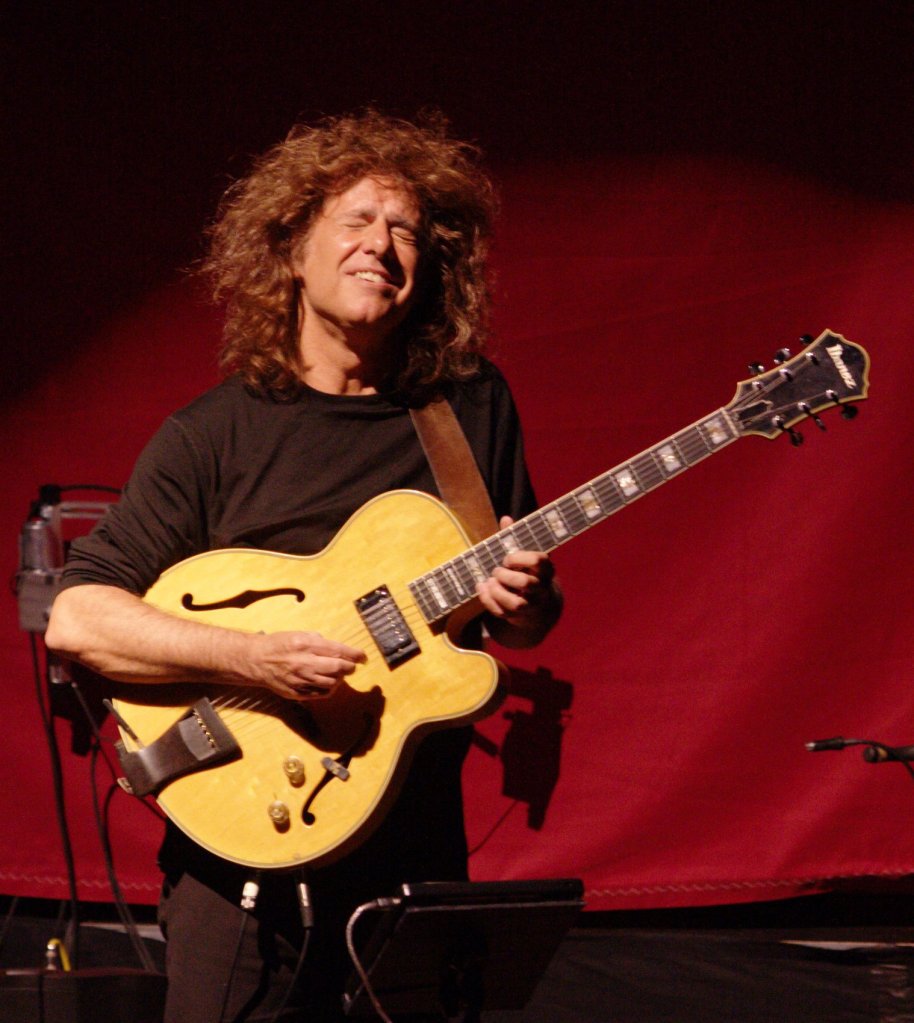
Metheny’s discography is vast and includes several groundbreaking albums that define modern jazz. His debut album, “Bright Size Life” (1976), featuring Jaco Pastorius on bass, is a masterpiece that redefined jazz guitar. Tracks like “Bright Size Life” and “Missouri Uncompromised” introduced Metheny’s lyrical phrasing and unconventional chordal work, setting him apart as a fresh voice in jazz.
In 1982, he released “Offramp” with the Pat Metheny Group, which included the Grammy-winning track “Are You Going with Me?” This album showcased Metheny’s use of guitar synthesizer, a relatively new instrument at the time, and his exploration of world music influences. Another landmark album, “Still Life (Talking)” (1987), embraced Brazilian rhythms with tracks like “Last Train Home,” further solidifying his reputation for innovation.
Metheny’s 1996 album “Beyond the Missouri Sky”, a duet with bassist Charlie Haden, offers introspective tracks like “Waltz for Ruth,” displaying his more melodic, acoustic side. In recent years, his solo album “Orchestrion” (2010) featured a mechanical orchestra, an ambitious and experimental project that exemplifies Metheny’s drive to expand the possibilities of jazz.
Type of Guitar and Amp That Modeled His Tone
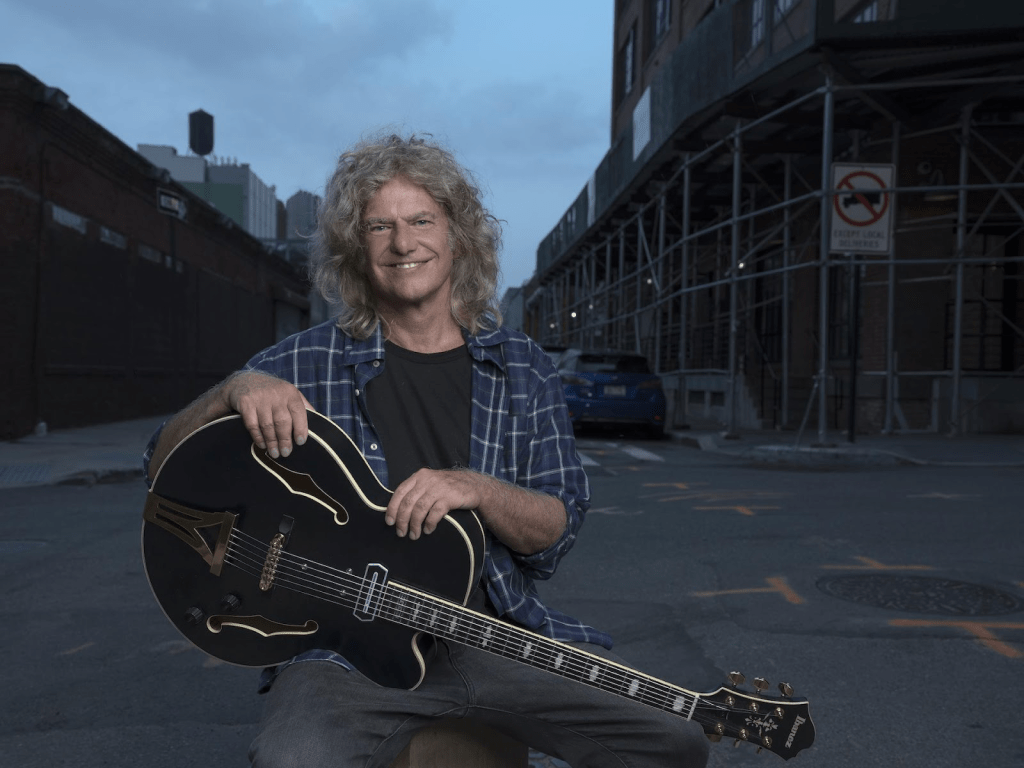
Pat Metheny’s choice of gear is as unique as his music. His primary guitar is the Ibanez PM-100, a signature hollow-body model crafted to his specifications, allowing him to achieve his signature warm and resonant tone. Another notable guitar in his arsenal is the 42-string Pikasso guitar, a custom-made instrument with four necks, designed by luthier Linda Manzer. This guitar has become one of Metheny’s trademarks, used in songs like “Into the Dream” for creating ethereal, harp-like textures.
Metheny is also known for using the Roland GR-300 guitar synthesizer, especially during the 1980s. This synthesizer allowed him to emulate horn and keyboard sounds on his guitar, opening up new dimensions in his compositions. For amplification, Metheny has used various setups, often favoring acoustic amps that faithfully replicate his guitar’s tone while allowing for expressive dynamics and clarity.
Important Technique: Seamless Genre Fusion
One of Pat Metheny’s most defining qualities is his ability to blend different genres seamlessly. Metheny’s approach to genre fusion involves drawing elements from jazz, rock, folk, and world music, all while maintaining his unique voice. His skillful use of both electric and acoustic tones, coupled with intricate melodic lines and chord voicings, creates a lush, multi-layered soundscape.
Another hallmark of Metheny’s style is his rhythmic complexity. He often employs shifting time signatures and syncopation, adding an exciting, unpredictable element to his compositions. Metheny’s phrasing, whether soloing or playing rhythm, is melodic and thoughtful, allowing each note to contribute to the song’s emotional narrative.
What Is His Legacy?
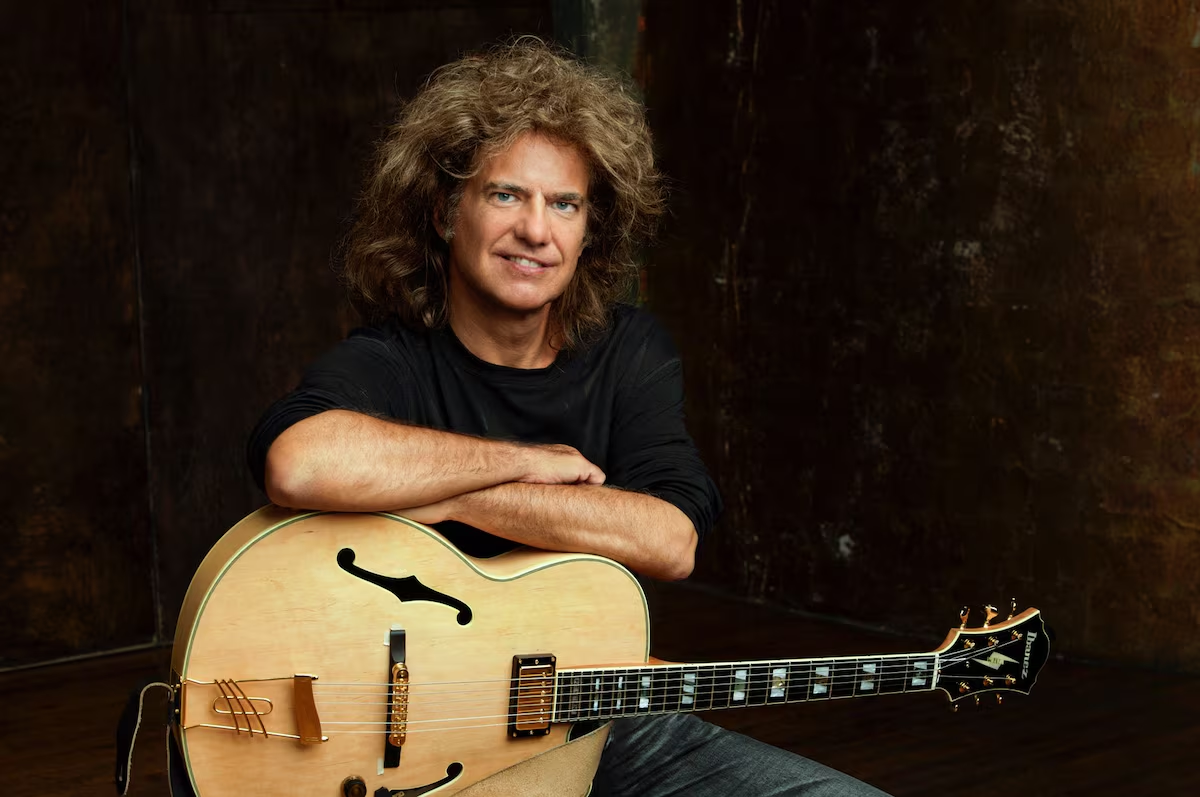
Pat Metheny’s legacy is profound, spanning a career that has significantly shaped modern jazz guitar. His influence extends to musicians across multiple genres who are inspired by his dedication to originality and experimentation. Metheny’s willingness to push the boundaries of jazz guitar has set a standard for creativity, inspiring generations of guitarists to find their own unique voice.
Metheny’s impact is further evident in the number of Grammy Awards he has won—20 to date—making him one of the most decorated jazz musicians of all time. He continues to be an active presence in the music world, consistently releasing new music and performing globally, demonstrating a commitment to his art that few musicians achieve.
Conclusion
Pat Metheny’s contributions to jazz guitar are unparalleled. His exploration of tone, harmony, and rhythm has expanded what’s possible in jazz, and his dedication to constantly evolving has inspired countless musicians. Metheny’s music, whether through hauntingly beautiful melodies, complex compositions, or cutting-edge experimentation, will undoubtedly resonate for decades to come. For fans and aspiring guitarists alike, Metheny’s career is a testament to the power of innovation and authenticity in music.
Bonus Track: 10 Lesser-Known Facts About Pat Metheny
- Metheny began teaching at the University of Miami at just 18 years old.
- He is a fan of American folk and bluegrass music, citing it as a key influence.
- Metheny has worked on over 40 albums as a leader and collaborator.
- He was the first jazz musician to receive a Grammy in 10 different categories.
- Metheny’s song “James” is a tribute to folk musician James Taylor.
- He often uses an unusual right-hand picking technique, angling his pick for a warmer tone.
- Metheny’s Pikasso guitar has 42 strings and four necks, allowing for unique soundscapes.
- He’s known for marathon rehearsal sessions, sometimes lasting up to 14 hours.
- Metheny is an avid reader, with a particular interest in philosophy and science fiction.
- He is one of the few jazz musicians to cross over into mainstream success without compromising his style.
 oscaronguitars.com
Leave a comment