
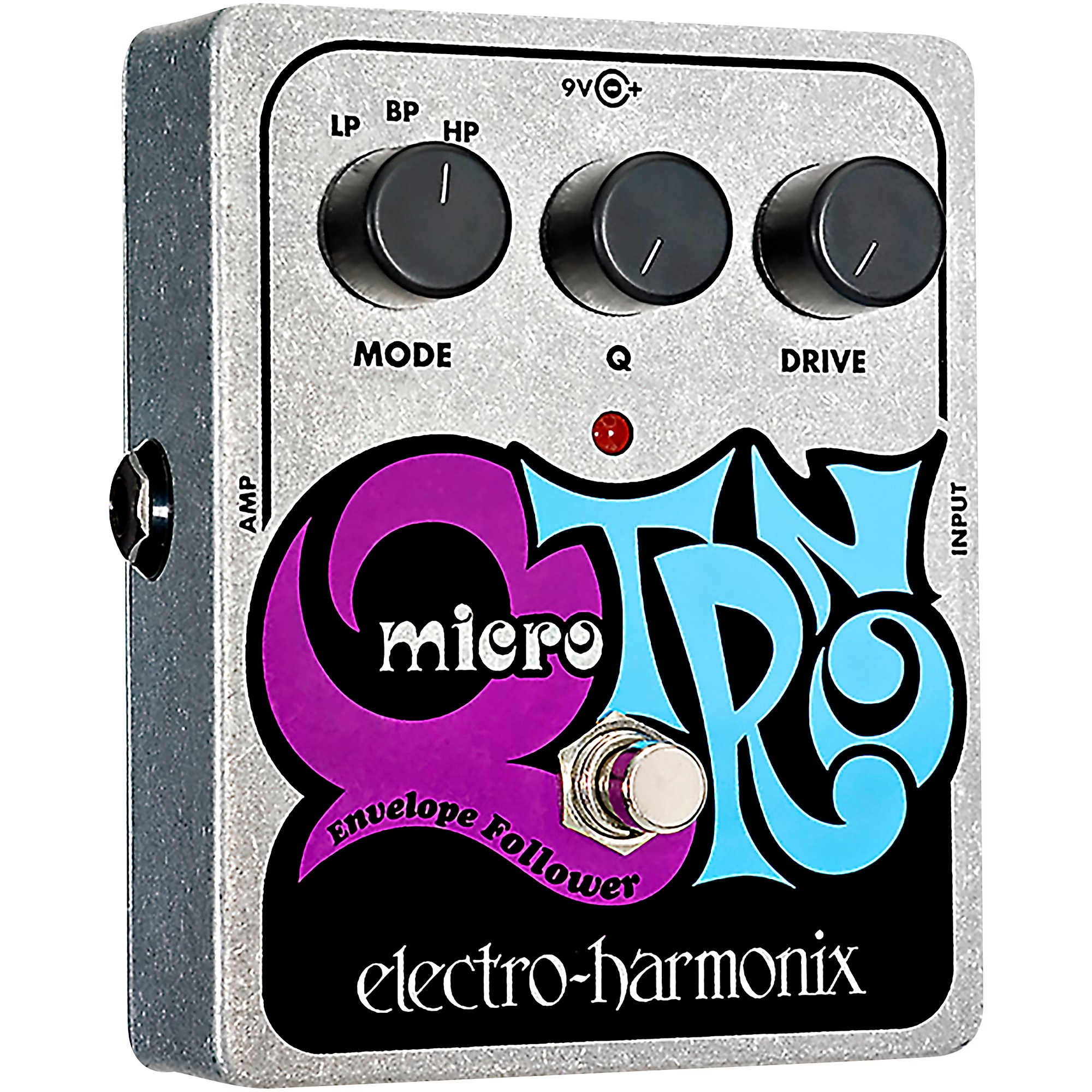
Hey there, guitar enthusiasts! If you’re diving into the world of guitar effects, you’ve probably come across something called an envelope filter. It might sound a bit technical, but trust me, this effect is all about adding some serious funk, quirkiness, and expressiveness to your playing. So, what exactly is an envelope filter effect, and how can it enhance your guitar sound? Let’s break it down.
What Is an Envelope Filter?
An envelope filter is a dynamic effect that responds to the intensity and attack of your playing. It’s a type of filter that automatically adjusts the cutoff frequency based on the envelope (or shape) of your guitar signal. Think of it as a kind of auto-wah that reacts to how hard or soft you play. The harder you hit the strings, the more pronounced the effect; play softer, and the effect becomes subtler.
The envelope filter’s signature sound is often described as “quacky” or “squelchy,” and it’s especially popular in funk, disco, and jam band music. It can add a percussive, vocal-like quality to your guitar tone, making it great for rhythmic playing and solos alike.
How Does an Envelope Filter Work?
Here’s a quick rundown of how the envelope filter does its magic:
- Signal Detection: The envelope filter starts by detecting the amplitude (or volume) of your guitar signal. This is the “envelope” part, which shapes how the effect reacts to your playing dynamics.
- Cutoff Frequency Adjustment: Based on the detected signal, the effect dynamically adjusts the cutoff frequency of the filter. The harder you play, the higher the cutoff frequency moves, allowing more high frequencies through and creating that characteristic wah-like sweep.
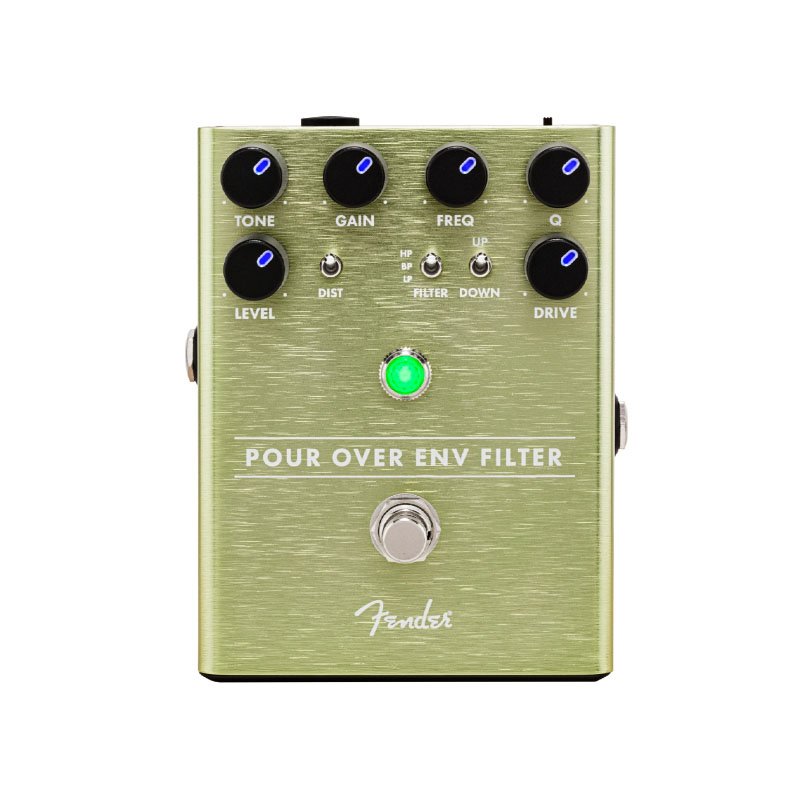
- Filter Types: Envelope filters often use low-pass, high-pass, or band-pass filters to shape the sound. Each filter type affects a different range of frequencies, contributing to the overall tone.
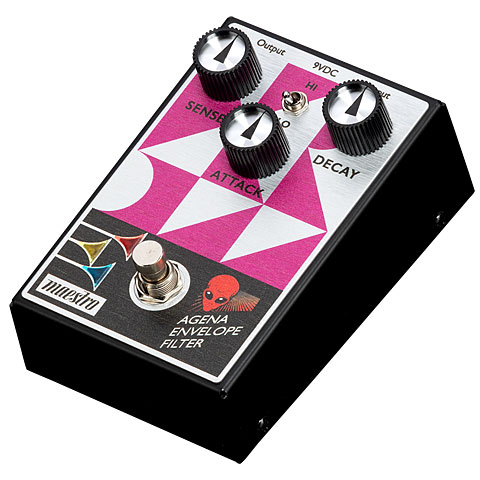
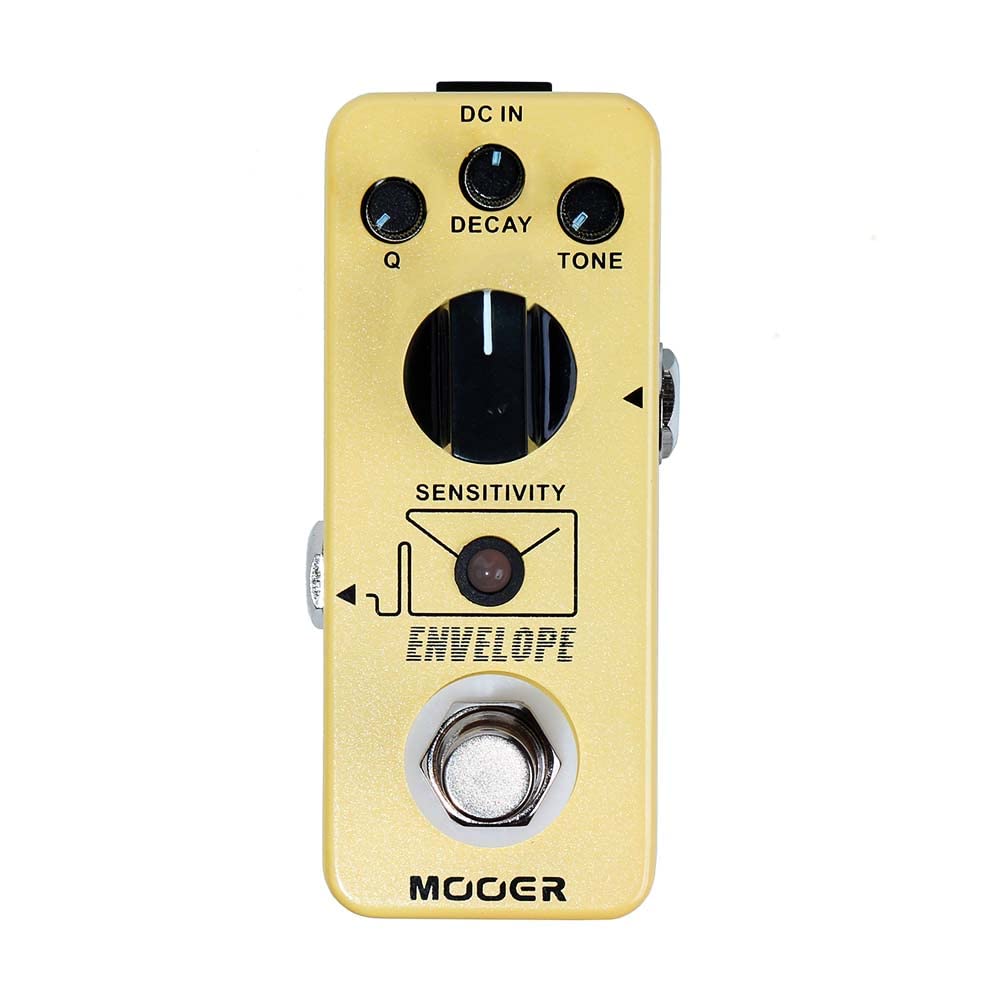
- Decay and Sensitivity Controls: Many envelope filters come with knobs to adjust the decay (how quickly the effect fades) and sensitivity (how responsive the filter is to your playing). These controls let you fine-tune the effect to match your style.

Why Use an Envelope Filter?
Envelope filters can add a ton of character to your guitar sound. Here are a few reasons why you might want to incorporate one into your setup:
- Expressiveness: The envelope filter reacts to your playing dynamics, making it one of the most expressive effects out there. It’s great for adding nuance and personality to your riffs and solos.
- Funky Rhythms: This effect is a staple in funk music for a reason. It can turn simple chord progressions or single-note lines into rhythmically complex, groove-laden phrases.
- Unique Solo Sounds: If you’re looking to break away from traditional overdrive or delay-drenched solos, an envelope filter can give you a fresh, distinctive tone that stands out.
- Versatility: While it’s often associated with funk and disco, the envelope filter can be used in a wide range of genres, from rock and blues to electronic music.
Famous Uses of Envelope Filters
Envelope filters have been used by some of the most iconic guitarists across various genres. Here are a few examples:
- Jerry Garcia (Grateful Dead): Jerry was known for his use of the Mutron III envelope filter, which became a key part of his sound in the 1970s. It added a unique, vocal-like quality to his solos, making them instantly recognizable.
- Bootsy Collins (Parliament-Funkadelic): While primarily a bassist, Bootsy’s use of envelope filters was legendary in the funk world. His rhythmic, quacky bass lines helped define the sound of P-Funk, and guitarists can learn a lot from his approach.
- John Mayer: In more recent years, John Mayer has used envelope filters to add texture and groove to his playing, particularly in his work with the John Mayer Trio and his solo material.
- Tom Morello (Rage Against the Machine): Known for his innovative use of effects, Morello has incorporated envelope filters into his riffs to create unexpected, cutting-edge sounds that complement his aggressive playing style.
How to Use an Envelope Filter Effectively
To get the most out of your envelope filter, here are some tips:
- Adjust Sensitivity for Your Style: Start by tweaking the sensitivity knob to match your playing dynamics. If you play with a light touch, you might need to increase the sensitivity to make the effect more noticeable.
- Experiment with Decay: The decay setting controls how quickly the filter effect fades. A faster decay gives a sharper, more percussive sound, while a slower decay produces a smoother, more flowing effect.
- Combine with Other Effects: Envelope filters can create interesting textures when combined with other effects like distortion, delay, or reverb. Try placing the filter before or after these effects in your signal chain to see how it changes the overall sound.
- Use in Moderation: Like any effect, it’s easy to overdo it with an envelope filter. Use it tastefully to enhance specific parts of your playing rather than drenching every note in quackiness.
- Practice Dynamic Control: Since the effect responds to how hard you play, practicing with dynamic control can help you get the most out of your envelope filter. Try playing phrases with varying intensity to see how the filter reacts.
Choosing the Right Envelope Filter
When shopping for an envelope filter, there are a few things to keep in mind:
- Analog vs. Digital: Analog envelope filters often have a warmer, more organic sound, while digital versions may offer more features and flexibility. Consider what’s most important to your playing style.
- Control Options: Look for a pedal with adjustable controls like sensitivity, decay, and filter type. This allows you to fine-tune the effect to suit your needs.
- Size and Build Quality: If you’re adding it to a pedalboard, consider the size and durability of the pedal. You want something that’s sturdy enough to withstand live performance but compact enough to fit into your setup.
- Price: Envelope filters can range in price, from budget-friendly options to high-end models. Determine your budget and try out different pedals to find the best balance between cost and quality.
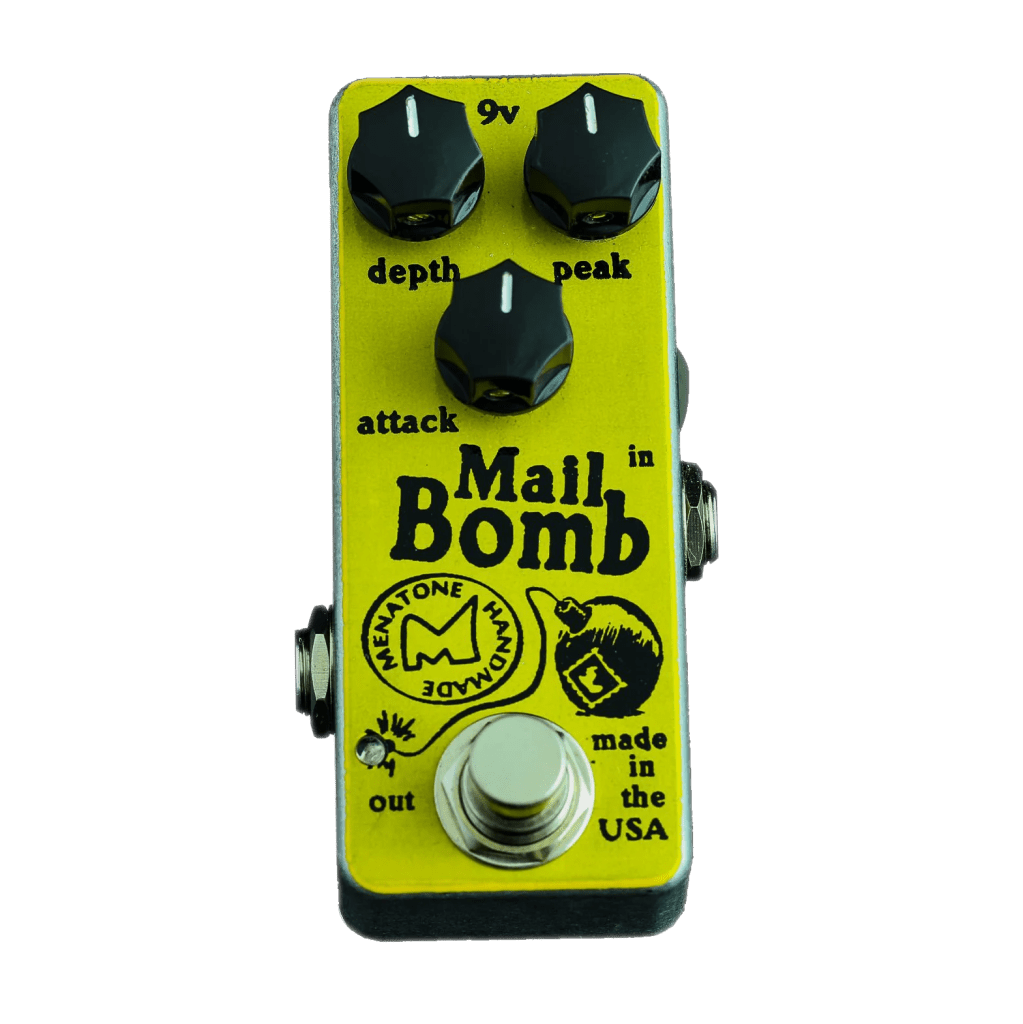
Conclusion: Embrace the Quack!
The envelope filter is a fantastic effect for guitarists looking to add some funk, expression, and uniqueness to their sound. Whether you’re playing tight, rhythmic grooves or soaring solos, this dynamic effect can bring a whole new dimension to your tone.
 oscaronguitars.com
Leave a comment