
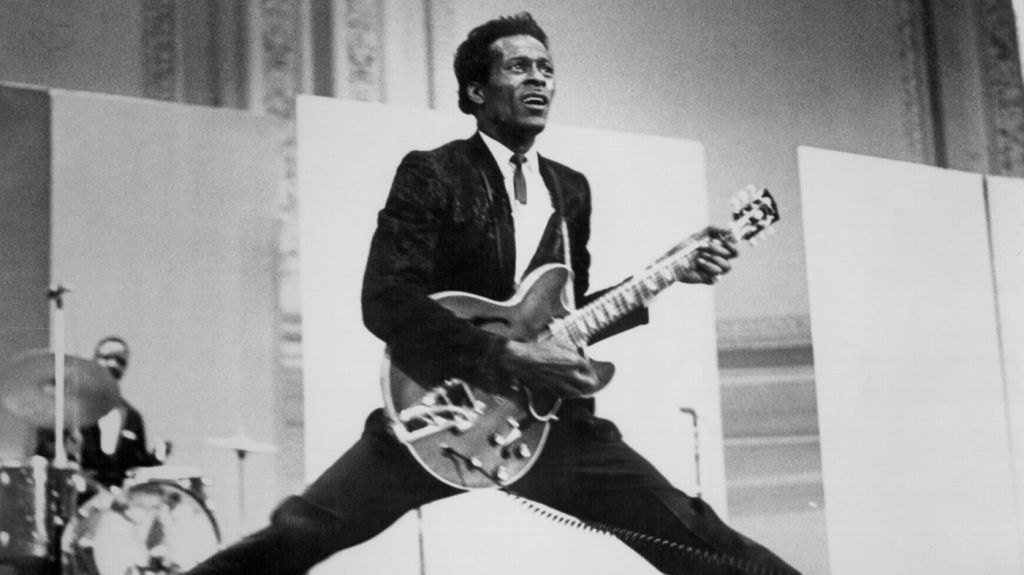
The Sound That Shaped a Generation
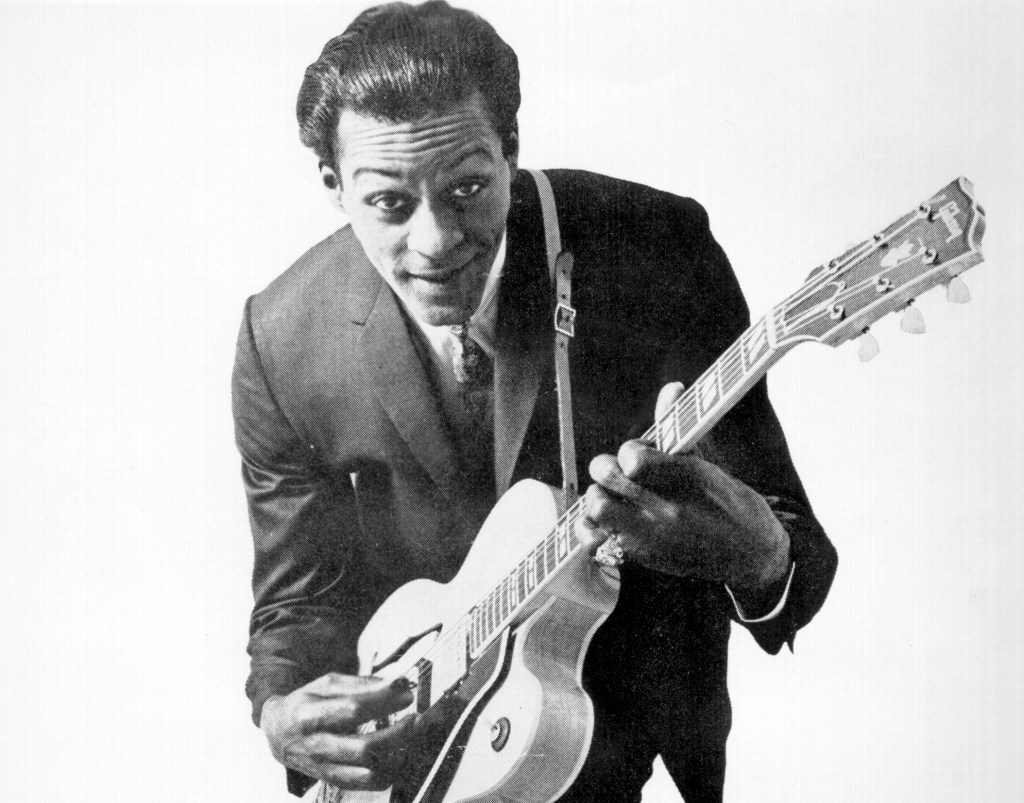
It’s impossible to talk about the birth of rock and roll without tipping your hat to Chuck Berry. Born Charles Edward Anderson Berry on October 18, 1926, in St. Louis, Missouri, he didn’t just help invent rock and roll—he was rock and roll. While others were dabbling in rhythm and blues, Berry synthesized it with country twang, clever wordplay, and guitar licks that exploded through radios like lightning. His work in the mid-20th century wasn’t just music; it was a blueprint.
Berry’s story isn’t just about catchy hooks or duck walks. It’s about a cultural revolution, about breaking boundaries—musical, racial, and generational. His guitar riffs ignited teenage rebellion, and his lyrics painted vivid pictures of American youth, long before it was fashionable—or even acceptable—to do so.
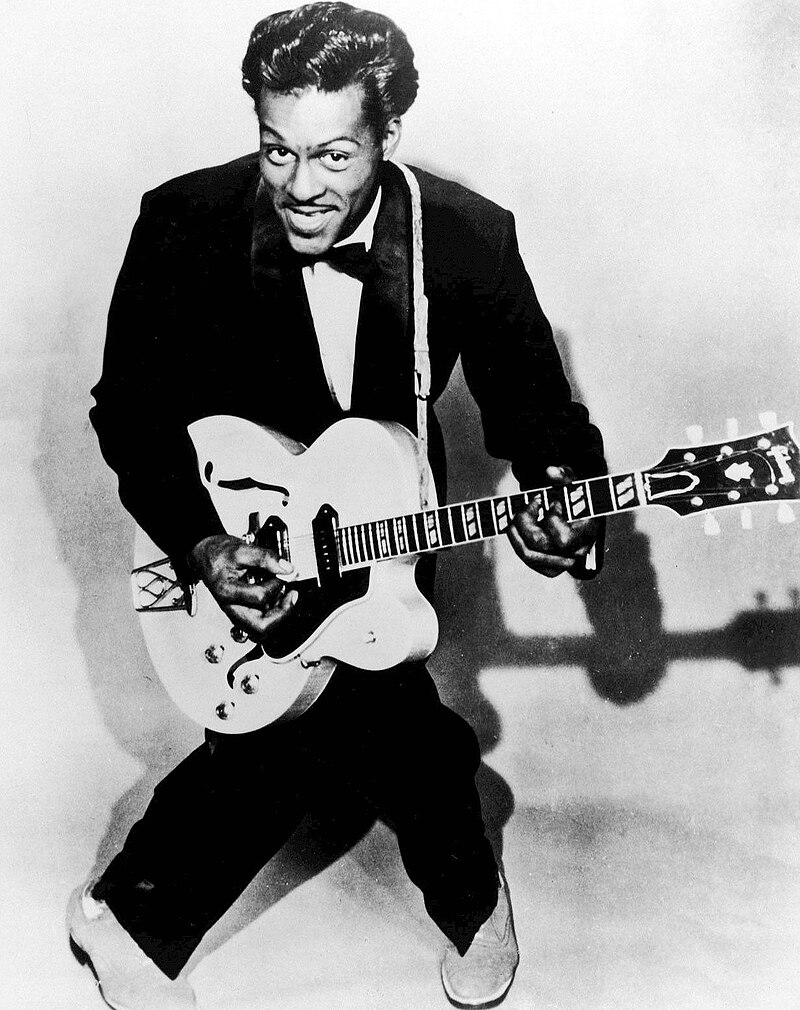
Chess Records and the Rise of a Rock Innovator
In 1955, Berry took a road trip to Chicago to meet with Muddy Waters. That meeting led to an introduction to Leonard Chess of Chess Records, the label that would release Berry’s first single: “Maybellene.” A reworking of the country tune “Ida Red,” “Maybellene” fused R&B rhythm with a country melody and lyrics about a hot rod race gone wrong. It shot up the charts, selling over a million copies.
From there, the hits kept coming. “Roll Over Beethoven,” “Too Much Monkey Business,” “School Days,” and “Rock and Roll Music” weren’t just popular—they were foundational. They took the raw energy of rhythm and blues and reshaped it into something new: fast, fun, danceable, and profoundly American.
And always, always there was that guitar. Sharp, rhythmic, punchy—Berry’s style was instantly recognizable. His use of double-stops (playing two notes simultaneously) was revolutionary, laying the groundwork for countless rock solos to come.
“Johnny B. Goode” and the Power of a Dream
If Chuck Berry had written only one song, and it was “Johnny B. Goode,” his place in history would still be secure.
Released in 1958, the song tells the story of a poor country boy with dreams of playing the guitar so well, people would “come from miles around.” But this wasn’t just fiction—it was Berry’s story, disguised. Originally, the lyrics described the boy as “a colored boy,” but Berry changed it to “country boy” to ensure radio play. Even with that edit, the subtext was clear to anyone paying attention.
“Johnny B. Goode” was more than a hit—it was a cultural icon. It became the anthem of rock ambition and teenage aspiration. NASA even chose it to ride aboard the Voyager I spacecraft, now somewhere in interstellar space. Think about that: Chuck Berry’s music is quite literally among the stars.
The Guitar, the Gear, and the Groove
While Berry’s sound was inseparable from his songwriting and showmanship, the tools of his trade also deserve attention.
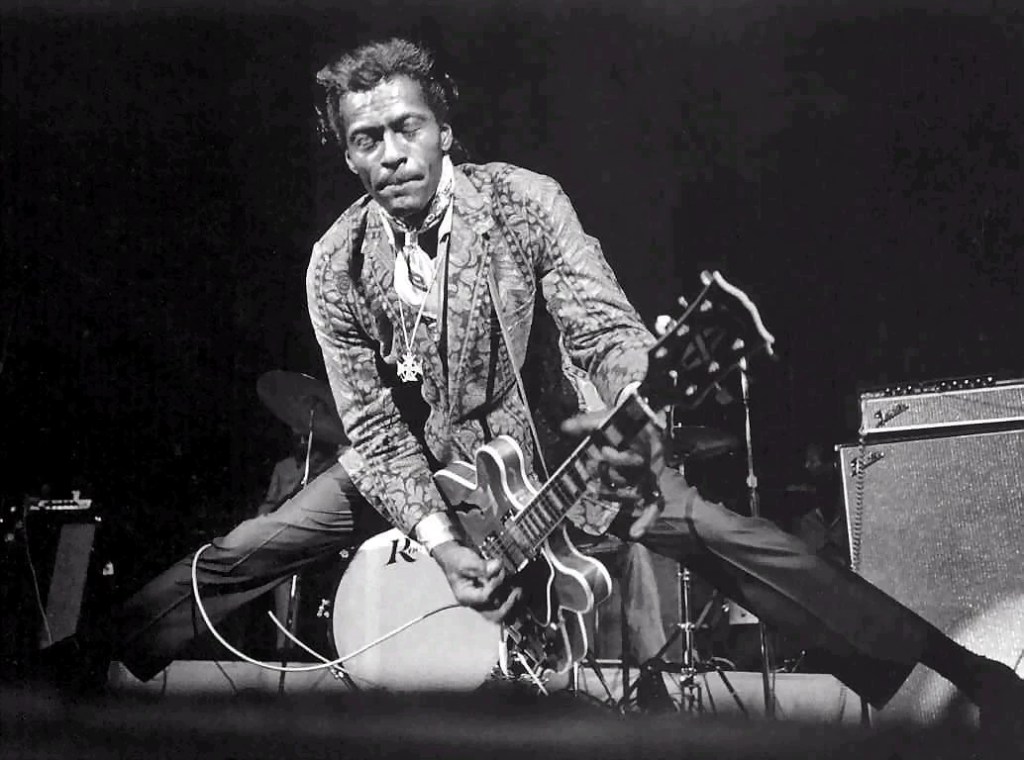
He was most famously associated with the Gibson ES-350T, a hollow-body electric with a rich, bright tone. Later, he favored the Gibson ES-335, a semi-hollow that gave him a bit more punch and feedback control. Running these through Fender Tweed amps, Berry achieved a tone that was clean, chimey, and biting—perfect for his driving riffs and rhythm work.
Berry’s style combined economy and expression. He wasn’t flashy for the sake of flash. He bent notes, slid into chords, and let the rhythm groove drive the songs. His solos were short, melodic, and full of energy—a language that countless guitarists would mimic, from Keith Richards to Angus Young.
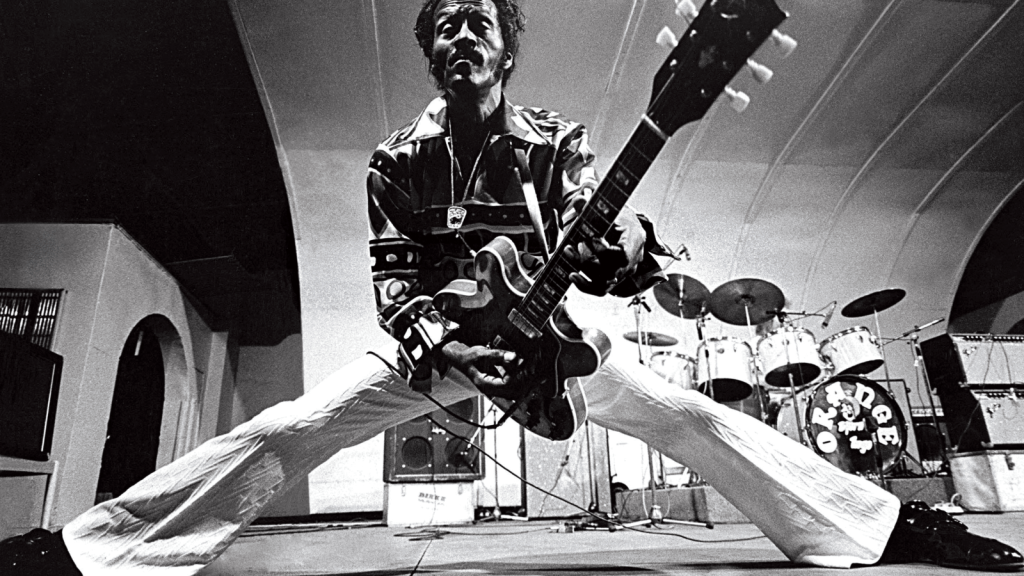
Oh, and the duck walk? That was pure theater. Invented almost by accident, it became a defining stage move—not just for Berry, but for rock performers everywhere.
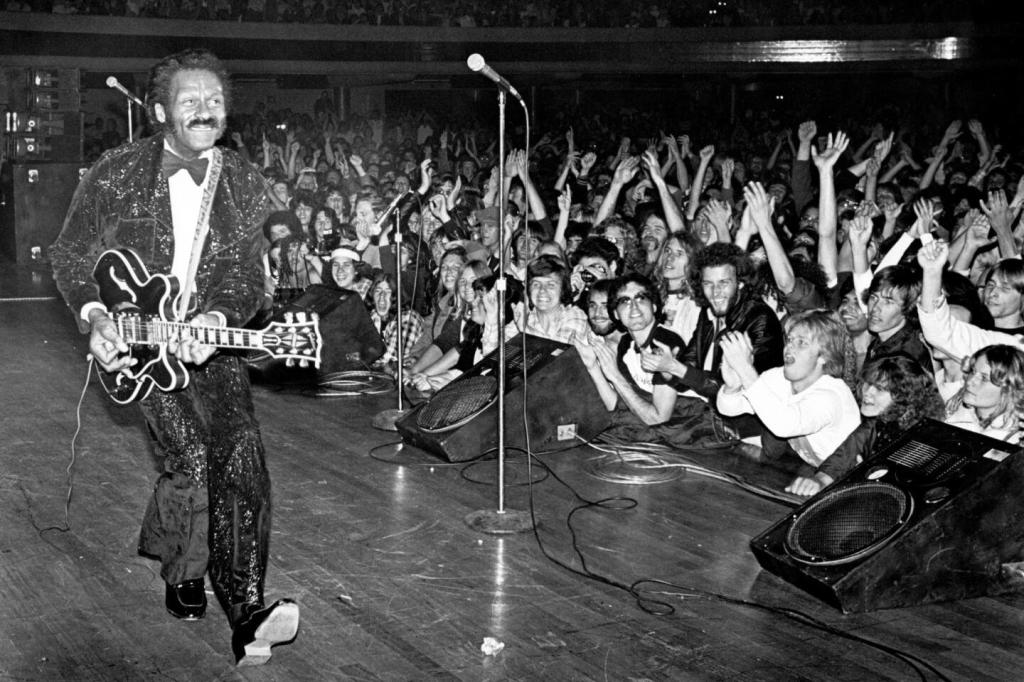
Breaking Barriers Beyond the Music
Chuck Berry wasn’t just crossing musical genres—he was tearing down racial walls too. In a time of deep segregation, Berry’s music attracted fans from both Black and white communities. Teenagers didn’t care about race; they cared about the beat, the lyrics, the attitude. His songs spoke to the dreams and frustrations of postwar youth, regardless of skin color.
But Berry’s journey wasn’t without turmoil. His career was periodically derailed by legal issues—some stemming from systemic racism, others self-inflicted. In 1959, he was arrested under the Mann Act and served prison time. Later, in the 1970s, he was convicted of tax evasion. These chapters complicated his legacy but didn’t erase it.
In fact, some argue that the defiance in Berry’s music—his refusal to play it safe—was rooted in his understanding of a system stacked against him. He channeled that into riffs that kicked down doors.
Covered and Celebrated: Chuck’s Global Influence
The list of artists influenced by Chuck Berry is practically a who’s who of rock history:
- The Beatles covered “Roll Over Beethoven” and “Rock and Roll Music.”
- The Rolling Stones practically worshipped him; Keith Richards built his playing style around Berry’s.
- AC/DC‘s Angus Young famously adopted Berry’s duck walk.
- Elvis Presley, though considered the King of Rock and Roll, once admitted: “If you tried to give rock and roll another name, you might call it Chuck Berry.”
Even Bruce Springsteen, Bob Dylan, and John Lennon acknowledged Berry’s massive impact. Lennon once famously said, “If you tried to give rock and roll another name, you might call it Chuck Berry.”
Final Riff: A Legacy That Rocks On
Chuck Berry died on March 18, 2017, at the age of 90. But his sound? His swagger? Still alive. Still blasting from speakers in garages, record stores, and road trips.
Berry didn’t just influence rock music—he was the DNA. His songs distilled youthful rebellion, fast cars, heartbreak, joy, and guitar wizardry into a three-minute form. And whether you’re a punk rocker, a blues purist, a metalhead, or a pop star, chances are you’ve borrowed something from Chuck Berry, even if you don’t know it.
Bonus Track: 10 Things You Might Not Know About Chuck Berry
- NASA-approved: “Johnny B. Goode” was chosen for the Voyager Golden Record, meant to represent the best of humanity.
- One-man band: Berry often toured without a band, using local musicians who had to know his songs on the fly.
- Stage rule: He demanded payment in cash before he performed—a result of years of bad experiences.
- Rock and Roll Hall of Fame: He was part of its inaugural class in 1986.
- Grammy Recognition: Received a Lifetime Achievement Award in 1984.
- Live unpredictability: He never played a song the same way twice, keeping even his own band guessing.
- Duck walk origin: He invented it trying to hide wrinkled pants from his mom as a kid.
- First hit at 29: Berry wasn’t a teenage prodigy—he broke through later than most rock stars.
- Studio wizard: Berry layered his guitar parts and vocals meticulously, giving his songs a polished, punchy edge.
- Still rocking: Released his final studio album, Chuck, in 2017—at the age of 90.

 oscaronguitars.com
Leave a comment