
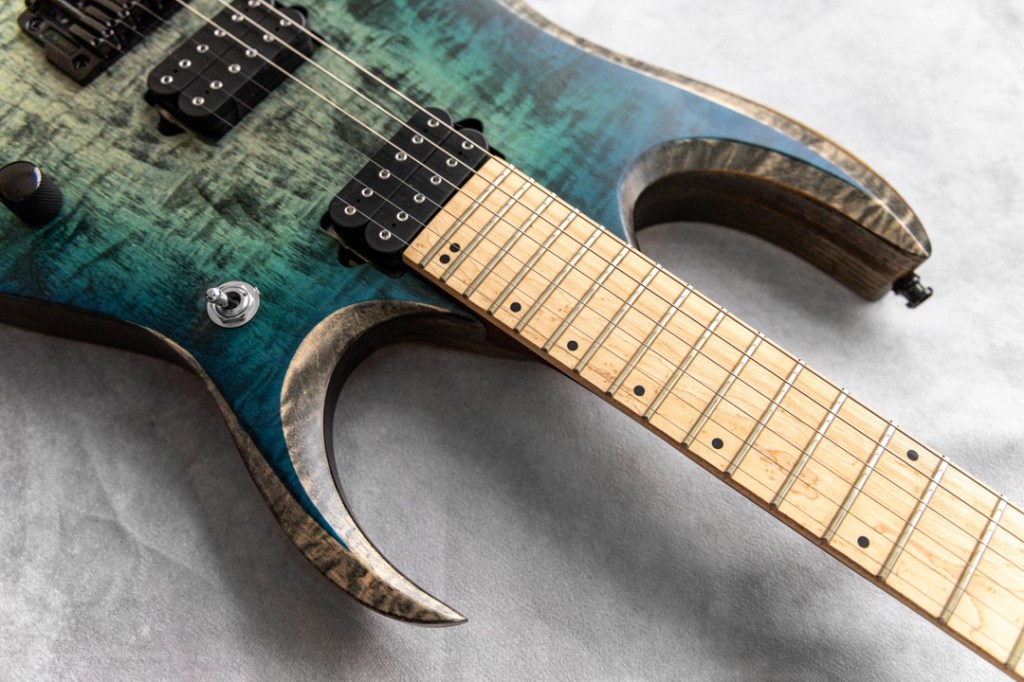
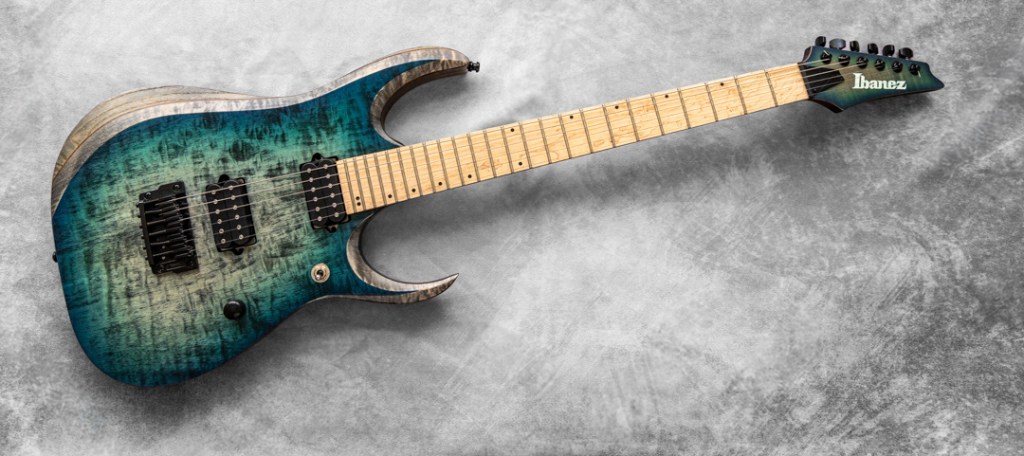
Sometimes, the perfect guitar appears when you least expect it. That’s exactly what happened when I came across the Ibanez RGD61LA in 2025—five years after it had been discontinued. At first glance, I was sure it wasn’t for me: no tone knob, a fixed bridge, and clearly built for lower tunings. But then I looked closer. The craftsmanship was stunning—beautiful woods, a flawless satin finish, premium Gotoh locking tuners, Schaller strap locks, and a killer set of DiMarzio Fusion pickups. And although it was a $1,000 guitar, it looked, felt, and sounded like a much more expensive instrument. That’s when it hit me: this wasn’t meant for me—it was meant for my youngest son.
He’s a dedicated shredder, deep into Metallica and Megadeth, and has been pushing into lower tunings like Eb, D, and even C#. He’s been putting in the hours, nailing his schoolwork, and diving headfirst into his passion for guitar. This wasn’t just a cool surprise—it was something he’d earned. More than that, this guitar became a symbol: a reward, a rite of passage, and a shared thread between generations, styles, and a love for heavy music that runs deep in our family.

First Impressions: Built for Speed, Styled to Stun
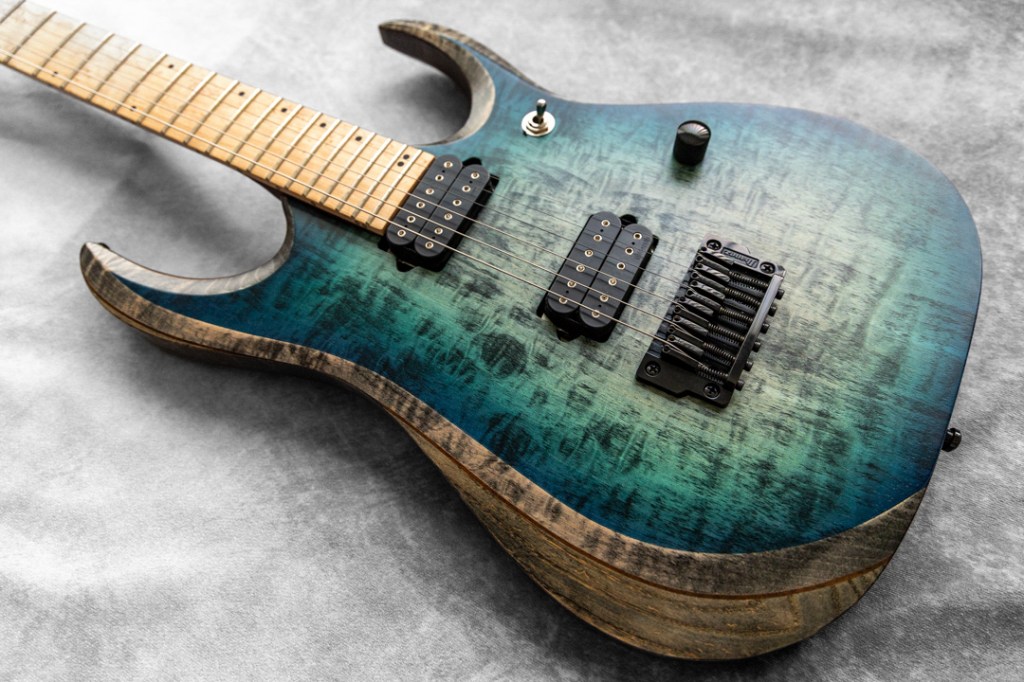
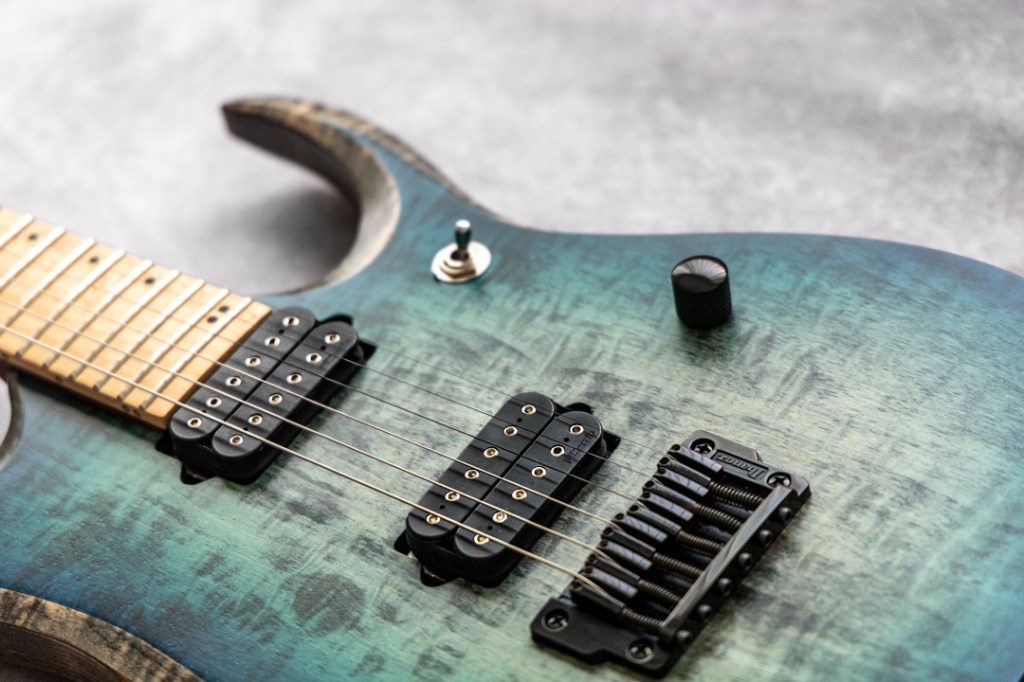
The Stained Sapphire Blue Burst satin finish instantly commands attention—rich, deep, and alive with texture and tone. Just as striking as its appearance is the feel of the wood: smooth yet tactile, with a sense of raw elegance. The craftsmanship is flawless, every detail executed with precision. While the RGD series draws its roots from the iconic RG shape, it pushes the design further—sharper horns, deeper bevels, and sculpted contours that radiate performance. Access to all 24 frets is effortless. This is a guitar built for speed, made to be tuned low, and meant to be played loud.
Designed for Low Tunings: A Scale That Means Business
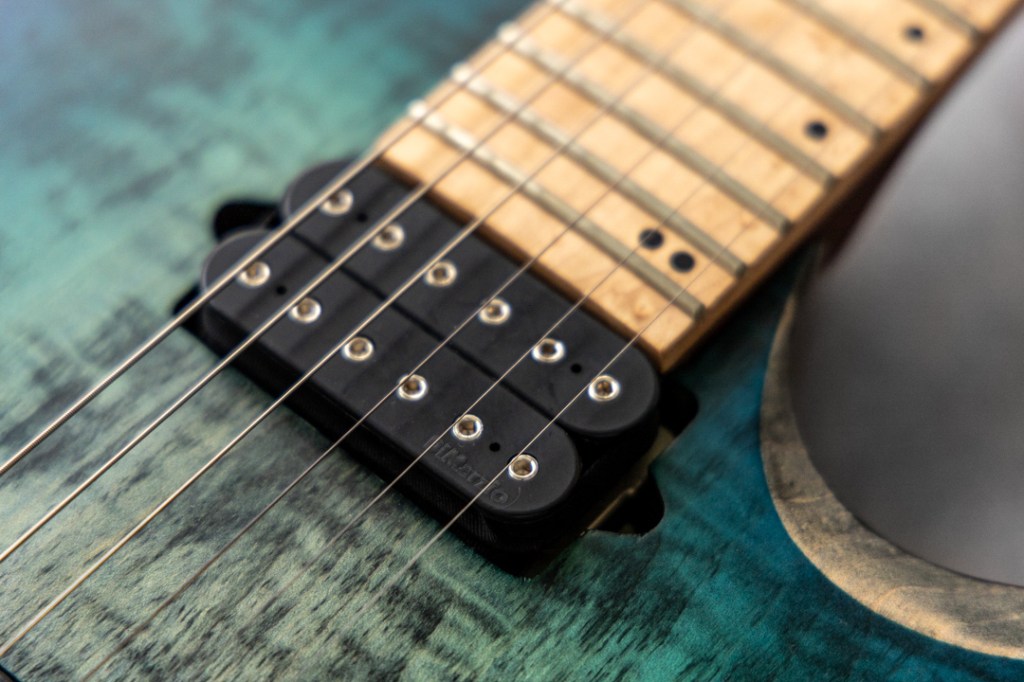
As I mentioned, my son’s been exploring down-tuned playing—D Standard and below—and the RGD61LA is absolutely made for that. Its 26.5″ scale length isn’t just a technical detail; it’s a feature that makes this instrument feel tight and responsive even when the pitch drops. Combined with its solid build and thoughtful specs, the result is a guitar that retains clarity, punch, and articulation where others would start to sound muddy or slack.
Hardware That Delivers: No Mods Necessary
One of the reasons I jumped on this guitar was its hardware—everything I might normally upgrade was already there, stock.
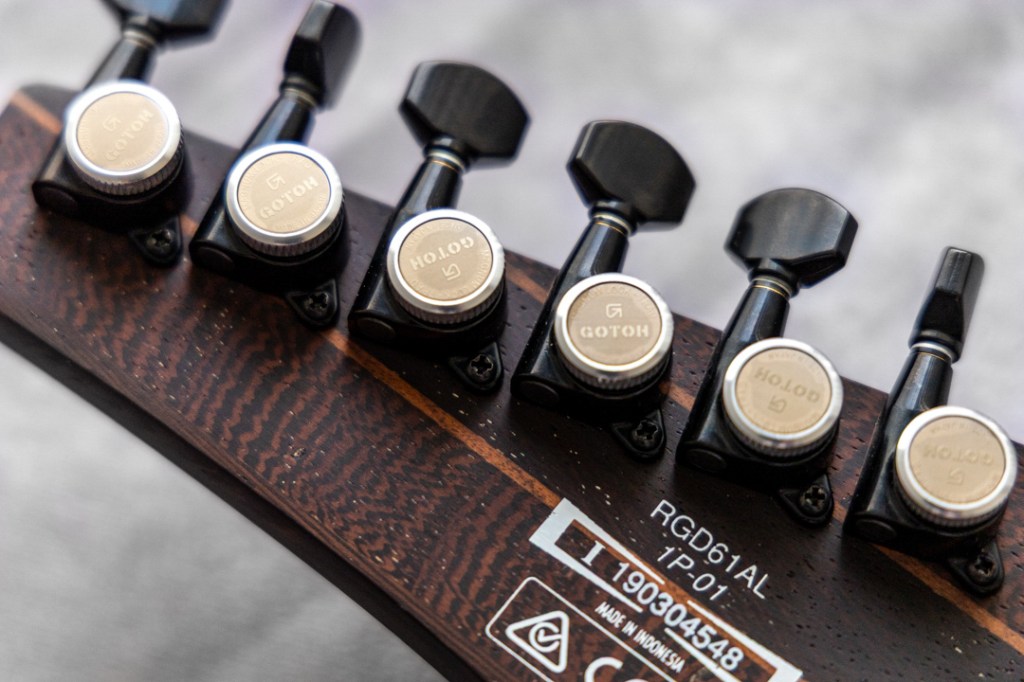
The Gotoh MG-T locking tuners make tuning stability rock solid, especially when detuning frequently. The Gibraltar Standard II bridge is smooth, low-profile, and easy to adjust. It anchors the strings firmly for excellent sustain while maintaining comfort during palm muting and heavy riffing.
And then there are the Schaller S-Lock strap pins, a thoughtful touch that ensures your strap isn’t going anywhere mid-song. No need for aftermarket mods—this guitar is gig-ready straight out of the case.
The Neck: Precision Meets Playability
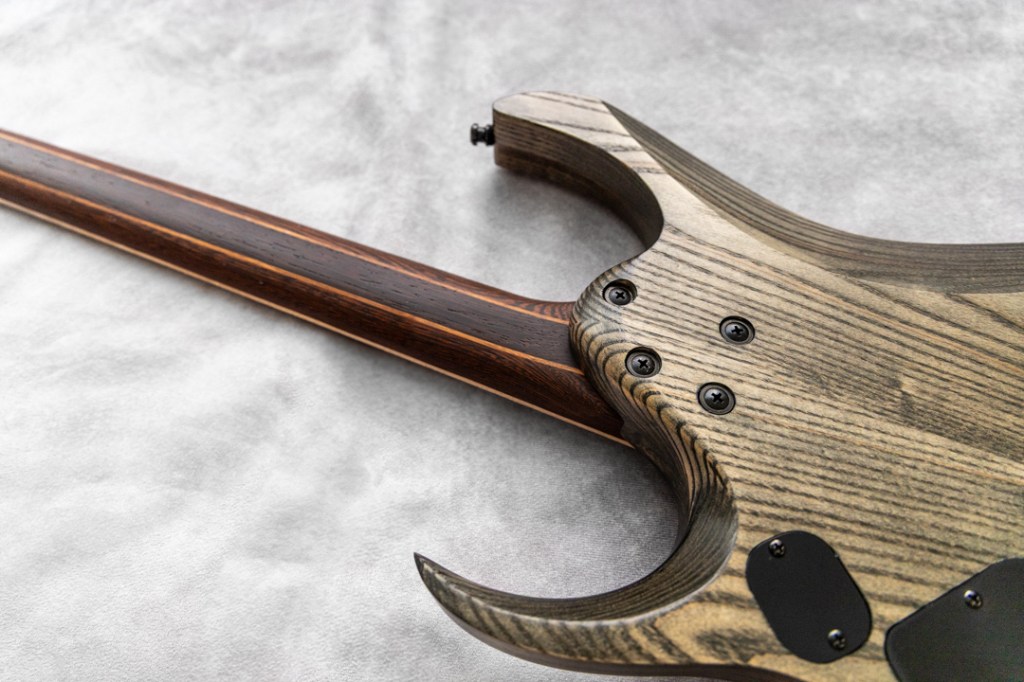
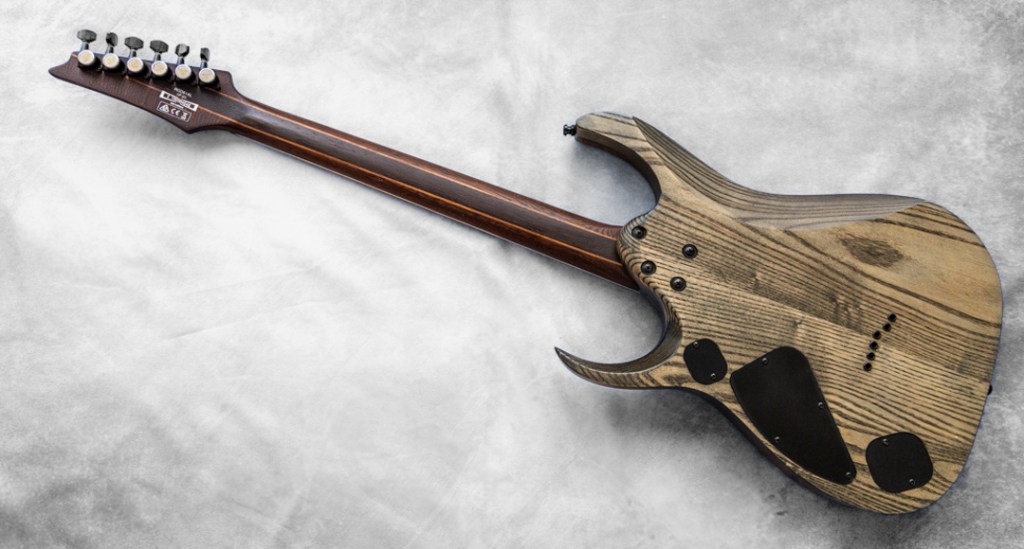
Ibanez necks are legendary for their speed, and the Nitro Wizard neck on the RGD61LA is no exception. It’s a five-piece laminate of panga panga and walnut, combining beauty with rock-solid stability.
The birdseye maple fingerboard adds a touch of brilliance—both visually and tonally—bringing extra snap and responsiveness to every note. Jumbo Sub Zero-treated frets handle aggressive bends and high-speed shredding with ease, offering durability that keeps up with serious playing. And those luminescent side dots? A lifesaver, whether you’re navigating a dim stage or jamming in a dark bedroom. Best of all, the feel of the neck is pure bliss—smooth, fast, and endlessly playable. It’s not just beautiful; it’s built to perform.
The Pickups: Clarity and Crunch in Equal Measure
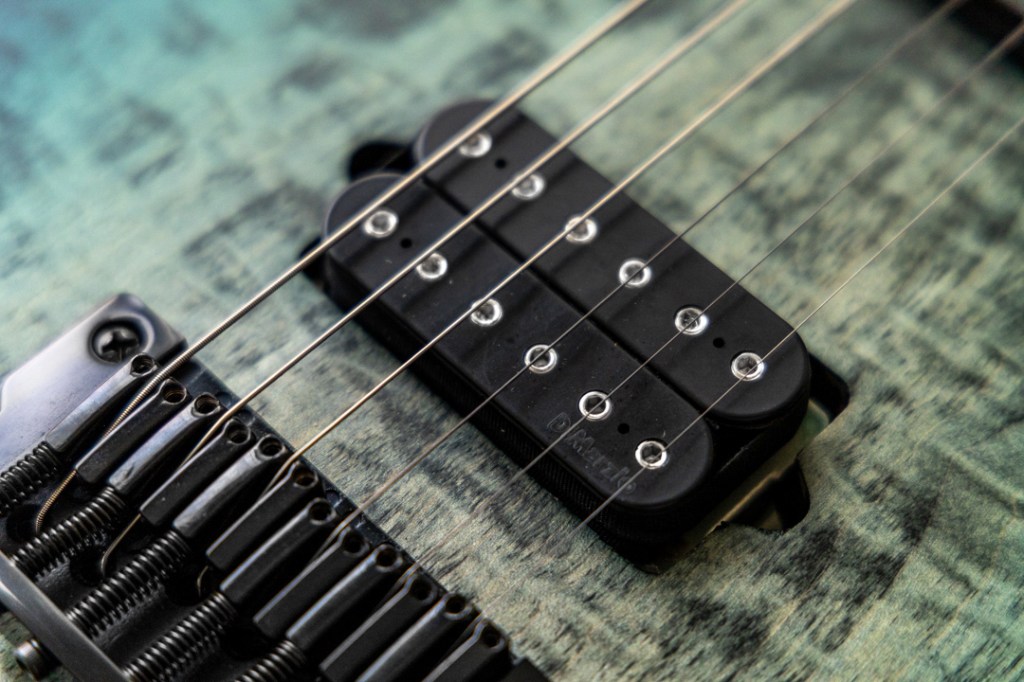
Let’s talk tone. The DiMarzio Fusion Edge pickups, developed in collaboration with Ibanez, are made for players who want clarity even when playing at high gain. These ceramic humbuckers are tight, articulate, and aggressive.
- The bridge pickup is perfect for low-end chugs, palm mutes, and riffing—it cuts through the mix without getting harsh.
- The neck pickup handles fast leads and even clean passages with warmth and detail.
Whether you’re chugging riffs or flying through solos, these pickups ensure your tone remains sharp and defined. They’re passive, so no batteries to worry about, but they carry the bite and clarity often associated with active pickups.
Tonewoods That Speak: Beauty With Backbone
The body is a layered ash design with a stunning 5mm flamed maple top. This combo gives the guitar a balanced tonal character—snappy high end, solid midrange, and just the right amount of low-end thump.
The panga panga neck, often compared to wenge, adds further clarity and a bit of visual flair with its natural striping. It’s strong, stable, and eye-catching. The wood isn’t just for looks—it shapes the sound and enhances the sustain.
Together, these tonewoods make for a resonant, dynamic instrument that feels alive under your fingers.
The Bigger Picture: Sharing the Journey
While I don’t play metal myself, buying this guitar was more than just checking off a wishlist. It was about supporting my son’s journey, recognizing his hard work, and finding common ground in music. Even though our styles differ, the language of guitars is one we both speak fluently.
I’ve always believed that music is about connection—between people, between generations, and even between styles. Sharing that joy, watching him bond with his instrument, and seeing him light up when he plays—that’s what makes it all worth it.

Pros and Cons: The Real Deal Rundown
Pros:
- Perfectly built for down tuning
- Sleek, fast, and playable neck
- Premium hardware out of the box
- Top-tier DiMarzio pickups for modern tones
- Stylish, aggressive aesthetic
- Great build quality for a non-Japan model
Cons:
- Discontinued, so it’s hard to find
- Fixed bridge may not suit whammy bar lovers
- Not designed for vintage tones or traditionalists
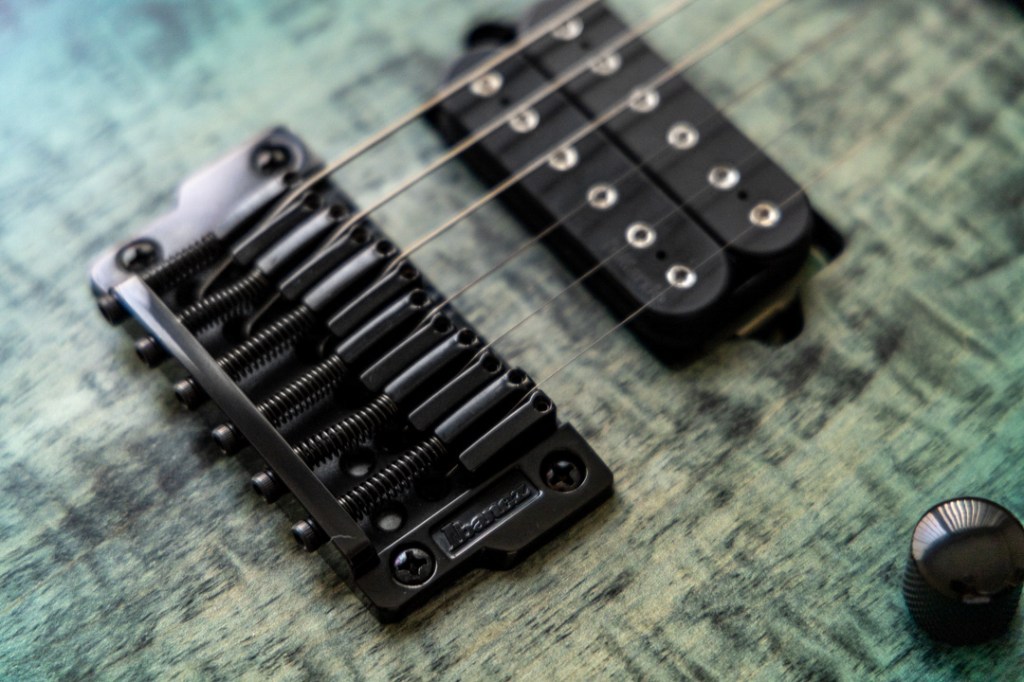
A Hidden Gem from the Axion Label Line
The Axion Label wasn’t just about metal—it was about pushing limits. These guitars were forward-thinking in tone, build, and looks. The RGD61LA exemplifies that mission. It’s not just a riff machine—it’s a precision instrument for players who want more: more clarity, more punch, more potential.
Despite its limited production run, its legacy lives on in the hands of players who value innovation and quality. I feel lucky to have found one and even luckier to share that experience with someone I love.

Conclusion: A Guitar That Inspires Growth
The Ibanez RGD61LA is more than just specs on paper—it’s a guitar that inspires. It was built for a purpose: to push players into new territory, especially those venturing into modern metal and down-tuned genres.
For my son, it’s a dream come true. For me, it’s a symbol of connection, encouragement, and the beautiful way music brings us together.
If you find one, don’t hesitate. This guitar isn’t just for the technically minded—it’s for anyone who wants to grow, shred, and share the journey.
Ibanez RGD61LA – Specifications
Model Name:
Ibanez RGD61LA (Axion Label Series)
Years Offered:
2019–2020
Made In:
Indonesia
Finish:
Stained Sapphire Blue Burst (SBB)
Recommended Case:
Ibanez M300C
Body
- Type: Solid body
- Body Material: Layered ash with 5mm flamed maple top
- Neck Joint: AANJ (All Access Neck Joint)
- Bridge: Gibraltar Standard II (10.8mm string spacing)
- Strap Buttons: Schaller S-Lock
- Hardware Color: Black
- Knobs: Knurled metal dome
Neck
- Neck Type: Nitro Wizard
- Neck Material: 5-piece panga panga / walnut
- Scale Length: 673.5mm / 26.5″
- Neck Dimensions:
- Width at Nut: 43mm
- Width at 24th Fret: 58mm
- Thickness at 1st Fret: 19mm
- Thickness at 12th Fret: 21mm
- Radius: 400mmR
- Fingerboard: Birdseye maple
- Inlays: Black step off-set dot
- Side Dots: Luminescent
- Frets: 24 Jumbo, Sub Zero treated
- Nut: Black plastic
Electronics
- Pickup Configuration: HH
- Neck Pickup: DiMarzio® Fusion Edge (Passive / Ceramic)
- Bridge Pickup: DiMarzio® Fusion Edge (Passive / Ceramic)
- Controls: Single volume
- Switching: 3-way toggle pickup selector
- Output Jack: ¼” stereo barrel (side-mounted)
Hardware
Factory Tuning: D Standard (D G C F A D)
Machine Heads: Gotoh MG-T Locking Tuners
Bridge Type: Fixed, string-through Gibraltar Standard II
String Gauge (Factory): .010/.013/.017/.026/.036/.046 (D’Addario EXL110)
 oscaronguitars.com
Leave a comment