
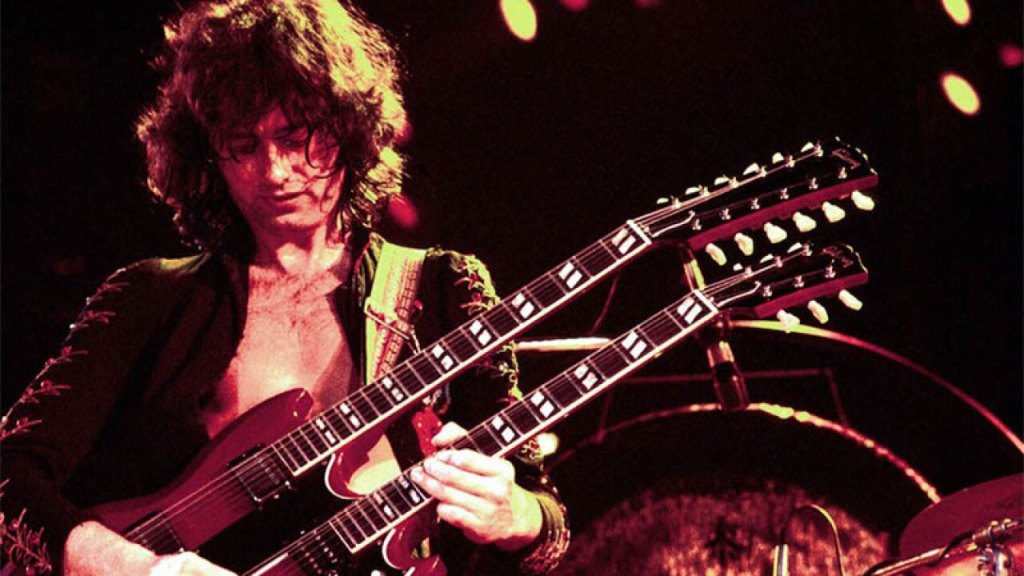
In the pantheon of guitar gods, only a handful truly reshaped the landscape—Jimi Hendrix, Eddie Van Halen, and, without question, Jimmy Page. But Page didn’t just play the guitar—he transformed it. With a mind wired for experimentation, a heart rooted in the blues, and a vision that fused mysticism with sonic innovation, Page didn’t just earn his place—he carved his throne. He changed how the guitar sounded, how it was recorded, how it was performed, and ultimately, how it was felt. He inspired a generation to plug in, turn up, and explore uncharted territory. If rock & roll grew darker, heavier, and more complex, it was because Jimmy Page opened the gates.
Let’s dig into the story of one of the most influential musicians to ever hold a six-string.
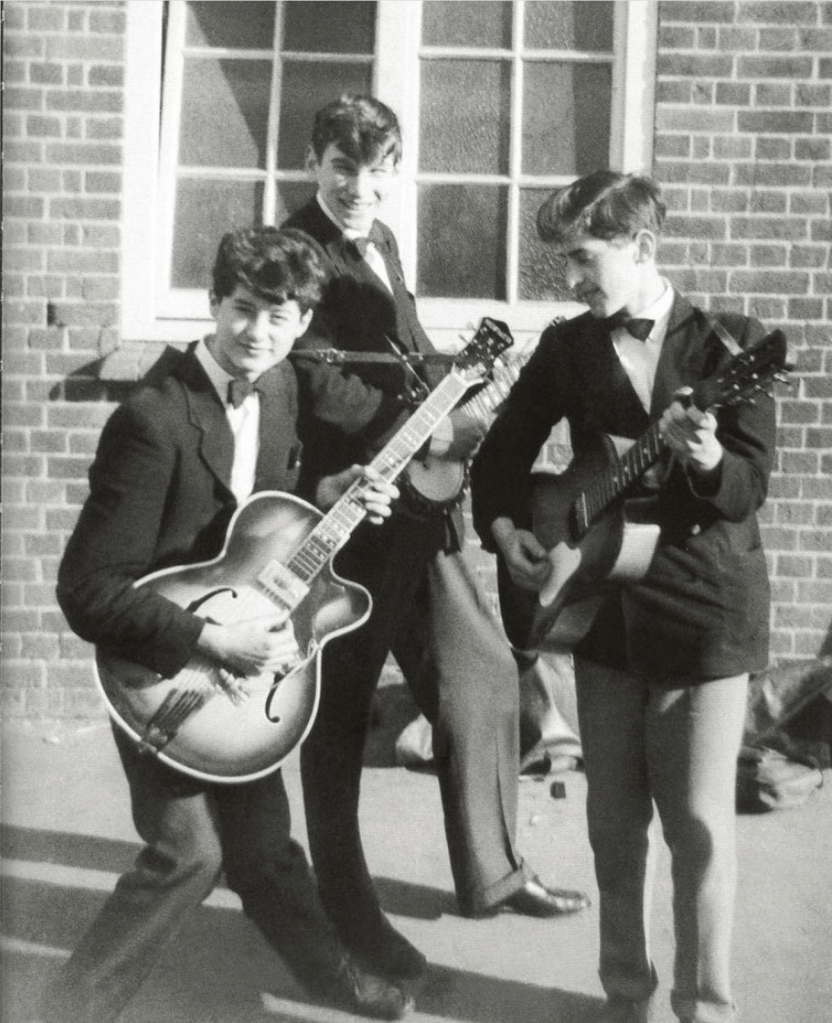
On January 9, 1944, in the quiet town of Heston, Middlesex, England, a boy named James Patrick Page was born—a boy who would one day become one of the most revered and revolutionary guitarists in rock history. Jimmy Page didn’t just play guitar; he transformed the instrument into a portal of sonic magic, fusing blues, folk, psychedelia, and heavy rock into a new language of sound. But before the dragon suits, the double-neck guitars, and the sold-out stadiums, Page was just another talented teenager with a Telecaster and a dream.
The Session Years: A Guitar Prodigy Behind the Scenes
Long before Led Zeppelin, Jimmy Page was already making waves—but quietly, from behind studio walls. In the early 1960s, he was one of the most in-demand session musicians in London. While many future rock stars were still figuring out how to play in tune, Page was laying down scorching solos and slick rhythm tracks for pop hits, film scores, and television jingles.
He played on sessions for The Who, The Kinks, Donovan, Marianne Faithfull, Petula Clark, and Tom Jones, among others—often uncredited, but always indispensable. His playing on “You Really Got Me” (though contested) and countless other tracks gave him a reputation as a chameleon: adaptable, lightning-fast, and endlessly creative.
Page wasn’t just a guitar-for-hire—he was a sonic architect. He paid attention to mic placement, room ambience, and tonal layering, sharpening his skills not just as a player, but as a producer-in-the-making. These studio chops would serve him well when it came time to build a band of his own.
The Yardbirds: A Crucible of Sound
In 1966, Page joined The Yardbirds, initially playing bass before switching to dual lead guitar alongside Jeff Beck. That lineup didn’t last long, but it lit a creative fire. With Beck gone, Page assumed the role of lead guitarist, pushing the band into more experimental territory. The Yardbirds were already known for their blues-rock foundation, but Page began exploring heavier riffs, feedback, Eastern modalities, and fuzz-drenched solos.
By 1968, The Yardbirds were fracturing, but Page still had a contract to fulfill—a tour in Scandinavia. Instead of folding, he assembled a new lineup. The New Yardbirds, as they were first called, featured Robert Plant on vocals, John Paul Jones on bass and keyboards, and John Bonham on drums. After just a few shows, it was clear: this was no Yardbirds retread. This was a new beast entirely.
Enter: Led Zeppelin.
Led Zeppelin: The Blueprint of Hard Rock
In October 1968, the band rechristened itself Led Zeppelin—a name suggested by The Who’s Keith Moon, who joked that the band would “go over like a lead balloon.” Page dropped the “a” in “lead” to avoid pronunciation confusion, and thus, one of the most mythic names in rock was born.
Their self-titled debut album, Led Zeppelin, was released in early 1969, and it was like nothing the world had heard before. The fusion of blues roots, psychedelic textures, and feral power redefined what rock music could be. Page’s guitar work—wild, elegant, intricate—was the thread that tied it all together. Songs like “Dazed and Confused”, “Communication Breakdown”, and “Good Times Bad Times” announced a new chapter in guitar history.
The Alchemist of Sound: Page’s Innovations
Jimmy Page wasn’t just a riff master—he was an audio wizard. He pushed the limits of what a guitar could do, both on stage and in the studio. His signature techniques include:
- Reverse echo (adding reverb before the note hits)
- Bow-playing (using a violin bow on electric guitar)
- Open tunings and alternate modal scales
- Multi-tracking solos and layered textures
- Manipulating microphone distance and room acoustics
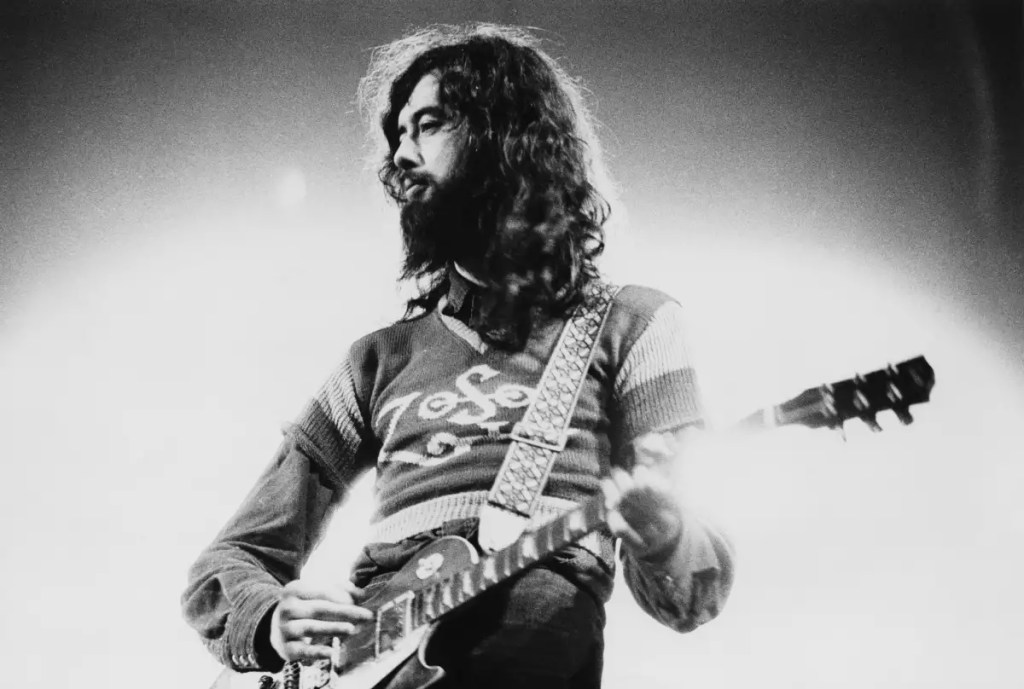
Page’s playing on “Whole Lotta Love”, for instance, took a simple blues riff and blasted it into outer space with theremin squeals, echo effects, and stereo panning. On “When the Levee Breaks”, he recorded Bonham’s drums in a stairwell to capture that iconic, thunderous reverb.
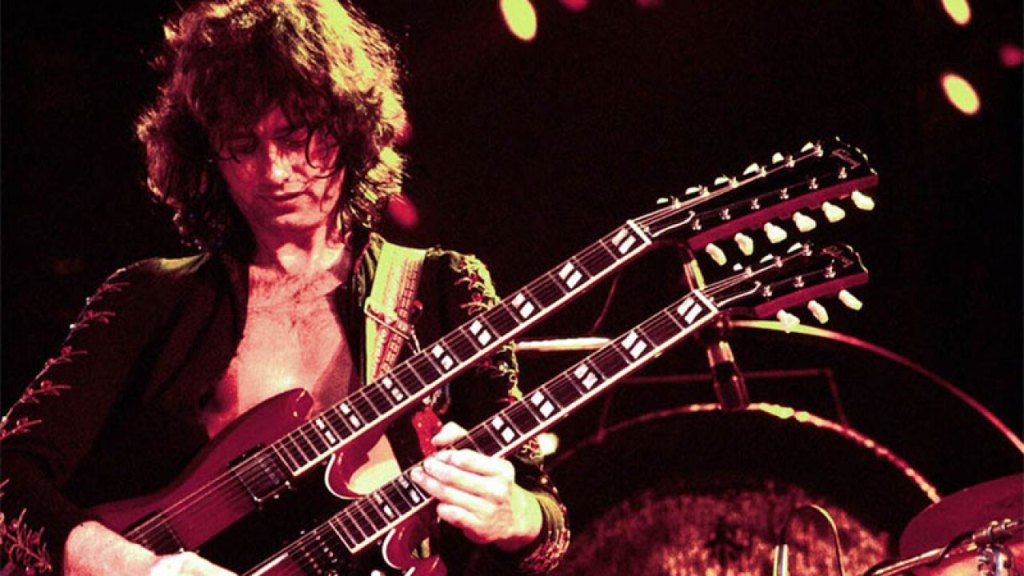
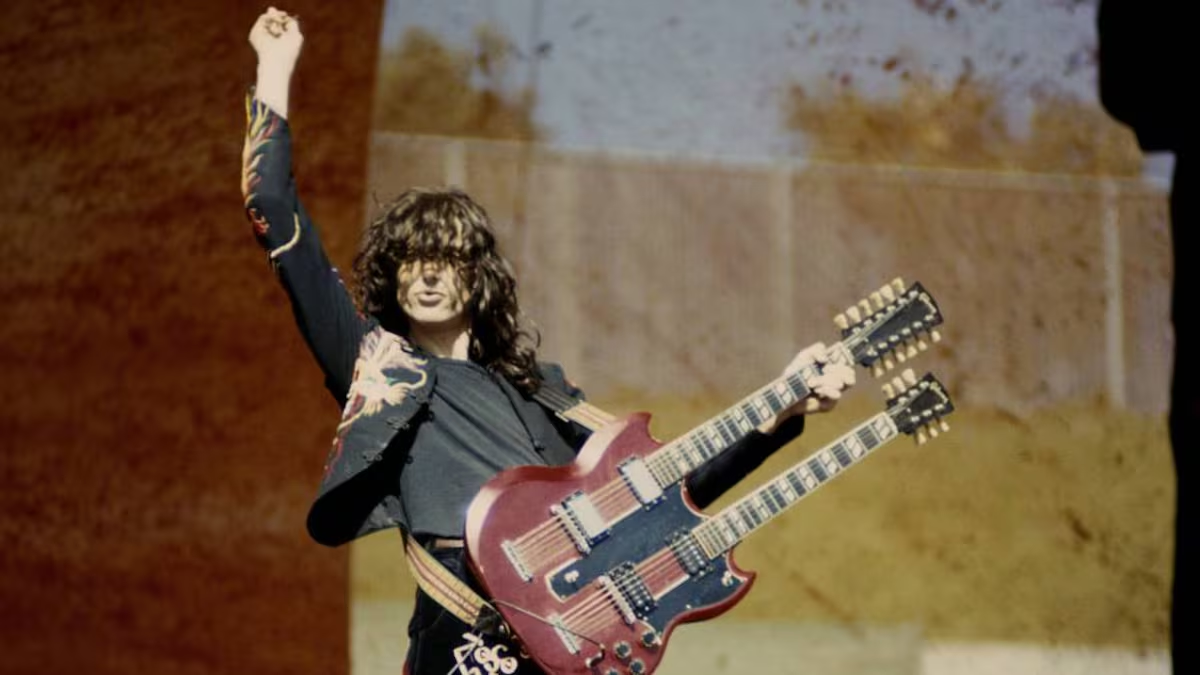
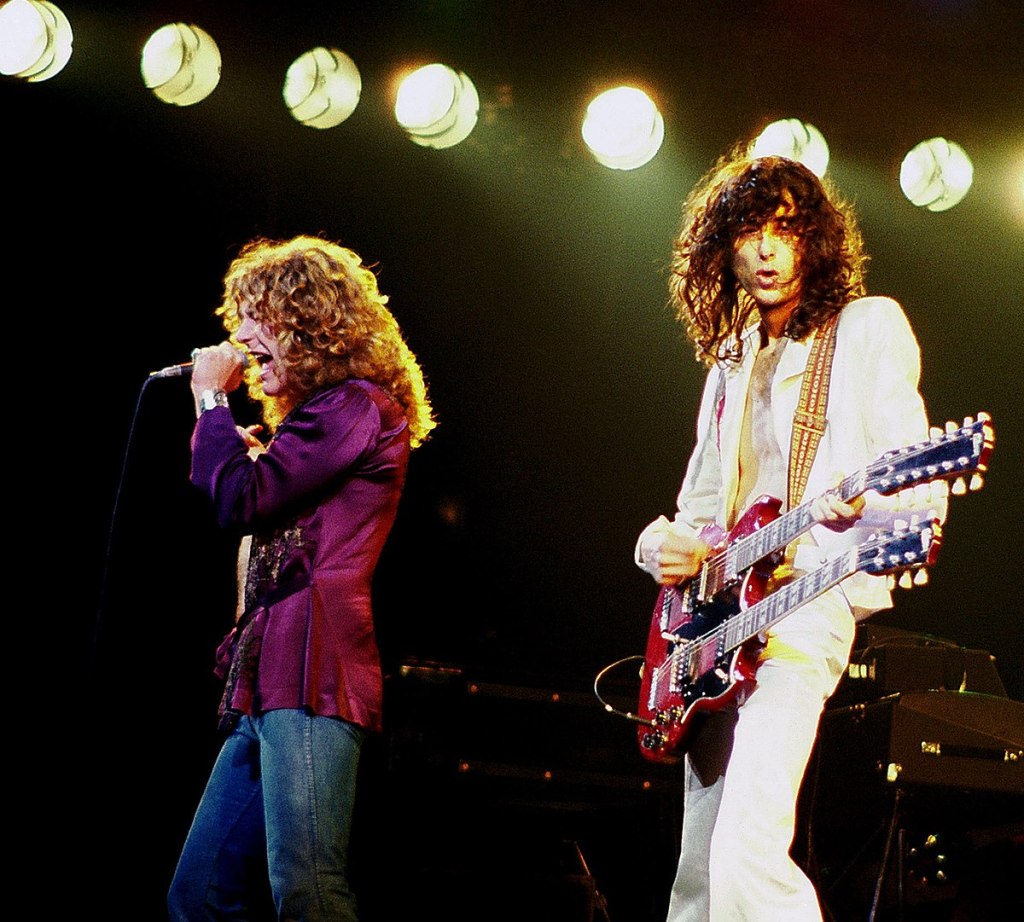
On stage, Page became a spectacle of mysticism and swagger, often playing with a bow, wearing dragon-embroidered suits, and coaxing otherworldly sounds from his iconic Gibson Les Paul Standard and Gibson EDS-1275 double-neck guitars.
Timeless Tracks That Redefined Rock
Led Zeppelin’s discography is a masterclass in sonic storytelling. Page’s contributions to their most iconic tracks are the stuff of legend:
- “Stairway to Heaven”: A spiritual journey built around a haunting acoustic intro, swelling into one of the most lyrical and electrifying solos ever recorded.
- “Kashmir”: An orchestral juggernaut built on a hypnotic DADGAD riff that merged Middle Eastern scales with a rock backbone.
- “Black Dog”: A syncopated riff puzzle where Page’s guitar snakes in and out of Plant’s vocals with surgical precision.
- “Achilles Last Stand”: A galloping ten-minute epic that pushed Page’s multi-layered approach to its peak.
- “The Rain Song”: A showcase of Page’s softer, more melodic side, featuring lush chord voicings and elegant fingerpicking.
Each song was more than a track—it was a testament to Page’s vision of rock as an evolving, emotionally rich, and sonically adventurous art form.
Gearhead Glory: The Tools Behind the Tone
Jimmy Page’s tone is as iconic as his riffs. Here’s a quick rundown of some of the tools of his trade:
- Guitars:
- 1959 Gibson Les Paul Standard (“Number One”)
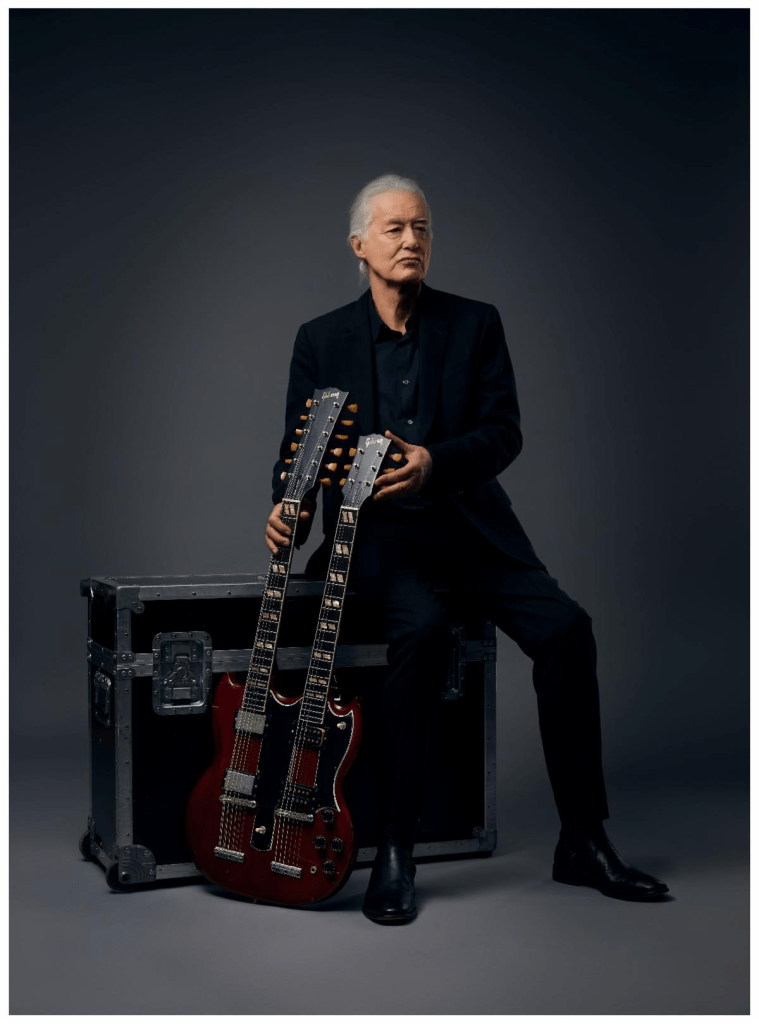
- Gibson EDS-1275 double-neck (for “Stairway to Heaven”)
- Fender Telecaster (gifted by Jeff Beck, used on early recordings)
- Danelectro 3021 (used for slide work and DADGAD tuning)
- Amps:
- Marshall Super Lead 100-watt heads with 4×12 cabinets
- Hiwatt and Supro amps for specific recordings
- Effects:
- Tone Bender fuzz
- Echoplex delay
- Theremin for live sonic freakouts
Page’s genius wasn’t in relying on the gear—it was how he made each component an extension of his musical vision. Whether it was the aggressive bite of a Les Paul through a cranked Marshall or the ethereal shimmer of reverb in a quiet acoustic passage, Page knew exactly how to sculpt sound.

Legacy: More Than Just a Guitar Hero
Jimmy Page’s influence is immeasurable. He didn’t just play licks; he changed the way people approached songwriting, recording, and performing. His production work on Zeppelin albums set new standards for what rock records could sound like—dynamic, layered, heavy, and cinematic.
His techniques have inspired legions of guitarists, from Slash to Jack White, from Joe Perry to John Frusciante. But more than that, his commitment to artistic integrity—refusing singles, avoiding television appearances, embracing mystery—helped shape Led Zeppelin into not just a band, but a myth.
Page was inducted twice into the Rock and Roll Hall of Fame: once with The Yardbirds, and once with Led Zeppelin. Yet even in his post-Zeppelin years, he remained active—remastering the Zep catalog, collaborating with artists like David Coverdale and The Black Crowes, and always preserving the Zeppelin legacy with dignity and care.

Bonus Track: 10 Lesser-Known Facts About Jimmy Page
- He appeared on BBC at age 13, playing skiffle music on guitar in a schoolboy performance.
- Page studied painting at Sutton Art College before turning full-time to music.
- He recorded the guitar part on “Goldfinger”, the James Bond theme song by Shirley Bassey.
- He played a pivotal role in popularizing alternate tunings like DADGAD in rock.
- He was fascinated with the occult, especially Aleister Crowley, even buying Crowley’s former residence.
- He played with Roy Harper, contributing solos and acoustic parts to Harper’s albums.
- He used violin bow techniques live, sometimes combined with a theremin and effects pedals.
- Page refused to reunite Zeppelin without Bonham, respecting the band’s legacy.
- He once turned down an offer to join the Rolling Stones after Brian Jones’ death.
- Page is an avid collector of rare guitars, tapes, and rock memorabilia.
Conclusion: A Legacy Cast in Bronze and Thunder
Jimmy Page’s story is more than the tale of a brilliant guitarist—it’s the saga of a visionary who helped reshape the very foundation of rock music. From the smoky backrooms of London’s studios to the thundering heights of stadiums around the world, Page’s fingerprints are on every era of modern rock.
Even decades after Zeppelin’s last note rang out, the sound he helped create still echoes in riffs, rhythms, and recording studios across the globe. To study Jimmy Page is to explore the very DNA of rock music—dangerous, elegant, primal, and eternal.

 oscaronguitars.com
Leave a comment