
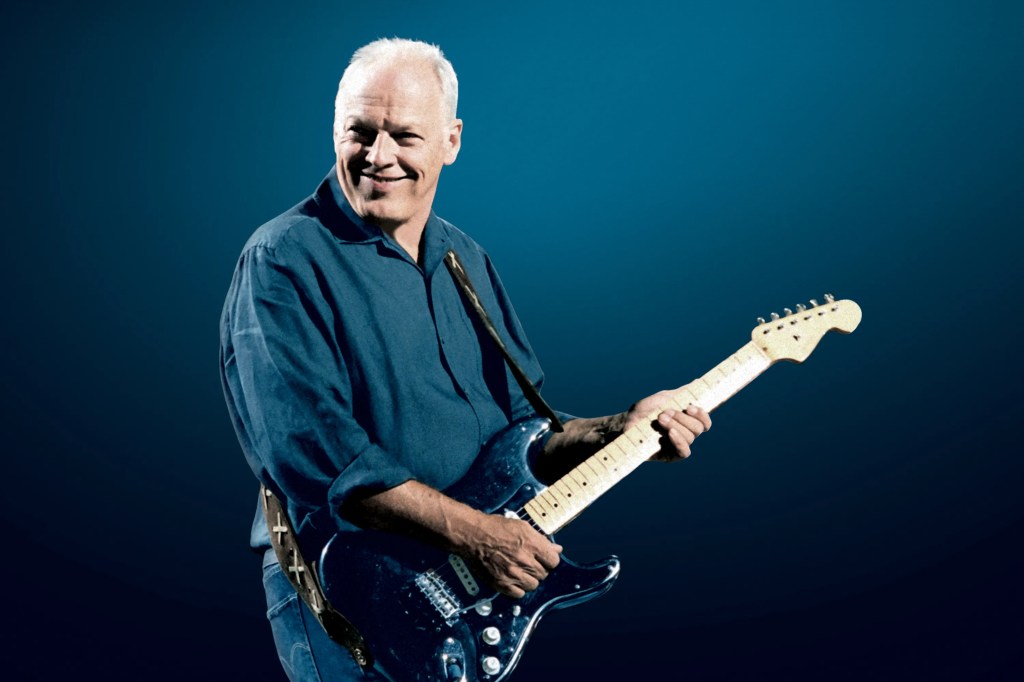
The Early Years: A Cambridge Beginning
Born on March 6, 1946, in Cambridge, England, David Jon Gilmour grew up in a household steeped in academia—his father was a senior lecturer in zoology at the University of Cambridge. But despite these scholarly surroundings, young David was drawn to music. Inspired by Elvis Presley, Lead Belly, and later, the bluesy textures of Hank Marvin’s Stratocaster, Gilmour was already shaping his sonic identity by the time he met Syd Barrett, a fellow student at Cambridge Tech and future Pink Floyd founder.
By the mid-1960s, Gilmour had busked across Europe, played in bands like Jokers Wild, and developed a playing style that merged bluesy phrasing with an ear for melody. These early experiences gave him the artistic maturity and technical prowess that would make him one of the most influential guitarists of the 20th century.

A New Chapter: Pink Floyd’s Second Genesis
When Gilmour officially joined Pink Floyd in January 1968—initially to bolster the group’s live shows during Syd Barrett’s erratic decline—he helped steer the band toward a sound that was more musically expansive and emotionally resonant. After Barrett’s departure, Gilmour’s role expanded rapidly: guitarist, co-lead vocalist, and eventually, one of the band’s primary creative forces.
Gilmour’s ethereal solos, layered textures, and emotive tone became key ingredients in Pink Floyd’s golden era, from the experimental Meddle to the multi-platinum classics The Dark Side of the Moon (1973), Wish You Were Here (1975), Animals (1977), and The Wall (1979).
His contributions weren’t limited to just solos or soundscapes. Gilmour’s vocals—clear, soulful, and emotionally restrained—anchored some of the band’s most iconic moments, from the chorus of “Comfortably Numb” to the entirety of “Echoes.”
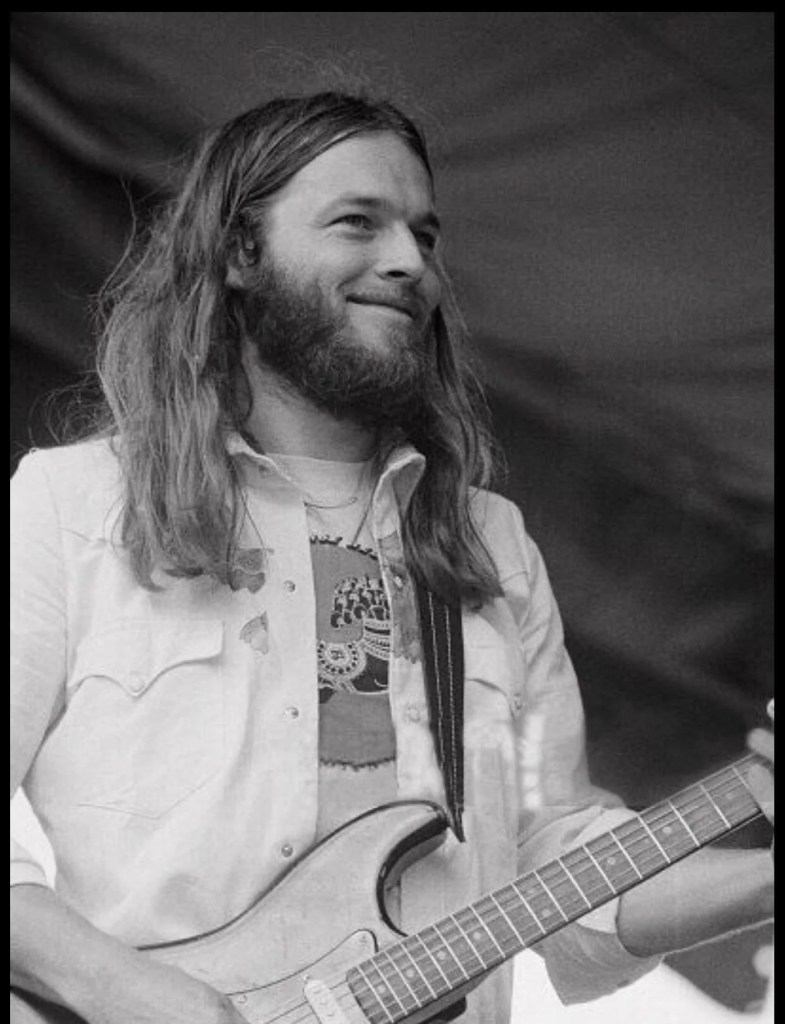
Signature Moments: The Gilmour Sound in Four Tracks
- “Comfortably Numb” (The Wall, 1979) – Co-written with Roger Waters, the song contains two solos often cited among the greatest in rock history. Gilmour recorded over 20 takes to find the perfect tone and phrasing. The result is a slow-burn masterpiece of phrasing, vibrato, and emotional weight.
- “Shine On You Crazy Diamond” (Wish You Were Here, 1975) – A nine-part epic and a tribute to Syd Barrett. The four-note guitar motif that opens the piece is one of Gilmour’s most haunting and recognizable phrases, dripping with nostalgia and melancholy.
- “Time” (The Dark Side of the Moon, 1973) – From the explosive alarm-clock intro to the philosophical lyrics and that aching guitar solo, Gilmour’s work here captures the anxiety of wasted youth with surgical precision.
- “High Hopes” (The Division Bell, 1994) – Often overlooked, this later-period Floyd ballad closes the book on the band’s discography with a slide solo recorded on a Lap Steel, full of longing and sonic clarity.
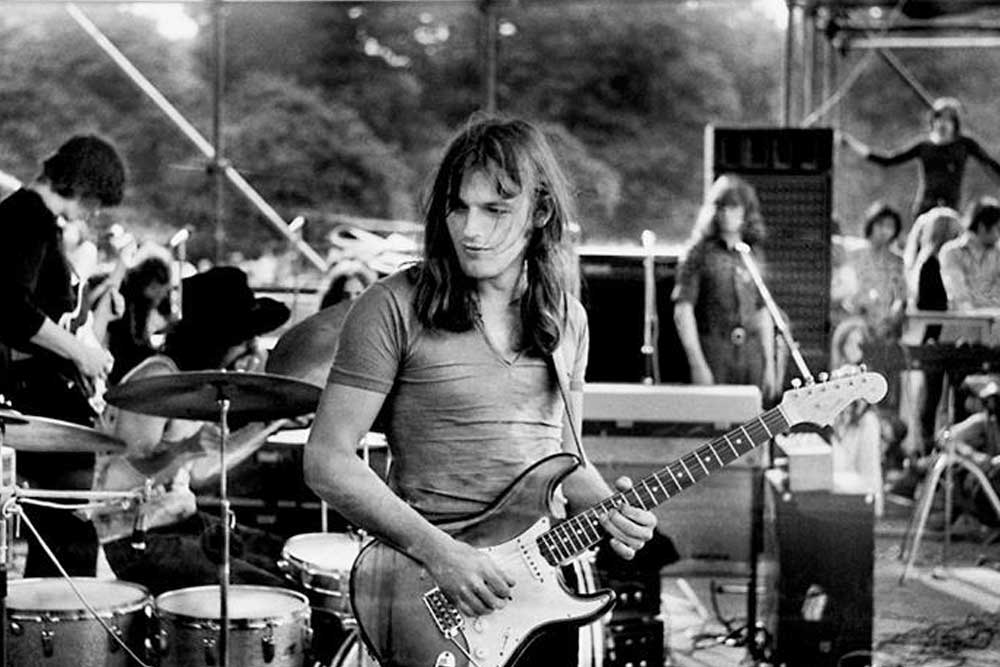
The Tools of the Trade: Gilmour’s Gear and Technique
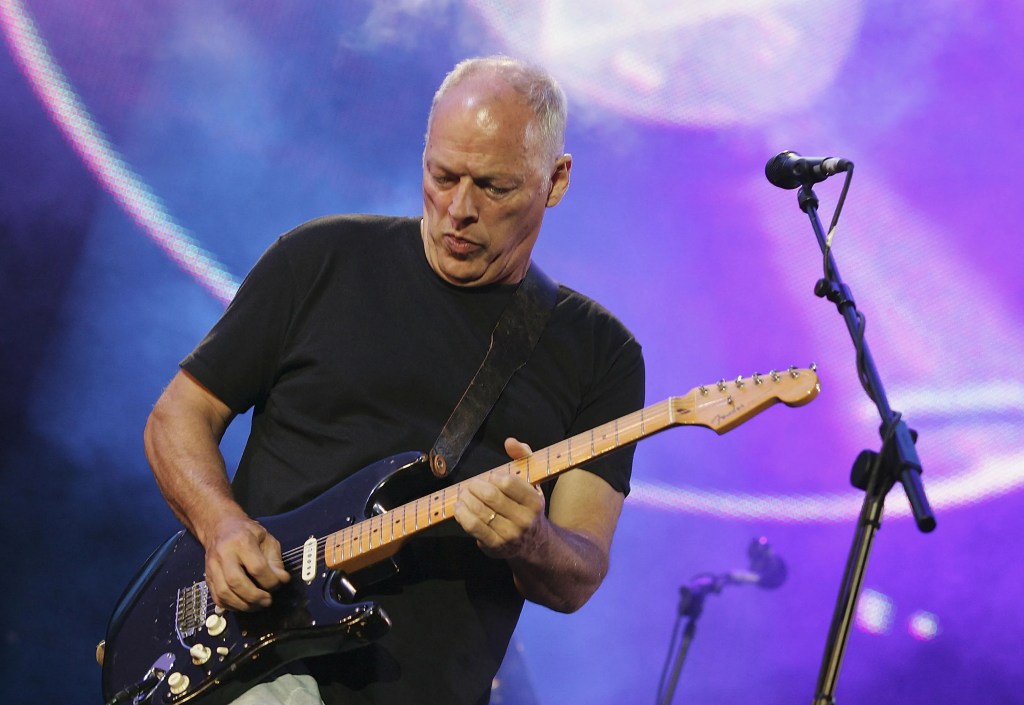
Though best known for his Black Strat (a 1969 Fender Stratocaster modified extensively over the years), Gilmour’s approach to tone has always been about nuance over flash.
- Guitars: Gilmour’s arsenal includes Stratocasters, Telecasters, a 1955 Gibson Les Paul Goldtop (used for solos like “Another Brick in the Wall”), and lap steels for that signature slide tone on “High Hopes” and “One of These Days.”
- Effects: Gilmour is a master of ambience, using delay (notably the Binson Echorec), reverb, compression, and modulation pedals (like the Electric Mistress flanger and Uni-Vibe) to sculpt immersive textures. His use of the Big Muff and Tube Driver pedals contribute to his soaring sustain.
- Technique: Unlike many guitar heroes, Gilmour avoids rapid-fire shredding. His expression comes through precision, dynamics, and phrasing—think wide bends, slow vibrato, and a tone that sings like a human voice.
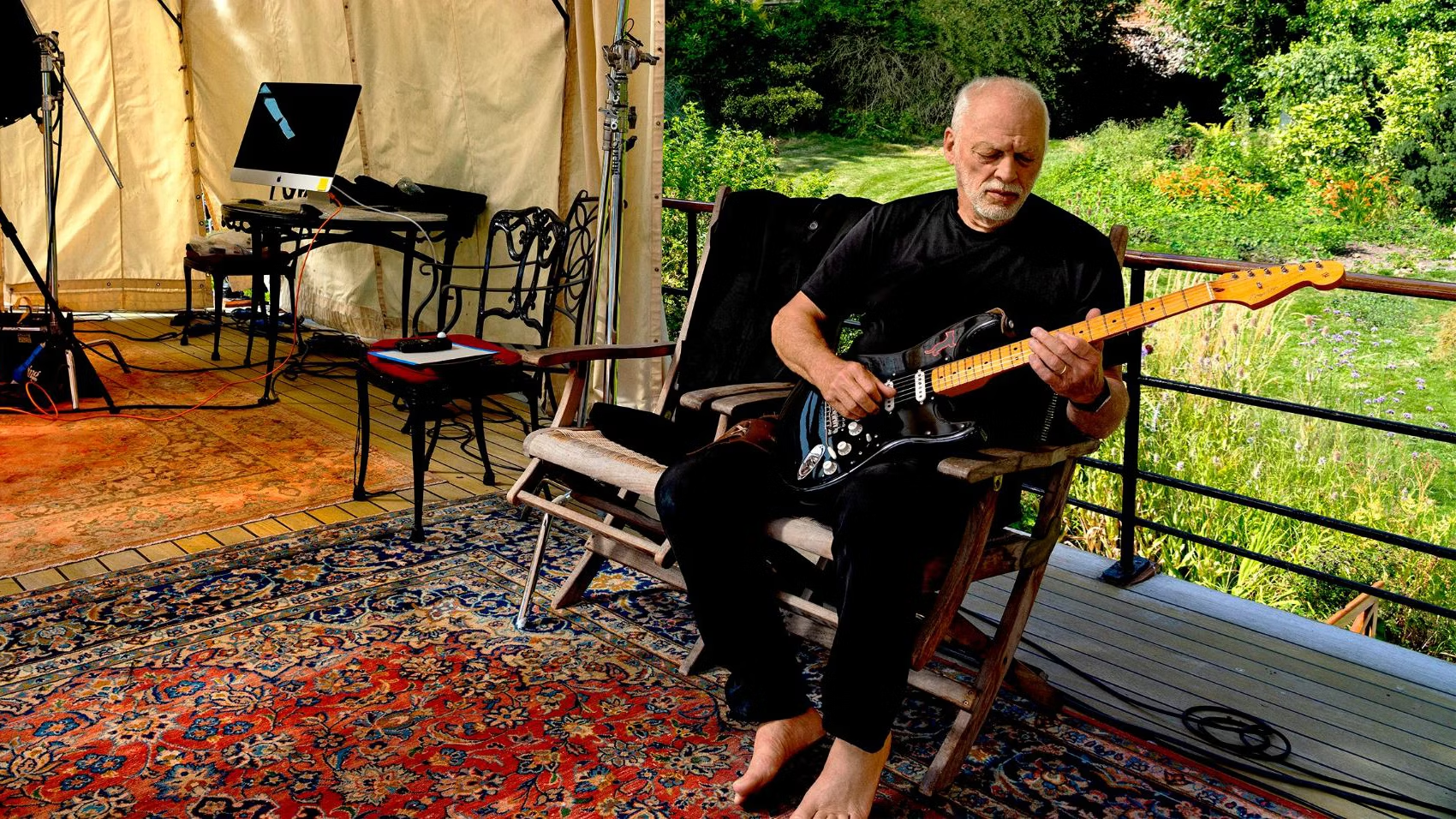
A Solo Career with Personal Resonance
Outside Pink Floyd, Gilmour has released four solo albums:
- David Gilmour (1978) – A raw, bluesy solo debut.
- About Face (1984) – More politically tinged, influenced by the Thatcher era.
- On an Island (2006) – A deeply personal, introspective record recorded aboard his Astoria houseboat-studio.
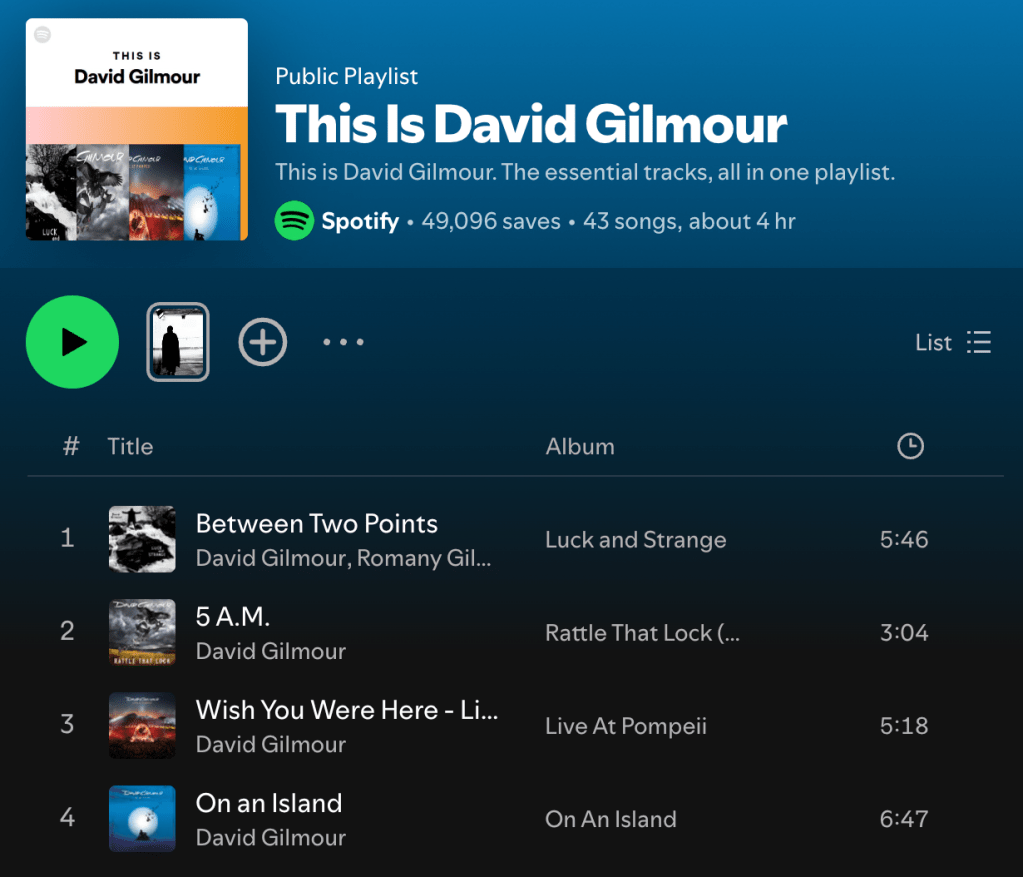
- Rattle That Lock (2015) – Combines classical themes with his signature guitar work, showcasing his evolution as a songwriter.
Each solo release reflects different phases of his life—from grief and nostalgia to joy and social commentary—always with a deeply introspective tone.
Beyond Music: Legacy and Humanitarianism
Gilmour’s impact isn’t confined to music. In 2019, he auctioned off over 120 guitars, raising $21.5 million for ClientEarth, an organization focused on fighting climate change and protecting the environment.
He has also supported homelessness charities, Amnesty International, and various human rights initiatives. His public persona—reserved, thoughtful, and socially conscious—mirrors the emotional integrity of his art.
Influence: The Emotional Guitarist’s Guitarist
David Gilmour has influenced generations of guitarists including John Frusciante (Red Hot Chili Peppers), Steven Wilson (Porcupine Tree), and Alex Lifeson (Rush). His playing style is often the first to be cited when discussing “how to make a single note count.”
While others pursued speed and complexity, Gilmour opted for emotion, timing, and storytelling, proving that silence and space are as powerful as distortion and volume.
Enduring Brilliance: Why Gilmour Still Matters
David Gilmour’s body of work is a testament to the idea that great music doesn’t shout—it whispers truths. Whether channeling alienation, grief, or transcendence, Gilmour creates spaces for listeners to feel.
His music endures not only because it’s technically brilliant, but because it’s spiritually resonant, grounded in human experience, and delivered with rare authenticity.
Bonus: 10 Fascinating Facts About David Gilmour
- The Astoria Studio – Gilmour records on a luxurious houseboat moored on the Thames, originally built in 1911.
- He Reunited Floyd for a Cause – In 2005, Gilmour reunited with Roger Waters for a one-off Pink Floyd performance at Live 8 after 24 years apart.
- A Reluctant Frontman – Gilmour often deferred to others when it came to lyrics, preferring to speak through his guitar.
- Used a Haircut to Write a Song – The title track Rattle That Lock was inspired by a jingle heard at a French train station.
- Polished Polyglot – He speaks fluent French and has a deep appreciation for European classical music.
- Flew His Own Planes – Gilmour is a licensed pilot and owned an aviation company before selling it for ethical concerns about emissions.
- Produced Syd Barrett’s Solo Work – He helped his friend and predecessor post-Floyd, despite Barrett’s deteriorating mental health.
- Knighted for the Arts – Gilmour was awarded a CBE in 2003 for services to music.
- Shunned a Floyd Reunion – In 2015, he confirmed Pink Floyd was “done,” preferring to preserve the band’s legacy rather than dilute it.
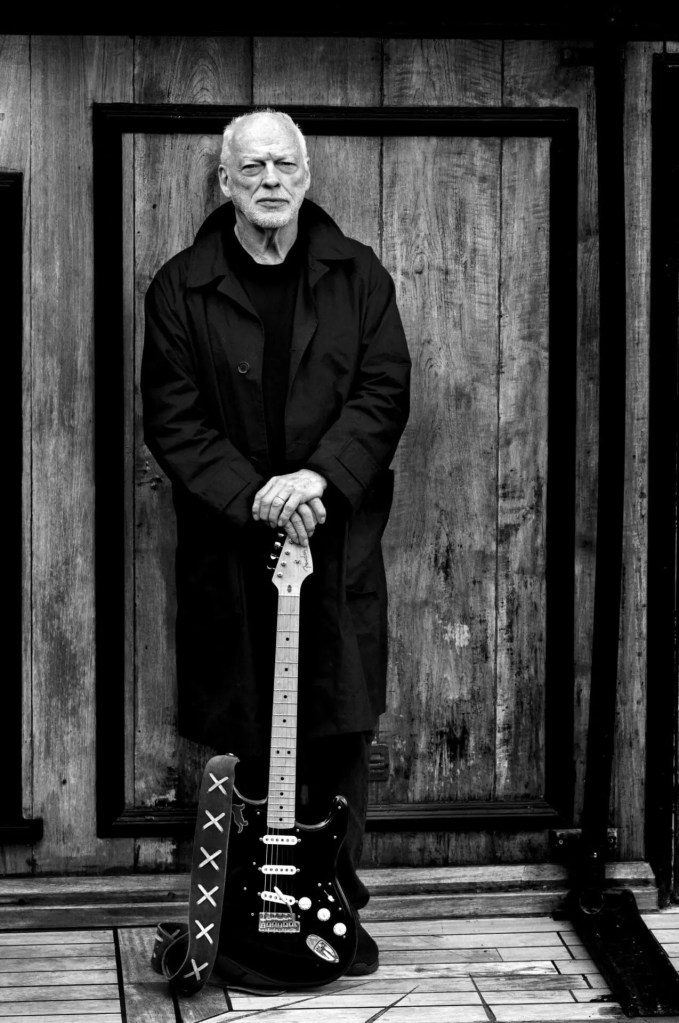
- His Black Strat is a Legend – It sold for a record-breaking $3.975 million, the most ever paid for a guitar at auction.
 oscaronguitars.com
Leave a comment