
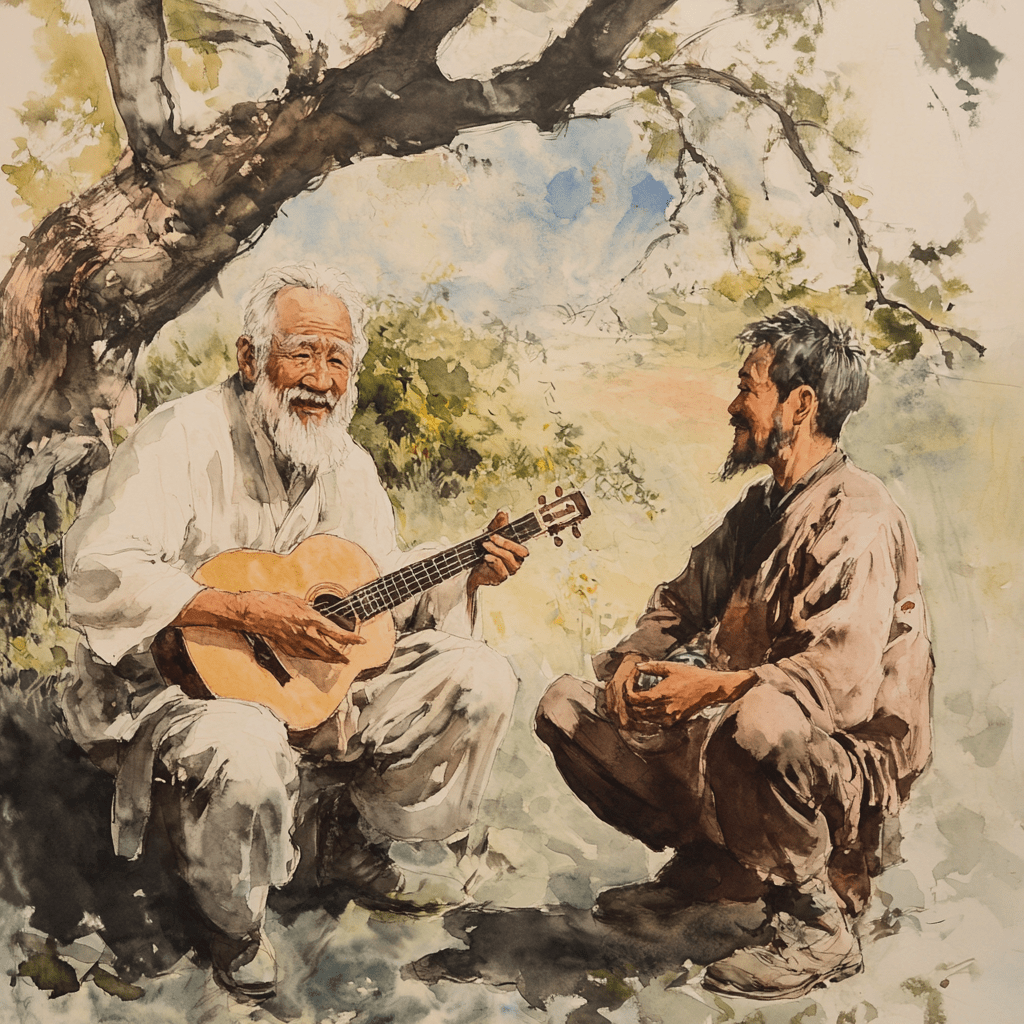
A farmer’s horse ran away, prompting his neighbors to comment, “Bad luck!” The farmer simply replied, “Maybe.” The next day, the horse returned, bringing with it several wild horses. “Good luck!” the neighbors exclaimed, to which the farmer again replied, “Maybe.” This Zen story reveals a powerful truth for guitarists: don’t label your practice sessions or performances as good or bad. Each moment has value, even if the benefits aren’t immediately clear.
Why This Lesson Matters in Guitar Playing
When it comes to learning guitar, it’s natural to judge each session or performance. Days when the notes flow easily may feel like “good” practice, while challenging days can feel “bad.” But this constant labeling creates pressure, affecting your motivation and enjoyment. Instead, viewing each session with openness—just like the farmer—can help you find value in every moment, regardless of how it initially feels.
Some sessions reveal new skills or musical breakthroughs; others challenge your patience, focus, and determination. Both types are essential, contributing to a well-rounded musician. By letting go of the need to label, you can enjoy the journey more fully and avoid discouragement when things don’t go as planned.
Risks of Not Learning This Lesson
Labeling your practice as “good” or “bad” can have unintended consequences:
- Inconsistent Motivation: Constantly labeling sessions can lead to frustration or discouragement on “bad” days, making it harder to stay motivated long-term.
- Missed Opportunities: When we judge sessions too quickly, we risk overlooking subtle improvements, small breakthroughs, or valuable lessons within the struggle.
- Added Pressure: Labeling performances as successes or failures can create anxiety, making you more likely to overthink or get tense while playing.
- Limiting Growth: By focusing only on “good” results, you miss the growth that comes from challenging or difficult practice sessions.
Unleashing Your Guitarist Potential by Embracing All Experiences
Adopting the farmer’s neutral, open-minded approach to guitar practice lets you appreciate each moment for what it is. Here’s how to apply this perspective:
- See Practice as Exploration: Treat each session as an opportunity to explore and grow. Focus on the experience rather than the outcome.
- Learn from Difficult Days: Challenging sessions are often the most valuable. Embrace these days as an essential part of your progress, building resilience and strength.
- Reflect Without Judgment: After each practice or performance, reflect on what you experienced without attaching labels. Ask yourself what you learned or what felt satisfying, and then let it go.
- Trust the Process: Growth in guitar playing isn’t linear. Trust that every session contributes to your skill and expression, even if the results aren’t obvious right away.
- Celebrate Small Wins: Find joy in small moments, like mastering a tricky riff or feeling more comfortable with a new technique. Recognize these as positive, no matter how the overall session went.
Conclusion
The story of the farmer teaches us to release the need for judgment, embracing every practice and performance with openness. In guitar playing, every moment has value—even the tough ones. By letting go of the urge to label, you’ll find a greater sense of satisfaction, growth, and freedom. Remember: whether the day’s practice was easy or difficult, each moment brings you closer to becoming the guitarist you want to be.
 oscaronguitars.com
Leave a comment