
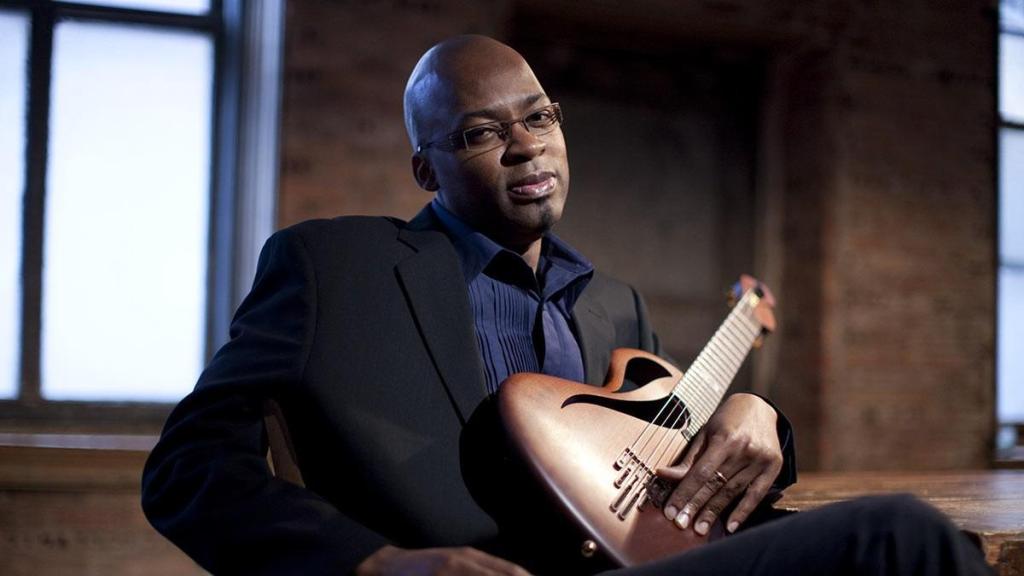
Lionel Loueke is an artist who breaks boundaries with every note. Known for his unique blend of African rhythms, jazz harmonies, and innovative technique, Loueke’s playing is instantly recognizable and uniquely captivating. His work has transformed the role of the guitar in jazz, introducing new textures and influences that bring together the sounds of his Beninese heritage with cutting-edge jazz improvisation. Loueke’s distinctive approach to guitar has captivated audiences around the world and inspired guitarists who aim to push beyond traditional jazz.
In this article, we’ll explore Loueke’s background, musical style, key albums, and the techniques that make him such an influential figure in jazz guitar.
Early Life and Musical Roots
Lionel Loueke was born in Benin, West Africa, where his early experiences with music centered around traditional African rhythms and sounds. Growing up in a culture rich with polyrhythmic drumming and vocal music, Loueke was immersed in musical traditions that would later become central to his guitar style.
It wasn’t until his teenage years that he picked up the guitar, inspired by popular Western music and jazz. Self-taught at first, he eventually earned a scholarship to study jazz at the Ivory Coast’s National Institute of Art, where he honed his skills in jazz theory and improvisation. His journey took him from Africa to the Paris Conservatory, and finally to the Berklee College of Music in the United States, where he further developed his style alongside other jazz students from around the world.
Musical Style and Techniques
Loueke’s music is a reflection of his global journey—a blend of African rhythms, modern jazz harmony, vocal effects, and fingerstyle techniques. His ability to incorporate elements from multiple musical cultures has made his style not only distinctive but groundbreaking.
1. Polyrhythmic Mastery
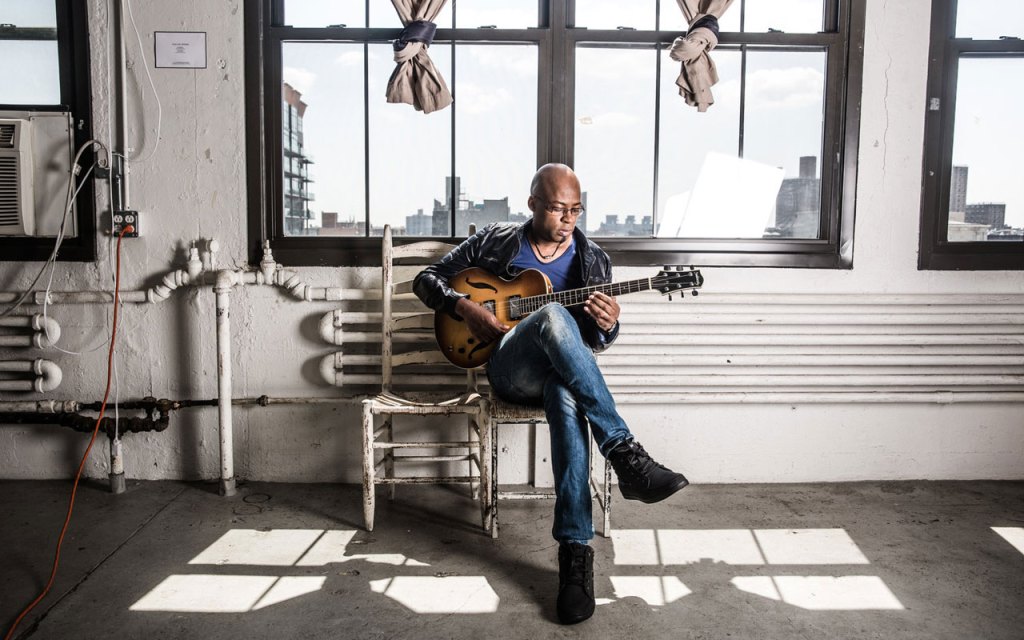
Loueke’s playing is deeply rooted in African polyrhythms, which involve layering different rhythmic patterns on top of one another. He often uses contrasting meters, such as playing in 4/4 while layering a 6/8 feel on top, creating rhythmic complexity that engages the listener. His rhythmic phrasing and percussive strumming, which he achieves by tapping and muting strings with his hands, create an immersive sound that mimics the layered texture of African percussion ensembles.
2. Fingerstyle Techniques and Percussive Effects
Rather than using a pick, Loueke predominantly plays fingerstyle, allowing him to create a wide range of tonal textures. He plucks, mutes, and taps the strings to produce percussive sounds that complement his melodies, creating a rhythm section effect even in solo passages. His approach to fingerstyle is heavily influenced by traditional African playing, where rhythm and melody are inseparable. This technique enables him to seamlessly transition between chords, basslines, and melodic runs, sometimes within a single phrase.
3. Vocal Integration and Harmonization
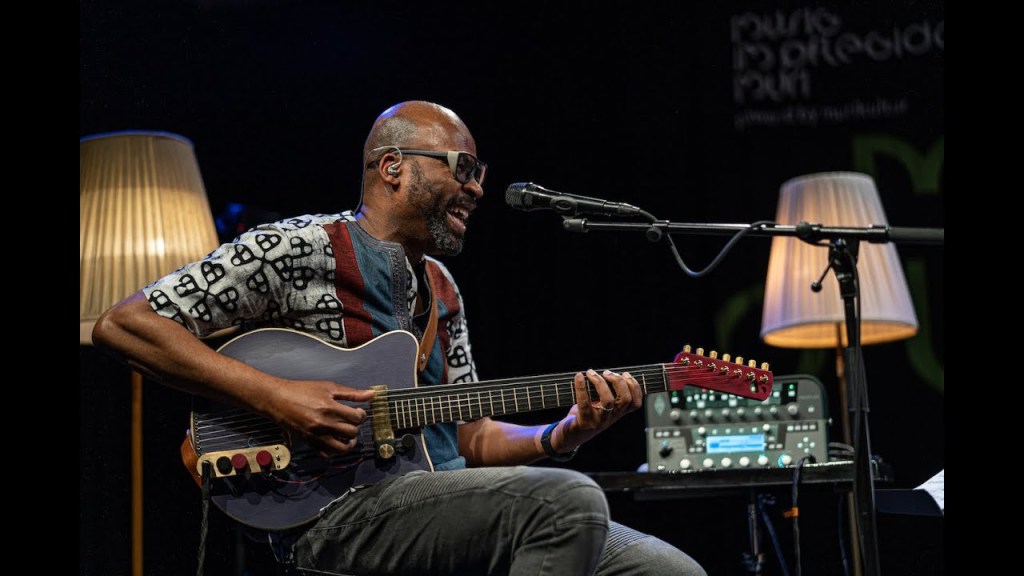
One of Loueke’s signature techniques is his integration of vocalizations with his guitar playing. He frequently sings along with his lines, often harmonizing or doubling the melody to add depth and texture. His voice becomes an extension of the instrument, blending seamlessly with his guitar lines. Loueke uses vocal harmonizers and effects to enhance this, adding a rich, layered sound that has become an essential part of his performances.
4. Extended Harmony and Harmonic Experimentation
Loueke’s harmonic approach often involves unconventional chord voicings and extended harmonies. Drawing from both jazz and African scales, he creates lush, unexpected sounds that challenge traditional jazz structures. He’s known for employing open-string voicings and complex inversions, as well as alternating between tonal and atonal harmonies. These choices give his compositions an unpredictable, exploratory feel, with harmonic textures that keep listeners engaged.
5. Innovative Use of Technology
Loueke embraces technology in his performances, using effects pedals, loops, and harmonizers to expand his sound. This allows him to build layers of rhythm, melody, and harmony, even in solo settings. His use of effects is subtle yet impactful, adding dimension without overpowering the organic qualities of his guitar and voice. Loueke’s approach to technology is always in service of the music, enhancing his sound without detracting from its natural feel.

Essential Albums
Lionel Loueke’s discography offers a deep dive into his evolving style and the creative directions he has pursued over the years. Here are some standout albums that showcase his unique approach to jazz guitar:
1. Karibu (2008)
Loueke’s breakthrough album Karibu captures the essence of his style, blending African rhythms with jazz improvisation and harmonic exploration. The album features collaborations with jazz giants Herbie Hancock and Wayne Shorter, adding depth to tracks like “Seven Teens” and “Benny’s Tune.” With this album, Loueke introduced his signature sound to the jazz world, creating a musical landscape that feels both familiar and new.
2. Mwaliko (2010)
Mwaliko is a collaborative project where Loueke works with artists from different musical backgrounds, exploring themes of cultural exchange and unity. Tracks like “Twins” and “Hope” highlight his vocal integration and polyrhythmic mastery, with guest musicians adding textures that complement his guitar work. This album is a testament to Loueke’s commitment to musical fusion, blending elements of jazz, African, and world music.
3. Heritage (2012)
Produced by Robert Glasper, Heritage dives into the relationship between African and African American musical traditions. This album explores a more modern jazz sound, with Loueke using effects and electronic elements to add depth to tracks like “Tribal Dance” and “African Ship.” Loueke’s guitar is rich and expressive, showing his ability to bridge traditional African music with contemporary jazz innovation.
4. Gaïa (2015)
In Gaïa, Loueke strips down his sound to create an earthy, organic feel. This trio album with bassist Massimo Biolcati and drummer Ferenc Nemeth features tracks that emphasize groove and rhythm, with an almost primal energy. Songs like “Broken” and “Even Teens” showcase Loueke’s polyrhythmic skill, with minimal effects and a raw approach that focuses on live interaction among the musicians.
5. HH (2020)
HH is a solo tribute album to Herbie Hancock, featuring Loueke’s interpretations of Hancock’s compositions. This album is a testament to Loueke’s versatility, as he reimagines classics like “Cantaloupe Island” and “Actual Proof” in his own style, blending jazz harmony with African rhythm and vocal layering. It’s a must-listen for any fan of Hancock or Loueke, capturing his ability to reinvent beloved standards with creativity and respect.
Key Techniques to Learn from Lionel Loueke
For guitarists inspired by Loueke’s style, here are some techniques to explore:
- Explore Polyrhythmic Patterns: Experiment with layering rhythms by playing in one meter with your hands and tapping a different rhythm with your foot. This can help develop independence and a sense of rhythmic complexity.
- Integrate Vocal Harmonies: Try singing along with your guitar lines, either in unison or in harmony. Use effects like harmonizers to add depth to your vocals and experiment with using your voice as an extension of your guitar.
- Develop Percussive Fingerstyle Techniques: Practice muting, tapping, and scratching the strings to create percussive sounds. Incorporate these techniques into chord progressions and riffs to add rhythm without the need for additional instruments.
- Experiment with Open Voicings: Loueke often uses open-string voicings that create a fuller, more resonant sound. Explore open tunings and alternative fingerings to achieve similar harmonic richness in your playing.
- Use Effects Subtly: Loueke’s approach to effects is minimal and purposeful. Experiment with reverb, delay, and light harmonizers to add space and depth to your sound without overpowering it.
Influence and Legacy
Lionel Loueke has redefined what it means to be a jazz guitarist, pushing the boundaries of the genre by incorporating African influences and global sounds. His music is a bridge between cultures, bringing African musical traditions into the modern jazz context in a way that honors his roots while embracing the future. Through his teaching, recordings, and collaborations, Loueke has inspired a new generation of guitarists to think outside the box, blending genres and techniques to create something entirely new.

Conclusion
Lionel Loueke’s music is a celebration of diversity, innovation, and the power of cultural exchange. His ability to blend African rhythms, modern jazz harmony, and vocal techniques into a cohesive, original sound has set him apart as a groundbreaking artist. Whether through solo projects or collaborations with jazz legends, Loueke continues to push the boundaries of jazz guitar, showing us what’s possible when we look beyond tradition and embrace the world of sounds around us.
For guitarists and music lovers alike, Lionel Loueke is a reminder of the beauty that can emerge when we connect with our roots while daring to explore new territories.
 oscaronguitars.com
Leave a comment