

Bo Diddley wasn’t just a musician. He was a blueprint. With his homemade square guitar, raw energy, and signature rhythm, he cut through the polished sound of 1950s pop and injected rock ‘n’ roll with something feral, playful, and undeniably African American. His innovations laid the foundation for generations of guitarists, and his rebellious spirit made him both a musical pioneer and a quiet revolutionary.
The Square Guitar: Building a Personal Icon
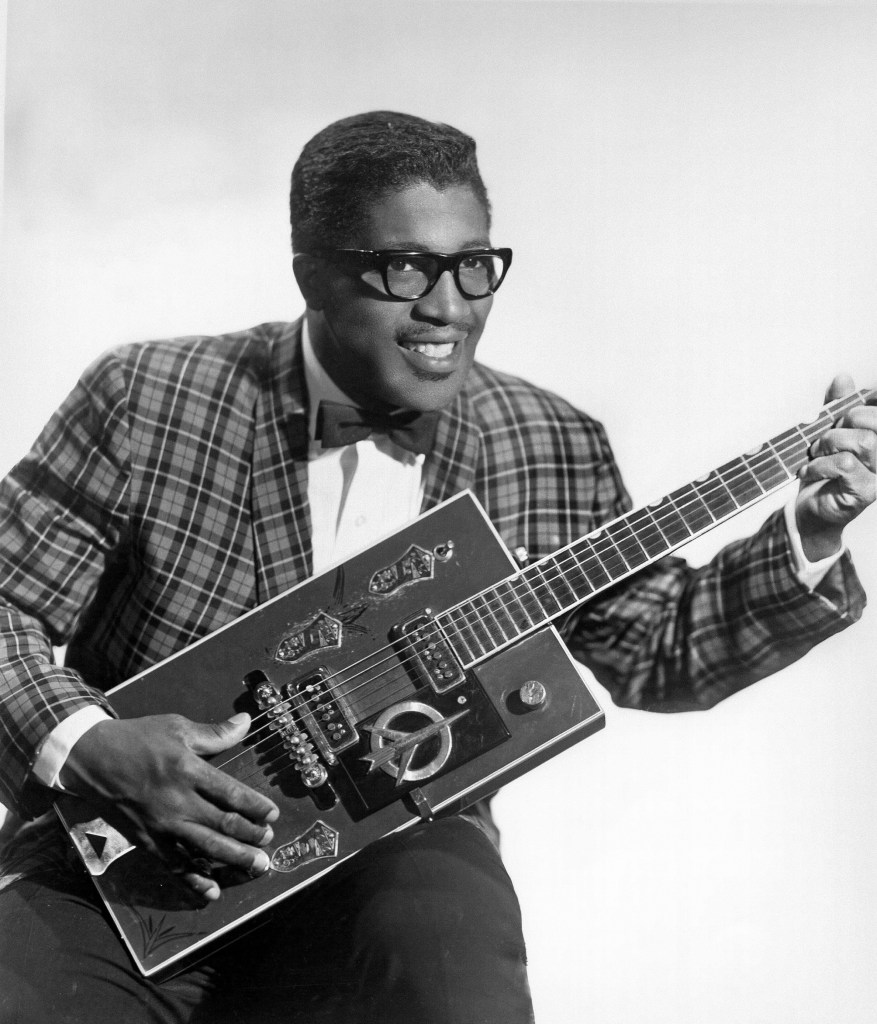
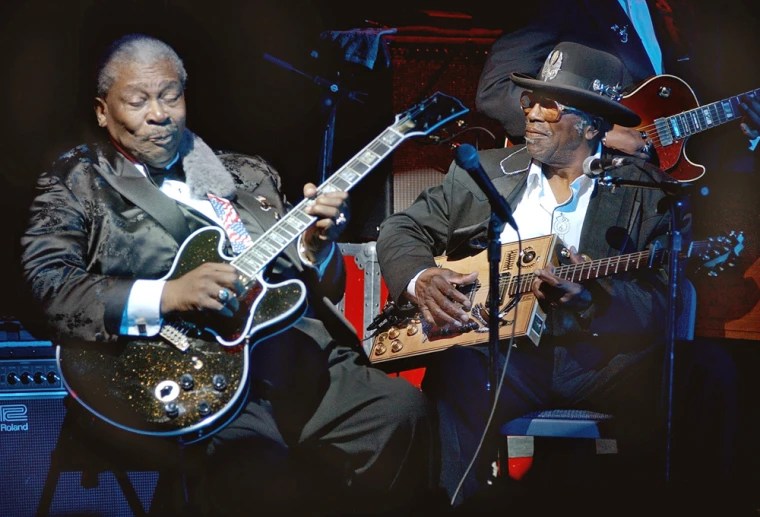
One of Bo Diddley’s most memorable visual trademarks was his custom-built rectangular guitar. The story of this unusual design reflects his DIY ethos and deep desire for control over his tone and stage presence. Tired of the feedback from traditional hollow bodies and constrained by their shape, Diddley crafted his own guitars—starting with simple cigar box-style builds.
These square-bodied instruments weren’t just for show. They were part of his sonic arsenal. Partnering later with luthier Norm Dane, Diddley co-designed futuristic, custom guitars with built-in effects like reverb and tremolo, way ahead of their time. In doing so, he redefined not only the instrument’s form but also how it could be integrated into performance—physically, visually, and sonically.
Chess Records: The Home of Electric Blues
Bo Diddley found a recording home at Chess Records, a Chicago label that had already become a bastion of electric blues thanks to artists like Muddy Waters and Howlin’ Wolf. But Bo brought something new to the table—a propulsive rhythm, minimal chord changes, and a unique blend of spoken word, rhythm, and blues that didn’t fit easily into any box.
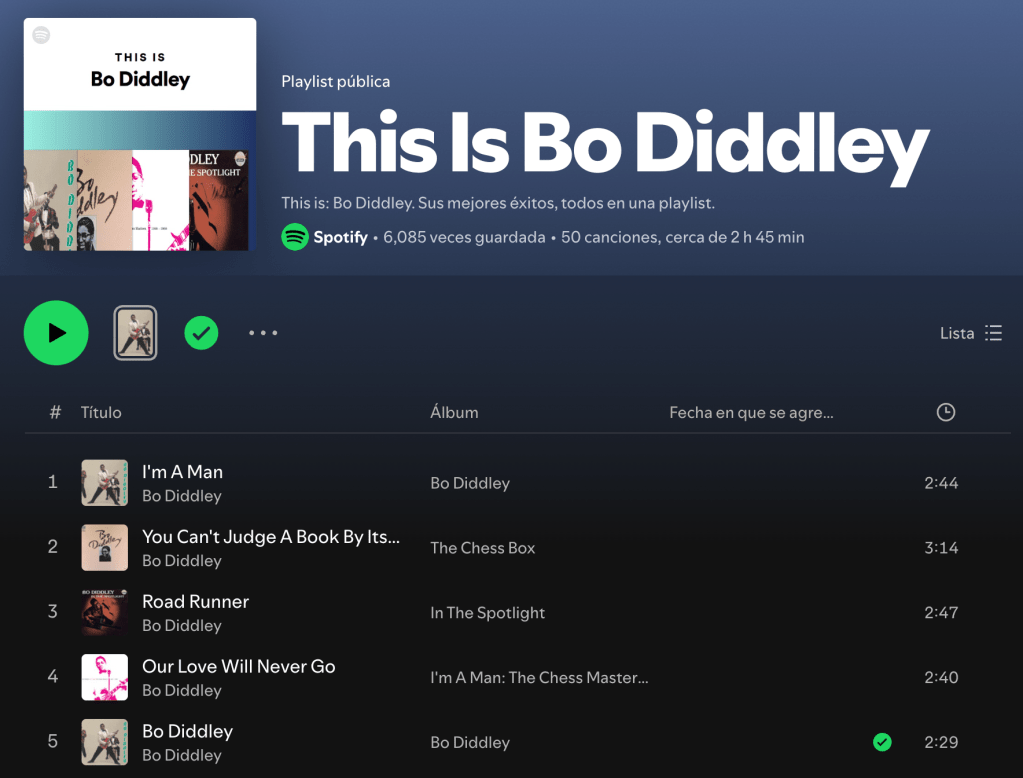
His self-titled debut single “Bo Diddley” b/w “I’m a Man” (1955) was an earthquake. The song’s now-iconic rhythm—bom-ba-bom-bom, ba-bom—would become known as the Bo Diddley beat, a syncopated clave pattern derived from African and Afro-Caribbean music traditions, but electrified for the rock era. This beat would echo for decades through countless songs across genres.
Induction into the Rock and Roll Hall of Fame
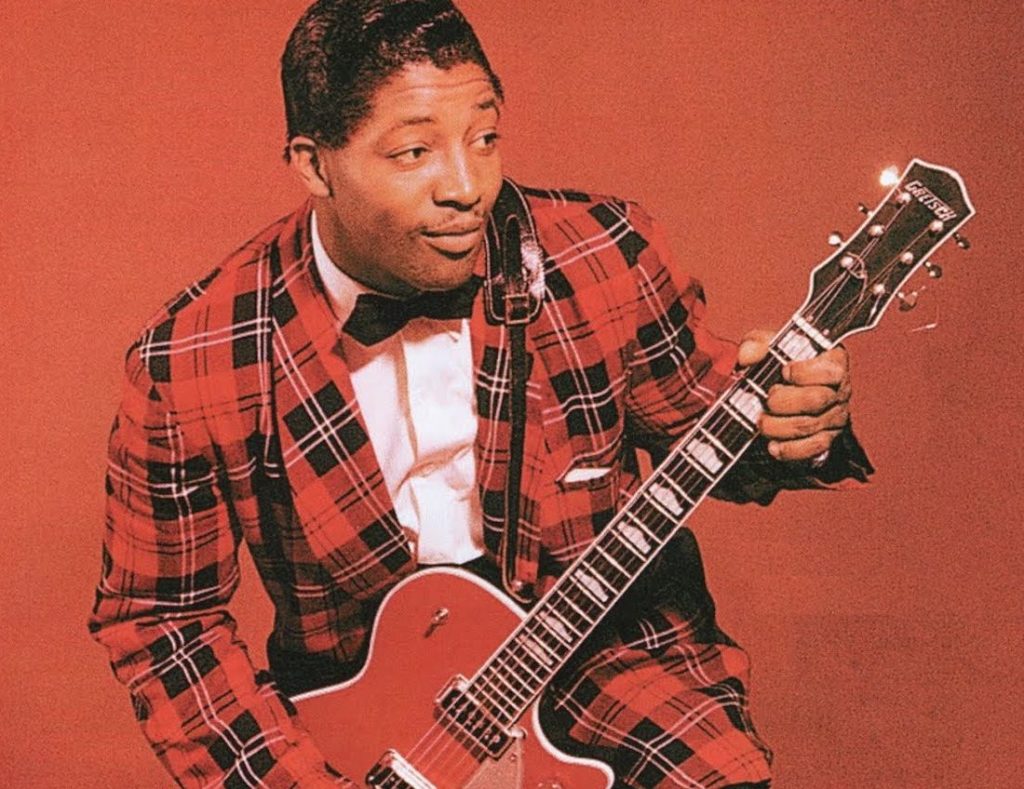
In 1987, Bo Diddley was inducted into the Rock and Roll Hall of Fame, a recognition that was long overdue. While Elvis and Chuck Berry were widely credited with shaping rock music, Bo’s contributions were just as foundational, if not more so in terms of rhythm and innovation.
Artists like The Rolling Stones, The Beatles, The Clash, and U2 borrowed his rhythm and stage swagger. His 1987 induction speech was characteristically blunt: “You can’t judge a book by looking at the cover.” A reminder that while his eccentric guitar and rhythm defined his image, his deeper impact was in his fearless originality and refusal to conform.
Civil Rights and Confronting Segregation
Bo Diddley wasn’t overtly political in his lyrics, but his actions told a different story. Touring the segregated South during the Civil Rights Movement was no small feat for a Black musician. Diddley often faced violence, threats, and hostility for performing to integrated audiences or refusing to follow Jim Crow laws.
He didn’t stop. He used his platform, fame, and tenacity to challenge racial barriers simply by showing up and playing his music—loud, proud, and defiant. In a time when Black artists were often expected to “stay in their lane,” Bo drove right off the road.
A True DIY Musician
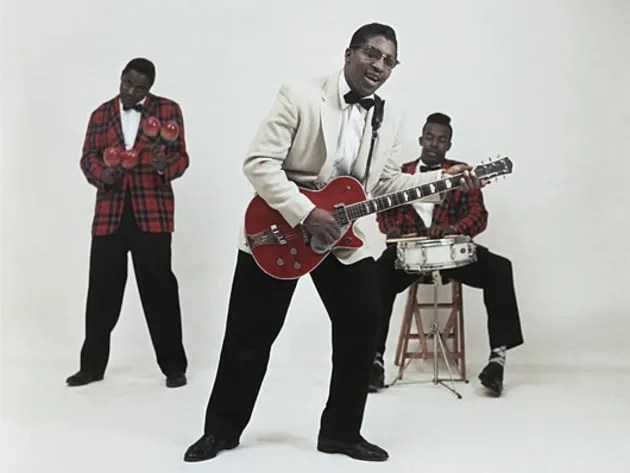
Bo Diddley’s relationship with sound was exploratory. He didn’t just play instruments—he built them, rewired them, bent them to his creative will. Long before pedalboards became common, Bo experimented with reverb, tremolo, and custom amplification.
He often modified his gear to produce unique tones, placing him in the lineage of other sonic experimenters like Jimi Hendrix and later Tom Morello. His use of early effects like the DeArmond Tremolo Control gave his playing a pulsing, hypnotic quality that turned three chords into something magical.
Humor and Surrealism in Lyrics
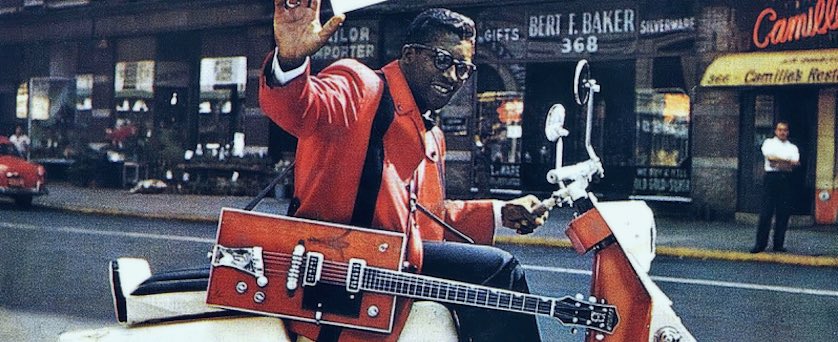
While many early rock songs stuck to romance or rebellion, Bo’s lyrics often veered into the absurd, comical, or storytelling realm. In songs like “Who Do You Love?” he claimed to carry a cobra snake for a necktie and a tombstone for a pillow. It wasn’t nonsense—it was mythmaking, blues surrealism.
Bo Diddley’s songs were full of boastful swagger and tall tales, but underneath was a cunning lyricist playing with the blues tradition of the trickster figure. His songs had punchlines, catchphrases, and rhythmically spoken interludes that prefigured elements of hip-hop decades ahead of its time.
Breaking Racial Barriers in Performance
Bo Diddley wasn’t just a bluesman; he was a showman. His rhythmic dancing, guitar acrobatics, and distinctive look helped him cross racial lines in the entertainment industry. He became one of the first African American artists to appear on The Ed Sullivan Show in 1955—a breakthrough moment that went sour when Sullivan misunderstood Bo’s intentions and banned him from future appearances.
Still, Bo’s charisma and unique sound helped him build a crossover audience, one that defied the color lines of American radio and performance venues. His presence laid groundwork for later Black artists to succeed in the mainstream rock scene.
Multi-Instrumental Talent
Though known for his guitar work, Bo Diddley was a multi-instrumentalist. He originally trained on the violin as a child, studying at Chicago’s Ebenezer Baptist Church, and he later added drums and bass to his repertoire. This classical foundation gave his rhythmic instincts a sharper edge and made him a versatile musician and arranger.
His deep understanding of rhythm—likely influenced by his violin bowing patterns and church syncopations—translated into the raw percussiveness of his guitar playing. He often saw the guitar as both melodic and percussive, which is evident in his choppy strumming and pounding chord attacks.
A Family of Music
Bo Diddley’s legacy didn’t stop with his own career. He influenced his immediate and extended family, both literally and figuratively. His daughter was adopted by his sister and grew up to continue his musical traditions. His influence also shaped the communities he lived in, mentoring young musicians and supporting local music scenes.
In the broader sense, Bo’s “musical family” included countless guitarists and performers who credit him as a foundational figure. He mentored younger acts and never hesitated to call out the music industry when it ignored Black pioneers in favor of white cover acts.
Bo Diddley Beat: A Global Pulse
Perhaps nothing symbolizes Bo Diddley’s legacy more than his beat. It appears everywhere—from Buddy Holly’s “Not Fade Away” to George Michael’s “Faith,” U2’s “Desire,” and even Beyoncé’s “Single Ladies.”
That beat, rooted in African rhythmic traditions and reborn through his amplifier, became one of the genetic codes of modern pop and rock. It’s been adapted across decades and continents—a living, pulsing fingerprint of his genius.
Conclusion: A Legacy Carved in Rhythm and Wood
Bo Diddley wasn’t just ahead of his time—he was outside of it. His square guitars, pulsing rhythms, sly lyrics, and defiant presence created a new space for rock music to grow. He didn’t just follow trends—he made them up, built the tools, and taught others how to play.
While others polished their sound for the charts, Bo chiseled his music from raw experience, Black identity, and innovation. His contributions continue to ripple through the DNA of rock, blues, punk, pop, and hip-hop. Bo Diddley didn’t just bring the beat—he was the beat.

10 facts about Bo Diddley
- Born Ellas Otha Bates: Later adopted and renamed Ellas McDaniel before taking on the stage name Bo Diddley.
- Classically trained violinist: Studied violin for over 10 years and played in a church orchestra before switching to guitar.
- Worked as a boxer and carpenter: Held multiple jobs, including boxing and construction, which influenced his hands-on, no-frills style.
- Pioneered home recording: Built a multi-track home studio decades before it was common, crafting much of his sound independently.
- Invented custom effects: Experimented with tremolo, reverb, and preamp circuits; even modified his own gear and pickups.
- Was banned from Ed Sullivan Show: After a misunderstanding about what song to perform, he was blacklisted from future appearances.
- Appeared in early video music promos: One of the first artists to create promotional video clips for TV, foreshadowing the MTV era.
- Mentored other musicians: Supported and inspired younger artists like The Duchess (Norma-Jean Wofford), one of the first female rock guitarists.
- Performed into his 70s: Continued to tour and play high-energy shows well into his old age, outlasting many of his peers.
- Featured in tech ads: Starred in a 1990s commercial for Nike with Bo Jackson, playing on the famous “Bo Knows” slogan.
 oscaronguitars.com
Leave a comment