
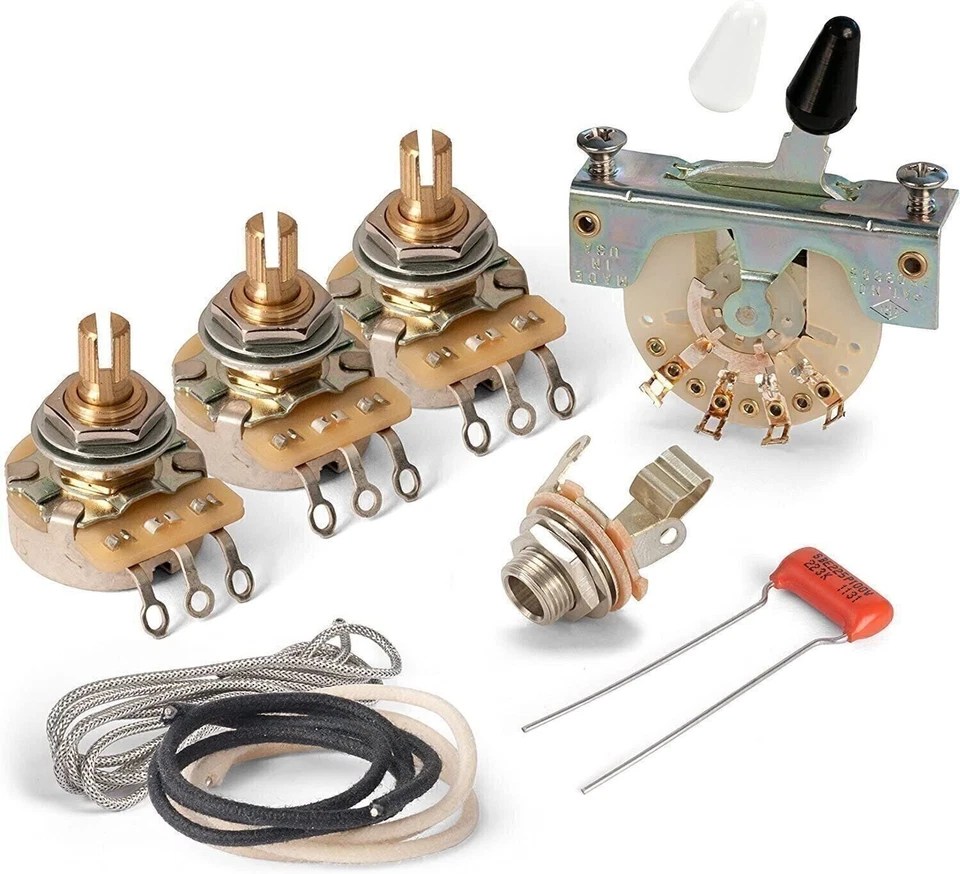
Your electric guitar’s potentiometers, switches, and plug connectors might not steal the spotlight, but they’re the unsung heroes behind your tone and performance. From volume control to pickup selection and reliable connections, understanding these components is key to keeping your guitar in top shape or upgrading for a better experience.
Potentiometers (Pots): The Tone and Volume Masters
1. Volume Pots
Volume pots control the output level of your guitar. Commonly available in 250k and 500k values, they shape your guitar’s tonal brightness.
Popular Brands: CTS, Bourns, Alpha.
Pros:
- Smooth control over volume dynamics.
- High-quality pots improve tonal clarity.
Cons:
- Cheap pots can create static or fail prematurely.
When to Upgrade: If your volume pot crackles, feels loose, or lacks precision, it’s time for a replacement.
2. Tone Pots
Tone pots let you roll off the treble, softening your guitar’s high frequencies. They work alongside capacitors to sculpt your sound.
Popular Brands: CTS, Emerson.
Pros:
- Adds versatility to your sound.
- Higher-quality pots and capacitors improve response.
Cons:
- Poor-quality tone pots can feel unresponsive or muddy.
When to Upgrade: If your tone pot barely affects your sound or feels stiff, upgrade to improve your control.
3. Push-Pull Pots
Push-pull pots double as switches, enabling coil splitting, phase switching, or other tone-shaping options.
Pros:
- Adds more tonal variety.
- Keeps your guitar clean without extra switches.
Cons:
- More complex wiring.
- Slightly bulkier than standard pots.
When to Upgrade: If you want to expand your tonal palette without modifying your guitar’s aesthetics, these are a solid choice.
Pickup Selector Switches: Changing Your Sound on the Fly
Types of Switches
- 3-Way Switches: Found on Les Pauls, ideal for quick changes between two pickups or blending both.
- 5-Way Switches: Standard on Strats, offering more tonal options like combining coils.
- Mini Toggles: Often used for coil splitting or activating additional pickup configurations.
Popular Brands: CRL, Oak Grigsby, Switchcraft.
Pros:
- Reliable switching between pickups.
- High-quality switches feel smooth and precise.
Cons:
- Cheap switches can break or feel flimsy.
When to Upgrade: If your switch crackles or doesn’t engage cleanly, upgrade to ensure seamless transitions mid-performance.
Plug Connectors (Output Jacks): Your Guitar’s Lifeline
1. Standard Jacks
The most common option, typically found on most electric guitars.
Popular Brands: Switchcraft, Neutrik.
Pros:
- Reliable and easy to replace.
- Affordable and widely available.
Cons:
- Cheaper jacks can loosen or lose connection over time.
When to Upgrade: If your signal cuts out or the jack feels wobbly, it’s time for a sturdier replacement.
2. Locking Jacks
Locking jacks grip the cable, ensuring it doesn’t accidentally unplug during a performance.
Popular Brands: Neutrik.
Pros:
- Secure and reliable for live gigs.
- Reduces wear on the jack.
Cons:
- Slightly more expensive.
- Cable compatibility can be limited.
When to Upgrade: If you play live frequently and fear accidental disconnections, a locking jack can be a lifesaver.
Tips for Maintaining or Upgrading Guitar Electronics
- Choose Quality Components: Brands like CTS, Switchcraft, and Neutrik are trusted for their durability and performance.
- Match Values: Use pots and capacitors that suit your pickups—250k for single-coils, 500k for humbuckers.
- Shield Your Electronics: Adding copper tape or shielding paint can reduce hum and noise in your signal.
- Go for Solderless Systems: Some modern wiring kits make upgrades simple and solder-free.
- Don’t Skimp on the Jack: A high-quality output jack is a small investment that ensures a solid connection.
Conclusion
Your guitar’s pots, switches, and jacks might be small, but they’re mighty. Whether you’re chasing the perfect tone, fixing a crackling switch, or preparing for a gig, understanding these components can save you time and frustration. Upgrade wisely and play on with confidence.
 oscaronguitars.com
Leave a comment