
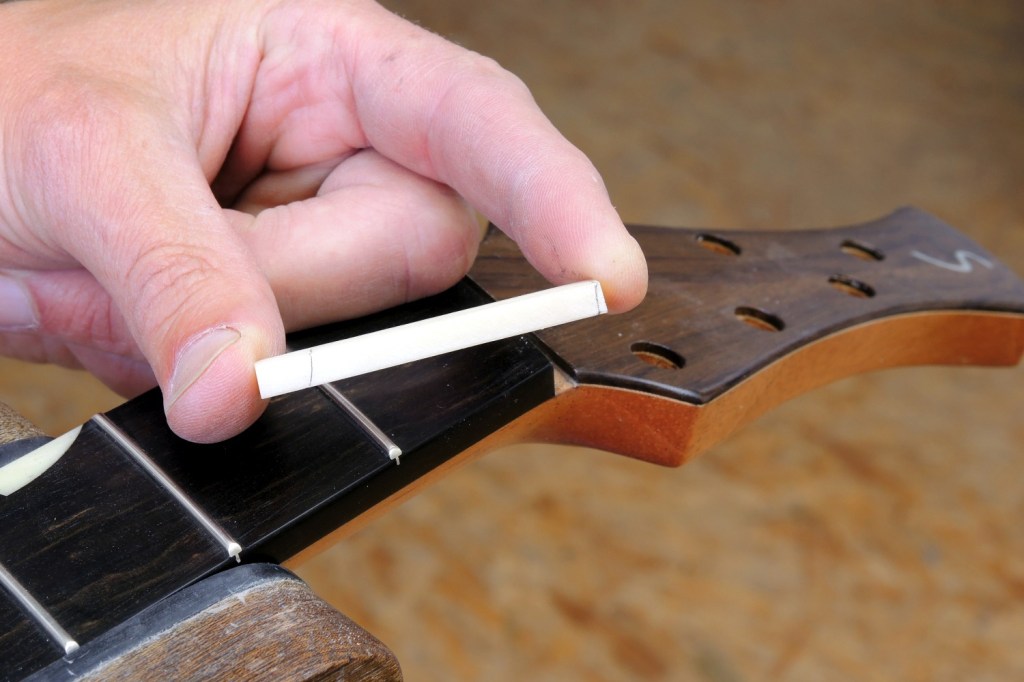
The guitar nut might be tiny, but it’s crucial for tuning stability, sustain, and tone. From bone to synthetic materials like Tusq, choosing or upgrading your nut can make a noticeable difference in your playing experience. Let’s dive into the world of guitar nuts, explore the options, and figure out when it’s worth an upgrade.
What Is a Guitar Nut, and Why Does It Matter?
The nut is the small strip located at the top of the fretboard. It guides the strings, affects string height (action), and transfers vibrations to the neck. A poorly made or worn nut can lead to tuning issues, string buzz, or dead tones.
Types of Guitar Nuts
1. Bone Nuts
Bone nuts have been the gold standard for decades, especially on higher-end guitars. They’re crafted from natural bone and offer excellent tonal qualities.
Popular Brands: Graph Tech (for pre-slotted bone nuts), handcrafted options from luthiers.
Pros:
- Superior sustain and resonance.
- Bright, clear tone.
- Durable and long-lasting.
Cons:
- Requires skilled installation.
- More expensive than synthetic materials.
When to Upgrade: If your current nut is plastic or worn out, a bone nut is a great way to enhance tone and durability.

2. Tusq Nuts
Tusq is a synthetic material designed to mimic the tonal properties of bone while being consistent and easy to manufacture.
Popular Brands: Graph Tech Tusq.
Pros:
- Consistent performance—no tonal variations like natural bone.
- Smooth surface reduces string friction.
- Affordable and readily available.
Cons:
- Lacks the “vintage” vibe of natural materials.
- Marginally less resonance than bone.
When to Upgrade: If your plastic nut causes tuning instability or dull tone, a Tusq nut is an excellent, budget-friendly upgrade.
3. Plastic Nuts
Plastic nuts are common on entry-level guitars. They’re cheap to produce but often lack the tonal and functional qualities of better materials.
Pros:
- Affordable.
- Lightweight.
Cons:
- Poor durability.
- Can lead to tuning instability and weak tone.
When to Upgrade: Almost always! If your guitar has a plastic nut, upgrading to bone or Tusq is a worthwhile improvement.
4. Graphite Nuts
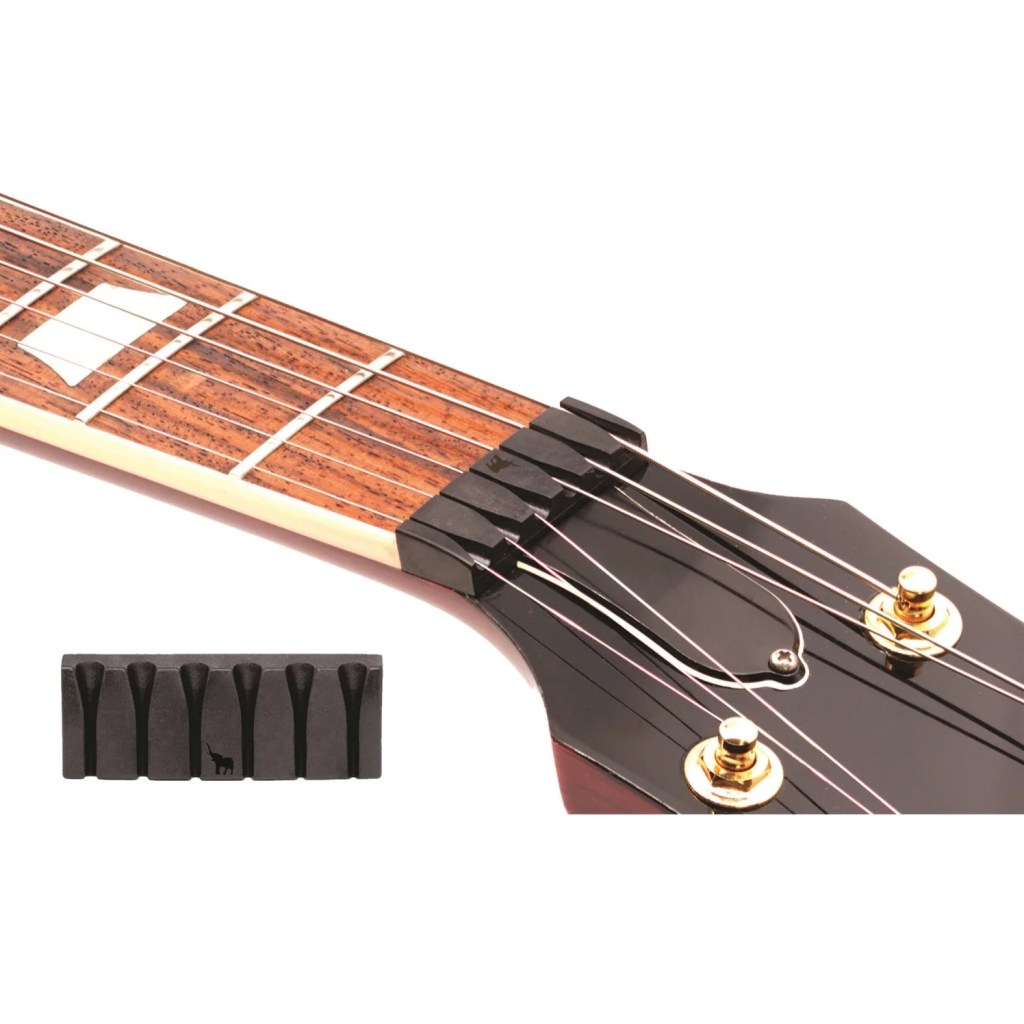
Graphite nuts are popular for their low friction, making them ideal for players who use tremolos or perform heavy bending.
Popular Brands: Graph Tech Black TUSQ XL.
Pros:
- Excellent tuning stability, especially with tremolo systems.
- Durable and smooth.
Cons:
- Tone is slightly softer than bone or Tusq.
When to Upgrade: If you’re experiencing tuning issues with tremolo use, a graphite nut can be a game-changer.
Pros and Cons of Different Nut Materials
| Material | Tone | Durability | Price |
|---|---|---|---|
| Bone | Bright, clear | High | $$$ |
| Tusq | Balanced, consistent | High | $$ |
| Plastic | Dull, inconsistent | Low | $ |
| Graphite | Slightly soft | High | $$ |
Tips for Choosing or Upgrading Your Nut
- Consider Your Playing Style: If you’re a tremolo enthusiast, go for graphite. For vintage vibes, bone is your friend.
- Match the Material to Your Tone Goals: Bright tone? Bone. Balanced tone? Tusq.
- Get a Professional Installation: A poorly cut nut can cause more problems than it solves.
- Check String Spacing: Make sure the nut matches your guitar’s neck width for optimal comfort.
- Don’t Ignore Action: The nut plays a big role in string height—too high, and your guitar will feel harder to play.
When to Upgrade Your Guitar Nut
- Buzzing or Dead Strings: A worn-out nut can cause uneven vibrations.
- Tuning Instability: If your guitar struggles to stay in tune, the nut may be the culprit.
- Tone Troubles: If your guitar sounds dull or lacks sustain, a better nut can bring life back to your sound.
- Frequent String Breaks: Rough edges or cheap materials can snap strings faster.
Conclusion
The guitar nut is a small detail with a big impact. Whether you’re upgrading from plastic to bone or switching to a Tusq nut for consistency, the right choice can enhance your tone, tuning stability, and overall playability. Give your guitar the upgrade it deserves—you’ll hear the difference!
 oscaronguitars.com
Leave a comment