
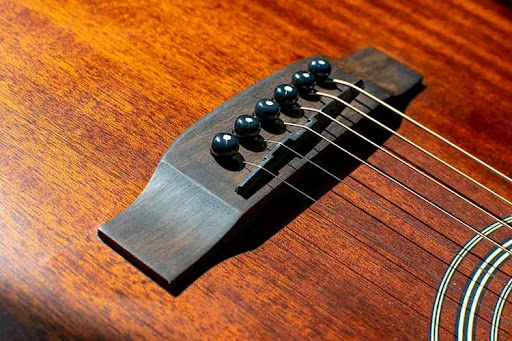
When it comes to your guitar’s sound and playability, one often-overlooked component plays a huge role: the saddle. Whether you’re rocking an electric or acoustic guitar, the saddle is where the strings meet the body (or bridge), and it affects everything from your tone to your sustain. So, how do you choose the right one? Let’s take a closer look at different saddle types, materials, and when you might want to upgrade for a better playing experience.
What Is a Guitar Saddle?
A guitar saddle is a small piece of material that sits on the bridge of your guitar, supporting the strings. The saddle helps to transfer the vibrations of the strings into the guitar’s body, contributing to your instrument’s overall tone and sustain. It’s one of those parts that might not get much attention, but trust me, it makes a difference!
Different Types of Guitar Saddles

1. Plastic Saddles
Plastic saddles are often found on budget-friendly guitars. They’re affordable, lightweight, and can still do a decent job of getting the job done.
Popular Brands: Fender, Yamaha (on entry-level models).
Pros:
- Inexpensive.
- Common on lower-priced guitars.
- Easy to replace.
Cons:
- Less durable than other materials.
- Tend to produce a “flatter” tone compared to other saddle materials.
- Not as stable over time—can wear out or deform.
When to Upgrade: If you find that your tone lacks warmth or sustain, or if you’re playing more often and need something more durable, consider upgrading to a different material.
2. Bone Saddles
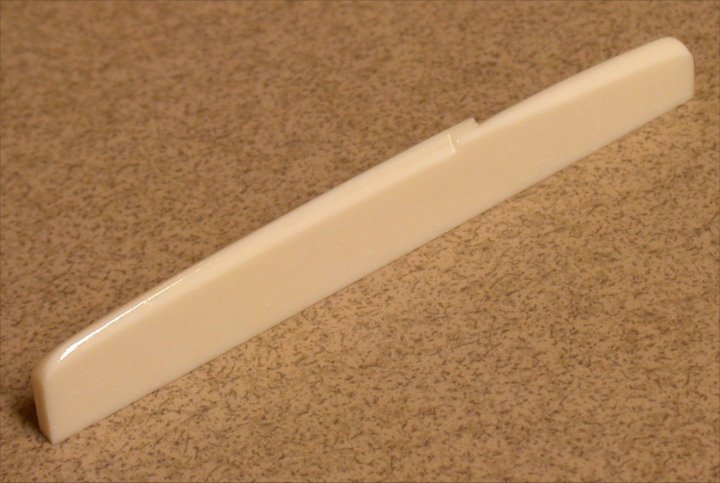
Bone has been a classic material for guitar saddles for decades, especially in acoustic guitars. Known for its dense and sturdy nature, a bone saddle provides excellent sustain and tonal clarity.
Popular Brands: Martin, Gibson, Larrivée (on higher-end acoustics).
Pros:
- Great sustain and tonal quality.
- Natural material with a nice balance of warmth and brightness.
- Long-lasting and durable.
Cons:
- Can be expensive compared to plastic.
- Can be a bit more prone to cracking with time (especially if not well cared for).
When to Upgrade: If you’re looking to enhance your guitar’s tonal complexity and are after a more traditional, vintage sound, bone is a solid option.
3. Tusq Saddles
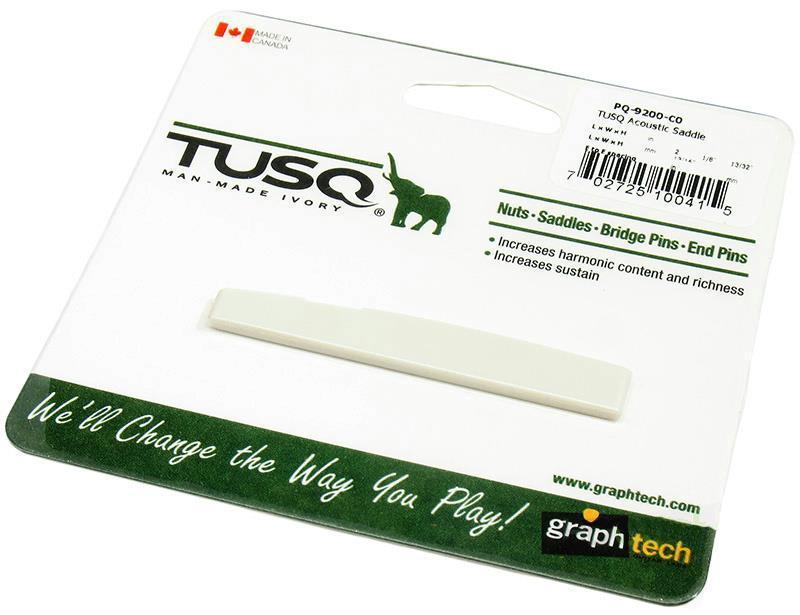
Tusq is a synthetic material that mimics the qualities of bone while offering a more consistent and stable performance. It’s a favorite for guitarists looking for high performance with a more modern feel.
Popular Brands: Graph Tech (Tusq).
Pros:
- Offers bone-like tonal qualities, but more consistent.
- Does not crack or warp as easily as bone.
- Affordable alternative to bone.
Cons:
- Not as traditional as bone, so it might not be preferred by purists.
- Some players might prefer the warmth of real bone.
When to Upgrade: If you’re after a bone-like tone with more durability and consistency, Tusq is a great upgrade for modern playability.
4. Graphite Saddles
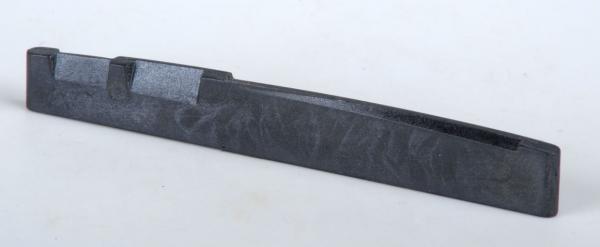
Graphite is a highly stable and low-friction material, which makes it perfect for improving string movement and tuning stability. This material is commonly found in electric guitars or on high-performance acoustic guitars.
Popular Brands: Graph Tech, Ibanez, PRS.
Pros:
- Excellent for tuning stability.
- Low friction means less string binding, which helps with smooth playability.
- Works well with both electric and acoustic guitars.
Cons:
- Can sometimes sound slightly “sterile” or lacking in warmth compared to bone or Tusq.
- Might not suit every player’s tonal preference.
When to Upgrade: If you’re a player who values smooth action and tuning stability, especially with tremolo systems, graphite is a solid choice.

5. Brass and Steel Saddles
Brass and steel are popular choices for electric guitar saddles. They’re often used in combination with fixed bridges and are favored for their bright, cutting-through tone.
Popular Brands: Wilkinson, Gotoh, TonePros.
Pros:
- Strong, bright tone with excellent sustain.
- Great for aggressive playing styles.
- Can handle high string tension.
Cons:
- Might produce too much brightness or “metallic” tone for some players.
- Heavier than other materials, which can affect the guitar’s overall feel.
When to Upgrade: If you’re looking to brighten up your tone and enhance sustain, brass or steel might be the right choice. It’s especially beneficial for rock and metal players.
Tips for Choosing and Maintaining Your Guitar Saddle
- Match the Saddle Material to Your Playing Style: Consider how your playing style and tonal needs match up with the material you choose. If you play rock or metal, steel or brass may be your best bet. For softer, warmer tones, bone or Tusq will serve you better.
- Check for Saddle Wear: Over time, saddles can wear down from string friction. If you start hearing buzzing, loss of sustain, or feel uneven string heights, it may be time to replace the saddle.
- Upgrade for Better Tuning Stability: If you’re using a tremolo system or notice that your guitar frequently goes out of tune, upgrading to a graphite or Tusq saddle can improve stability.
- Be Careful with Nut-Saddle Compatibility: Make sure your saddle material complements the nut material on your guitar. For example, pairing a bone saddle with a plastic nut may not give you the best tonal results.
Conclusion
Choosing the right guitar saddle isn’t just about tone—it’s about playability and durability too. Whether you’re upgrading from a plastic saddle for better sustain or swapping to graphite for smoother playability, the right saddle can drastically improve your overall guitar experience. Take the time to experiment with different materials to find the one that best suits your needs!
 oscaronguitars.com
Leave a comment