
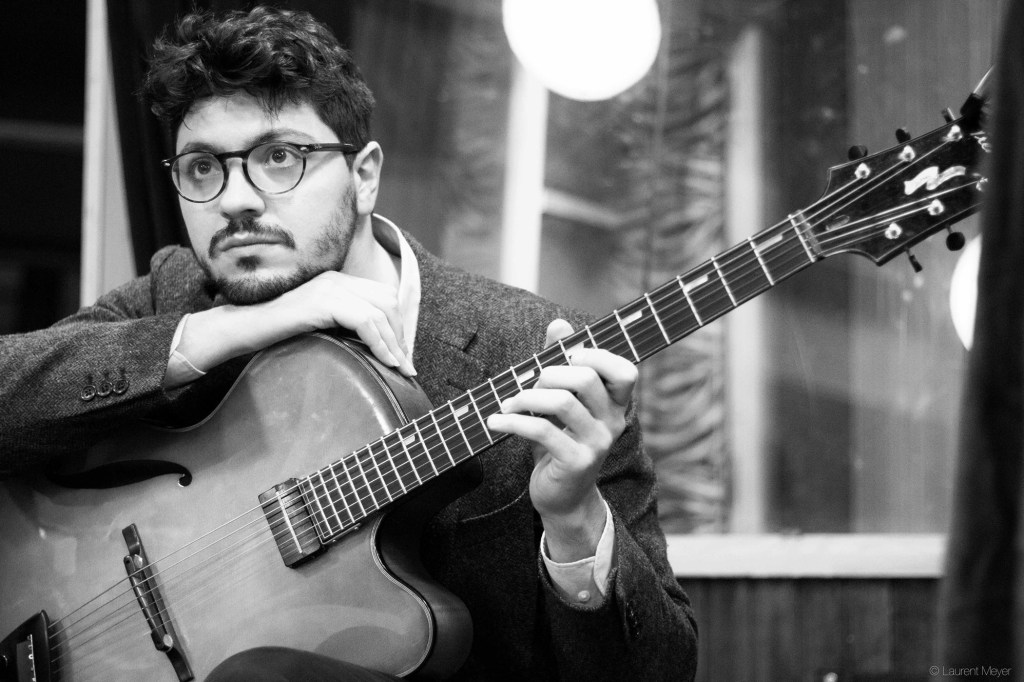
Pasquale Grasso is one of the most innovative and technically proficient jazz guitarists of his generation. Born in Italy and steeped in the rich traditions of jazz, Grasso has developed a playing style that blends virtuosic technical skill with an extraordinary sense of harmonic exploration. Known for his impeccable technique, deep knowledge of jazz history, and unique approach to the guitar, Grasso is quickly becoming one of the most respected names in contemporary jazz guitar.
In this article, we’ll take a deep dive into Pasquale Grasso’s musical journey, his playing style, and his influence on modern jazz guitar, along with some of his most important works.
Early Life and Musical Background
Pasquale Grasso was born in 1989 in Italy, where he began his musical journey at a young age. His early exposure to jazz was influenced by the rich cultural and musical traditions of his homeland. Drawing inspiration from the greats of jazz guitar—such as Wes Montgomery, Joe Pass, and Grant Green—Grasso quickly found his voice on the instrument. He began his formal education at the Conservatorio Giuseppe Verdi in Milan, but his true passion for jazz guitar came from his deep study of the genre and his desire to push its boundaries.
Grasso’s dedication to the guitar led him to further refine his skills, eventually gaining recognition for his fluid improvisational style, his mastery of jazz harmony, and his remarkable ability to blend technical precision with musical expression.
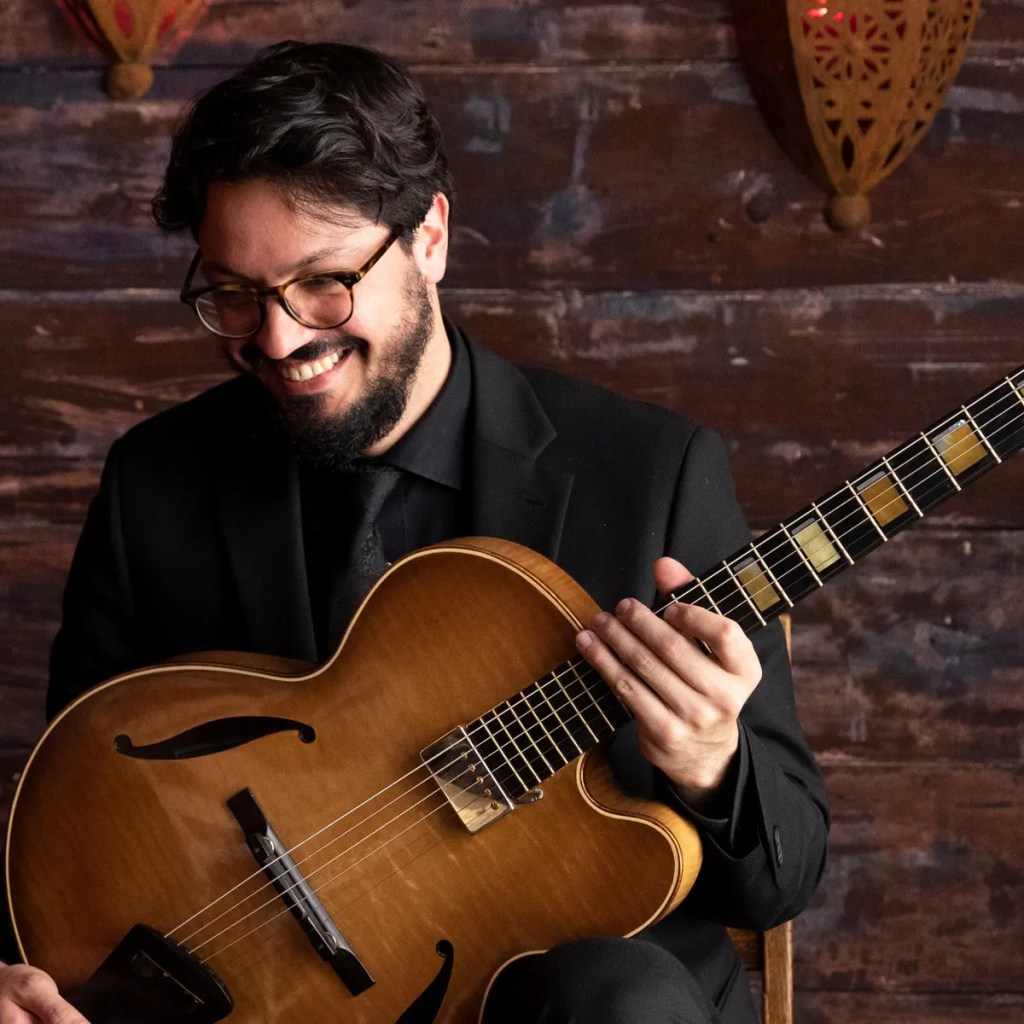
Pasquale Grasso’s Playing Style: A Blend of Tradition and Innovation
Grasso’s approach to guitar playing is rooted in the great traditions of jazz guitar, but he has quickly made a name for himself by modernizing these traditions. His playing style is defined by several key elements:
1. Impeccable Technique and Virtuosity
One of the standout characteristics of Grasso’s playing is his impeccable technique. His command of the instrument is virtually unparalleled, allowing him to execute complex lines, fast runs, and intricate chord voicings with ease. Grasso’s technical prowess is not just about speed or precision, though—it’s about using his technical skill to serve the music and create expressive, dynamic solos. Whether playing in unison with a band or performing a solo, Grasso’s technical mastery is always in service of the musical idea.
2. Chord-Melody Integration
Grasso is known for his ability to blend chords and melody seamlessly. This approach, often referred to as “chord-melody” playing, involves combining single-note lines with harmonized chords in a way that allows the guitarist to play both the melody and harmonic accompaniment at the same time. This technique adds a rich depth to his playing and allows him to fill out the sound, especially in solo performances.
Grasso’s mastery of chord-melody playing is particularly evident in his renditions of jazz standards, where he combines his deep harmonic knowledge with complex but accessible chord voicings. He takes these familiar tunes and reinterprets them with fresh harmonies and rhythms, turning them into something uniquely his own.
3. Advanced Harmony and Theory
Grasso’s understanding of jazz harmony is profound. He is well-versed in the theories behind chord substitutions, altered scales, and modal playing, which he incorporates into his solos and arrangements. His improvisational skills are based on a deep understanding of jazz standards and their harmonic progressions, and he’s able to navigate through complex changes with both fluidity and creativity. Grasso’s chord voicings and harmonic progressions are highly innovative, often incorporating rich extensions, color tones, and passing chords to create new harmonic landscapes.
What sets Grasso apart is how he seamlessly integrates advanced harmonic theory with his melodic lines. His solos are not just technical exercises—they’re deeply musical, showcasing his ability to play outside of traditional chord structures while remaining melodically grounded.
4. Swing Feel and Rhythmic Drive
Another defining aspect of Grasso’s style is his swing feel and rhythmic drive. Like the great jazz guitarists before him, Grasso is a master of the swing rhythm that lies at the heart of jazz music. He effortlessly incorporates syncopation, phrasing, and groove into his playing, creating a rhythmic drive that is both complex and infectious. His ability to play behind and ahead of the beat creates a sense of forward motion in his solos, keeping listeners engaged and adding an exciting dynamic to his performances.
5. Influences from the Masters
Grasso draws on a wide range of influences, with Wes Montgomery being one of the most significant. He often credits Montgomery’s use of octaves and smooth phrasing as one of his primary inspirations. However, Grasso also incorporates elements from guitarists such as Joe Pass, who is known for his chord-melody approach, and Charlie Christian, one of the pioneers of jazz guitar. Despite his contemporary approach, Grasso has a deep reverence for the classic jazz guitar sound, and he works hard to maintain the integrity of this tradition while adding his own voice.

Notable Albums and Performances
Grasso’s discography is a testament to his abilities as a performer and composer. His work demonstrates not only his technical prowess but his deep understanding of the jazz tradition and his dedication to pushing its boundaries. Some of his most important albums and performances include:
1. “Solo” (2017)
Solo is a prime example of Grasso’s ability to take on jazz standards and reinterpret them with fresh harmonic and melodic ideas. The album is entirely solo guitar, showcasing Grasso’s skill in blending melody, harmony, and rhythm into a cohesive whole. Tracks like “Body and Soul” and “Autumn Leaves” feature Grasso’s mastery of chord-melody integration and his ability to take well-known jazz standards and transform them with sophisticated harmonies and virtuosic solos. It’s an album that reveals his technical proficiency and emotional depth.
2. “Pasquale Grasso Trio” (2019)
As a trio leader, Grasso delivers a brilliant performance in Pasquale Grasso Trio, where he is joined by bassist Ari Roland and drummer Jimmy Wormworth. This album features jazz standards, as well as original compositions, demonstrating Grasso’s unique ability to blend modern jazz with classic swing. The trio’s rhythm section provides a solid foundation for Grasso’s improvisational prowess, allowing him to explore more adventurous harmonic and melodic territory.
3. “Solo: The Jazz Guitar Master” (2020)
Solo: The Jazz Guitar Master further explores Grasso’s ability to play solo guitar in a way that feels both intimate and expansive. Each track demonstrates his deep knowledge of jazz history, with reinterpretations of jazz standards that retain their original spirit while showcasing his inventive harmonies and virtuosic playing.
4. Live Performances
Grasso is also known for his exceptional live performances, where his improvisational skills come to the forefront. He has performed at prestigious jazz festivals around the world, including the Montreux Jazz Festival and the Newport Jazz Festival. His live shows capture the energy and spontaneity of jazz, where each performance feels like a unique journey through the music.
Conclusion
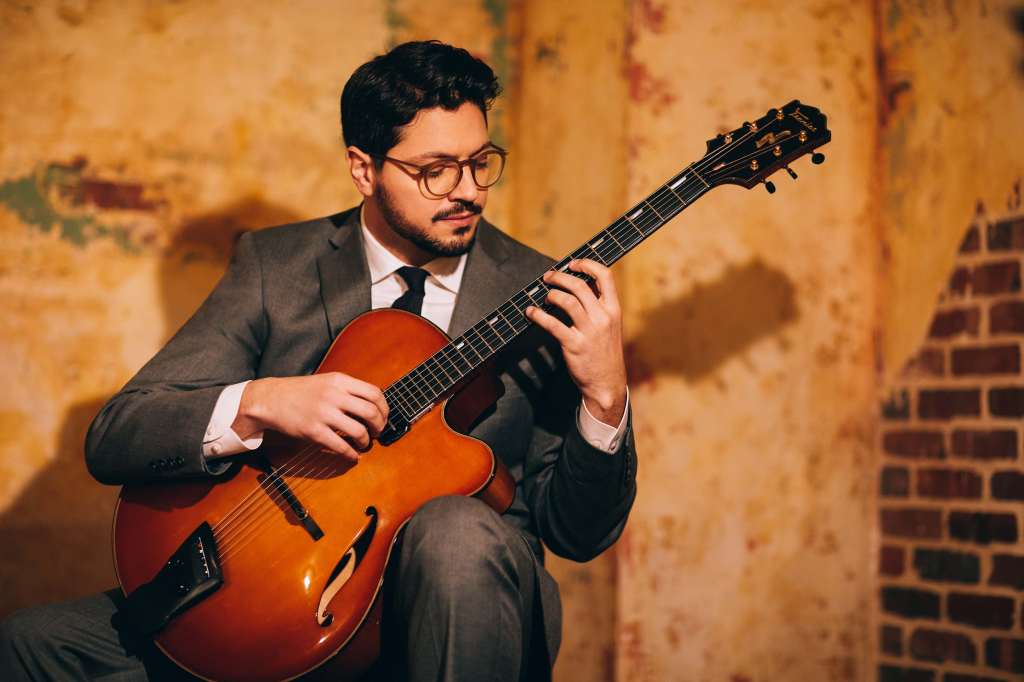
Pasquale Grasso has solidified his place as one of the most innovative and technically proficient guitarists in the world of jazz. With his virtuosic technique, mastery of harmony, and ability to blend traditional jazz with modern sounds, Grasso has redefined what is possible on the guitar. His approach to chord-melody, improvisation, and rhythm has set him apart as one of the brightest stars in the jazz guitar world today.
Whether performing solo, leading a trio, or collaborating with other musicians, Grasso’s musical voice is unmistakable. His work not only honors the tradition of jazz guitar but pushes it forward into exciting new directions. Pasquale Grasso is a guitarist to watch, and his influence on the future of jazz guitar will be felt for years to come.
 oscaronguitars.com
Leave a comment