
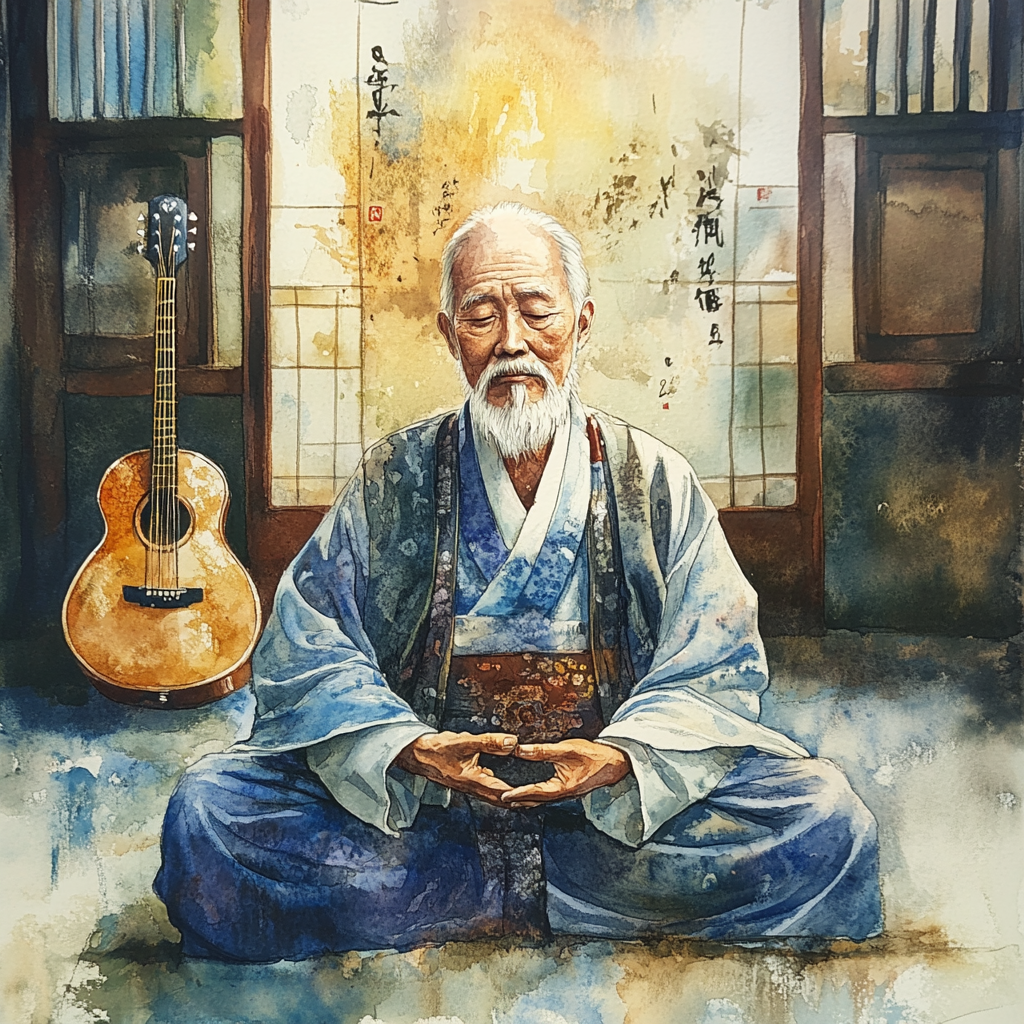
In Zen practice, there’s a simple yet profound saying: “Sitting quietly, doing nothing, spring comes, and the grass grows by itself.”
At first glance, it seems like a call for idleness, but in fact, it offers a deep lesson on patience and natural growth. For guitarists, this saying serves as a reminder that progress doesn’t always come from constant practice or striving. Sometimes, taking a step back and allowing your skills to develop naturally can be just as important as the work itself.
Why This Lesson Matters for Guitarists
As guitarists, we often fall into the trap of thinking that more practice equals faster progress. We push ourselves to play longer, work harder, and master every new technique right away. While dedication is essential, it’s equally important to recognize that progress doesn’t always happen in an instant. Sometimes, the best thing you can do for your playing is to step away and let your mind and body rest. Improvement, like the grass growing in spring, often occurs when we least expect it—when we allow space for it to happen naturally.
Risks of Not Embracing This Lesson
If you don’t take time to rest and let your playing develop organically, several issues can arise:
- Burnout: Overworking yourself can lead to physical and mental fatigue, causing you to lose motivation or even injure your hands, wrists, or arms.
- Plateaus: When you’re constantly practicing without a break, you may feel stuck or like you’re not improving. This can be a result of over-practicing, which doesn’t give your brain or body the time they need to process and integrate new information.
- Loss of Joy: Guitar playing is supposed to be a source of enjoyment and self-expression. If you’re pushing yourself too hard without allowing rest, you might start to feel like it’s a chore, taking away the passion and fun.
- Missed Opportunities for Reflection: Sometimes, stepping back allows you to reflect on what you’ve learned and come up with new insights or creative ideas. Without this time, your learning process may feel rushed and less fulfilling.
Unleashing Your Guitar Potential Through Rest
Taking breaks and allowing your skills to develop naturally isn’t about doing nothing—it’s about trusting the process and giving yourself the time to grow. Here’s how to apply this lesson to your guitar playing:
- Schedule Rest Days: Just like physical exercise, practicing the guitar requires balance. Schedule regular rest days where you don’t play at all. This allows your muscles and mind to recover and integrate what you’ve learned.
- Let Ideas Marinate: After a practice session, take a break and let the ideas you worked on sink in. Sometimes, the best insights come when you’re not consciously thinking about them.
- Listen to Your Body: If you’re feeling tired or frustrated, take a break. Rest isn’t just about physical recovery; it’s about mental clarity too. Over-practicing can lead to diminishing returns.
- Allow Time for Spontaneity: Taking a break can help you rediscover the joy of playing. Without the pressure of constant practice, you might find yourself improvising or creating in ways you hadn’t anticipated.
- Trust the Process: Improvement isn’t always linear. By stepping away from the guitar, you give your brain the space to process and absorb new skills, leading to unexpected breakthroughs.
Conclusion
“Sitting quietly, doing nothing” teaches us that improvement doesn’t always come from effort alone—it comes from trust, patience, and allowing things to unfold naturally. As guitarists, we sometimes need to step back, take a breather, and let our playing grow at its own pace. By doing so, we give ourselves the time to absorb our practice, recover, and come back even stronger. Rest isn’t a sign of laziness; it’s an essential part of the creative process that allows us to reach our full potential.
 oscaronguitars.com
Leave a comment