
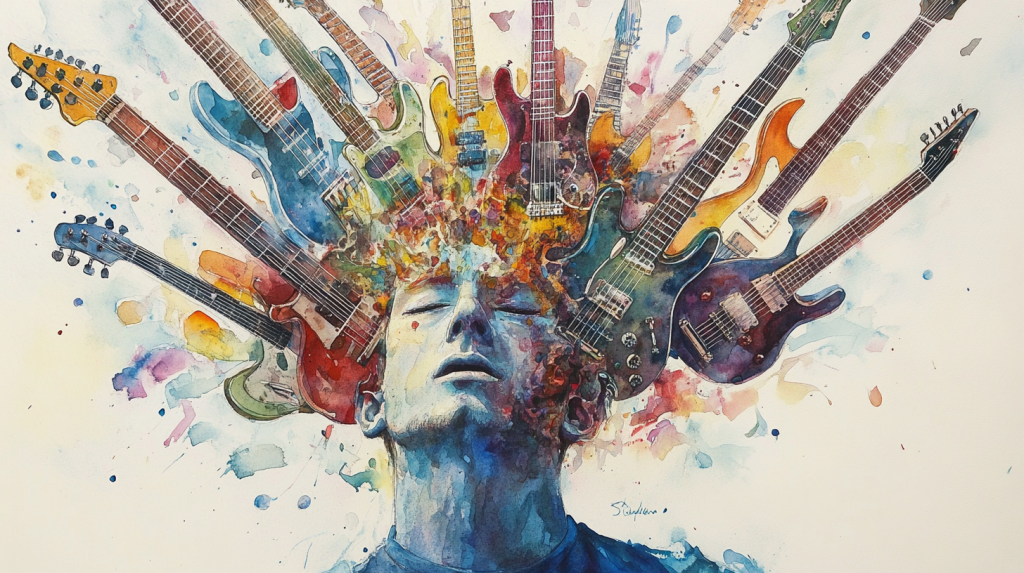
As guitarists, we spend countless hours perfecting our technique, dialing in our gear, and experimenting with different pedals and amp settings in search of that elusive “perfect tone.” But what if I told you that one of the most important aspects of crafting your sound doesn’t come from your amp, your guitar, or your pedals at all? What if it comes from your mind?
The psychological side of tone is often overlooked, but it’s just as essential as any physical aspect of playing. The way you think about your sound, how you approach playing, and how you connect emotionally with your instrument all play a massive role in defining your tone. In this article, we’ll explore how your mindset can shape your sound, and how to harness the power of your mind to achieve the tone you’ve always wanted.
1. Your Perception Shapes Your Sound
One of the most intriguing things about tone is how subjective it is. Two players can use the exact same gear, yet their sounds can be vastly different. Why? It comes down to perception. Your brain interprets the vibrations coming from your instrument and amps, and those interpretations shape the way you hear your tone. For example, if you approach your guitar playing with a mindset of “I need a brighter, more cutting tone,” your brain will focus on certain frequencies, and you might unconsciously adjust your playing to emphasize those qualities.
If you approach it with a mindset of “I want a warm, smooth tone,” your brain will focus on different aspects of the sound. Essentially, what you think you hear and what you expect to hear will influence your tone as much as any physical adjustment you make. This is why two players can have different ideas of what constitutes “good tone” even with the same equipment.
2. Mental Focus: The Bridge Between You and Your Sound
Tone is deeply connected to how you approach playing. If you’re distracted or stressed out, your playing will likely reflect that tension. On the other hand, when you focus deeply on your instrument, you can unlock a new dimension of sound. Your mind is a bridge between your hands and your instrument, and if your mind is clear, your playing will have a smoother, more controlled quality to it. A clear mental state helps you engage more fully with the music, leading to more expressive and nuanced tones.
Think of musicians who play with an unmistakable vibe—like Hendrix, Clapton, or John Mayer. Their tone is as much about the emotional energy they bring to their instrument as it is about the gear they use. When you’re mentally present and connected to what you’re playing, the sound naturally becomes more engaging, rich, and dynamic. The more focused and intentional you are, the more your tone will reflect your inner musical expression.
3. Visualization: A Tool for Crafting Your Tone
Visualization is a powerful mental tool for guitarists. Before you even pick up your guitar, imagine the tone you want to create. Picture yourself playing the riff or solo, hearing it in your mind before you play it. This mental rehearsal can guide your approach and help you achieve your desired sound. For example, if you’re aiming for a heavier, distorted tone, mentally picture the crunch of the amp as you play. If you want a smooth, clean tone, visualize the softness and clarity of each note.
Studies in neuroscience suggest that visualizing an action can stimulate the same neural pathways as actually performing that action. When you mentally rehearse your playing and tone, you train your mind and body to sync up, making it easier to achieve your sound once you’re actually playing. You might even find that visualization makes you more confident in your tone choices, knowing you’ve already “heard” the sound in your mind.
4. Emotional Connection: Tone as an Extension of Your Feelings
Tone isn’t just technical—it’s deeply emotional. Think about how music connects with listeners on an emotional level. This connection is possible because the performer channels their feelings through their instrument. Your emotions directly influence your tone, and how you feel when you play is reflected in the sound you produce.
If you’re playing a mellow ballad and you’re feeling relaxed, your tone will likely be smooth, warm, and introspective. But if you’re fired up, playing a fast solo, your tone might come across as more aggressive and cutting. This emotional connection goes beyond physical technique—it’s about the intention behind each note, and how those emotions are conveyed through your guitar.
Understanding and embracing this emotional side of tone can make your playing feel more authentic. When you’re emotionally invested in the music, your tone will resonate with the same feeling, and that will connect with your audience on a deeper level.
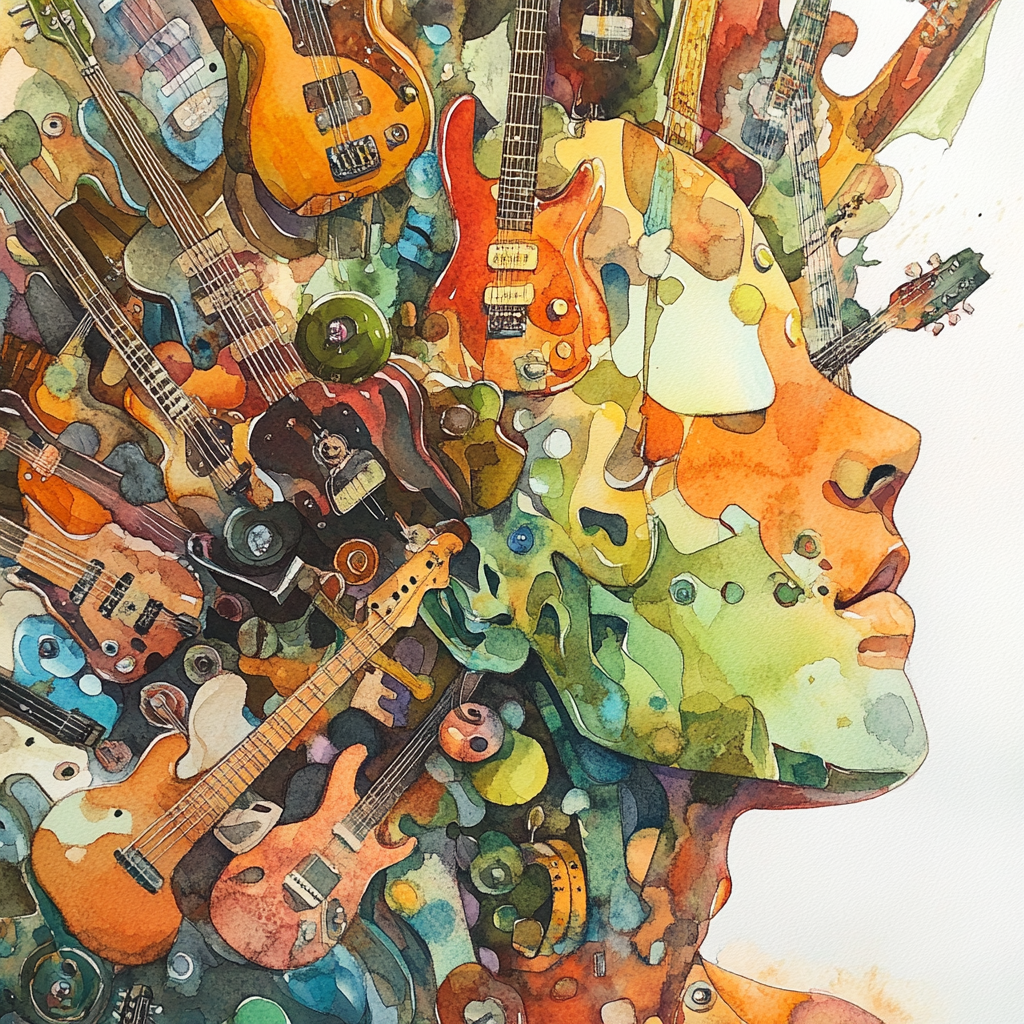
5. The Power of Belief: How Confidence Affects Your Tone
Believe it or not, confidence plays a huge role in tone. If you’re constantly second-guessing your choices, your playing will likely sound hesitant, uncertain, and less defined. On the flip side, confidence can make your sound sharper, bolder, and more expressive. When you believe in the sound you’re creating, it resonates through every note you play.
This isn’t just about thinking you have the “best tone”—it’s about trusting your instincts and allowing yourself to experiment with different sounds without fear of judgment. If you approach your sound with confidence, you’ll have the freedom to explore and grow, which in turn helps you craft a tone that is uniquely yours.
6. Clearing Mental Blockages: Overcoming Self-Doubt
Many guitarists struggle with self-doubt, especially when it comes to tone. You might find yourself endlessly tweaking your gear, trying different combinations of pedals and amps, hoping for that perfect sound, but feeling frustrated when it never seems to arrive. This kind of mental blockage can cloud your judgment and hinder your progress.
To overcome this, take a step back and let go of the need for perfection. Allow yourself to make mistakes and experiment without worrying about finding the “perfect” tone. Often, it’s in those moments of experimentation where we discover something unique and unexpected. Trust yourself, embrace imperfection, and allow your mind to be free when creating your sound.
Conclusion
Crafting your perfect tone isn’t just about the gear you use—it’s about how you think, feel, and connect with your instrument. Tone is as much psychological as it is physical, and by cultivating the right mindset, you can unlock a new dimension of your sound. The clearer your mental focus, the deeper your emotional connection, and the more confident you are, the more your tone will evolve. So, the next time you sit down to practice or perform, remember that your tone begins in your mind. Let your thoughts, emotions, and mindset guide you toward a sound that is truly your own.
 oscaronguitars.com
Leave a comment