
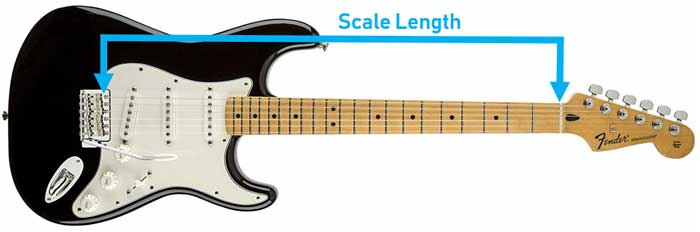
1. What Is Guitar Scale Length?
The scale length of a guitar refers to the distance between the nut and the bridge saddle, where the strings are anchored. This measurement determines the vibrating length of the strings and plays a vital role in defining the guitar’s tone and playability.
How Scale Length Is Measured:
- Standard Measurement: Scale length is typically measured in inches or millimeters. For instance, a common scale length for many electric guitars, like the Fender Stratocaster, is 25.5 inches.
- Different Scale Lengths: Guitars come with various scale lengths, commonly ranging from around 24 inches to 26.5 inches. Each scale length has its own characteristics that influence the guitar’s feel and sound.
Why It Matters:
- Tone and Tension: Scale length affects the tension of the strings, which in turn influences the guitar’s tone and playability. A longer scale length means higher string tension, resulting in a different tonal response compared to a shorter scale length.
- Playability: The scale length also affects the spacing between frets, which can make a guitar feel easier or harder to play depending on your hand size and playing style.
2. How Scale Length Affects Tone
One of the primary ways scale length influences a guitar is through its impact on tone. The scale length affects how the strings vibrate, which directly contributes to the guitar’s sound.
Longer Scale Lengths (25.5 inches and above):
- Brighter Tone: Guitars with longer scale lengths, such as those found on Fender Stratocasters and Telecasters, tend to produce a brighter, clearer tone. This is due to the increased string tension, which creates a more articulate and defined sound.
- Tight Bass Response: Longer scale lengths often result in a tighter, more focused bass response, making them ideal for genres that require clarity and punch, like rock, metal, and country.
- Higher Tension: The increased string tension on longer scale guitars means the strings feel tighter under the fingers, which can affect how you play and bend notes.
Shorter Scale Lengths (24.75 inches and below):
- Warmer Tone: Guitars with shorter scale lengths, such as Gibson Les Pauls, typically produce a warmer, fuller tone. The reduced string tension allows the strings to vibrate more freely, creating a richer, more mellow sound.
- Rounded Bass: The bass response on shorter scale guitars is often rounder and less tight than on longer scale guitars, making them well-suited for blues, jazz, and classic rock.
- Lower Tension: With less string tension, shorter scale guitars are easier to play, especially when it comes to bending strings. This can be particularly advantageous for players with a lighter touch or those who play intricate, melodic lines.
Mid-Length Scales (25 inches):
- Balanced Tone: Guitars with a mid-length scale, such as PRS models, offer a balance between brightness and warmth. They provide a versatile tonal range that can handle a variety of genres with ease.
- Moderate Tension: The string tension on mid-length scale guitars is also balanced, providing a comfortable playing experience without sacrificing tonal quality.
3. How Scale Length Affects Playability
Beyond tone, scale length also has a significant impact on how a guitar feels under your fingers. The spacing between frets, string tension, and overall playability are all influenced by the scale length.
Frets and Finger Stretching:
- Longer Scale Lengths: The frets on guitars with longer scale lengths are spaced slightly farther apart, which can make them more challenging to play, especially for those with smaller hands. However, this extra spacing can also provide more room for intricate fingerwork and allow for greater accuracy in note placement.
- Shorter Scale Lengths: Shorter scale lengths mean closer fret spacing, which can make it easier to reach and play chords, especially for players with smaller hands or those who prefer less finger stretching.
String Tension and Bending:
- Higher Tension on Long Scales: As mentioned earlier, longer scale lengths result in higher string tension. This can make bending notes more challenging but can also provide more control and precision for experienced players.
- Lower Tension on Short Scales: Shorter scale lengths reduce string tension, making bends and vibrato easier. This is particularly beneficial for blues and jazz players who often rely on expressive string bends and slides.
Comfort and Playing Style:
- Comfort for Different Hands: Players with larger hands may find longer scale lengths more comfortable, while those with smaller hands may prefer the ease of a shorter scale length.
- Playing Style Considerations: Your playing style should also influence your choice of scale length. For example, if you play a lot of fast leads and need quick access to notes, a shorter scale length might be preferable. Conversely, if you prefer heavy, rhythm-focused playing, a longer scale length might provide the tension and tone you need.
4. Choosing the Right Scale Length for Your Needs
Selecting the right scale length is a personal choice that should be based on your playing style, hand size, and tonal preferences.
Questions to Ask Yourself:
- What Type of Music Do You Play? Consider the genres you play most often. If you need bright, articulate tones for rock or country, a longer scale length might be ideal. For warmer, smoother tones in blues or jazz, a shorter scale length could be a better fit.
- How Comfortable Is the Guitar? Try out guitars with different scale lengths to see how they feel in your hands. Pay attention to the fret spacing, string tension, and overall comfort.
- What Are Your Playability Preferences? Think about how much you rely on string bending, fast fretwork, or intricate chord shapes. These factors will help determine whether a longer or shorter scale length is right for you.
Trying Before You Buy:
- Visit a Guitar Store: The best way to determine the right scale length for you is to try out different guitars in person. Visit a guitar store and play a variety of instruments with different scale lengths to get a feel for what works best for you.
- Consider Versatility: If you play a wide range of styles, you might want to consider a guitar with a mid-length scale, which offers a balanced tone and playability suitable for multiple genres.
5. Conclusion: Understanding and Choosing the Right Scale Length
Scale length is a key factor in defining a guitar’s tone and playability. Whether you prefer the bright, tight response of a longer scale length or the warm, easy playability of a shorter scale length, understanding how scale length influences your instrument can help you make more informed choices.
Take the time to explore different options, try out guitars with various scale lengths, and find the one that feels right in your hands and sounds perfect to your ears. By choosing the right scale length, you’ll enhance your playing experience and get the most out of your guitar.
 oscaronguitars.com
Leave a comment