
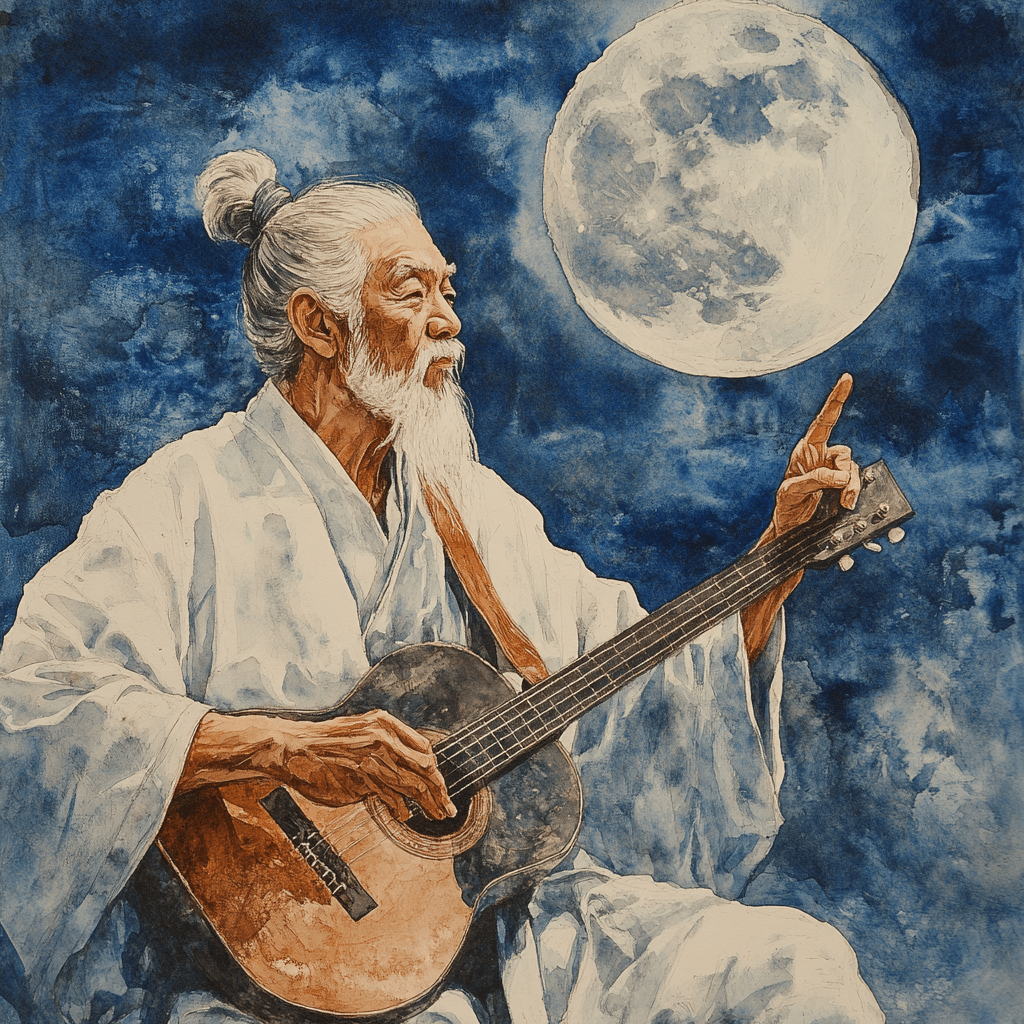
A Zen master once said, “Do not mistake the finger pointing at the moon for the moon itself.”
On the surface, this might seem like a simple warning against getting distracted by appearances, but there’s a profound lesson hidden within. For guitarists, this teaching has a direct application: don’t get caught up in the techniques, gear, or tools of music—focus on the experience of playing, the emotions you convey, and the deeper expression behind the notes.
Why This Lesson Matters for Guitarists
As guitarists, it’s easy to get sidetracked by the latest techniques, gear, or the pursuit of the “perfect” sound. We can become fixated on learning complicated riffs, buying expensive pedals, or perfecting our speed and accuracy. While all of these elements are important in their own way, they are merely tools—the finger pointing at the moon. They are not the essence of music itself.
The true magic of guitar playing lies in the way we express ourselves through the instrument. It’s not about the gear you use or the technique you’ve perfected; it’s about the emotions you convey, the connection you make with your audience, and the joy of creating music. Techniques and gear are simply means to an end—they are not the end itself.
Risks of Not Learning This Lesson
If we focus too much on the tools rather than the experience, several things can happen:
- Technical Obsession: By chasing after technical perfection, we can lose sight of the soul of the music. A technically flawless performance can still feel cold or disconnected if it lacks emotional depth.
- Gear Addiction: Guitarists can become fixated on buying the latest pedals, amps, or guitars, thinking that new equipment will somehow make them better players. But no amount of gear can replace the real skill, expression, and connection that come from truly playing and creating music.
- Creativity Stifling: When you’re too focused on technique or gear, you may end up limiting your creativity. Instead of letting your feelings guide the music, you might find yourself trying to play to a formula or focusing too much on how your gear sounds rather than how the music feels.
- Loss of Purpose: Guitar playing becomes more of a technical exercise than a way of expressing yourself, which can lead to frustration and burnout. When you’re focused on the “finger” and not the “moon,” it’s easy to forget why you picked up the guitar in the first place—to create, to connect, and to share music.
Unleashing Your Guitar Potential Through Focused Expression
To truly unlock your potential as a guitarist, remember that your instrument is a tool for self-expression, not an end in itself. Here’s how to apply this lesson in your own playing:
- Don’t Get Stuck on Perfection: Instead of obsessing over perfect technique, allow yourself to be imperfect. Embrace mistakes as part of your unique expression and focus on conveying emotion.
- Prioritize Emotion Over Mechanics: When you play, ask yourself what you want to communicate. Focus on the emotional intent behind each note rather than the technical execution.
- Simplify Your Gear: While gear can enhance your sound, it shouldn’t become a crutch. Try simplifying your setup, focusing on playing the music rather than fiddling with effects or settings.
- Be Mindful of Your Practice: In every practice session, remind yourself that it’s not just about executing the scales or perfecting a riff. It’s about feeling the music and exploring new ways to express it.
- Look Beyond the Surface: Remember that while techniques and gear are important, they are just the tools that help you communicate the music. The true essence is in how you play and the emotions you convey.
Conclusion
The Zen master’s warning to not mistake the finger pointing at the moon for the moon itself is a powerful reminder for all musicians, especially guitarists. Techniques and gear are necessary, but they are not the heart of music. To truly connect with the essence of guitar playing, you must focus on expressing yourself through the instrument. Don’t get lost in the tools—embrace the music itself and let it guide your fingers. When you do, the music will speak louder than any technique or piece of equipment ever could.
 oscaronguitars.com
Leave a comment