
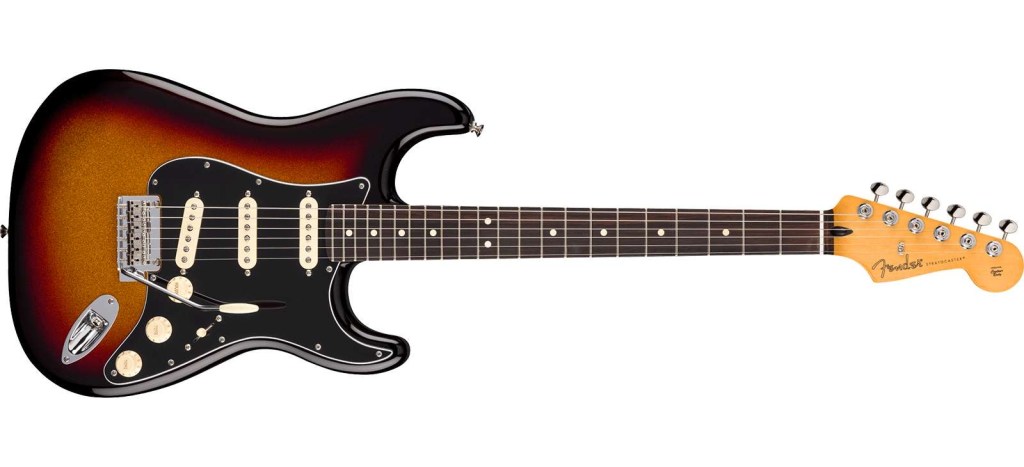
One of the most exciting aspects of buying guitars is the opportunity to modify them to perfectly suit your personal taste. But imagine finding a guitar that already has nearly everything you’d typically upgrade. That’s precisely the philosophy behind Fender’s Player II Stratocaster Modified—a guitar thoughtfully designed to eliminate the need for extensive modifications.
As a player, I’ve spent considerable time with this guitar, and I’m eager to share my in-depth impressions, personal experiences, and detailed insights into this intriguing instrument.
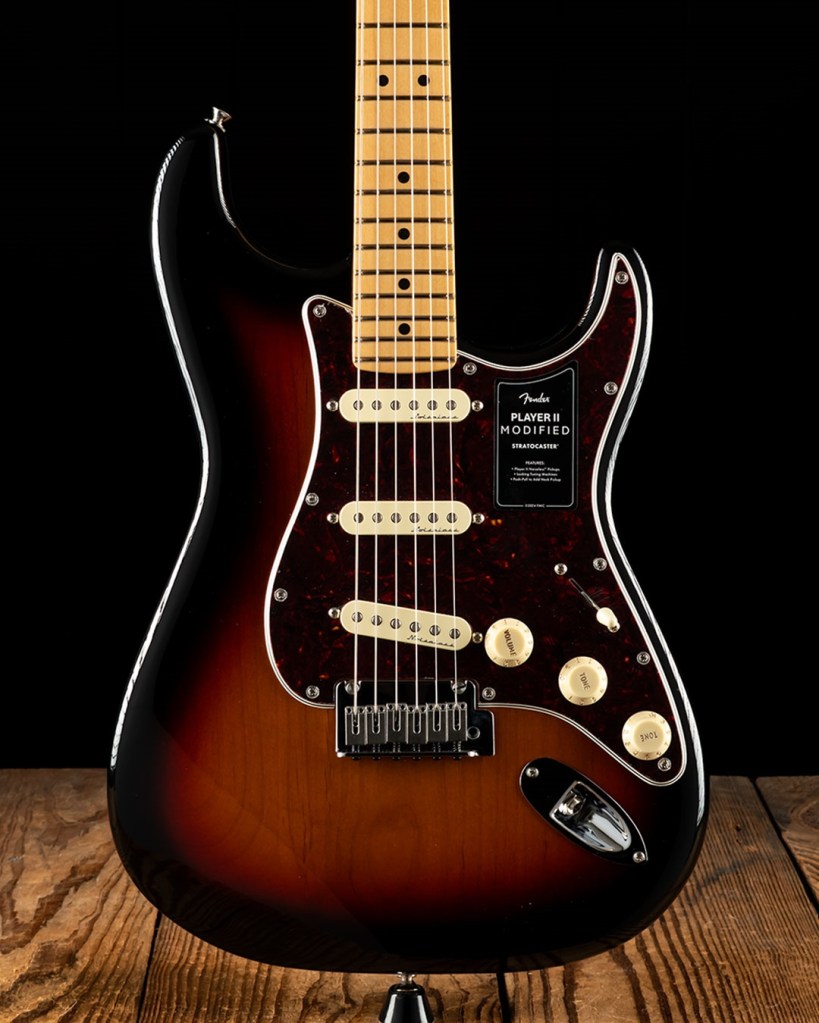
Classic Stratocaster with Modern Upgrades
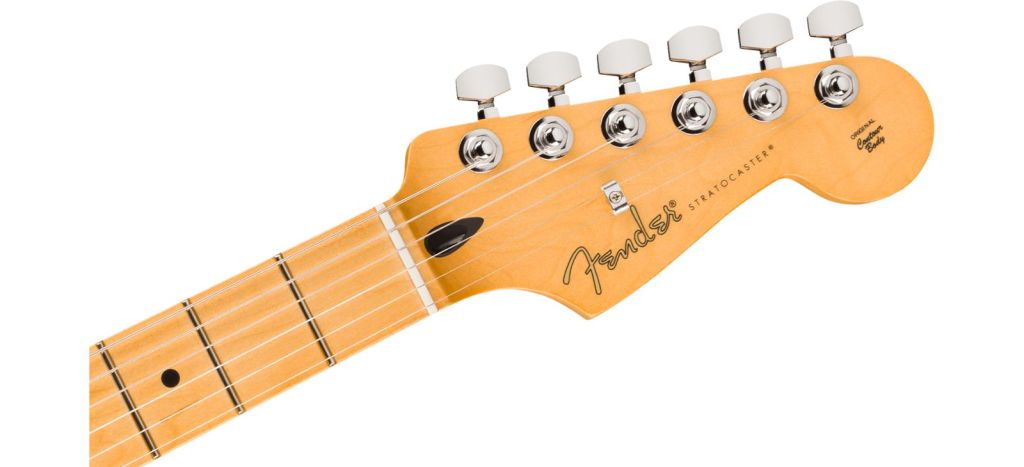
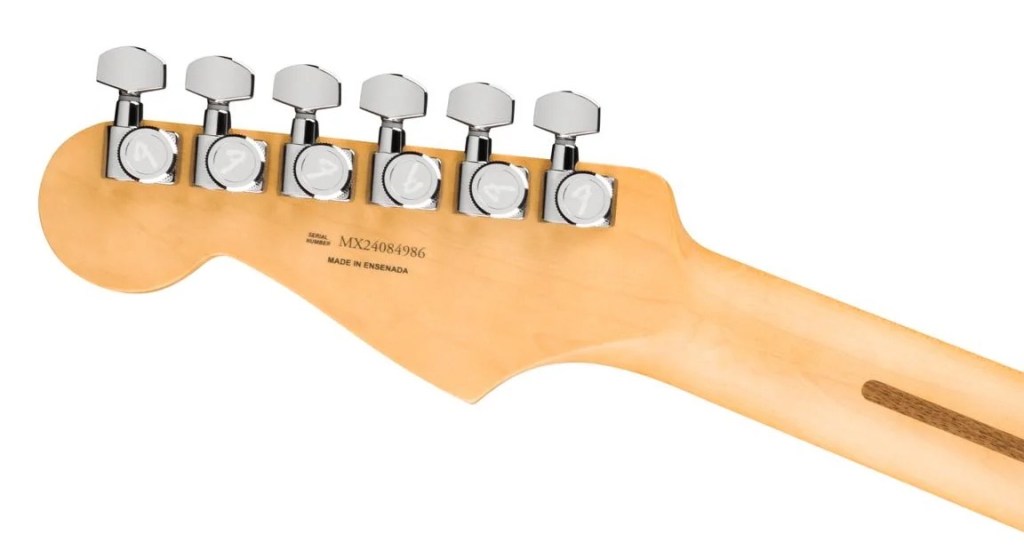
Headstock and Tuning Stability
At first glance, the Player II Stratocaster Modified looks every bit like a traditional Strat—with its classic headstock shape and iconic spaghetti logo. However, beneath these timeless aesthetics lie several thoughtful modern upgrades. Fender has outfitted this guitar with locking tuners, a feature that many players typically add themselves to improve tuning stability. Combined with a modern, low-friction string tree and a Tusq nut—celebrated for its smooth, self-lubricating properties—this Strat stays impressively in tune, minimizing the need for aftermarket tweaks. That said, I’d still opt for a Tusq string tree for even better tuning consistency. So, while this guitar is designed as a “no-mods-needed” instrument, there’s always room for one small enhancement.
Neck Feel and Playability
The neck is a traditional bolt-on design, secured with four screws, and fitted with 22 medium-jumbo frets. Its 9.5-inch radius and rolled fingerboard edges instantly provide a welcoming, premium feel. Fender chose a maple neck with a Modern “C” profile, featuring a smooth satin urethane finish on the back and a glossy headstock face. I wouldn’t call this a shredder’s neck, but it’s noticeably faster and more comfortable than the typical vintage-style chunky profiles. For my playing style, it’s just right—not razor-thin like an Ibanez, yet not overly thick either. Most importantly, it feels “invisible” in my hands, which to me is the best compliment a neck can get: it simply disappears, letting me focus entirely on the music.
While the satin finish on the back of the neck certainly aids quick hand movements, I’ve noticed a small drawback: the glossy finish on the fretboard can slightly inhibit aggressive vibratos or intense bending, especially if you apply more pressure when playing. While it doesn’t completely prevent playing, it does create a faint stickiness that players accustomed to ultra-smooth necks (like those from Charvel) may notice. A completely satin finish might have enhanced playability further, but for most players, such an effect won’t be a dealbreaker. If anything, it helps me not to push the strings that hard, a problem I’ve faced for years because I first learned to play on acoustic guitars. Relaxing your fingers improves dexterity, and in such cases the glossy finish won’t be a problem; on the contrary, it will somehow force you to play in a more relaxed fashion.
Body and Finish
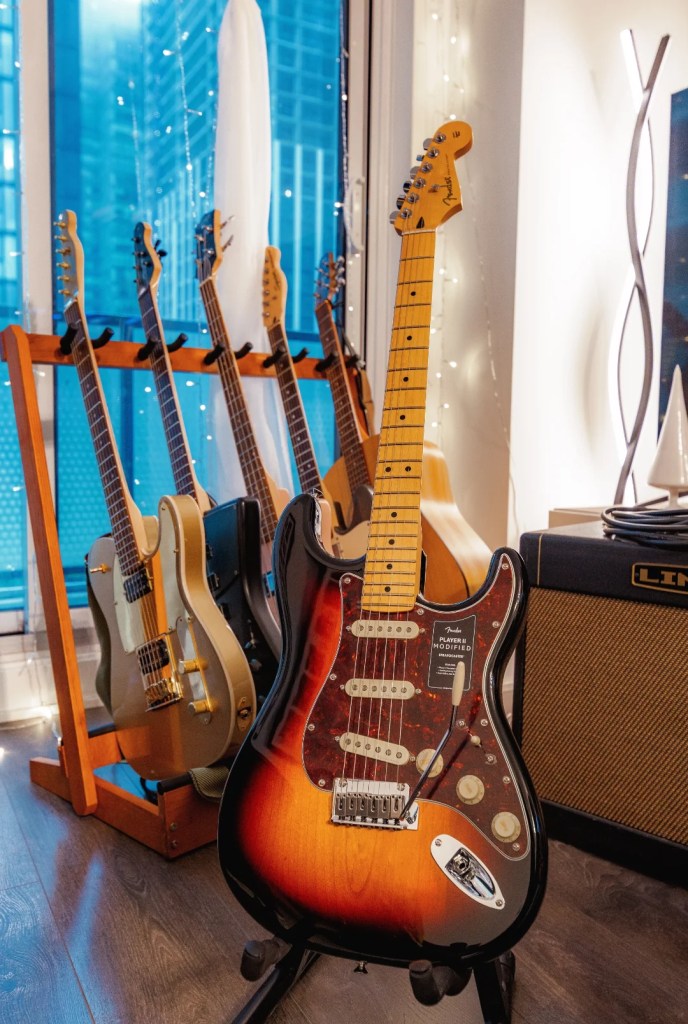
The Player II Modified Stratocaster’s alder body maintains the iconic Fender shape, boasting a flawless Sunburst finish (my personal favorite). Crafted in Fender’s esteemed Ensenada, Mexico facility, this guitar reflects the factory’s rising reputation for high-quality instruments. In contrast to some Player series guitars produced in Indonesia, the Mexican-made Stratocaster assures impressive build quality and attention to detail.
Exceptional Noiseless Pickups
A standout feature of this guitar is its trio of Player II Noiseless single-coil pickups. I’ll admit, I was initially skeptical—after all, their design isn’t truly “traditional” single-coil construction—but that doubt vanished the moment I started playing.
These pickups capture authentic Strat character while completely eliminating the notorious 60Hz hum. That’s a huge win for live performances, especially under noisy stage lighting or when pushing higher gain levels. Tonally, they deliver the expected quack and warmth in positions 4 and 5 (neck and middle), while the bridge pickup provides crisp, articulate bite. The output is slightly hotter than vintage-style pickups, making it easier to push an amp into natural overdrive or saturation.
If you play blues, funk, indie, or classic rock, these pickups absolutely shine. Unless you’re chasing ultra-specific vintage tones—like those from a ’65 Strat—they’re among the best noiseless options Fender has ever produced. I’d even drop a set into a Squier without hesitation.
Overall, like any good Stratocaster, this guitar offers an impressively broad tonal palette—from smooth, glassy cleans to tight, funky rhythms. Despite its slightly hotter output, it’s not a metal shred machine—but for everything else, it excels. And honestly, if Yngwie Malmsteen can make a Strat snarl, there’s no reason you can’t coax plenty of attitude out of this one too.
Versatile Electronics
Another smart feature is the push-pull tone control. Engaging it unlocks unconventional pickup combinations, such as neck-plus-bridge for a Telecaster-like twang, or all three pickups at once for a fuller, more complex tone. This effectively gives the guitar seven distinct and genuinely usable sounds, adding a noticeable boost in versatility. Unlike some switching systems that feel more like novelties, every setting here delivers a musical, practical tone.
That said, the control knob design makes the push-pull function somewhat awkward to use—it’s quite hard to grip and pull mid-performance. While push-button alternatives are easier to engage, they tend to feel flimsier and less reliable. You could swap in dome-style metal knobs for better ergonomics, but that would compromise the Stratocaster’s classic look. So, while the added Tele-like tones are great in theory, in practice they’re not as convenient to access as they could be.
Bridge and Tremolo System
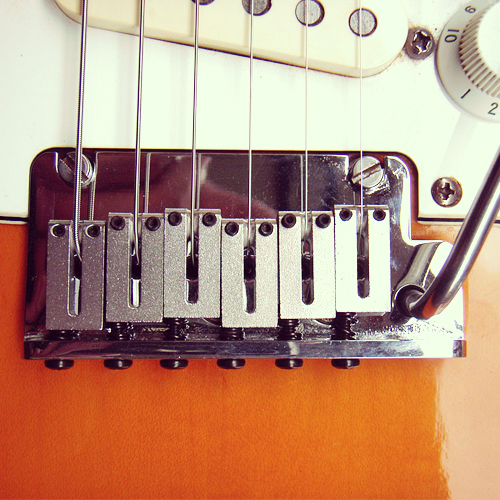
Fender has equipped the Player II Modified Stratocaster with a two-point synchronized tremolo system featuring a steel block and chamfered edges. This configuration allows deeper dive-bombs and subtle upward pitch modulation, maintaining excellent tuning stability—a notable improvement over typical Fender tremolos. While it doesn’t try to be a Floyd Rose, it manages aggressive tremolo use surprisingly well and keeps tuning locked in—something many traditional Strat-style bridges can struggle with.
Price and Value
With an MSRP of $1,024 USD, the Player II Stratocaster Modified isn’t exactly entry-level—but it’s far from overpriced. In fact, it delivers features and performance typically reserved for significantly more expensive guitars. Comparable noiseless Strat pickups alone can cost upwards of $200. Locking tuners? Around $100. A Tusq nut retails near to $20. Add a high-quality two-point tremolo system, and you’re well into premium territory.
Even some American Professional II Stratocasters—often priced around $1,700—don’t include the same combination of locking tuners, noiseless pickups, and expanded tonal options straight from the factory. That makes this guitar an outstanding value. The only upgrades worth considering might be a set of locking strap buttons and a Tusq string tree, though those come down purely to personal taste. It’s genuinely hard to think of another Strat in this price range that delivers so much performance with so little left to improve.
Pros and Cons
Pros:
- Excellent factory-installed locking tuners and Tusq nut
- Superior noiseless pickups that preserve classic Strat tone
- Seven versatile tonal options with push-pull electronics
- Tremolo system offers great tuning stability and smooth action
- Great build quality from Fender’s Mexico facility
Cons:
- Gloss fretboard finish can slightly slow down vibrato or fast bends for some players
- Fair price, but not budget-friendly.
Conclusion
The Fender Player II Stratocaster Modified truly lives up to its promise: a guitar thoughtfully designed to need little, if any, modification. From its enhanced tuning stability to the noiseless pickups and versatile tonal options, Fender has successfully blended timeless Stratocaster style with modern performance upgrades.
Who is this guitar for? Honestly—almost anyone. It’s perfect for intermediate to advanced players seeking a dependable, gig-ready Strat that needs no tinkering. Studio musicians will appreciate its tonal clarity and hum-free operation, while beginners with the budget will find it comfortable, inspiring, and built to last.
Aside from a minor nitpick with the glossy fretboard finish, this instrument offers outstanding value, tone, and playability straight out of the box. If you’re looking for a Strat that’s ready for the stage, the studio, or your bedroom amp—without requiring a list of upgrades—this could very well be the one.
I’ve spent considerable time with this guitar, and it was my mainstay until a Fender Player II Telecaster Modified entered the picture. But that’s a story for another day.

 oscaronguitars.com
Leave a comment