
Introduction
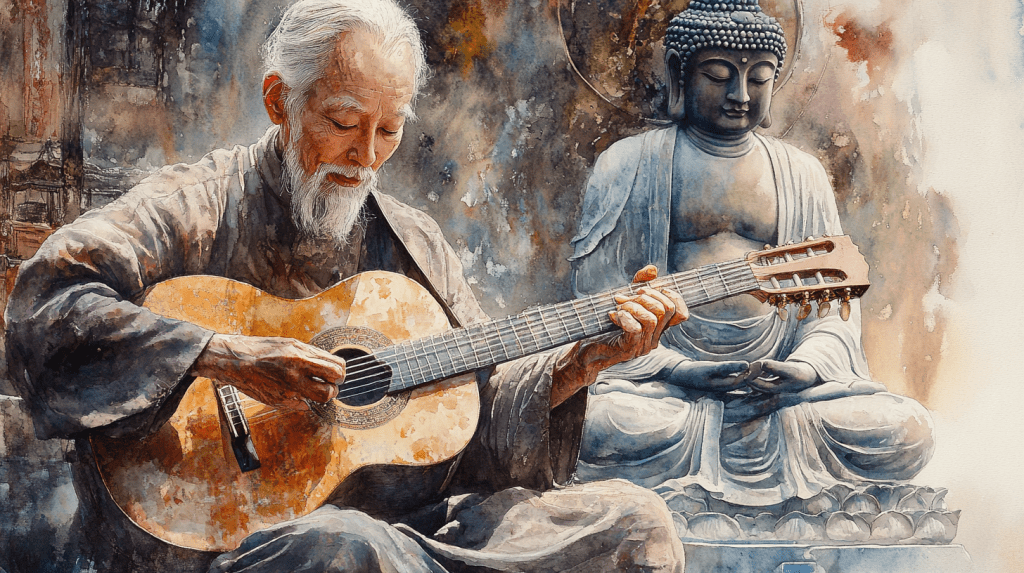
One day, a man came across a beautiful Buddha statue by the side of the road. Mesmerized by its beauty, he immediately began to worship it, believing it held the key to enlightenment. A Zen master, observing this, approached him and said, “This statue is just a marker, not the destination. It is a sign on the road, not the road itself.” This profound insight can be applied directly to the journey of guitar playing. Like the statue, the techniques, gear, and physical skills we acquire are important tools, but they are not the true destination. The path is about finding deeper expression through the music itself.
Why This Lesson Matters for Guitarists
When we first start playing guitar, it’s easy to get lost in the tools of the trade—perfecting our techniques, collecting gear, and improving our physical skills. These are all necessary steps, but they are just markers on the path. They are not the final goal.
The true purpose of learning to play guitar is not to accumulate techniques or perfect the gear, but to express yourself, to communicate through music. If you become too attached to your tools—whether it’s your guitar, amp, or a particular technique—you may lose sight of the deeper connection that music offers.
Understanding that gear, technique, and physical skill are just milestones allows you to stay focused on the true purpose: musical expression. It frees you from the trap of endlessly pursuing the next piece of equipment or the latest technique, and instead encourages you to use these tools to deepen your connection with your music.
The Risks of Not Learning This Lesson
Failing to grasp this lesson can lead to several pitfalls in your guitar journey:
- Gear Obsession: If you become fixated on acquiring the latest gear, you might never feel satisfied with what you have. You may find yourself constantly chasing the next “perfect” instrument or amplifier, without truly developing your musical skills.
- Technique Overload: While techniques are crucial, they can also become overwhelming if you treat them as the end goal. Focusing too much on acquiring more complex techniques or scales can lead to a lack of emotional depth in your playing. You may become more focused on technical perfection than on conveying emotion through your music.
- Stagnation in Creativity: The more you idolize your gear or your technique, the less room you leave for creativity. Playing guitar should be about expressing something within yourself. If you are too obsessed with the tools, you may forget to tap into your emotional side and let your playing speak for itself.
- Frustration and Burnout: Constantly striving for better gear or more complex techniques can lead to burnout. You may feel that you’re not improving fast enough or that your playing is always lacking, when the real issue is that you’re fixated on the wrong goals.
Unleashing Your Guitar Potential
To truly unleash your potential as a guitarist, you need to shift your focus. Here’s how to apply this lesson to your practice:
- Use Tools Wisely: Gear and technique are there to support your music, not define it. Focus on how you can use your guitar to express what you feel, rather than obsessing over the gear itself.
- Don’t Get Lost in the Details: Techniques are important, but they should serve the larger goal of musical expression. Practice with intention and focus on how you can communicate emotions through your playing.
- See Technique as a Road, Not the Destination: Approach each technique as a step along the path to greater self-expression. A scale isn’t an end goal—it’s a tool you can use to explore musical possibilities.
- Embrace the Journey: Understand that the road to mastering the guitar is long, and the milestones along the way are simply markers, not destinations. Don’t get too fixated on any one part of the journey. Keep moving forward, with an eye on the music itself.
Conclusion
Just as the Buddha statue by the road was a marker, not the destination, the tools you use in your guitar journey are simply milestones along the way. Techniques, gear, and physical skills are vital, but they are not the ultimate goal. The purpose of guitar playing is to express yourself through music. By focusing on the deeper emotional connection and not getting lost in the tools of the trade, you can truly unlock your potential as a guitarist.
 oscaronguitars.com
Leave a comment