

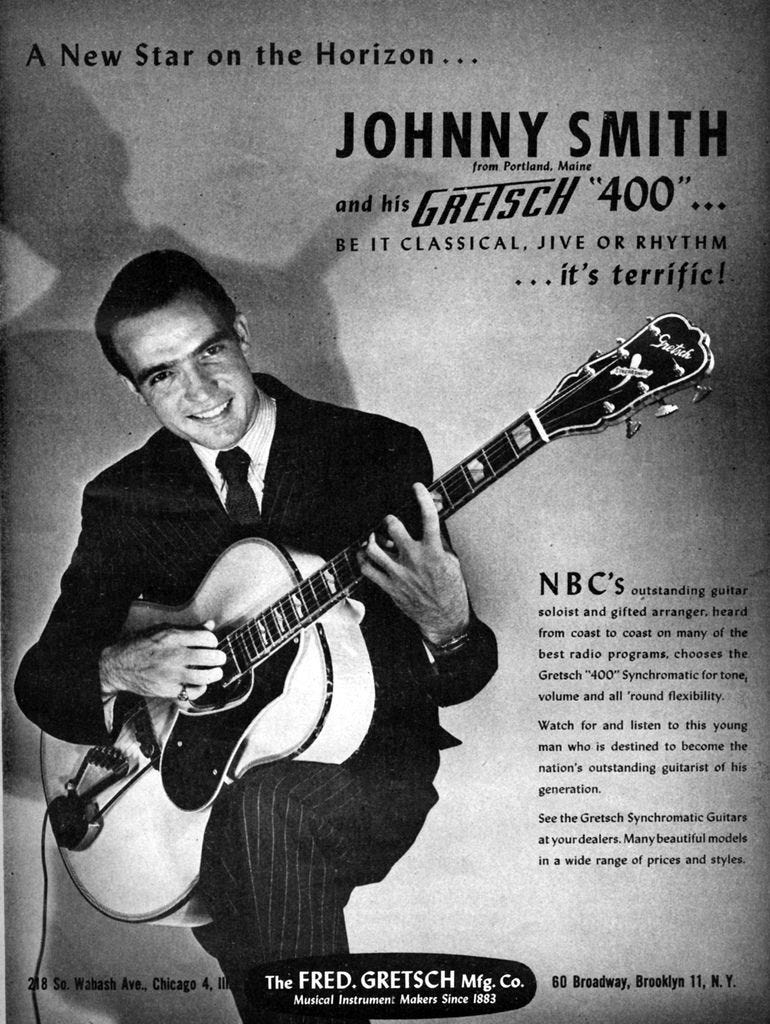
Johnny Smith is one of the most revered yet underappreciated guitarists in the world of jazz and fingerstyle guitar. Born on June 25, 1922, in Birmingham, Alabama, Smith’s unique blend of technical skill, melodic sensitivity, and innovative approaches has left a lasting mark on the guitar community. With a career spanning over six decades, he has influenced countless musicians while also developing a distinct voice that resonates deeply within the jazz genre. This article explores Smith’s background, his contributions to guitar playing, and his enduring legacy.
The Early Years: A Musical Foundation
Johnny Smith’s journey with the guitar began at a young age. He started playing the instrument at just 12 years old, influenced by the sounds of the big bands and the emerging jazz scene. His early exposure to music came from his father, who played the banjo and piano, as well as the rich musical culture of the Southern United States.
After high school, Smith’s talent quickly became evident. He joined the Army during World War II, where he played in military bands, honing his skills while drawing inspiration from the music of the time. Upon returning home, he moved to New York City in the late 1940s, where he began to immerse himself in the vibrant jazz scene and develop his unique style.

The Signature Sound: Melodic and Harmonic Innovation
Johnny Smith’s guitar playing is characterized by its lyrical quality and sophisticated harmonic language. His ability to blend jazz, classical, and popular music influences set him apart from his contemporaries. Smith often used a fingerstyle technique that emphasized melody, employing a mix of plucking and strumming that allowed him to create rich textures and intricate arrangements.
Smith’s unique approach to chord voicings and melodic phrasing also contributed to his distinctive sound. He was known for his use of complex chords, which added depth and color to his playing. His compositions often featured lush harmonies, and his ability to effortlessly navigate through chord changes made his performances both captivating and challenging.
Contributions to Guitar Education and Design
In addition to his impressive performance career, Johnny Smith made significant contributions to guitar education and instrument design. He became known for his work as an educator, teaching guitar at various institutions and influencing a new generation of guitarists. His lessons focused not only on technique but also on musicality, encouraging students to find their own voice and express their individuality through the instrument.
Smith also collaborated with instrument makers to design guitars that met his specific playing needs. He worked closely with the prestigious Gibson Guitar Company, resulting in the creation of the Johnny Smith model, a guitar renowned for its exquisite craftsmanship and sound quality. This instrument has become a favorite among jazz guitarists and is celebrated for its warm tone and versatility.

Notable Albums and Compositions
Johnny Smith’s discography includes a variety of albums that showcase his exceptional talent. One of his most notable recordings is Johnny Smith Plays Johnny Smith (1961), which features original compositions and arrangements that highlight his melodic and harmonic genius. Tracks like “Moonlight in Vermont” and “Samba for J.” exemplify his ability to craft beautiful melodies while maintaining intricate guitar work.
Another significant album is The Sound of Johnny Smith (1963), where he demonstrates his virtuosity and sensitivity across various jazz standards and original compositions. His arrangements of songs such as “Summertime” and “Over the Rainbow” exhibit his unique ability to breathe new life into classic tunes, offering listeners a fresh perspective.
Smith’s composition “Walk, Don’t Run” became a hit for The Ventures and is a perfect example of his skill in crafting catchy yet sophisticated melodies. This track has since become a staple in the repertoire of many guitarists.
Influence and Legacy
Johnny Smith’s influence extends far beyond his recordings and performances. His innovative techniques and unique approach to melody and harmony have inspired generations of guitarists across multiple genres. Notable musicians such as Pat Metheny, Larry Carlton, and John Scofield have acknowledged Smith’s impact on their playing, crediting him with shaping their understanding of the guitar.
Despite his immense talent and contributions, Smith remains somewhat of a hidden gem in the guitar world. His music is often overshadowed by more commercially recognized artists, but for those in the know, he is celebrated as a true master of the instrument.
Smith’s dedication to the craft of guitar playing, coupled with his willingness to share his knowledge, has left an indelible mark on the guitar community. He has not only elevated the role of the guitar in jazz but has also created a legacy that will continue to inspire musicians for years to come.
Conclusion: A Master of Melodic Expression
Johnny Smith’s artistry is a testament to the beauty and complexity of guitar playing. His melodic sensibility, harmonic innovation, and dedication to the craft have established him as one of the most significant figures in the history of jazz guitar. Smith’s contributions to music extend beyond his recordings and performances; they encompass a spirit of creativity and a commitment to teaching that continues to resonate within the guitar community.
As both a performer and educator, Johnny Smith’s influence is felt in every note played by those who follow in his footsteps. His legacy endures, reminding us that the guitar is not just an instrument but a means of profound musical expression.

 oscaronguitars.com
Leave a comment