
1. Understanding the Basics: What Are Bridges and Tailpieces?
Before diving into the specifics, it’s important to understand what bridges and tailpieces are and how they function on a guitar.
The Bridge:
- Purpose: The bridge is the component on a guitar that supports the strings and transfers their vibrations to the body of the guitar, playing a significant role in the instrument’s tone and sustain.
- Location: It’s typically located on the body of the guitar, below the pickups on an electric guitar or on the lower bout of an acoustic guitar.
- Types: There are several types of bridges, each offering different advantages in terms of tuning stability, ease of adjustment, and tonal characteristics.
The Tailpiece:
- Purpose: The tailpiece is the part of the guitar where the strings are anchored. It works in conjunction with the bridge to maintain string tension and influence the guitar’s resonance.
- Location: On electric guitars, the tailpiece is often separate from the bridge, while on some models, it’s integrated into a single unit. On acoustic guitars, the tailpiece is typically part of the bridge.
- Types: Like bridges, tailpieces come in various designs that can affect the guitar’s sustain and tonal properties.
2. Types of Guitar Bridges and Their Impact
Different types of bridges offer varying degrees of stability, sustain, and tonal impact. Here’s a breakdown of the most common bridge types and what they bring to the table:
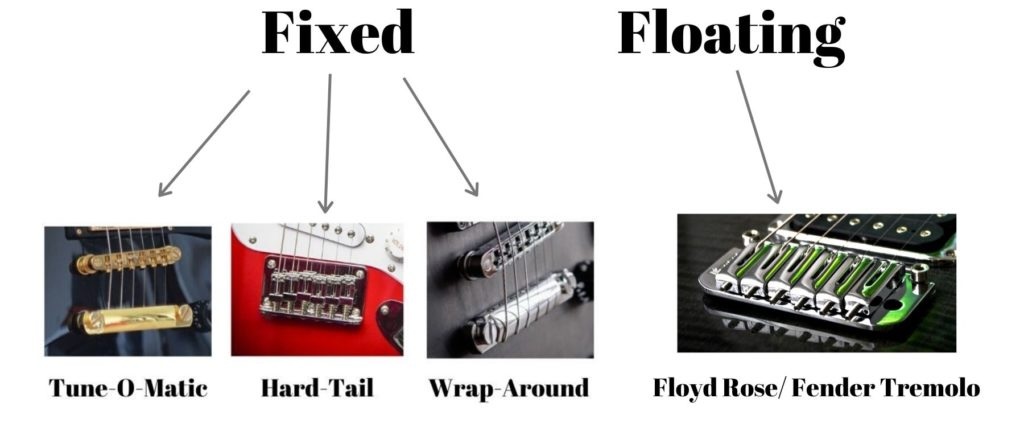
1. Fixed (Hardtail) Bridges:
- Overview: A fixed bridge, also known as a hardtail bridge, is a simple and robust design where the strings are anchored directly to the guitar body. This type of bridge is common on many electric and acoustic guitars.
- Advantages:
- Tuning Stability: Fixed bridges are known for their excellent tuning stability because they lack moving parts that can shift during playing.
- Sustain: Since the strings are anchored directly to the body, fixed bridges typically offer better sustain compared to other types.
- Simplicity: Fixed bridges are easy to maintain and adjust, making them ideal for beginners and players who prefer a straightforward setup.
- Examples: Fender Telecaster bridge, Tune-o-Matic bridge (paired with a stopbar tailpiece).
- Best For: Rock, blues, and genres where tuning stability and sustain are prioritized.
2. Tremolo Bridges:
- Overview: Tremolo bridges, also known as vibrato bridges, allow players to change the pitch of the strings by manipulating a lever or “whammy bar.” This bridge type is popular in various genres for creating vibrato effects and dive-bombs.
- Advantages:
- Expressive Techniques: Tremolo bridges enable a wide range of pitch-altering effects, from subtle vibrato to dramatic dive-bombs.
- Versatility: These bridges are versatile and are used in many genres, including rock, metal, and surf music.
- Disadvantages:
- Tuning Stability: Tremolo bridges, especially vintage-style models, can have issues with tuning stability, particularly if used excessively.
- Maintenance: They require more maintenance and setup expertise compared to fixed bridges.
- Examples: Fender Stratocaster’s synchronized tremolo, Floyd Rose double-locking tremolo.
- Best For: Players who use pitch-bending techniques and require the ability to manipulate the sound for expressive effects.
3. Floyd Rose Bridges:
- Overview: The Floyd Rose bridge is a type of double-locking tremolo system that locks the strings at both the nut and the bridge, providing exceptional tuning stability even with aggressive use of the tremolo arm.
- Advantages:
- Tuning Stability: Floyd Rose bridges are renowned for maintaining tuning stability, even with heavy whammy bar use.
- Precision: These bridges offer precise control over pitch changes, making them popular among metal and hard rock guitarists.
- Disadvantages:
- Complex Setup: Floyd Rose bridges are more complex to set up and maintain, requiring a higher level of technical know-how.
- String Changes: Changing strings on a Floyd Rose-equipped guitar can be time-consuming due to the locking mechanisms.
- Best For: Metal, shred, and hard rock players who require extreme tuning stability and the ability to perform advanced techniques.
4. Tune-o-Matic Bridges:
- Overview: The Tune-o-Matic bridge, commonly found on Gibson guitars, is a fixed bridge that allows for individual string height and intonation adjustments. It’s often paired with a stopbar tailpiece.
- Advantages:
- Sustain: The Tune-o-Matic bridge provides excellent sustain due to its solid construction and direct string anchoring.
- Adjustability: It allows for precise intonation adjustments, making it easy to fine-tune the guitar’s pitch accuracy.
- Disadvantages:
- Limited Range: Unlike tremolo bridges, the Tune-o-Matic does not allow for pitch-bending effects.
- Best For: Rock, blues, jazz, and any genre where tuning stability, sustain, and precise intonation are important.
3. Types of Guitar Tailpieces and Their Impact
Tailpieces work alongside bridges to influence the guitar’s sustain, resonance, and overall tone. Here’s an overview of common tailpiece designs and how they affect your guitar:
1. Stopbar Tailpiece:
- Overview: The stopbar tailpiece is one of the most common designs, often used in conjunction with a Tune-o-Matic bridge. It’s a simple metal bar that the strings wrap around and anchor into the body.
- Advantages:
- Sustain: The stopbar tailpiece is known for enhancing sustain by transferring more string vibration to the body.
- Stability: It provides stable string tension, which contributes to consistent tuning and tone.
- Disadvantages:
- Limited Adjustability: Unlike some other tailpieces, the stopbar offers no additional tonal adjustments beyond its basic function.
- Best For: Rock, blues, and genres where sustain is critical.
2. Bigsby Tailpiece:
- Overview: The Bigsby tailpiece is a type of vibrato tailpiece that allows for subtle pitch modulation, often used in rockabilly, country, and blues.
- Advantages:
- Vintage Tone: The Bigsby offers a unique, smooth vibrato effect that is less extreme than other tremolo systems, adding a vintage character to the sound.
- Aesthetic Appeal: Many players are drawn to the classic look of the Bigsby, which adds a retro vibe to the guitar.
- Disadvantages:
- Tuning Stability: Bigsby tailpieces can be prone to tuning issues if not properly set up or maintained.
- Limited Range: The vibrato effect is more subtle compared to other systems like the Floyd Rose.
- Best For: Rockabilly, country, blues, and any genre where subtle vibrato effects are desired.
3. Trapeze Tailpiece:
- Overview: The trapeze tailpiece is often found on hollow and semi-hollow body guitars. It extends from the guitar’s endpin to the bridge, creating a distinctive look and tone.
- Advantages:
- Resonance: The trapeze tailpiece contributes to a more resonant and airy tone, which complements the natural acoustic properties of hollow body guitars.
- Aesthetic: It adds a classic, vintage appearance to the guitar, often associated with jazz and early rock ‘n’ roll.
- Disadvantages:
- Limited Sustain: Trapeze tailpieces generally offer less sustain compared to stopbar tailpieces due to the reduced contact between the strings and the body.
- Best For: Jazz, blues, and vintage-style rock, where a resonant, open tone is preferred.
4. Making the Right Choice: Factors to Consider
When deciding on a guitar, it’s important to consider how the bridge and tailpiece will affect your playing style, tonal preferences, and maintenance requirements. Here are some factors to keep in mind:
1. Playing Style:
- Expressive Techniques: If you frequently use vibrato or pitch-bending techniques, a guitar with a tremolo or Floyd Rose bridge might be ideal. If you prefer a more straightforward, stable setup, a fixed bridge like a Tune-o-Matic might be better.
- Genre: Your genre of music can heavily influence your choice. For example, a rock or metal player might prefer the tuning stability of a Floyd Rose, while a jazz guitarist might opt for the warm tone of a trapeze tailpiece.
2. Maintenance and Setup:
- Complexity: Consider how comfortable you are with guitar maintenance. Tremolo and Floyd Rose systems require more upkeep, while fixed bridges and tailpieces are generally easier to maintain.
- Adjustability: If you like to fine-tune your guitar’s setup, look for bridges that offer easy adjustments for intonation and action.
3. Aesthetic Preferences:
- Vintage vs. Modern: Some players choose bridges and tailpieces based on their aesthetic appeal. For example, a Bigsby tailpiece offers a vintage look and feel, while a modern Floyd Rose is more functional and technical.
- Visual Impact: The choice of bridge and tailpiece can significantly alter the look of a guitar, so consider how important the instrument’s appearance is to you.
5. Conclusion: Choosing the Right Bridge and Tailpiece for Your Guitar
The bridge and tailpiece are more than just functional components—they play a crucial role in defining your guitar’s tone, sustain, and playability. By understanding the different types available and how they impact your instrument, you can make a more informed decision that aligns with your musical needs and preferences.
Whether you’re seeking the stability of a fixed bridge, the expressive possibilities of a tremolo, or the unique tone of a trapeze tailpiece, choosing the right bridge and tailpiece can enhance your playing experience and help you achieve the sound you desire.
 oscaronguitars.com
Leave a comment