
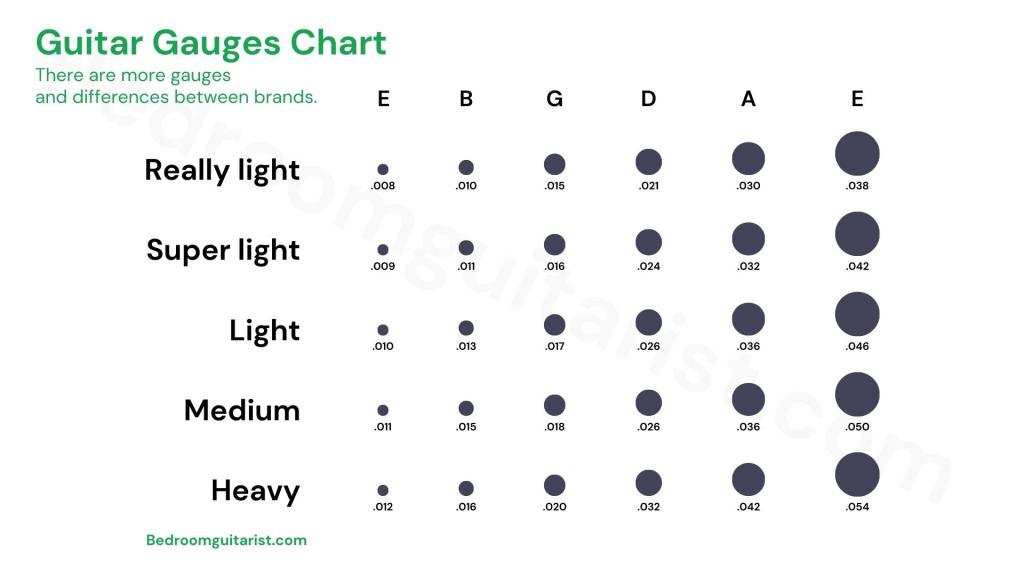
String gauge is one of the most crucial factors when selecting guitar strings, and it goes beyond just the number stamped on the package. The gauge refers to the thickness of each string, which can significantly affect how your guitar feels to play and the tone it produces.
1. What is String Gauge?
The gauge of a string is typically measured in thousandths of an inch. For example, a .010 gauge string has a diameter of 0.010 inches. The most common way to categorize string sets is by the thickness of the highest (treble) string, with the other strings falling in the same relative range.
2. Light, Medium, and Heavy Gauge: Understanding the Differences
- Light Gauge:
- Range: .008 to .010 for electric, .010 to .012 for acoustic.
- Feel: Easier to play, especially for beginners or players who prefer faster fret work and bends. These gauges require less tension, making them more forgiving on the fingers.
- Tone: Generally brighter and thinner in sound, which is great for genres like pop, blues, or rock where fast leads are crucial.
- Best For: Beginners, players who focus on lead guitar, and light touch musicians who prefer easier bends and a quicker response.
- Popular Examples: Ernie Ball Regular Slinky (.010), D’Addario XL Nickel Wound (.010).
- Medium Gauge:
- Range: .010 to .011 for electric, .012 to .014 for acoustic.
- Feel: A balanced choice between playability and tone. They provide a little more resistance compared to light strings, which means you’ll get a fuller, more substantial sound without making your fingers work too hard.
- Tone: More balanced with a thicker, richer sound than lighter gauges. Great for rhythm guitar and for players who want a bit more depth and warmth without sacrificing too much speed.
- Best For: Players who strum a lot, rhythm guitarists, or those who play a mix of lead and rhythm.
- Popular Examples: Ernie Ball Super Slinky (.009–.042), D’Addario EXL115 (.011–.049).
- Heavy Gauge:
- Range: .011 to .014 for electric, .013 to .017 for acoustic.
- Feel: Tougher on the fingers but ideal for players who need more tonal richness, sustain, and clarity at lower tunings. Heavier strings require more hand strength to press down, but they tend to stay in tune better, especially when tuned lower.
- Tone: They offer a fuller, heavier, and more defined tone with greater sustain. These strings are often preferred for heavier genres like metal, hard rock, and drop tunings.
- Best For: Rock, metal, and blues players who use lower tunings or want a thicker, meatier tone.
- Popular Examples: Ernie Ball Power Slinky (.011–.048), D’Addario XL Nickel Wound (.011–.048).
3. Gauge and Playing Style: What Works Best for You?
- Fretboard Feel and Playability: Lighter gauges are easier to bend, and they make fast runs or solos feel smoother and quicker. However, this can sometimes come at the cost of tone. The thinner strings can sound a bit tinny, especially for rhythm players or those seeking a thicker, bass-heavy tone.
- Tuning Stability: Heavier strings hold their tuning better under tension and are less likely to break. They are ideal for drop tunings or heavy riffing where the strings need to handle lower tensions and aggressive bends. Heavy gauge strings also provide a more consistent feel under your fingers, especially when playing with a hard touch.
- Tone Preferences: If you’re looking for a bright, crisp tone, lighter gauge strings may be your best option. However, if you prefer a fuller, richer sound, heavier strings provide a beefier sound that works well in more traditional genres. In acoustic guitars, heavier gauges help with projection and volume, especially for fingerstyle players who need to “drive” the soundboard harder.
4. How Gauge Affects String Tension
Tension refers to how tight the string feels under a given pitch. A heavier gauge will have more tension at standard tuning, providing more resistance, which leads to a thicker, warmer sound. Lighter gauges, on the other hand, have less tension, so they produce a sharper, crisper tone and are easier to bend but may not sustain as well.
5. Choosing the Right Gauge for Different Types of Guitars
- Electric Guitars:
For most electric players, the range of .009 to .011 works well for a balanced tone and comfort. However, shredders or players who prefer bending and fast runs often go with lighter gauges, while heavy rock and metal players lean towards heavier strings for tighter tones and better lower tuning stability. - Acoustic Guitars:
For acoustic guitars, most players gravitate toward medium gauge strings (.012–.013), as they offer a balance of tone, playability, and volume. If you’re playing genres like folk or bluegrass, you might enjoy the extra volume and brightness that heavier strings offer. - Classical Guitars:
Nylon-stringed instruments should only be strung with nylon or silk strings. These are lower in tension and much more flexible than steel-stringed varieties, making them perfect for classical music’s intricate fingerstyle playing.
Conclusion
Your choice of string gauge should align with your playing style, musical genre, and tonal preferences. Lighter gauges give you speed and playability, while heavier gauges give you richer, more sustained tones. Don’t be afraid to experiment to find what feels and sounds best for you!
 oscaronguitars.com
Leave a comment