
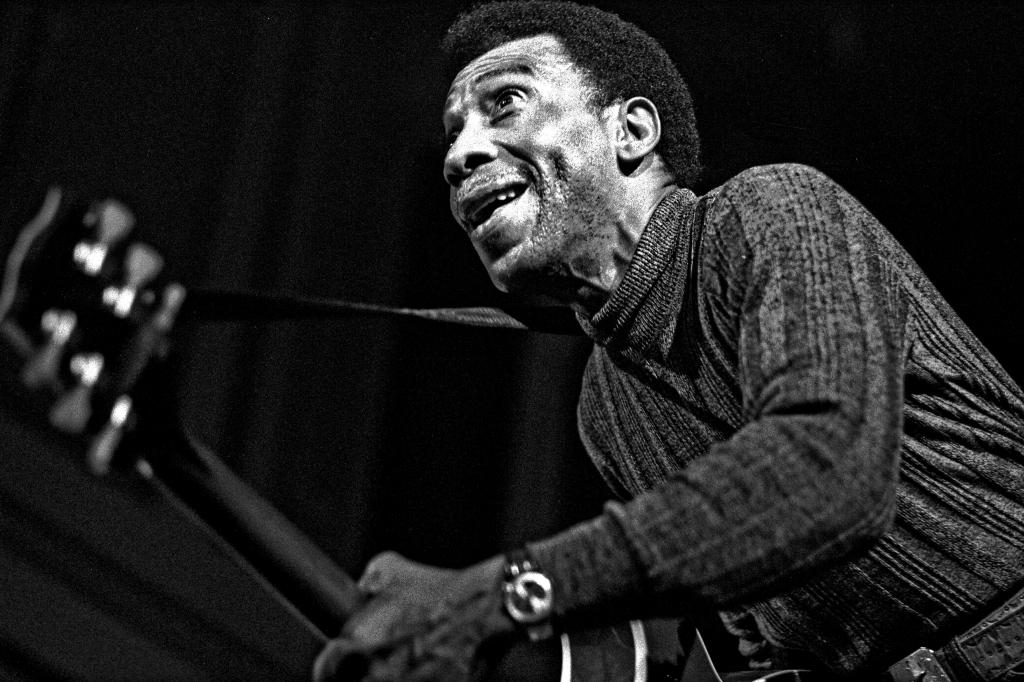
The Birth of a Blues Innovator
Aaron Thibeaux “T-Bone” Walker was born on May 28, 1910, in Linden, Texas, and would grow to become one of the true architects of modern electric blues. Raised in a musical family, Walker was surrounded by rhythm, song, and soul from his earliest years. His stepfather, a multi-instrumentalist, taught him guitar, banjo, violin, and piano, helping young T-Bone develop a versatile musical foundation.
When the family settled in Dallas, Walker found himself in the heart of the Texas blues scene. As a teenager, he accompanied and learned from the legendary Blind Lemon Jefferson, absorbing the essence of traditional acoustic blues while dreaming of something bigger—something louder.
From the South to the Spotlight
Walker began performing professionally before he turned 20, cutting his first record in 1929 under the name “Oak Cliff T-Bone.” In the early 1930s, he headed west to Los Angeles, where he became part of the city’s thriving jazz and blues circuit. There, he joined big bands, refined his stage presence, and began experimenting with the electric guitar—an instrument that was still considered a novelty at the time.
By the early 1940s, T-Bone was doing something revolutionary: he was turning the guitar into the voice of the blues. His 1942 recording “Mean Old World” is often cited as one of the first blues songs to feature electric guitar as the lead instrument. This single marked a turning point in the history of the genre—it was the sound of the blues entering the modern age.
Signature Songs and Defining Moments
T-Bone Walker’s legacy is anchored by a handful of timeless tracks that showcase his artistry and innovation:
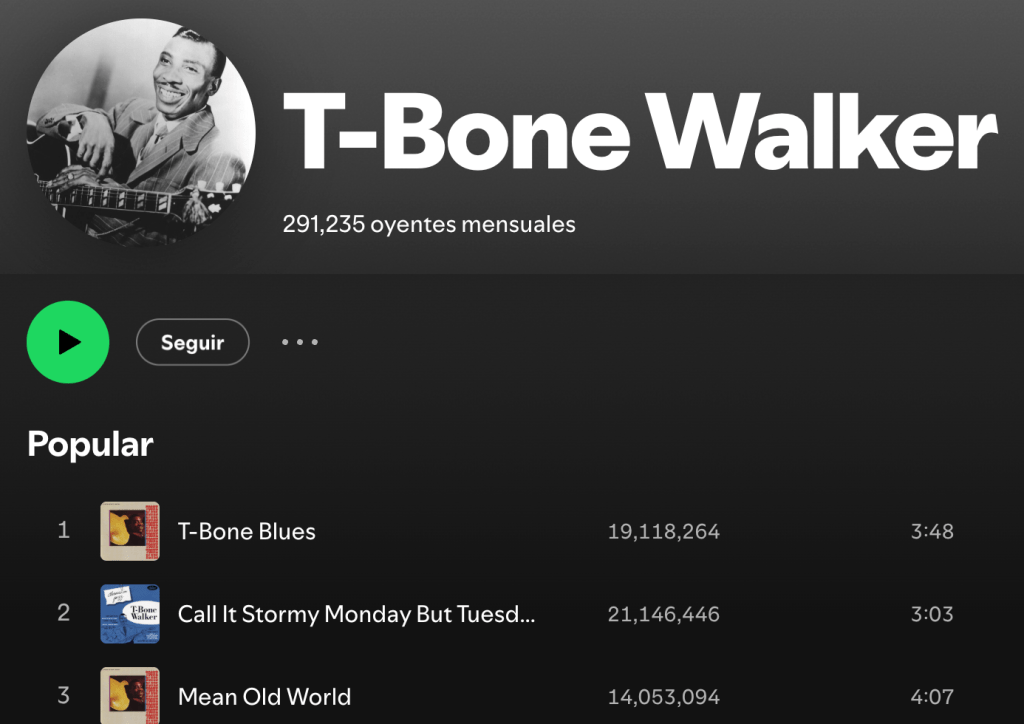
- “Call It Stormy Monday (But Tuesday Is Just as Bad)” – His most iconic song and an enduring blues standard. Its smooth vocals and expressive, crying guitar solos epitomize the emotional depth that became his trademark.
- “T-Bone Shuffle” – A lively, rhythm-driven number that captures Walker’s infectious energy and dance-floor swing.
- “West Side Baby” – A sleek blend of jazz sophistication and blues feeling, where Walker’s silky voice glides effortlessly over his crisp guitar lines.
- “T-Bone Blues” – A masterclass in phrasing and tone, this track showcases his ability to fuse technical mastery with heartfelt emotion.
Each of these recordings highlights a different facet of his genius—his phrasing, tone, swing, and sense of showmanship—all wrapped in a sound that felt both elegant and raw.
The Sound and the Style
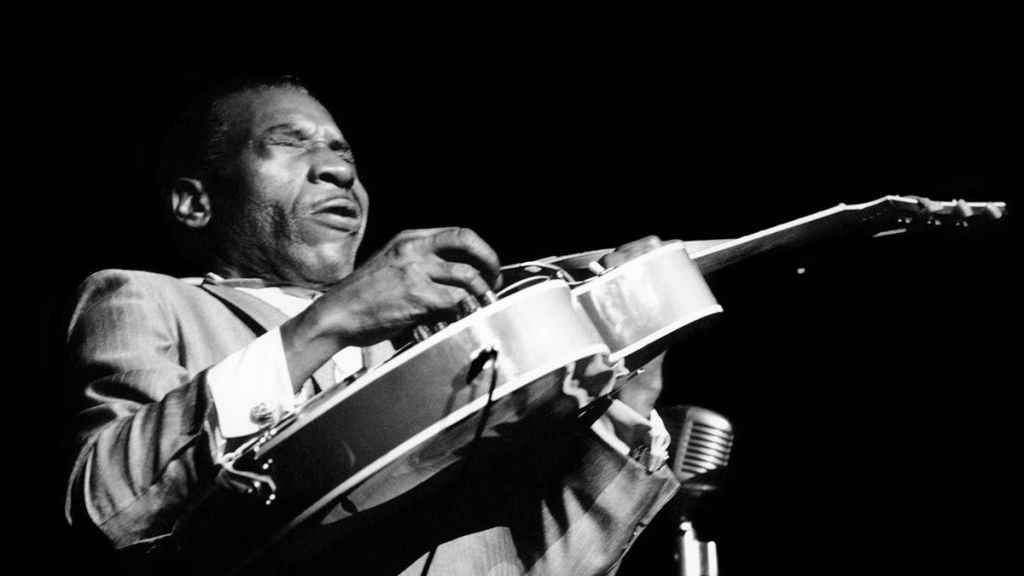
Walker’s weapon of choice was the Gibson hollow-body electric guitar, particularly models like the ES-250 and later the ES-5 and ES-335. These instruments allowed him to craft the warm, fluid tones that became synonymous with his name. His playing combined short, sharp runs with a supple vibrato and precise bends that gave each note a vocal-like expressiveness.
Equally important was his stage presence. Long before rock stars turned performance into theater, T-Bone Walker was flipping the script—literally. He’d play his guitar behind his head, with his teeth, or while doing the splits. Audiences were captivated not just by his sound, but by his charisma and showmanship.
Influence Across Generations
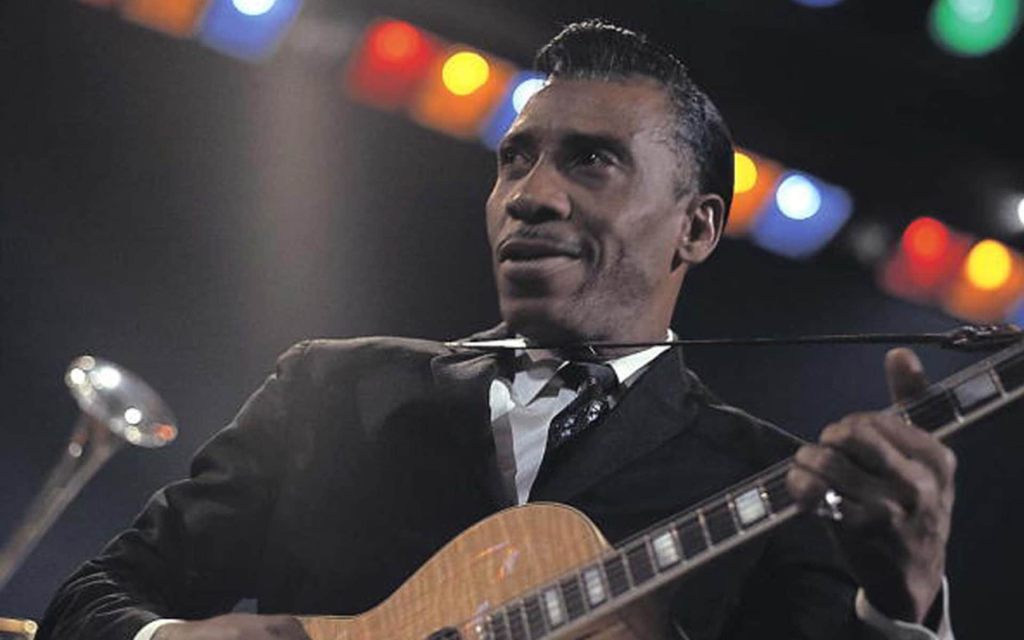
T-Bone Walker didn’t just influence other blues players; he reshaped the entire trajectory of popular music. B.B. King credited him as the reason he picked up an electric guitar. Chuck Berry built his rock and roll riffs from Walker’s rhythmic vocabulary. Even Jimi Hendrix’s legendary stage antics drew direct inspiration from T-Bone’s dynamic performances.
His impact also extended into jazz and R&B, helping bridge the gap between genres and generations. The idea of the guitar as a lead instrument—capable of carrying melody, rhythm, and emotion—began with Walker. His phrasing and tonal control became the blueprint for what electric blues, and later rock, would sound like.

Later Years and Recognition
Walker continued performing and recording through the 1950s and 1960s, maintaining his reputation as one of the most polished and inventive bluesmen in America. In 1969, he released Good Feelin’, an album that earned him a Grammy Award for Best Ethnic or Traditional Recording—a rare honor for a blues artist at the time.
Though health issues slowed him down in the 1970s, Walker’s influence never waned. He passed away in Los Angeles in 1975, leaving behind a body of work that continues to inspire musicians worldwide.
Why T-Bone Walker Still Matters
T-Bone Walker wasn’t just a musician—he was a visionary. He transformed the blues from an acoustic tradition into an electrified art form that could fill dance halls and arenas alike. His tone was smooth but powerful, his phrasing sophisticated yet deeply emotional. He proved that blues could be both refined and gut-wrenching, and that the guitar could speak every human emotion.
Every time a guitarist bends a note to make it cry or smiles while soloing center stage, there’s a little bit of T-Bone in that moment. His sound continues to ripple through time—alive in every soulful bend, every wailing riff, every heartfelt note.

Ten Fast Facts About T-Bone Walker
- His nickname “T-Bone” came from a playful abbreviation of his middle name, Thibeaux.
- He learned from and toured with Blind Lemon Jefferson as a teenager.
- He recorded his first single in 1929 under the name Oak Cliff T-Bone.
- He was among the first blues artists to perform with an electric guitar.
- His 1942 single “Mean Old World” helped define the sound of electric blues.
- His song “Call It Stormy Monday” became one of the most covered blues tunes in history.
- He was known for flamboyant live performances that inspired generations of showmen.
- He won a Grammy in 1970 for Good Feelin’.
- He was inducted into both the Blues Hall of Fame and the Rock & Roll Hall of Fame.
- His guitar style remains a cornerstone of modern blues and rock education.
Final Thoughts
T-Bone Walker’s artistry laid the foundation for what we now recognize as electric blues and rock guitar. He was the first to make the instrument cry, laugh, and sing with human emotion. More than a performer, he was a pioneer whose music bridged past and future—turning the blues into a universal language.
T-Bone Walker didn’t just play the blues. He electrified it—literally and spiritually—and in doing so, became a national treasure.
 oscaronguitars.com
Leave a comment