

Gene Bertoncini is a name that might not always come up in mainstream conversations about jazz guitar, but for those who are truly passionate about the craft, his contributions are undeniable. As one of the most respected jazz guitarists in the world, Bertoncini’s approach to the instrument is defined by a quiet elegance, a deep understanding of harmony, and an extraordinary ability to create beautiful melodies within the jazz tradition. In this article, we explore Gene Bertoncini’s musical journey, his style, and the lasting influence he’s had on jazz guitar.
The Early Years: A Foundation in Classical and Jazz
Born in 1937 in New York City, Gene Bertoncini was introduced to music early on. His initial training was in classical guitar, a foundation that would later inform his unique style. As a young man, he was deeply drawn to the sounds of jazz, and it didn’t take long before he began merging his classical technique with the improvisational spirit of jazz. What sets Bertoncini apart from many of his contemporaries is this early exposure to classical music, which has given his guitar playing a level of precision and finesse often associated with classical musicians.
He was a student at the renowned Juilliard School of Music, where he honed his guitar technique, but it was in the world of jazz where he would truly find his voice. Bertoncini became a regular on the New York jazz scene, playing with the best of the best and gaining a reputation as one of the most technically accomplished and expressive players of his generation.
Influences and Style: A Blend of Classical Precision and Jazz Freedom
Gene Bertoncini’s style is a rare and beautiful synthesis of two worlds: the precision of classical guitar and the free-spirited improvisation of jazz. His classical background informs his approach to chord voicings and fingerpicking, allowing him to play with an intricate delicacy and clarity rarely seen in jazz guitar.
One of Bertoncini’s trademarks is his ability to play sophisticated chord melodies with a seamless flow. His sound is rich and full, yet always articulate. He is able to combine harmonic sophistication with melodic invention in a way that feels natural, never forced. Whether playing chordal comping or leading a solo, Bertoncini’s lines are always smooth, his phrasing always thoughtful. There’s a sense of thoughtfulness to his playing that seems to be missing from the more aggressive, technical styles that dominate modern jazz guitar.
Bertoncini’s touch is light and fluid, but there’s no mistaking the depth of his harmonic knowledge. His command of jazz standards is unparalleled, and he approaches them with a delicate, almost classical sensibility. His technique and ability to move through complicated chord changes with ease make him one of the most admired guitarists in the jazz community.

Breaking into the Jazz Scene
In the 1960s, Gene Bertoncini became well-known as a sideman, working with some of the top jazz musicians of the time. He spent a significant portion of his career playing with jazz legend Buddy Rich, which allowed him to hone his craft and learn from one of the greatest big band drummers in jazz history. But it wasn’t just the drumming that influenced Bertoncini—it was the entire rhythm section. Bertoncini’s ability to blend into any musical setting, whether it was a big band, a trio, or a solo setting, speaks to his versatility and deep understanding of jazz.
He also worked with a wide range of jazz luminaries, including singers such as Tony Bennett and Mel Tormé, as well as instrumentalists like Sarah Vaughan, Charlie Byrd, and Al Cohn. These collaborations exposed Bertoncini to different musical traditions and helped to broaden his own playing, which was already exceptional in its own right.
Signature Sound and Contributions to Jazz Guitar
Bertoncini’s guitar sound is easily recognizable—a soft, rounded tone with a smooth, almost vocal-like quality. This sound, coupled with his impeccable sense of timing and phrasing, allows him to create a sense of intimacy with his listeners, even in larger performance settings. His solos are highly melodic, with an emphasis on thematic development rather than technical pyrotechnics. This makes his playing accessible to both musicians and casual listeners alike.
His ability to create complex, chordal harmonies is another defining characteristic of Bertoncini’s playing. He uses sophisticated chord voicings that go far beyond traditional jazz guitar, taking elements from classical guitar harmony and blending them into his jazz vocabulary. His sense of voice leading—how one chord moves to another—is exceptional, and he often uses inversions and substitutions in a way that’s both creative and surprising.
Bertoncini’s approach to improvisation is highly melodic, which distinguishes him from many of his peers. Instead of relying on fast scales or flashy arpeggios, Bertoncini focuses on constructing solos that emphasize lyricism and melody. His improvisations have a storytelling quality, and even in the most complex musical contexts, there is a sense of emotional depth that resonates with listeners.
Notable Recordings and Legacy
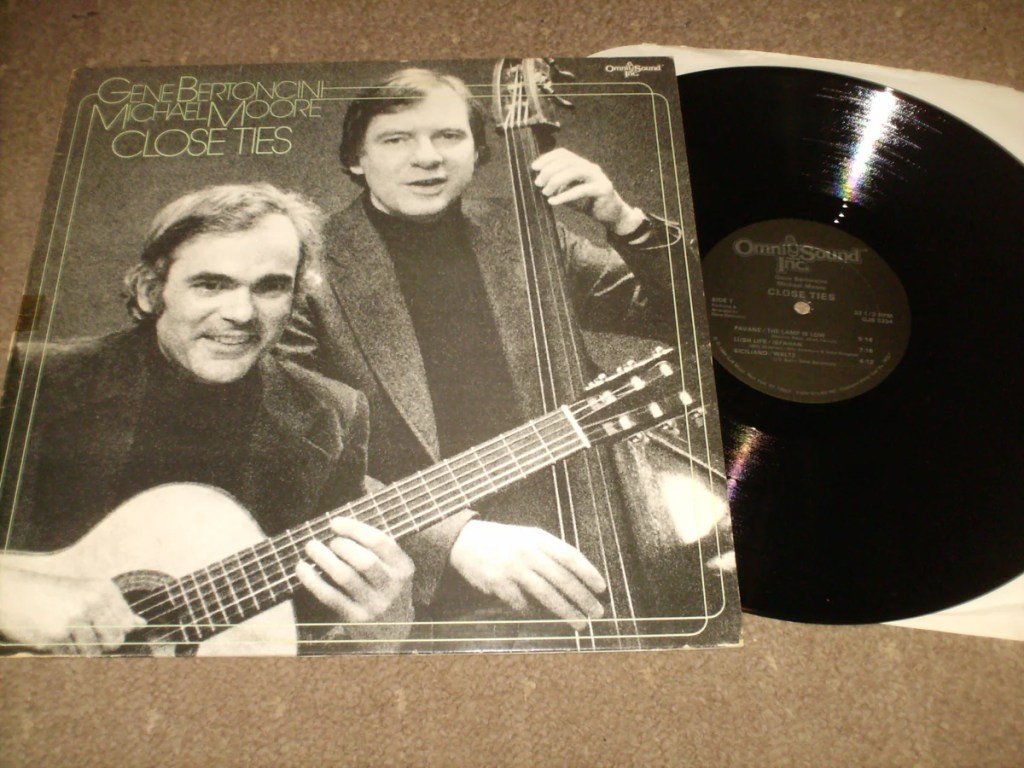
Throughout his career, Gene Bertoncini has recorded several albums that showcase his unique blend of classical elegance and jazz mastery. One of his most well-known albums is Solo Guitar, which features Bertoncini playing both jazz standards and original compositions on the guitar in an intimate, solo setting. This album is a testament to his ability to create lush, complex harmonies while maintaining a melodic flow that is distinctly his own.
In addition to his solo work, Bertoncini has recorded albums in collaboration with other jazz musicians. His work with the renowned jazz bass player John Patitucci on In the Moment highlights his ability to adapt his style to various musical settings, whether it’s in a duo, trio, or larger ensemble.
While Bertoncini has never been as commercially famous as some of the larger-than-life jazz guitar figures, his influence on jazz guitarists and musicians who appreciate the subtlety of his playing is profound. His technical ability, combined with his musicality, makes him a standout in the jazz guitar world, even if his name doesn’t always appear on the front pages of jazz magazines. Guitarists who have studied Bertoncini’s playing often cite him as one of the most influential guitarists they’ve encountered, especially in terms of his ability to blend harmonic knowledge with beautiful, lyrical improvisation.
Conclusion: A Quiet Giant in the Jazz Guitar World
Gene Bertoncini’s legacy as a jazz guitarist is built on his incredible technique, his musical depth, and his ability to bring a classical sensibility into the world of jazz. His playing is defined by a rare combination of precision and emotional depth, and he remains one of the most respected and admired figures in the world of jazz guitar. Whether playing solo or in collaboration with other greats, Bertoncini’s music continues to inspire guitarists and musicians alike.
Bertoncini may not have achieved the same level of commercial fame as some other jazz guitar legends, but for those who know his work, he remains a giant in the jazz guitar world—a master of melody, harmony, and improvisation who will continue to influence generations of guitarists to come.

 oscaronguitars.com
Leave a comment