

Albert Gene Drewery (1932–1993), universally known as Albert Collins, transcended the role of a blues guitarist to become an architect of sound. Dubbed “The Iceman” for the chilling, piercing quality of his guitar tone and the “cold” titles of his instrumental tracks, he earned the title “The Master of the Telecaster” through a lifetime of commitment to his instrument and a revolutionary approach to its technique. Collins’s influence is foundational, bridging the classic Texas blues tradition with modern electric music.
From Texas Roots to the Houston Sound
Born in Leona, Texas, in 1932, Collins’s musical education was unique. While his cousin, the legendary acoustic bluesman Lightnin’ Hopkins, provided early inspiration, Collins’s initial studies were on the piano and organ. This background is critical, as it informed his lyrical, rhythmic, and spaciously phrased guitar solos—a style less dependent on a constant stream of notes and more on strategic, well-timed bursts.
In the clubs of Houston’s Fifth Ward during the 1950s, Collins honed his craft, sharing stages with future Texas blues titans like Johnny Copeland and “Gatemouth” Brown. His sound, characterized by the incorporation of a horn section, reflected the local Texas blues-swing tradition, setting him apart from the harmonica-driven blues of Chicago.
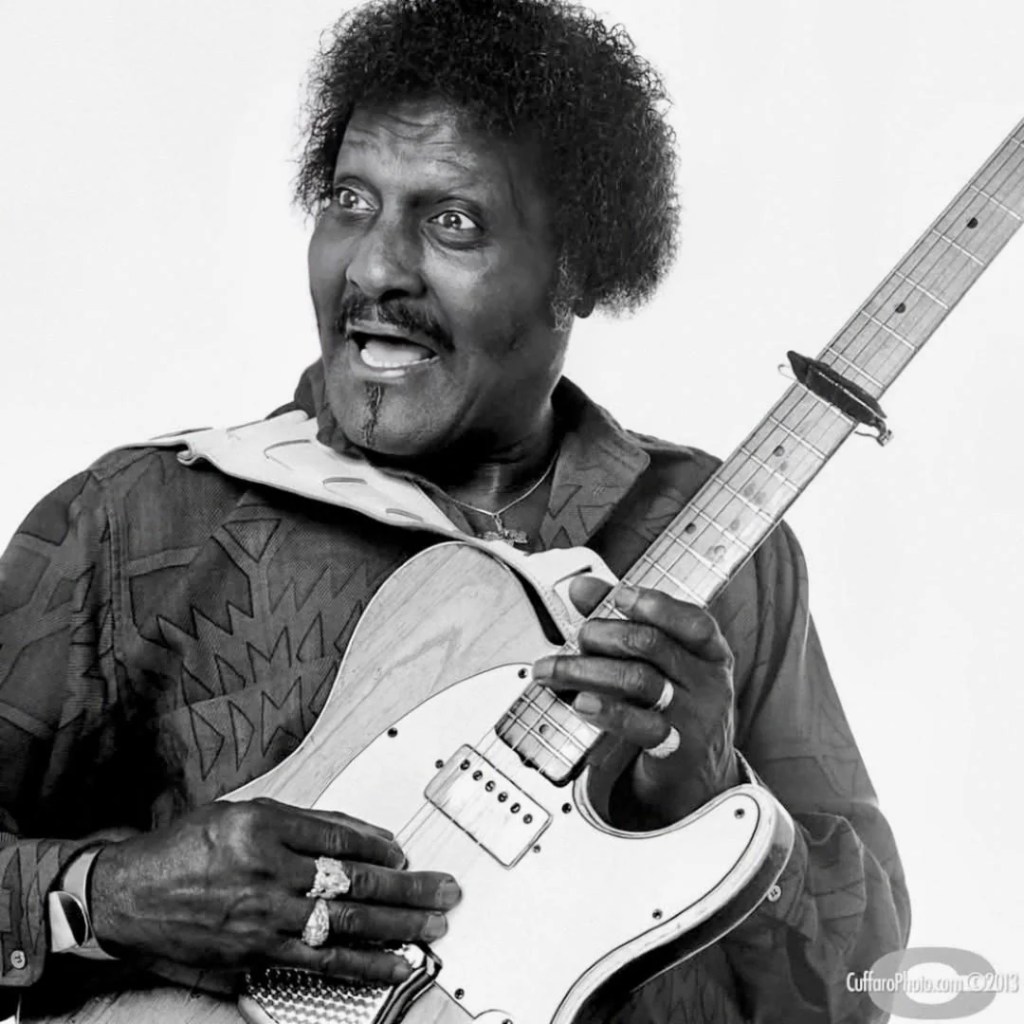
The Unconventional Technique: Anatomy of the ‘Ice Pick’
Collins’s distinct, razor-sharp tone—the “Ice Pick” sound—was a perfect fusion of three unconventional elements:
1. The Open F Minor Tuning and High Capo
The bedrock of Collins’s sound was his use of a highly unorthodox tuning: open F minor (low to high: $F-C-F-A\flat-C-F$). This tuning created a uniquely tense feel to the strings. Crucially, he employed a capo high on the neck, often at the 5th, 7th, or 9th fret. This practice served two key purposes:
- Unique Voicings: The combination of the open minor tuning and the capo enabled him to play chord voicings and melodic lines, particularly utilizing the Major 6th interval, that are otherwise difficult or impossible in standard tuning.
- Increased String Tension: Capoing high on the fretboard gave the strings a very short scale length and high tension, causing them to “snap” and strike the frets harder. This aggressive contact contributed directly to the percussive, high-treble attack that defined his tone.
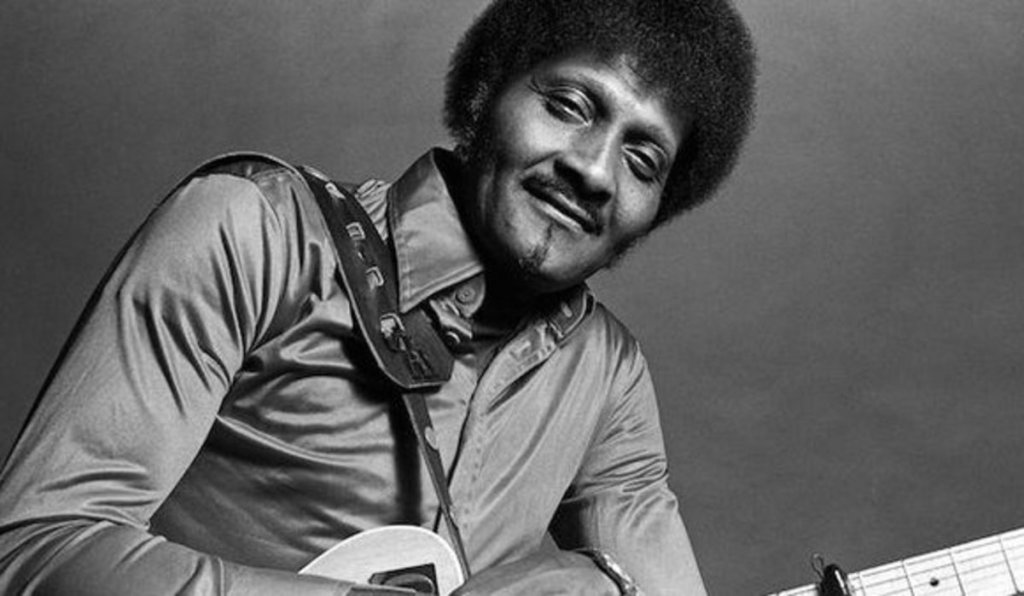
2. The Fender Telecaster and Amplification
Collins was virtually inseparable from his Fender Telecaster, which became an extension of his body and earned him his title. The Telecaster’s naturally bright, biting bridge pickup was the perfect complement to his playing style. He famously played a late-60s Custom Telecaster, and for amplification, he favored high-wattage Fender amps, often a Fender Quad Reverb. His settings were notoriously extreme: the bass was typically set to zero while the treble and mids were cranked, resulting in a tone that was both bright and powerful, achieving its desired distortion not through pedals but through pure amplifier volume.
3. Fingerstyle and Right-Hand Attack
Collins eschewed a guitar pick, playing instead with his fingers and thumb. This allowed for an aggressive, rhythmic plucking action—literally snapping the strings against the fretboard. His right hand was essential to his phrasing, delivering the staccato, punctuated lines that gave his playing its funky, percussive quality.
Legacy and Crossover Appeal
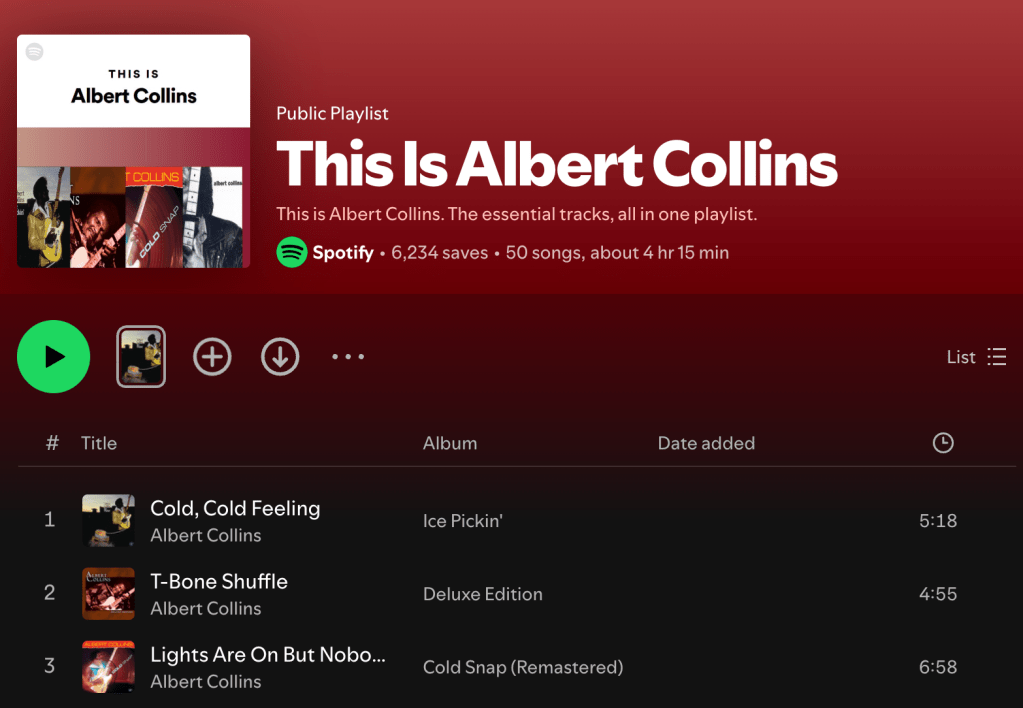
Collins’s career saw a massive resurgence after signing with Alligator Records in the late 1970s, introducing him to a global audience with albums like Ice Pickin’ (1978). This era saw him blend the blues with deeper elements of funk and R&B on tracks like the Grammy-nominated “Too Many Dirty Dishes” and the witty, narrative-driven “Master Charge.”
His most significant collaboration, the 1985 album Showdown! with fellow Texas blues players Robert Cray and Johnny Copeland, earned him a Grammy Award and solidified his status as a blues elder statesman who continued to innovate.
Beyond the records, Collins was an unparalleled showman. His legendary use of a 100-foot-plus guitar cable to walk off stage, through the audience, and sometimes even out the venue door while still soloing became a hallmark of his dynamic and engaging stage presence.
Albert Collins remains a towering figure, his stinging Telecaster sound and unique technique having a profound impact on guitarists across genres, most notably inspiring the next generation of Texas blues-rock players including Stevie Ray Vaughan and Jimmie Vaughan, cementing his legacy as a true master.
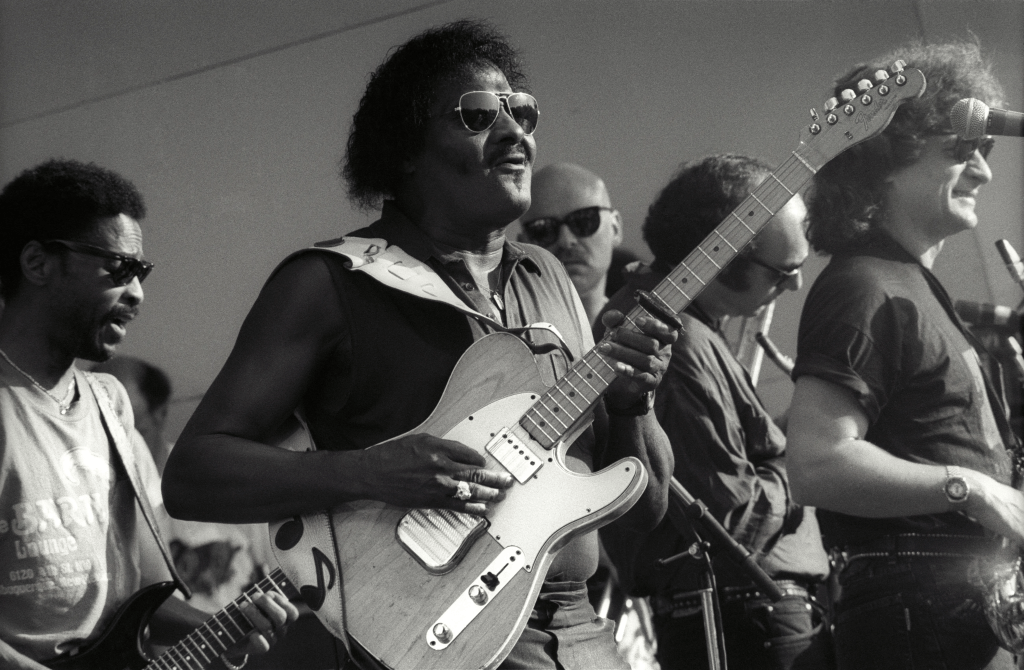
Bonus Track: 10 Facts About Albert Collins
- A Career Interruption: Collins did not find immediate, sustained success in music. In the early 1970s, unable to make a sufficient living from his music, he temporarily retired from playing guitar and took up work in construction, notably working on a remodeling job for musician Neil Diamond.
- The True Length of the Cable: His famous stage walkabouts often involved a guitar cable stretching over 100 feet long. This allowed him to not just walk through the audience, but often leave the venue entirely, occasionally stopping traffic or going next door to order a pizza while still playing.
- The Origin of “The Iceman”: His nickname was earned early on due to his instrumental song titles, which often used “cold” themes, starting with his 1958 debut single “The Freeze,” followed by hits like “Frosty,” “Sno-Cone,” and “Ice Pick.”
- Influence of “Boogie Chillen’”: Although he started on piano and organ, Collins was inspired to focus entirely on the guitar at the age of 12 after hearing John Lee Hooker’s seminal hit, “Boogie Chillen’.”
- First Guitar Was a Substitute: He initially took piano lessons. When his piano tutor was unavailable, his cousin Willow Young would lend him a guitar and taught him the altered tuning (open F minor) that he would use for his entire career.
- He Drove the Bus: Even at the height of his late-career fame, Collins was known for his grounded nature. He famously continued to drive his own band’s tour bus across the country, a testament to his dedicated work ethic.
- The First Fender: While known for the Telecaster, Collins initially purchased a less expensive Fender Esquire in 1952, after seeing Clarence “Gatemouth” Brown play one. He quickly had it modified with a Telecaster neck pickup.
- Vocal Career Began Late: For the first part of his career, Collins was primarily an instrumentalist. It wasn’t until the mid-1970s that he was persuaded by his wife and friends to step up to the microphone, developing the distinctive singing style heard on his major Alligator Records albums.
- Multiple Grammy Nominations: Beyond the Grammy win for Showdown! (1985), Collins received multiple other Grammy nominations, including for his albums Ice Pickin’ and Cold Snap.
- Film Appearance: Collins made a memorable, though uncredited, cameo appearance in the 1987 comedy film “Adventures in Babysitting,” where he forced the main characters to improvise a blues song before he would let them pass.
 oscaronguitars.com
Leave a comment