
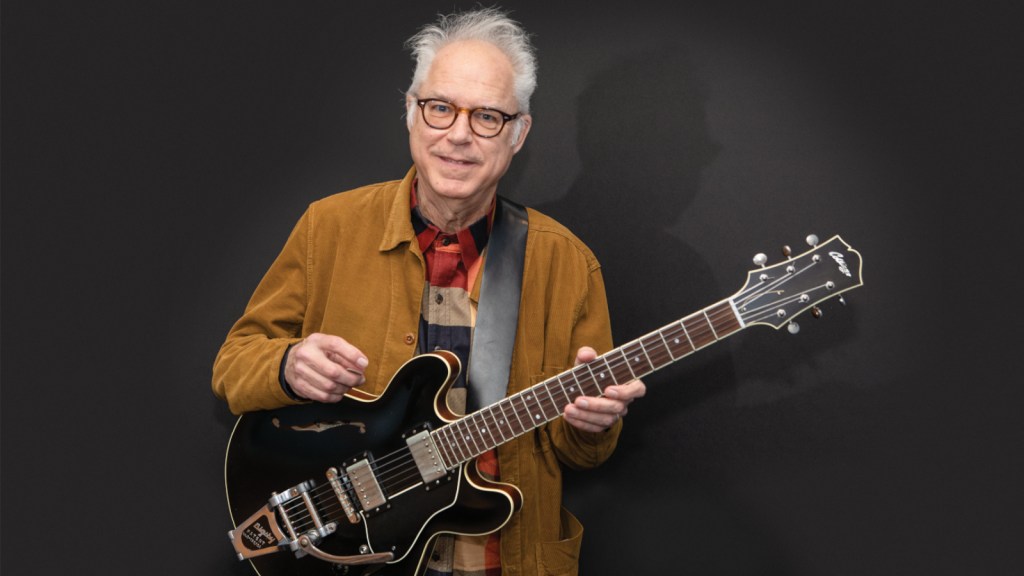
Few guitarists in the jazz world have a sound as distinctive as Bill Frisell. Known for his expansive and atmospheric approach, Frisell has continually pushed the boundaries of jazz, embracing elements of Americana, folk, rock, and experimental music. From his work with legendary artists to his genre-defying solo projects, Frisell has made an indelible mark on the guitar world with a sound that’s immediately recognizable and emotionally resonant. This article delves into Frisell’s influences, innovative style, essential albums, unique gear, and the legacy he’s built over his remarkable career.
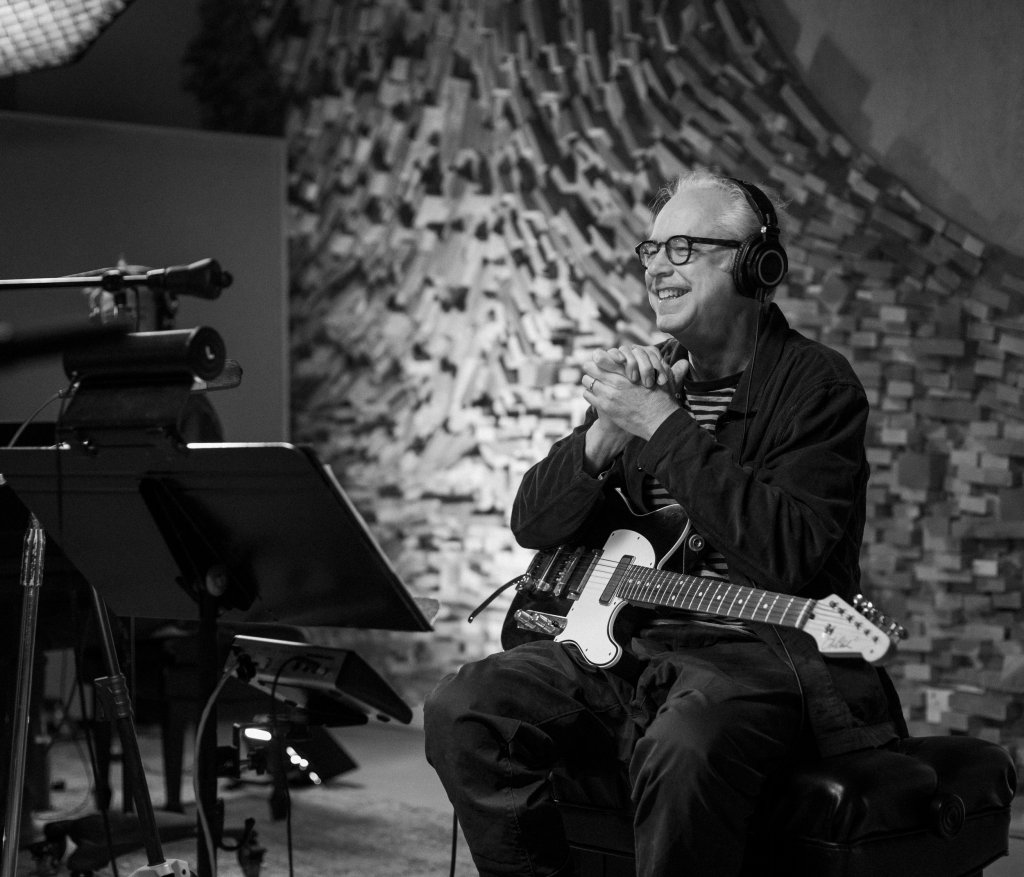
How Bill Frisell Began
Born on March 18, 1951, in Baltimore, Maryland, Frisell’s journey into music began in a rather traditional way—with the clarinet. Growing up in Denver, Colorado, he developed a deep love for music but eventually shifted his focus to the guitar. His early influences spanned jazz, classical, and rock, with particular admiration for guitarists like Wes Montgomery, Jimi Hendrix, and Jim Hall.
Frisell’s professional journey took off after he studied at the prestigious Berklee College of Music in Boston. In the late 1970s, he moved to New York City, where his innovative style quickly earned him a reputation. Collaborating with major players like drummer Paul Motian and saxophonist Joe Lovano, Frisell began carving out a niche in the jazz avant-garde scene, setting the stage for his unique approach to jazz guitar.
Frisell’s Influences: A Fusion of Styles
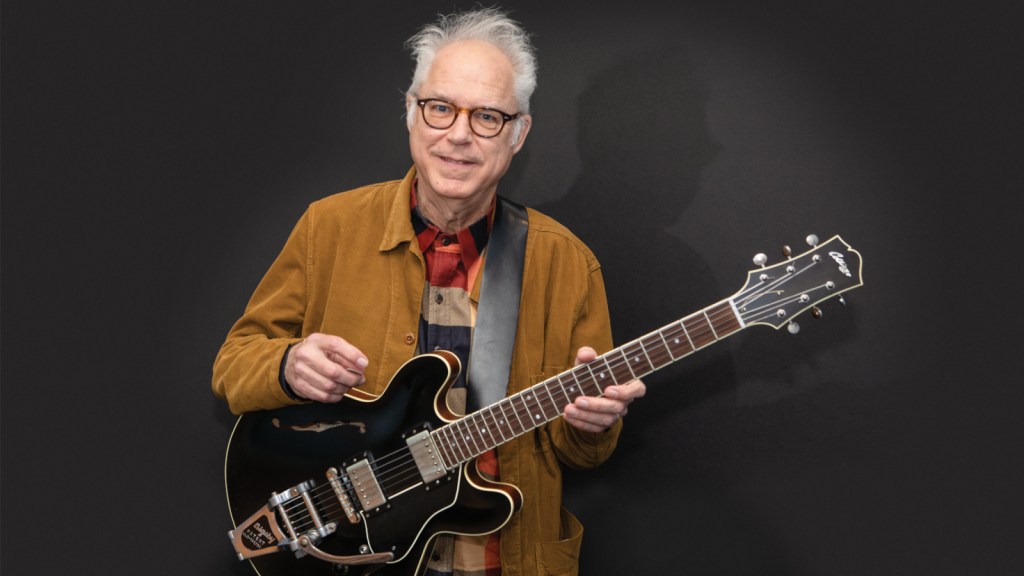
Bill Frisell’s sound is an amalgamation of diverse influences that reflect his open-minded approach to music. His jazz influences include Thelonious Monk, Miles Davis, and Ornette Coleman, but he also draws heavily from Americana and folk music, with a deep appreciation for artists like Bob Dylan and Hank Williams.
Frisell’s sound also reflects his fascination with ambient and experimental music, echoing artists like Brian Eno. This fusion of jazz, rock, folk, and ambient music has resulted in a sound that’s often described as cinematic and dreamy, allowing him to connect emotionally with listeners across genres.
Signature Albums and Tracks
Frisell’s discography is a treasure trove of sonic exploration, each album offering a unique perspective on his artistic vision. Here are a few highlights:
- “Have a Little Faith” (1992): This eclectic album is a perfect example of Frisell’s genre-blending style, featuring covers of pieces by Aaron Copland, Madonna, and Bob Dylan. It highlights Frisell’s ability to reinterpret diverse musical material in a way that sounds unmistakably his own.
- “Nashville” (1997): Frisell’s embrace of Americana shines in this collaboration with country musicians such as Jerry Douglas on dobro and Adam Steffey on mandolin. “Nashville” showcases Frisell’s unique take on country and bluegrass, resulting in a fusion of jazz and folk unlike anything else in his discography.
- “Blues Dream” (2001): This album sees Frisell dive into blues-inspired soundscapes with a layered, orchestral approach. Tracks like “Ron Carter” showcase his use of tremolo and ambient effects, evoking a haunting atmosphere that blurs the lines between blues and jazz.
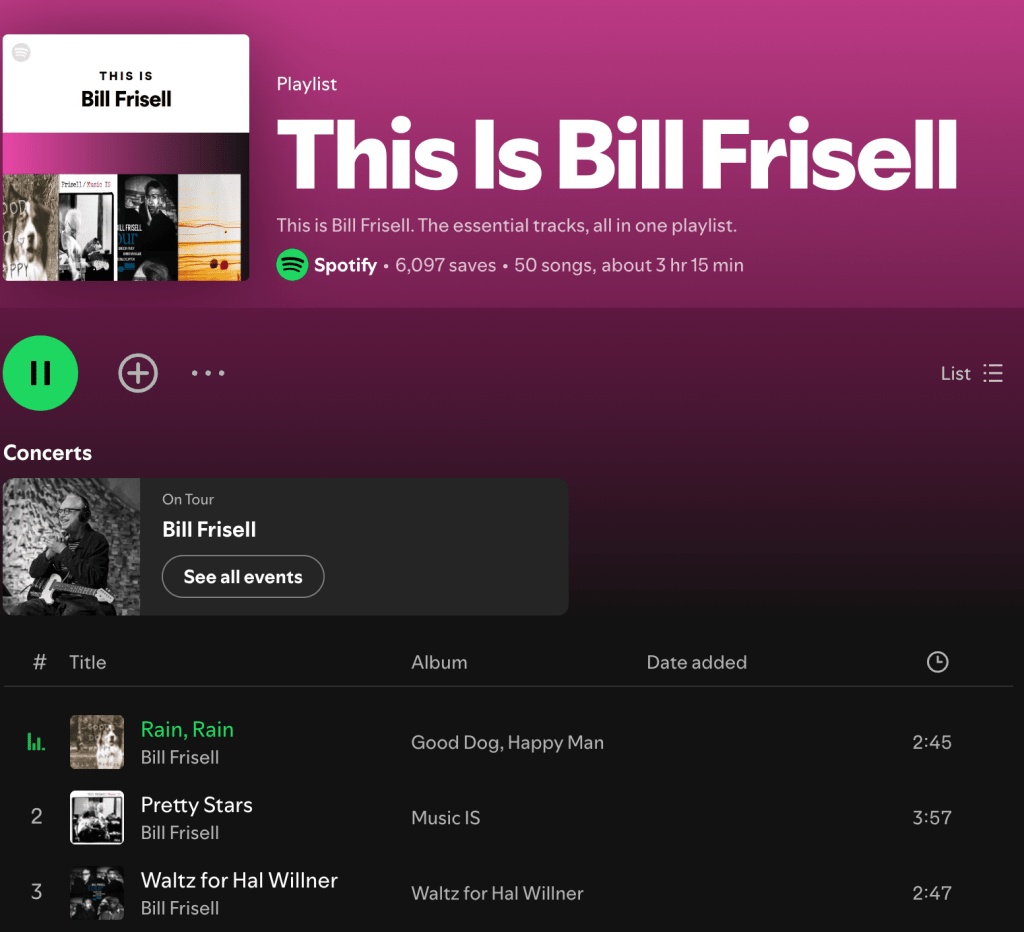
- “Good Dog, Happy Man” (1999): This album combines Frisell’s jazz guitar with elements of folk and rock, resulting in a warm and nostalgic sound that has become one of his hallmarks. The title track, in particular, captures Frisell’s skill for creating melodies that feel familiar yet entirely new.
- “Guitar in the Space Age!” (2014): Paying homage to the music of his youth, Frisell takes on songs from the 1950s and 60s, including covers of The Beach Boys and The Kinks. This album reflects his deep appreciation for rock and pop, filtered through his unique jazz sensibilities.

Unique Gear and Tone
Bill Frisell’s setup is as distinct as his sound, relying heavily on effects pedals and a few carefully chosen guitars. His primary guitar is typically a Fender Telecaster, though he’s also known to play a Gibson ES-175 and other semi-hollow body models. Frisell’s use of effects, particularly delay, reverb, and looping pedals, is essential to his sound, creating the ethereal, layered tones that are his trademark.
Frisell’s pedalboard often includes the Line 6 DL4 Delay Modeler, which he uses for looping and ambient soundscapes, and various reverb and delay pedals to create texture and depth. His use of tremolo is another key element, allowing him to inject subtle undulations into his notes that add a haunting quality to his playing. Frisell’s preference for low to moderate gain levels gives his sound a warm, organic quality, in contrast to the high-gain tones favored by many other jazz and rock guitarists.
Bill Frisell’s Techniques: Minimalism and Melody
One of the hallmarks of Frisell’s technique is his minimalist approach. Rather than relying on fast runs or flashy scales, he focuses on each note’s placement and resonance. His melodic approach is inspired by vocal lines, aiming for a lyrical quality that resonates emotionally with listeners. Frisell often lets notes ring out and overlap, creating a sense of spaciousness and allowing the listener to sink into the sound.
Frisell also employs unconventional chord voicings and partial chords, using open strings to create a layered harmonic texture that sounds full without being overpowering. This technique adds an earthy quality to his music, blending perfectly with his ambient effects to create a warm, immersive listening experience.
Another key aspect of Frisell’s technique is his use of looping. This allows him to build complex, layered soundscapes live, adding bass lines, rhythm parts, and ambient effects to his solos. These loops often evolve over the course of a song, giving his performances an organic, almost symphonic feel.

The Legacy of Bill Frisell
Bill Frisell’s contributions to the guitar world extend far beyond jazz. His genre-blending style has influenced musicians across multiple genres, including folk, rock, and classical. Frisell’s work with artists like Elvis Costello, Paul Simon, and John Zorn reflects his ability to adapt his sound to different musical contexts, further expanding his influence.
Frisell’s emphasis on tone, space, and melody has inspired a generation of guitarists to move beyond traditional approaches to jazz. His music has encouraged guitarists to embrace effects, experiment with genre-blending, and focus on emotional expression rather than technical prowess. Today, Frisell’s influence can be heard in the work of artists such as Kurt Rosenwinkel, Julian Lage, and Nels Cline, each of whom has adopted aspects of Frisell’s innovative approach.
Conclusion
Bill Frisell stands as one of the most innovative and influential guitarists of his generation. His ability to blend genres, coupled with his unique approach to tone and melody, has redefined what it means to play jazz guitar. From his ambient soundscapes to his heartfelt melodies, Frisell’s work continues to inspire listeners and musicians alike. For guitarists seeking to expand their horizons, Frisell’s career serves as a testament to the power of exploration, expression, and authenticity in music.
 oscaronguitars.com
Leave a comment