
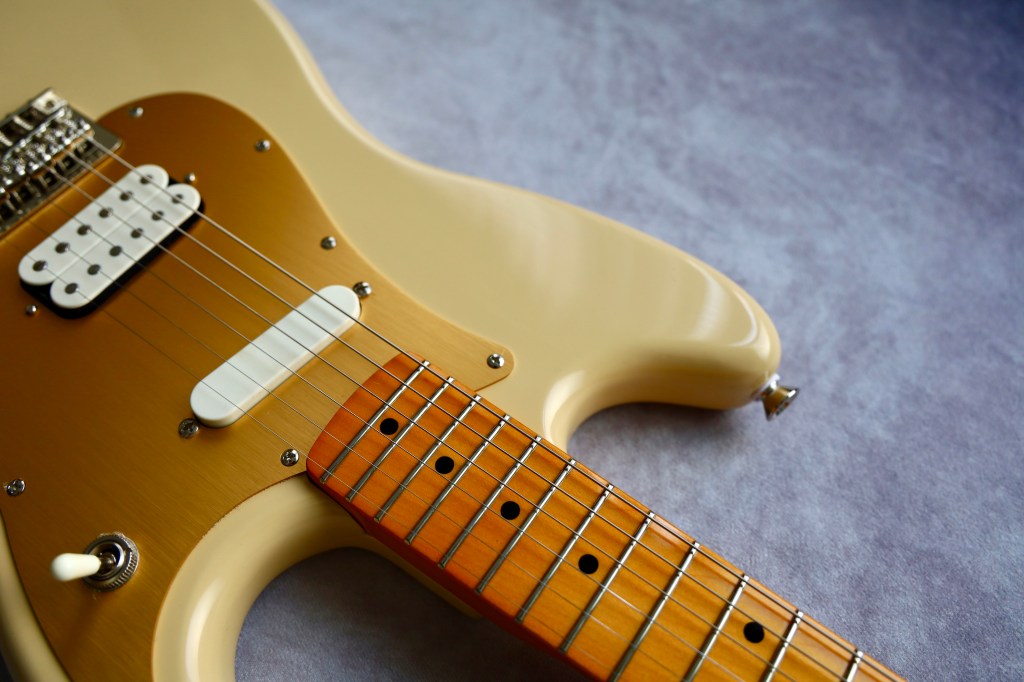
A short-scale offset that feels effortless, sounds better than expected, and hides serious potential under a simple design.
There comes a point in a guitarist’s life when it gets harder to be impressed. You’ve seen every Strat clone imaginable, every Les Paul variation under the sun… and then something slightly different catches your eye.
That’s exactly what happened to me with this Squier Duo-Sonic.
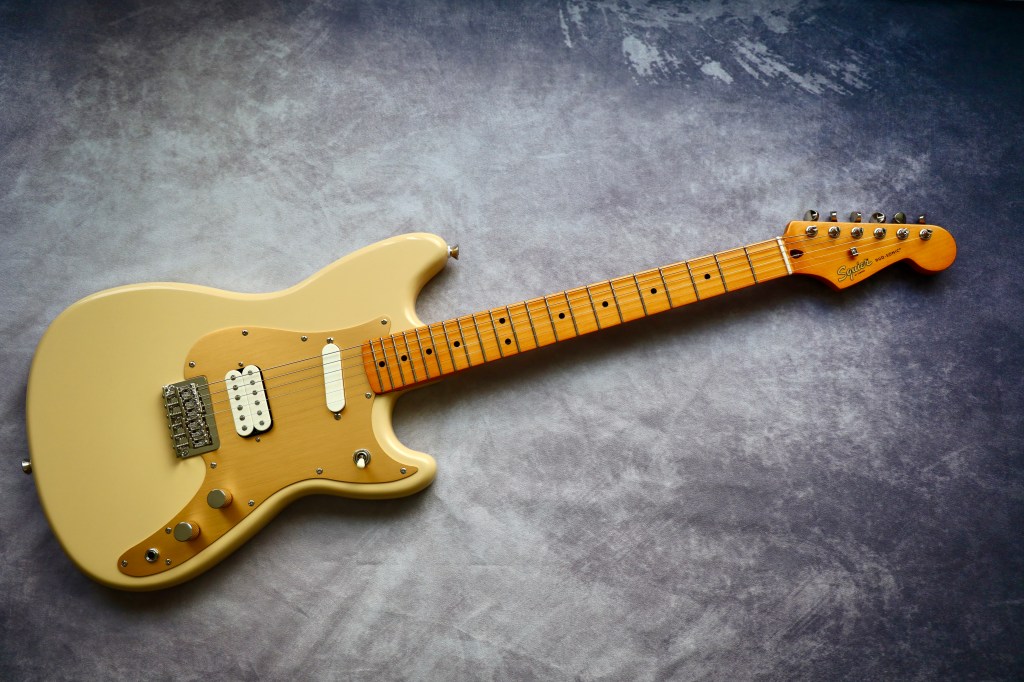
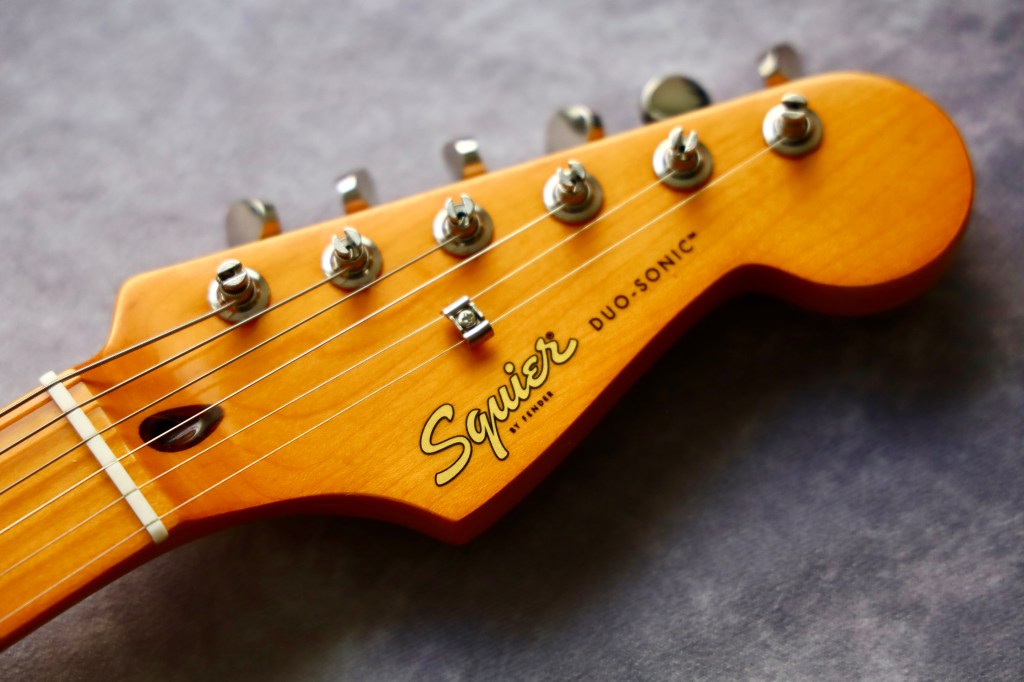
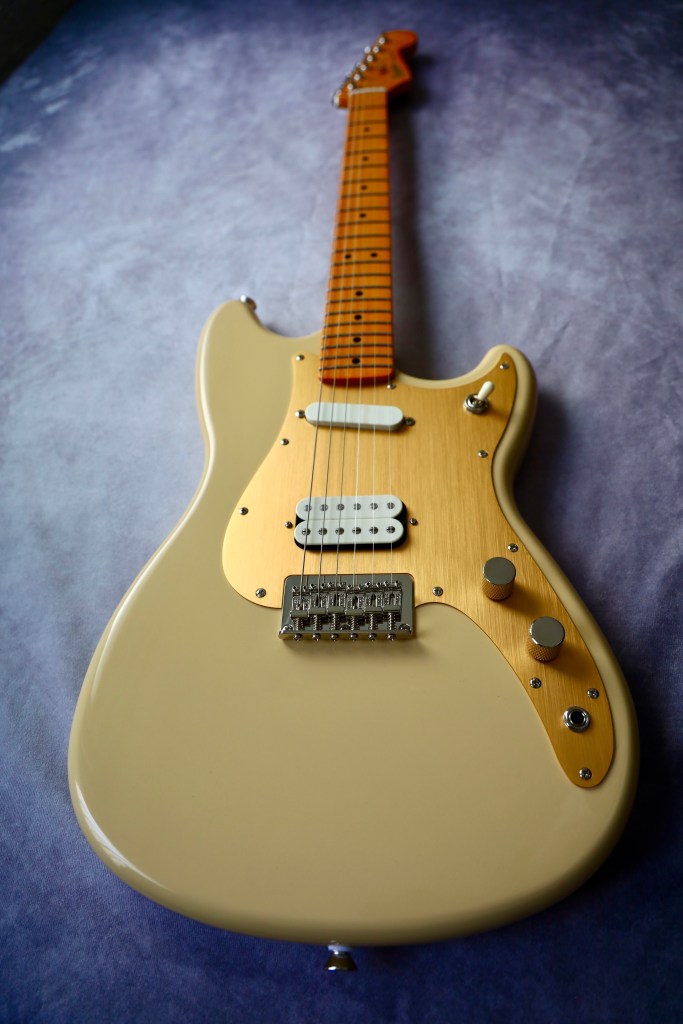
At first glance, I thought it was a Mustang. But something felt off—in a good way. The sand-colored finish, the maple neck, and that gold anodized aluminum pickguard gave it a vibe that was both vintage and oddly fresh. It looked like a throwback, but not a cliché.
And then I picked it up.
A Bit of History (Because This Guitar Has Earned It)
The Duo-Sonic isn’t new territory. Fender introduced it back in 1956 as a student model—simple, compact, and affordable. It started with a shorter scale and a very straightforward layout, sharing DNA with the Musicmaster.
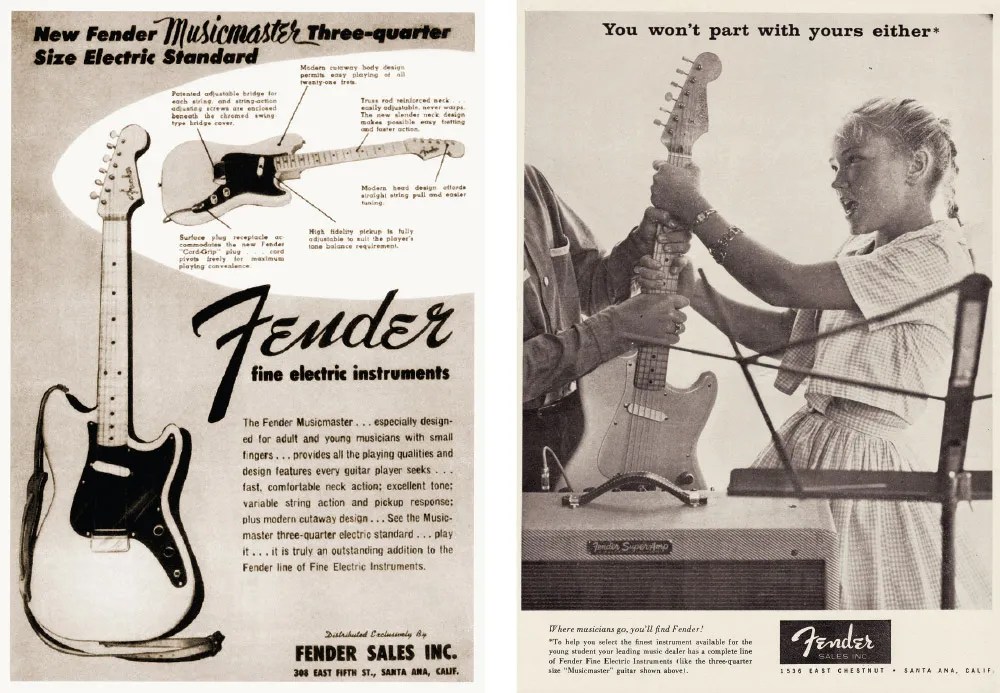
Over time, it evolved, gained an offset shape in the ’60s, and eventually found its way into the hands of alternative and indie players decades later. It was never the “main character” like the Strat or Tele, but that’s exactly why it developed personality.
(Dig deeper into the Duo-Sonic’s unique history here.)
The modern Squier version feels like a respectful continuation of that story—same spirit, updated execution.
First Contact: This Thing Is Comfortable
Let’s get straight to the point: this guitar is ridiculously comfortable.
The 24” scale truly enhances playability. Bends feel effortless, chords require minimal pressure, and extended sessions are much easier on your hands. With .010 gauge strings, it almost feels like you’re playing .009s on a standard-scale guitar.
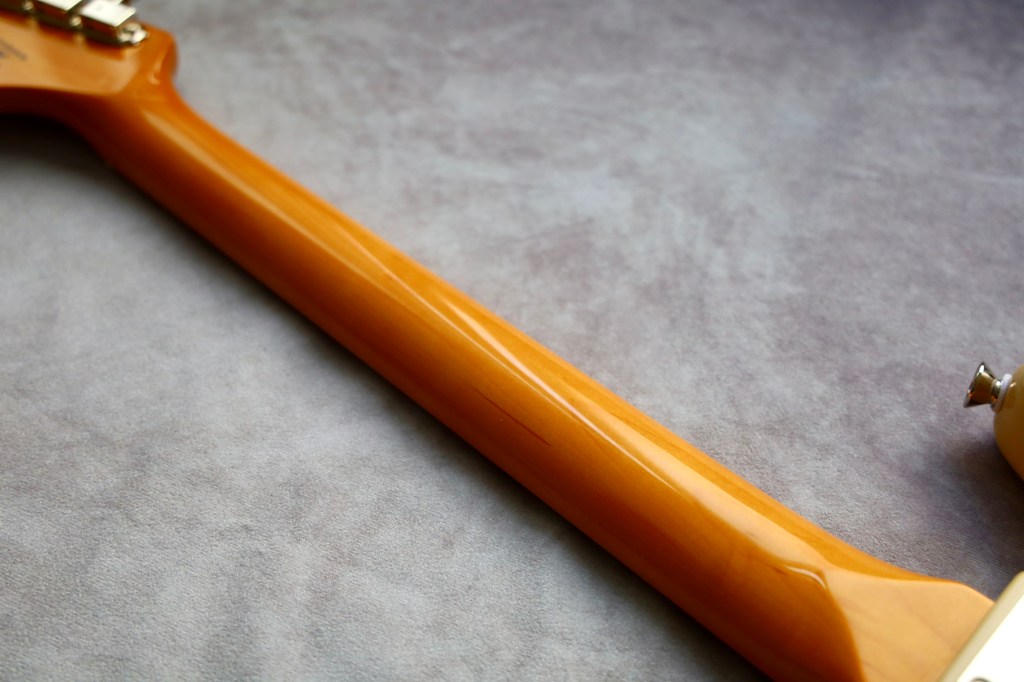
The neck was the biggest surprise. Featuring a modern “C” profile with a 9.5” radius, it feels smooth, familiar, and extremely comfortable—none of that chunky “baseball bat” feeling you sometimes get with vintage-inspired models. In fact, it’s better than what you’ll find on many guitars aiming for a ‘50s or ‘60s vibe. And remember, this is a Classic Vibe series instrument.
You pick it up, and within minutes, the specs fade into the background. You just play.
The Sound: Simple Setup, Surprisingly Flexible
Now here’s where things get interesting.
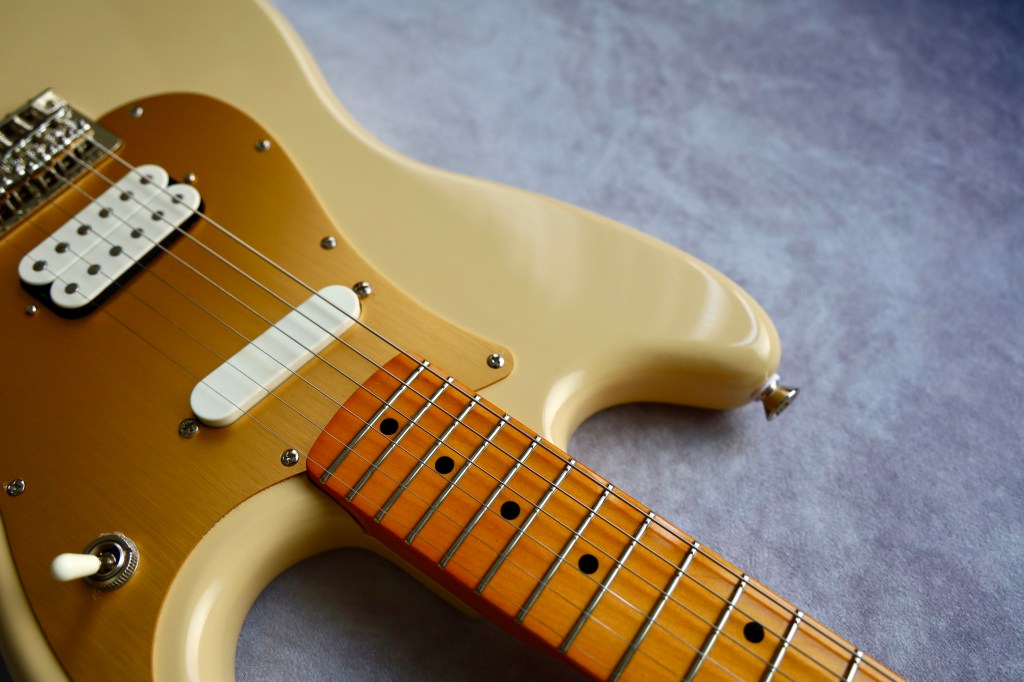
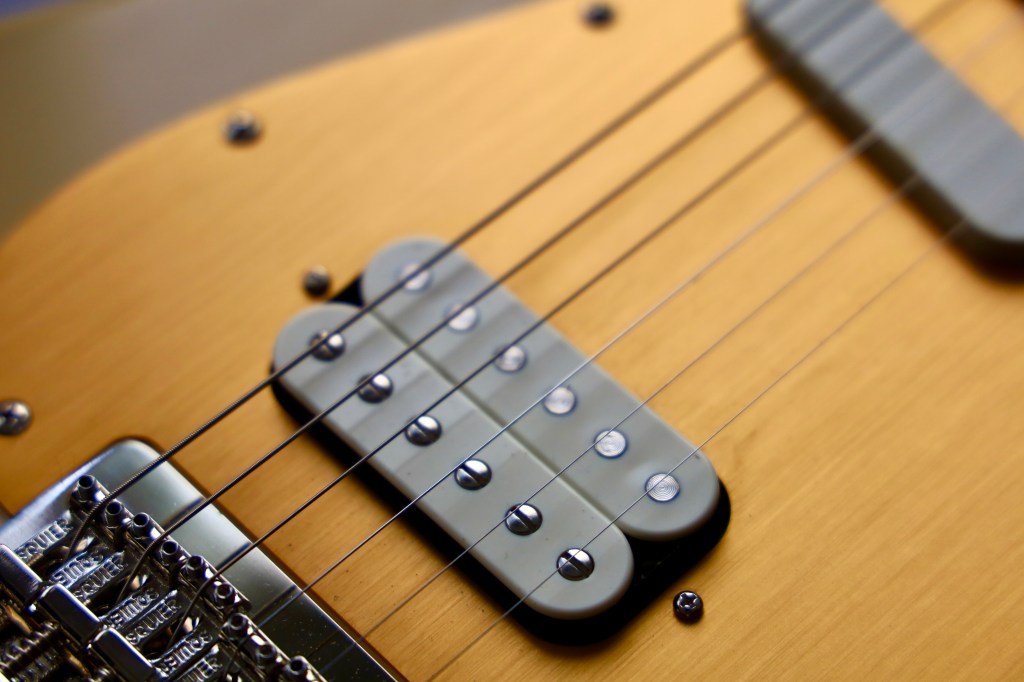
This is an HS guitar—humbucker in the bridge, single coil in the neck. Not the most common combo in this format, but it works.
The bridge humbucker has bite. It’s bright, punchy, and can get aggressive when pushed. Not a metal beast out of the box, but definitely capable of stepping into heavier territory with the right amp or pedal.
The middle position leans toward that Tele-style clarity, but slightly smoother. Less ice pick, more control.
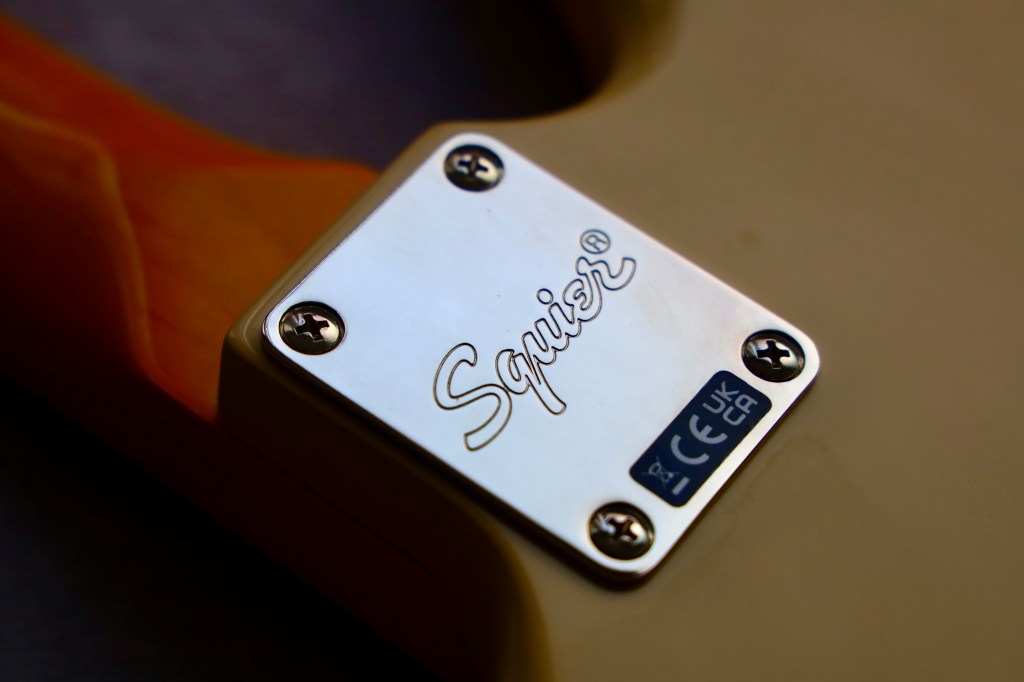
And the neck pickup? Warm, round, perfect for blues, clean tones, and anything that needs a softer touch.
The Alnico magnets make a difference here. The tone feels more organic, less brittle than the ceramic pickups you usually expect at this level.
That said, there’s an obvious volume jump between the humbucker and the single coil. You notice it immediately. It’s not a dealbreaker, but it’s part of the personality.
Dialing It In: Pickup Configurations by Style
This is where the Duo-Sonic becomes more than just “good for the price.”
If you tweak the pickup setup, it can adapt really well:
For blues and classic rock, keeping a vintage-style neck single coil and swapping the bridge for a lower-output PAF-style humbucker brings balance and warmth.
If you’re into indie, alternative, or even grunge, the stock setup already does the job. Maybe just a slightly hotter bridge pickup if you want more push.
For heavier styles, upgrading the bridge humbucker to something higher output changes the game completely. Pair that with better electronics and suddenly this guitar hits much harder than it looks.
If you live in clean tones—funk, pop, studio work—you’ll want clarity and balance. A higher-quality neck pickup and possibly a coil-split option on the humbucker can make this guitar far more flexible.
The key here is balance. This guitar rewards thoughtful upgrades more than brute-force changes.
Build and Feel: Not Perfect, But Very Honest
The body is poplar, which keeps it lightweight. Some players don’t love that, but your back definitely will.
It doesn’t have the classic Strat contours, but it never feels uncomfortable. It’s one of those designs that doesn’t scream ergonomics, yet somehow works.
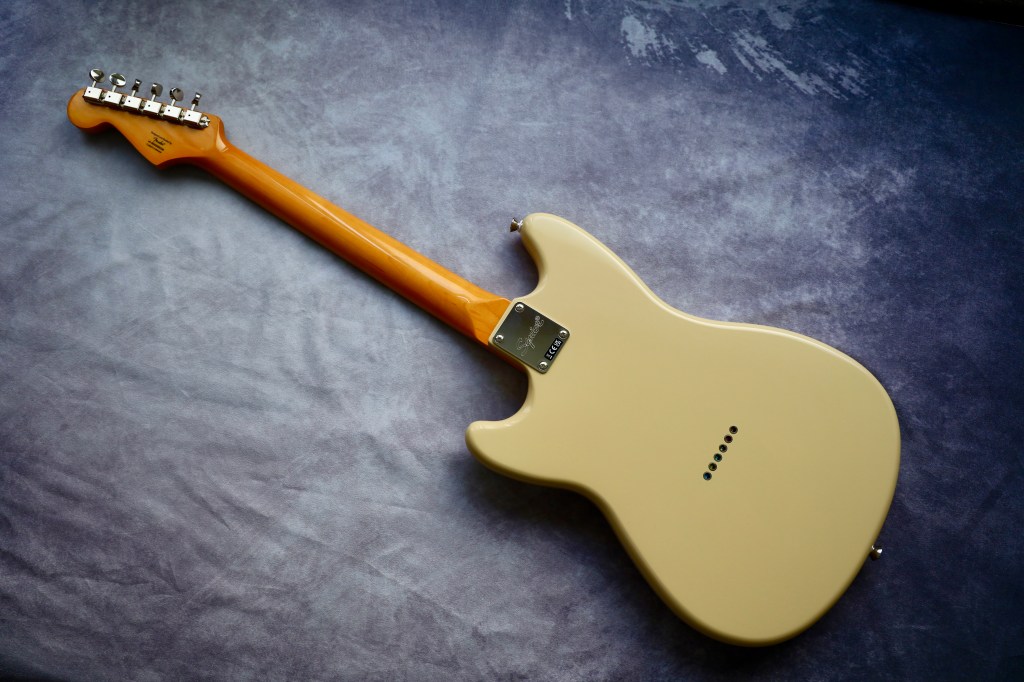
The bridge is simple—hardtail, no drama. And honestly, that’s a good thing. At this price, I’ll take a basic fixed bridge over a mediocre tremolo any day.
Frets are… okay. Not bad, not amazing. Slightly rough in places, which tells you where the cost-saving happened. Still perfectly playable.
Now, the weak point: tuners.
They work, but they’re not precise. Especially on the higher strings. And yes, tuning stability is something people mention a lot—and I agree.
A bit of lubrication helps. A tuner upgrade helps more.
Modding: This Is Where It Gets Fun
This guitar almost invites you to modify it.
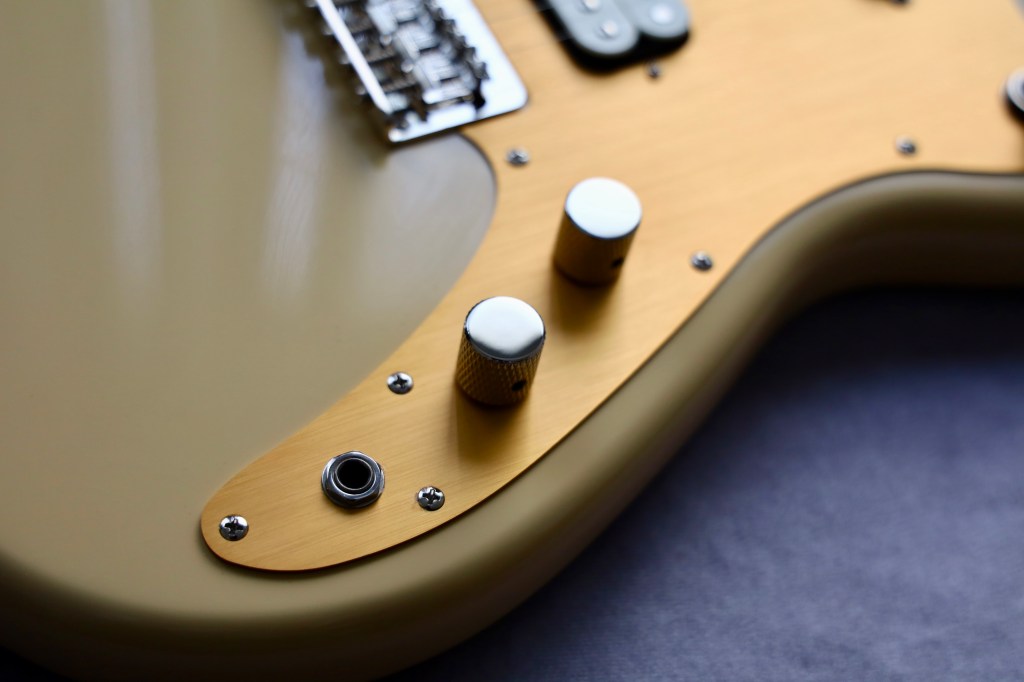
Swapping pickups, upgrading electronics, changing tuners—those are easy wins.
The bridge is trickier. Not impossible, but not a direct drop-in replacement either.
The important question is: do you want to keep its versatile nature, or turn it into something more specialized?
Because once you start upgrading, you’ll inevitably lean one way or another.
Pickup Configuration Guide (By Playing Style)
This guitar really opens up when you tailor the pickup setup to your needs:
Blues / Classic Rock
- Keep the neck single coil for warmth and dynamics
- Swap bridge humbucker for a lower-output PAF-style (Alnico II or V)
- Consider 250k pots to smooth highs
Indie / Alternative / Grunge
- Stock configuration already works well
- Upgrade to a slightly hotter humbucker for more push
- Keep wiring simple—this guitar thrives on directness
Metal / High Gain
- Replace bridge pickup with a high-output humbucker (e.g., ceramic or modern Alnico V)
- Consider a rail pickup in the neck to balance output and reduce noise
- Upgrade electronics (500k pots, better switch)
Funk / Clean / Pop
- Prioritize clarity: upgrade neck pickup to a higher-quality vintage-style single coil
- Consider coil-splitting the humbucker for added versatility
- Use 250k pots for smoother high-end response
Studio / Session Work
- Balance is key: match output levels between pickups
- Consider noiseless single coil or stacked design
- Upgrade wiring harness entirely for reliability
Pros and Cons
Pros
- Extremely comfortable short-scale feel
- Lightweight and well-balanced
- Versatile HS configuration
- Alnico pickups (uncommon at this price)
- Strong modding platform
- Distinctive aesthetics (gold pickguard, Sand Blast finish)
- Great value under $500
Cons
- Lacks the “true Fender sparkle” some expect
- Tuning stability issues (commonly reported)
- Vintage tuners feel imprecise
- Volume imbalance between pickups
- Electronics quality is entry-level
- Frets could use better finishing
- Bridge upgrade options are limited
Conclusion
The Squier Duo-Sonic HS is one of those guitars that doesn’t try too hard—and that’s exactly why it works.
It’s comfortable, inspiring, and refreshingly straightforward. It won’t blow your mind straight out of the box, but it also won’t disappoint you. And more importantly, it shows you its potential almost immediately.
For intermediate players, it’s a fantastic alternative to the usual suspects. For modders, it’s a playground. For beginners with a bit more budget, it could last for years.
And honestly, that’s the real win here.
It’s a guitar you actually want to play.
Technical Specifications
- Body: Poplar
- Finish: Gloss polyurethane (Sand Blast)
- Neck: Maple, “C” profile
- Scale Length: 24” (short scale)
- Fingerboard: Maple
- Radius: 9.5” (241 mm)
- Frets: 21, narrow tall
- Nut: Bone
- Nut Width: 42 mm (approx.)
- Pickups:
- Bridge: Alnico humbucker
- Neck: Alnico single-coil
- Controls: Master volume, master tone
- Switching: 3-way blade
- Bridge: 6-saddle hardtail (bent steel saddles)
- Tuners: Vintage-style
- Pickguard: Gold anodized aluminum
- Output Jack: Front-mounted
- Strings (factory): .010–.042
 oscaronguitars.com
Leave a comment