
For a shorter version you can check my concise review here.
The Quest for the Holy Grail
No wonder the wife (or significant other) gets upset when you come home with your 10th (or 20th, or 30th…) guitar. It’s never easy to explain why you did such an outrageous thing, especially when the obligatory talk about bills, mortgages, and college funds comes up. And yes, even though your significant other is your better half, you’ve failed miserably, for the 10th, 20th, or 30th time, at explaining that finding the perfect guitar is no easy task. And no, selling the others is not an option.

Because let’s face it: there’s probably no such thing as the perfect guitar, the one to rule them all. Maybe it’s not about finding it but the pursuit that makes your heart pound and your mind wander. Suddenly, there’s a spark in your brain, and you think, just maybe, the guitar you saw the other day could be the one. But don’t tell your significant other—it’s easier to find a spouse than the perfect guitar. Our narrow-minded society isn’t too keen on the idea of having 10, 20, or 30 spouses (which is either a pity, lame, or clever, depending on your perspective).
THE ONE
Anyway, once upon a time, I thought I found THE ONE. I really did. It’s my all-white Charvel Pro Mod Style 1 San Dimas HH FR. It’s incredibly comfortable and fast to play, sounds amazing thanks to its Seymour Duncan humbucker pickups paired with single-coil splitting, and is impressively versatile: metal, jazz, blues, pop, funk—you name it, it nails it. The Floyd Rose lets you dive gracefully into any vibrato style you can imagine. It’s the perfect guitar… Oh, not quite. There are three issues. Firstly, the naked maple fretboard gets dirty faster than a teenager sneaking out for the first time. You have to clean it at least once a week, or it looks really filthy. Not a big deal. Secondly, the white color is… quite boring, really ‘meh’. The San Dimas plays and sounds great, but it doesn’t look great. It looks average. Not awful, not beautiful—just average. Surprisingly bland for what is meant to be an eye-catching and stunning guitar.
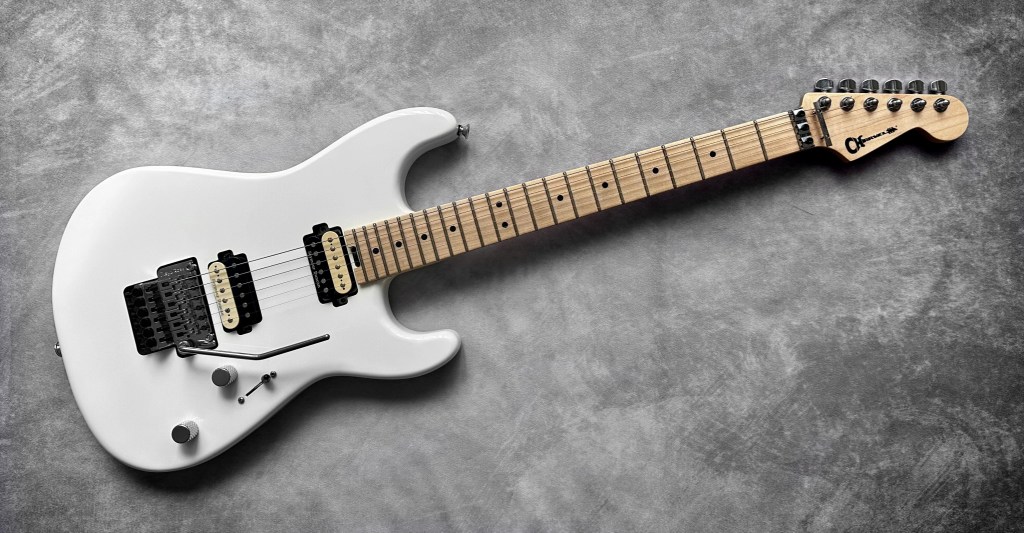
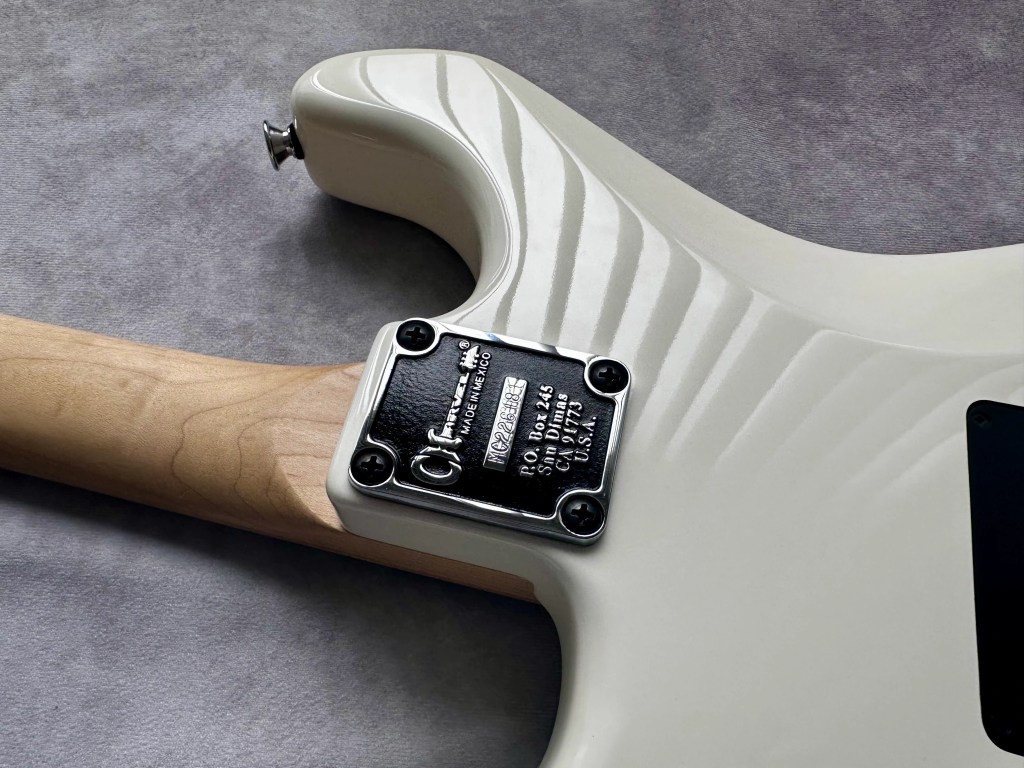
But my third gripe is a deal-breaker: access to the upper frets. The Charvel’s Style 1 is an exact copy of a Fender Stratocaster body. It even has a legend on the back of the headstock that reads, ‘The guitar headstock is the registered trademark of Fender Musical Instruments Corporation and is used with express permission from FMIC.’ Thank goodness Fender owns Charvel, or the ambulance-chasing lawyers would be rubbing their hands together and drooling like wolves. Having an exact copy of a Fender Stratocaster shape isn’t a bad thing at all since it’s one of the most iconic and beautifully proportioned bodies in the history of guitar design. It’s a contoured body that fits perfectly, an ergonomic marvel unmatched by any other guitar. But—and yes, there is a ‘but’—it has 22 frets, and the upper ones aren’t easily accessible at all. The original body design doesn’t exactly help you play comfortably all the way up. And the San Dimas has a metal plate at the neck-body joint celebrating the brand and proudly stating the guitar is made in Mexico. It looks beautiful, but the metal plate makes accessing the already difficult-to-reach upper frets even harder.
So there you have it: this Charvel is a truly wonderful guitar, but its look is quite boring, the fretboard gets messy after a few days of playing, and it’s really uncomfortable to reach the 22nd fret, which, by the way, is a bit short. So, it’s a shame, my beloved Charvel; I thought we were meant to be, but I’ve realized we’re not. It’s not about you, it’s me. This is goodbye. Well, not quite—you’ll remain in the collection forever and ever, but if I find (and rest assured, I will) a better guitar, I’ll only pay you a quick visit occasionally, just to remind myself why I replaced you in the first place. Sorry, but that’s the way it is.

So… could I find a guitar that plays and sounds as good and is as versatile as the Charvel, but with a darker fretboard (Rosewood, maybe?), 24 frets (because why not?), the same beautiful Strat-like body and proportions but in a slimmer, even more stylish design, with proper ergonomics for easy upper fret access, and that looks genuinely exciting? You bet I can find such a thing. It might come with a hefty price tag, but guess what? I just got some extra money. So, I had to make a decision: pay off some debt, save for the kids’ college fund, buy a really nice gift for my “one and only,” or buy yet another guitar. After careful and serene consideration, the decision was quite rational: let’s grab the car keys and head to the guitar store.
The Triumphant Return
I came back from the store carrying a big brown cardboard box with the ‘JACKSON®‘ brand in huge letters. For the sake of variety, I’ll spare you the conversation with my wife. Let’s just say that the phrase ‘brink of divorce’ might give you an idea of how it went. But luckily, love’s so deep, so profound, so healing, that it can handle even another guitar.
I peeled off the tape and opened the box to reveal a white plastic cover. The plastic rubbing against the shiny surface of the guitar made me cringe. Inside the box, there was also a transparent plastic bag containing a couple of Allen wrenches and a shiny whammy bar with a golden finish and its characteristic nut, designed for a Floyd Rose tremolo bridge. Additionally, two strap-locking ends (Dunlops) with the Jackson “J” on them were present. Let me tell you, this was a really nice touch.
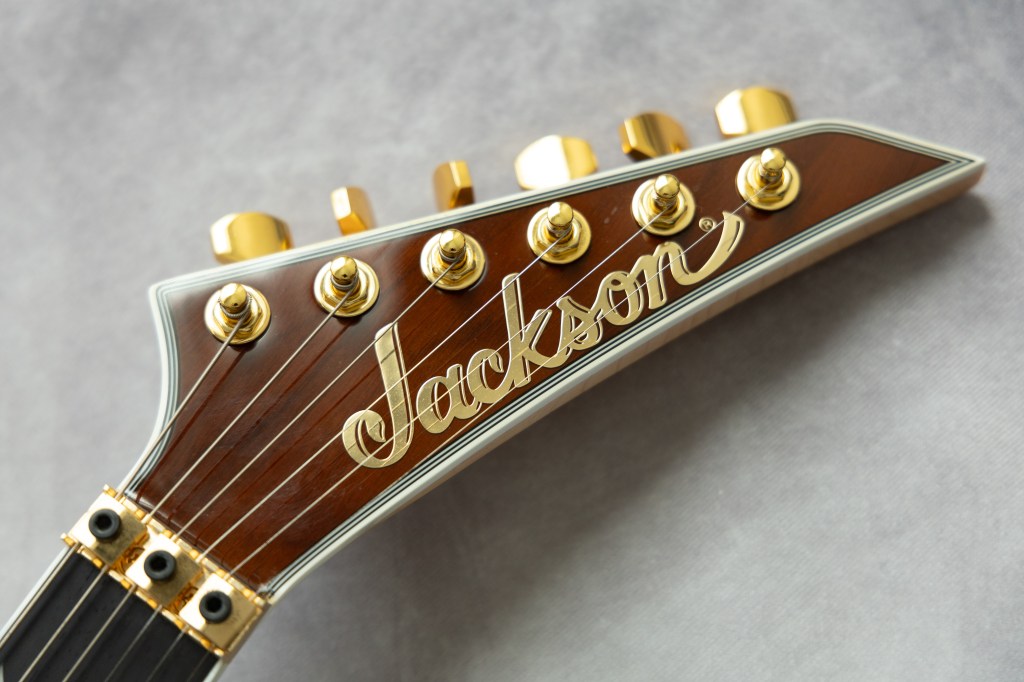
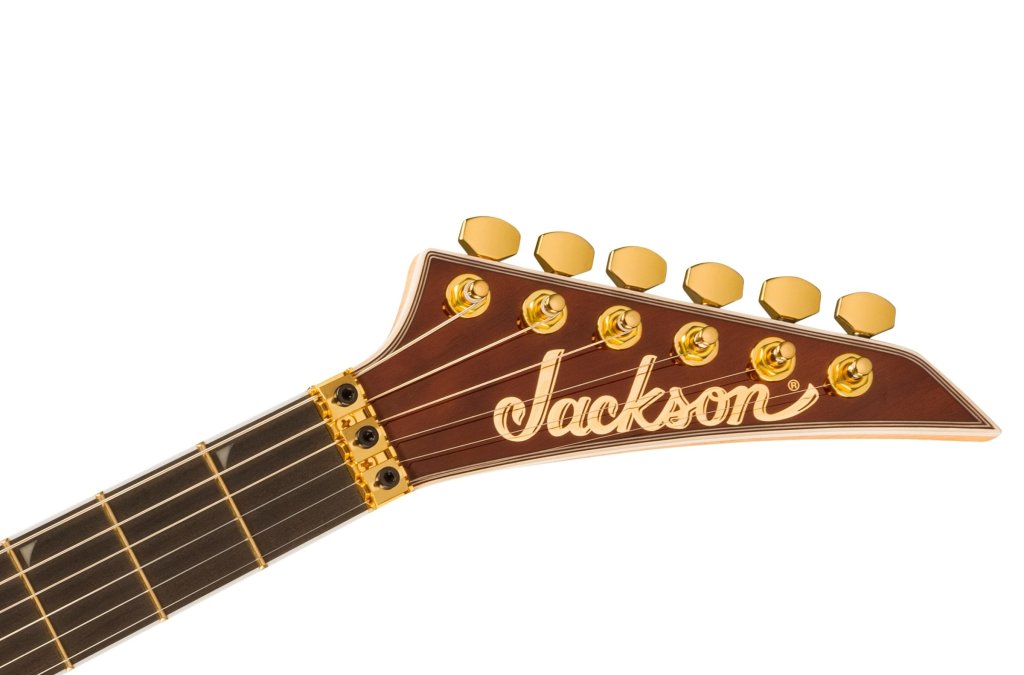
I placed the guitar next to a window to admire it. Oh my! The sight sent a rush of blood through my veins and quickened my heartbeat. I even felt a hint of sweat on my forehead. The light from the window struck both the glossy surface of the body and the deep, matte finish of the fretboard. The name ‘Jackson®’ reflected the light with a stunning golden shimmer, looking so three-dimensional that I ran my fingers over the name, expecting to feel the smooth curves of the letters, only to find it perfectly flat and exquisite.
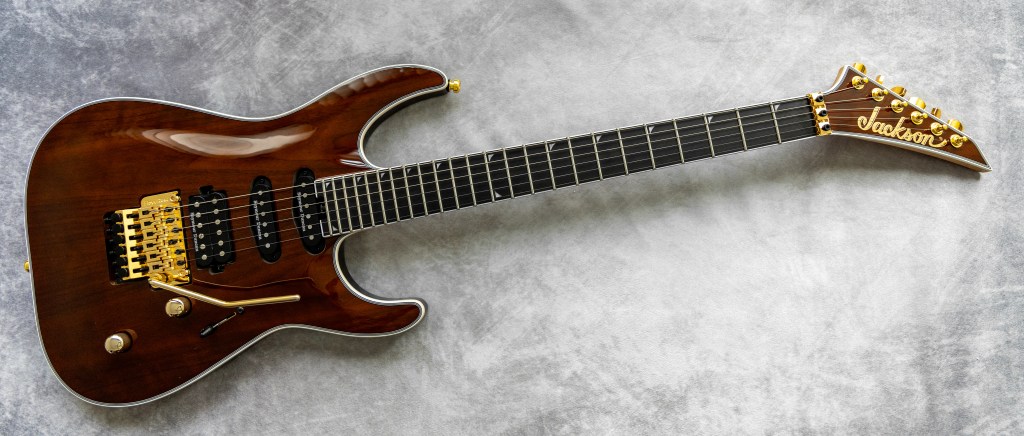
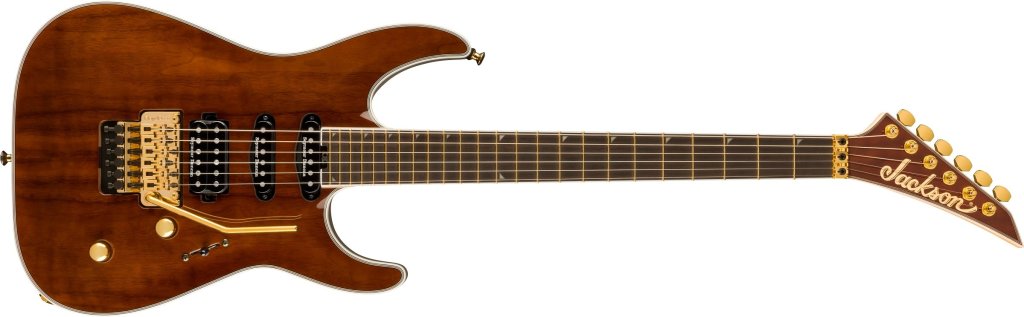
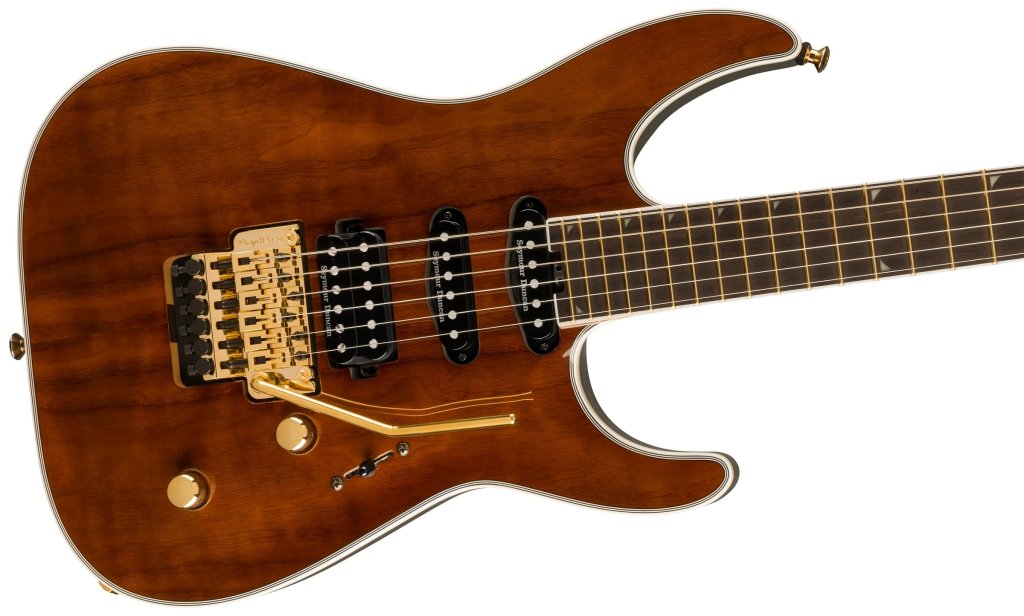
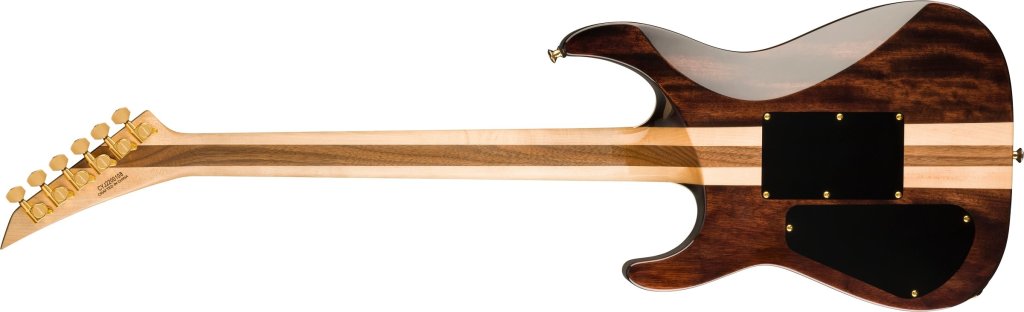
I then inspected the rich, dark brown body, reminiscent of the classic Stratocaster shape but with Jackson’s ‘Soloist’ style—a sleek, aggressive design with sharp contours and deeper cutaways for better upper fret access, thanks to its sculpted heel for easier playability. The body was transparent, showcasing the original color and texture of the wood. It had a chocolatey hue, similar to mahogany but less reddish. The wood wasn’t mahogany, but Okoume—lightweight and offering a warm tone with a mild midrange emphasis. After playing a Les Paul, this one feels like a feather.
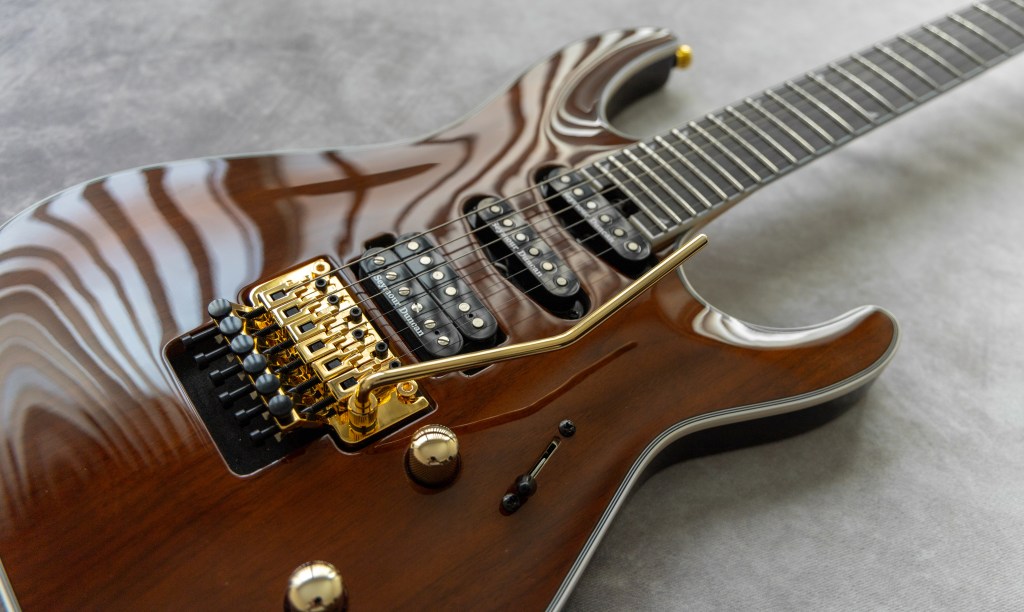
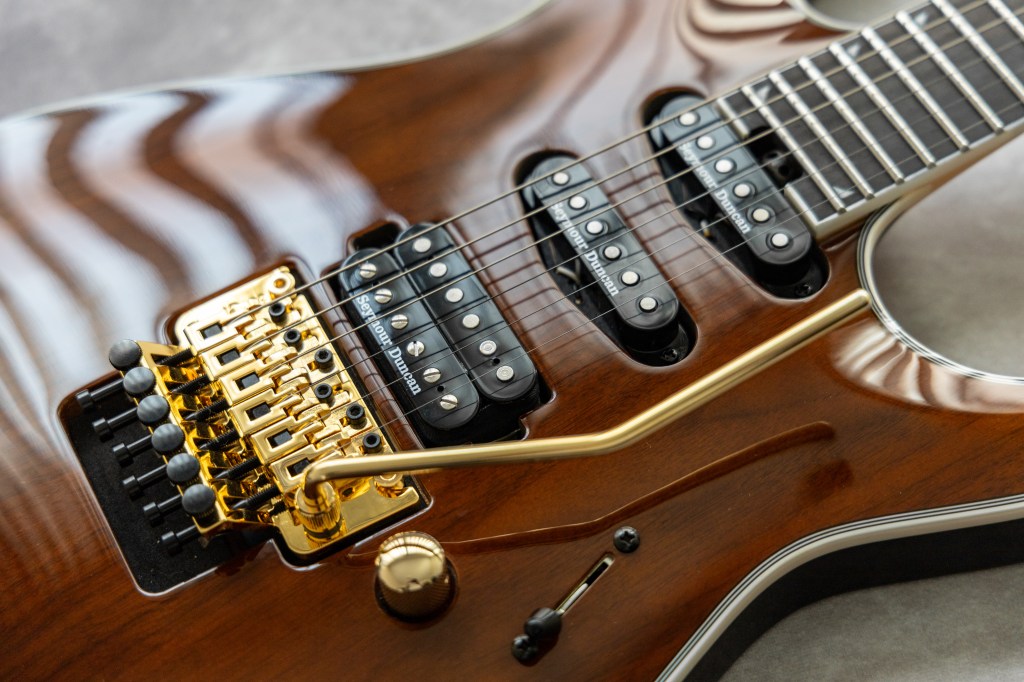
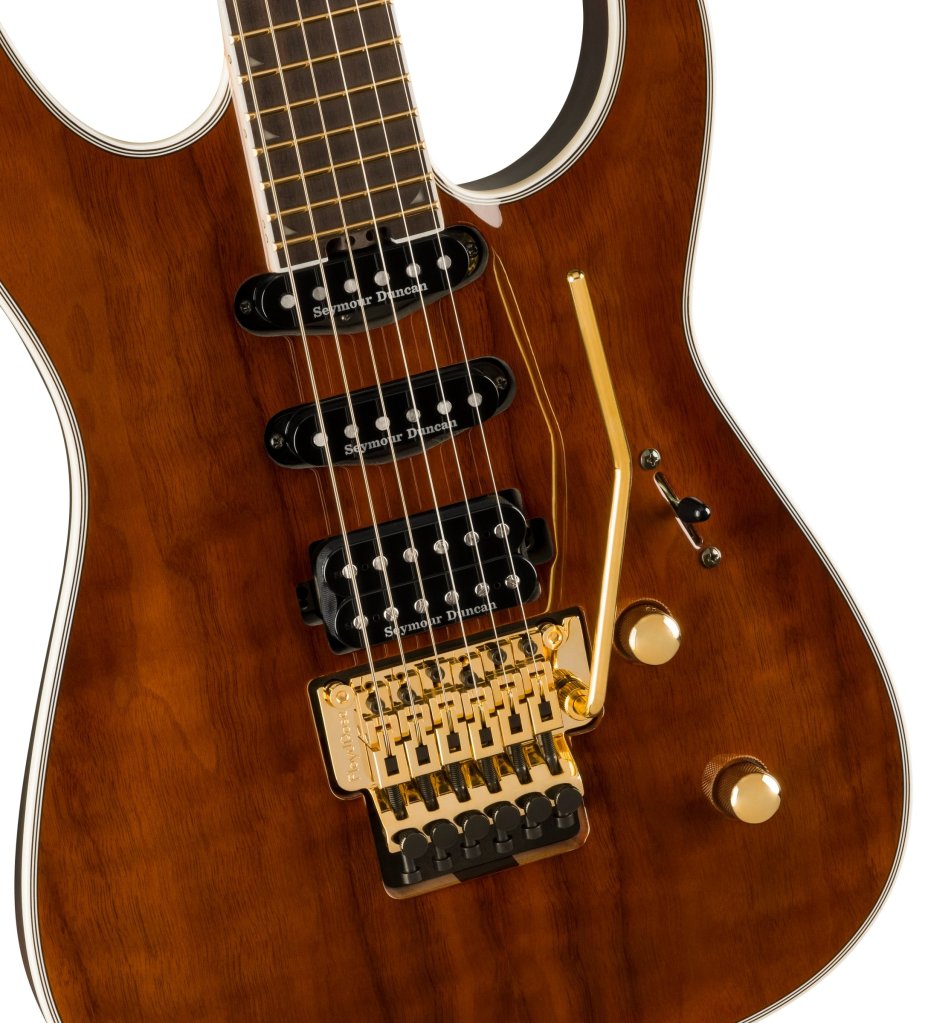
The body directly mounts three pickups bearing the ‘Seymour Duncan’ label. I will delve deeper into the pickups, as well as the neck construction and playability.
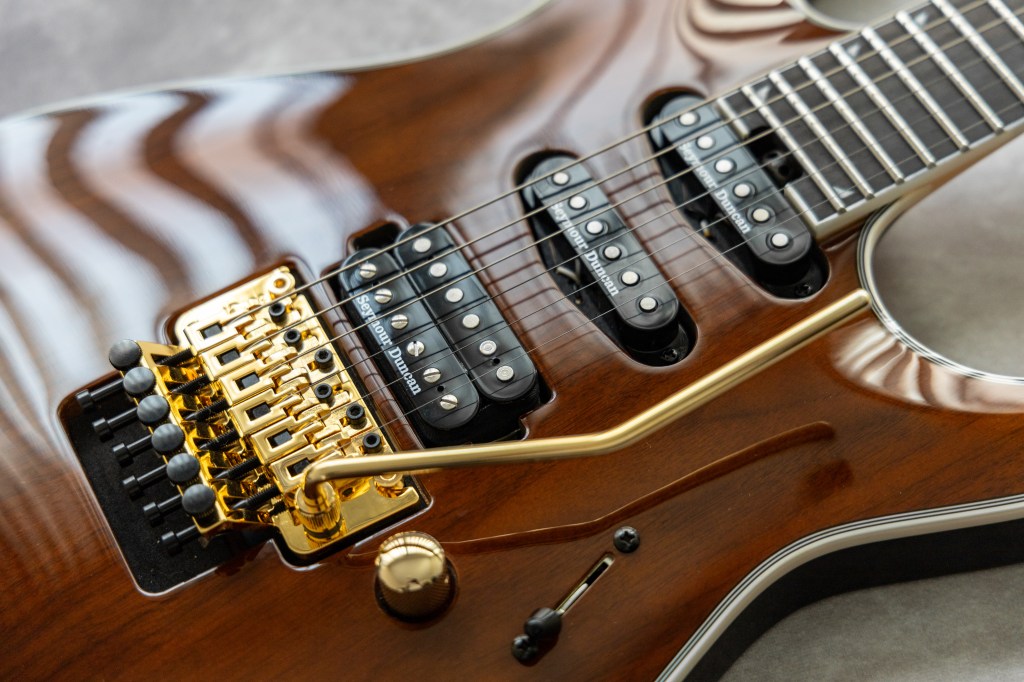
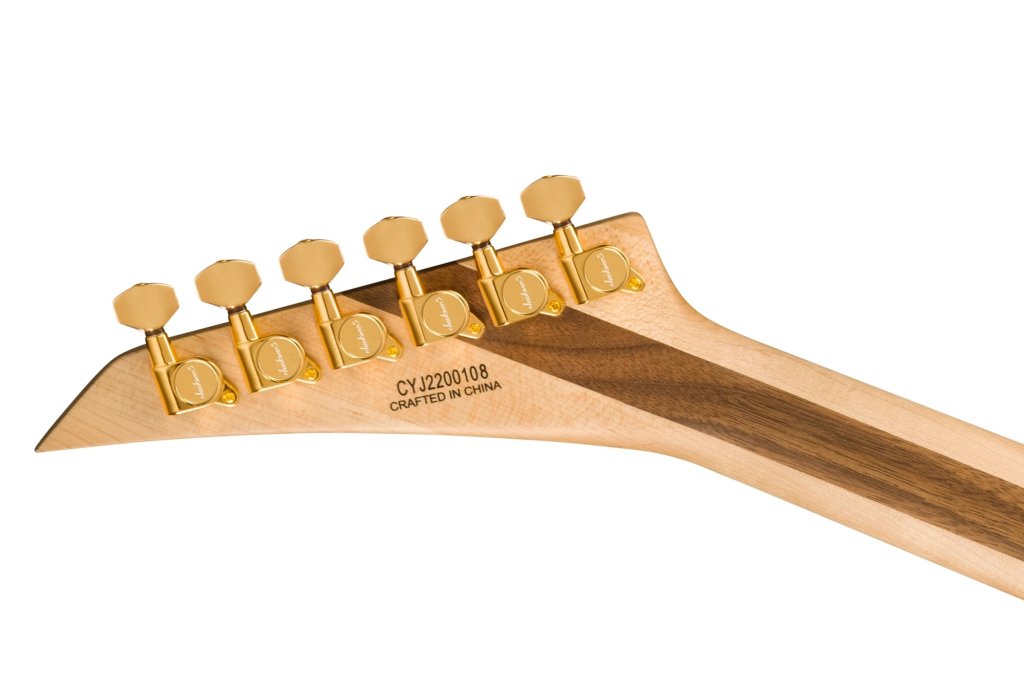
The golden Floyd Rose 1000 bridge sparkled alongside the Jackson-branded sealed die-cast tuning machines. Shining, golden, dome-style metal also finished the control knobs. The top of the body wasn’t flat but arched and slightly recessed at the heel, improving access to the 24th fret. The body’s contour, from the headstock to the body passing through the fretboard, was adorned with a 5-ply white binding (single-ply binding on the fretboard, though). The side dots, beautifully circled with a black ring, were luminescent, made with Luminlay to shine in the darkest of bedrooms—or stages if that’s your thing.

The fretboard wasn’t just any rosewood, but luxurious ebony, designed for a smooth, effortless playing experience. This was matched with jumbo stainless steel frets, meticulously polished for an ultra-smooth, long-lasting surface. These frets are harder to work with and more expensive, making them less common, but their durability is unmatched. The guitar featured a 25.5″ scale and was strung with 9-42 gauge strings, providing the ideal blend of playability and tone. Instead of the usual shark-tooth inlays seen on Jackson models, this one had refined ‘Pearloid Piranha Tooth‘ inlays—elegant and understated. A dual-action truss rod adjustment wheel, conveniently located at the base of the body, made adjustments a breeze.
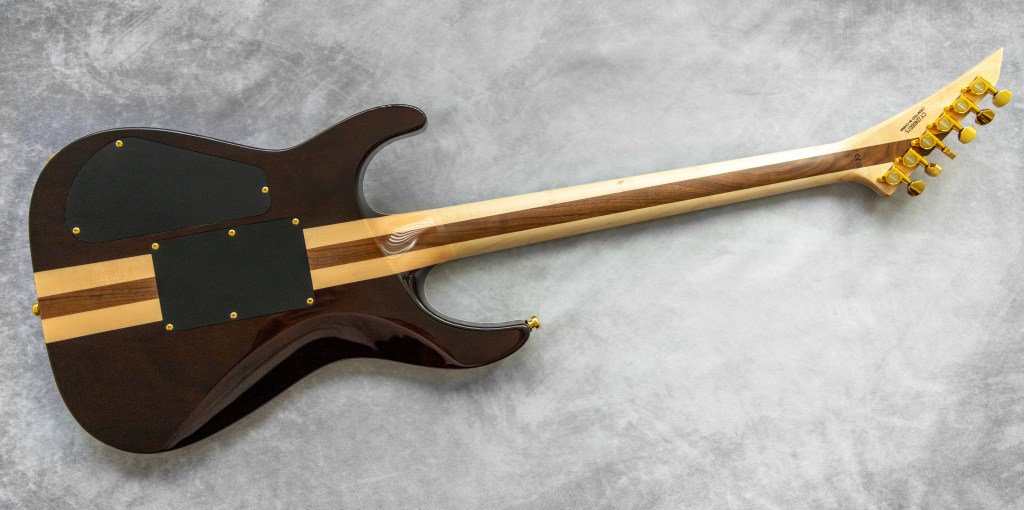
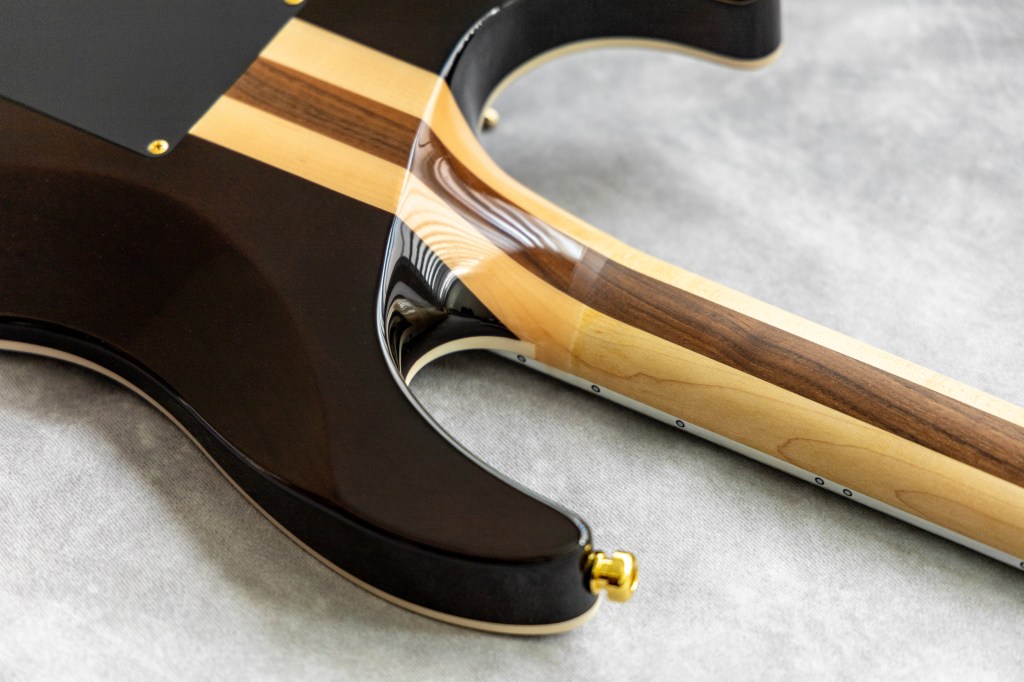
And once you’re utterly captivated by the front of this beauty, you must admire the back. I turned it over, and my breath caught. The neck was constructed from three pieces of Maple/Walnut/Maple wood, running seamlessly through the body—this guitar is a Neck-Through-Body design with graphite reinforcement. The three-piece neck extended from the headstock to the bottom of the body. And just when you think it couldn’t get any more stunning, the neck had a smooth, oiled finish, while the body boasted a glossy, polished surface. Cue heavenly music and lighting.
A Shredder’s Dream Neck with Versatile Control
The neck features a compound radius, starting at 12″ at the nut and flattening to 16″ at the heel, offering supreme comfort for both chords and soloing. Stainless steel jumbo frets paired with a genuine ebony fretboard deliver a silky-smooth feel, perfect for aggressive bends and vibratos while enhancing sustain. Its fast, ultra-comfortable neck is ideal for quick runs, complemented by an oil finish that adds a smooth, tactile experience. The action is dialed in perfectly—not too low to buzz, yet not too high to hinder speed. This guitar, built for blazing speed and face-melting volume, is undoubtedly a shredding monster. Indeed, the “volume” and “tone” controls can tame this beast. While many players crank both knobs to the max, there’s a treasure trove of tones in between. This is where this Jackson truly excels.
Seymour Duncan Pickups: Power, Versatility, and Unique Tone
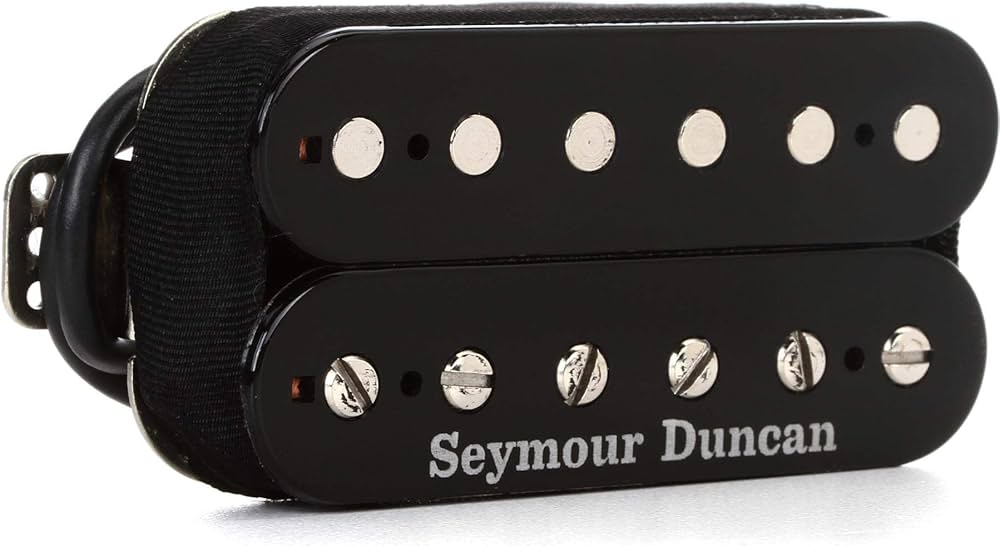
The Seymour Duncan pickups in this guitar are worth highlighting. Jackson chose a versatile mix of humbucker and single-coil pickups from a premium brand. For heavy metal riffs or screaming solos, the Seymour Duncan Distortion TB-6 fits the bill perfectly. For pristine 80s clean tones to modern Polyphia-like sounds, this guitar can handle it all. The Seymour Duncan Flat Strat SSL-6 pickups offer bright, sparkling tones or darker, muffled sounds when needed.
The Duncan Distortion is a high-output passive humbucker featuring a large ceramic magnet and hot coil windings, delivering powerful, balanced tones perfect for rock and metal. It offers tight low-end crunch and screaming highs, ideal for heavy rhythms and soaring leads.
In contrast, the Flat Strat pickups, featuring flat Alnico 5 rod magnets, offer a superb balance of increased output and classic Strat sparkle. While these overwound single-coils provide bold, punchy tones, they don’t reach the high volume levels of the Duncan Distortion. Though more powerful than typical Stratocaster single-coils, they still have lower output compared to the Duncan Distortion. This is normal for single coils, but far from a drawback. Their versatility shines, delivering a wide range of tones. Just keep in mind you won’t have high-output across all pickups, so adjust your amp settings or use an overdrive or distortion pedal to enhance the sound. It’s a straightforward tweak, especially if you’re into full-throttle playing.
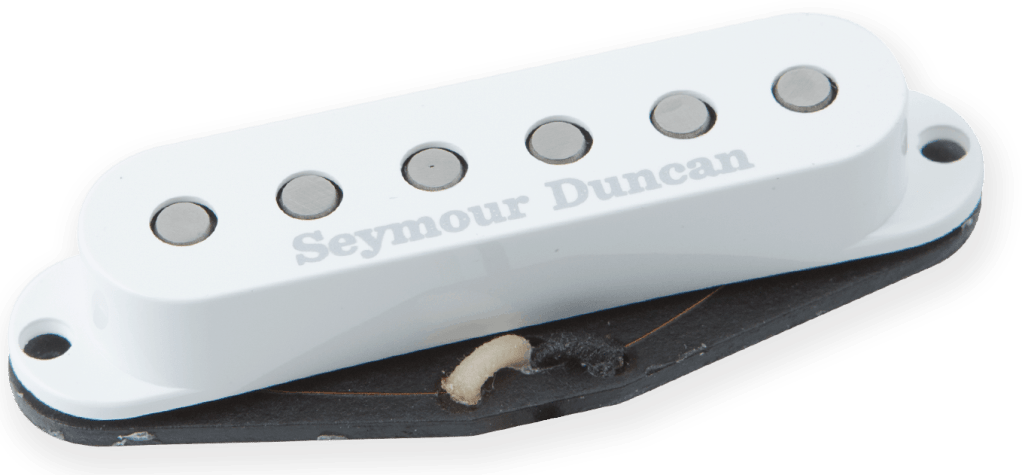
It’s also important to note that while the Flat Strat pickups lean towards the classic Stratocaster sparkle, you won’t find the traditional nasal Fender tone in this particular guitar.
Unleashing Versatility: From Funk to Grunge with the 5-Way Switch
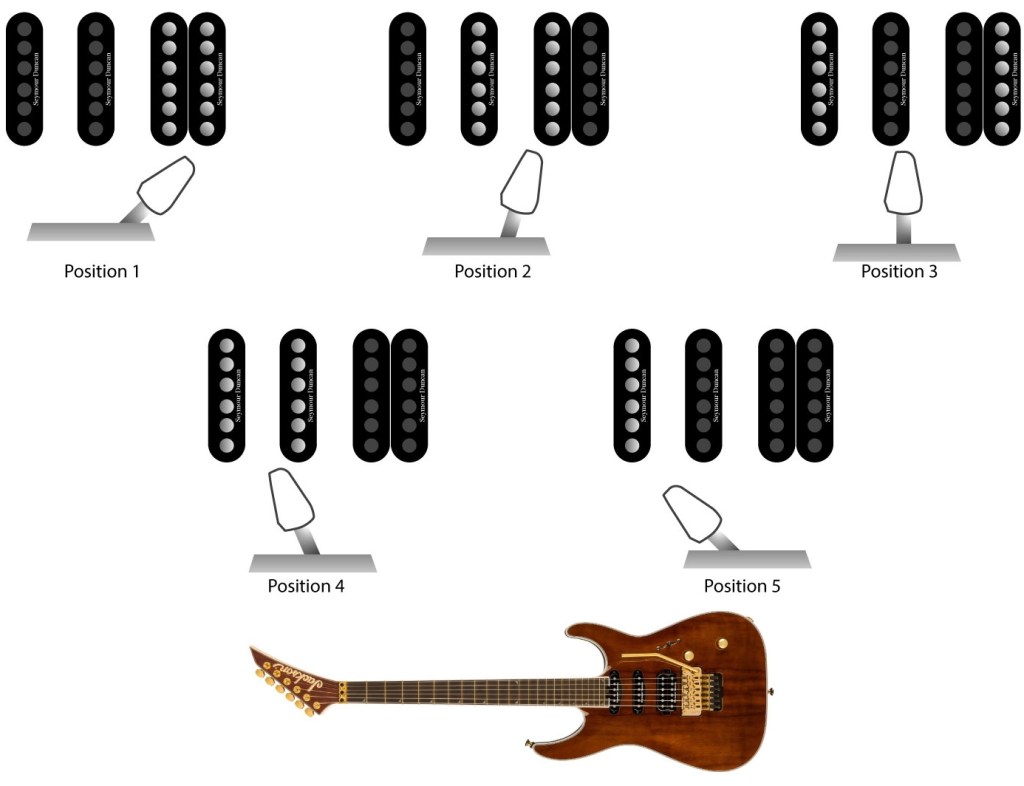
The 5-way switch offers a variety of tones, mixing humbucking and single-coil pickups. Want a jazzy sound? Select position 3, which uses both single coils, and you’ll get a humbucker-like sound that may feel a bit trebly. But that’s where the tone knob comes in: dial back some of the treble frequencies and voilà! You’ve got a smooth jazz tone that may also be perfect for B.B. King blues licks. Looking for trebly, twangy, clean funky tones? No problem! Just select the Flat Strat bridge single-coil or the second switch position through a clean amp (like a Roland Jazz Chorus), and you can play anything from James Brown to Earth, Wind & Fire, Nile Rodgers, and everything in between.
Sure, it won’t give you the exact twang of a Fender Stratocaster due to its neck-through construction, but the clean tones from this Jackson are still quite nice. Add some chorus, delay, and a bit of compression, and you’ll get a crystalline tone.
Oh, and believe it or not, with this Jackson, you can easily play both Rockabilly and Surf Guitar. Just use the bridge pickup, set your amp to a clean sound with lots of spring reverb and a slap-echo delay, and you’re set to go.
Unsurprisingly, this Jackson can handle any 80s metal you throw at it with ease. And if you’re feeling grungy, just leave the whammy bar aside, set your amp to a Fender Twin Reverb tone, and use distortion pedals like the Big Muff and Boss DS-1 for a raw, grungy sound, courtesy of the Seymour Duncan Distortion bridge pickup.

Speaking of 90s grunge tones without a whammy bar, one thing I appreciate about this Jackson is its versatility. It’s better to have a Floyd Rose and not need it for grunge sounds than to crave a dive-bomb machine when you’re stuck with a fixed bridge. The Jackson’s tone versatility lets you adjust for a wide range of sounds, from bright and clear to warm and mellow.
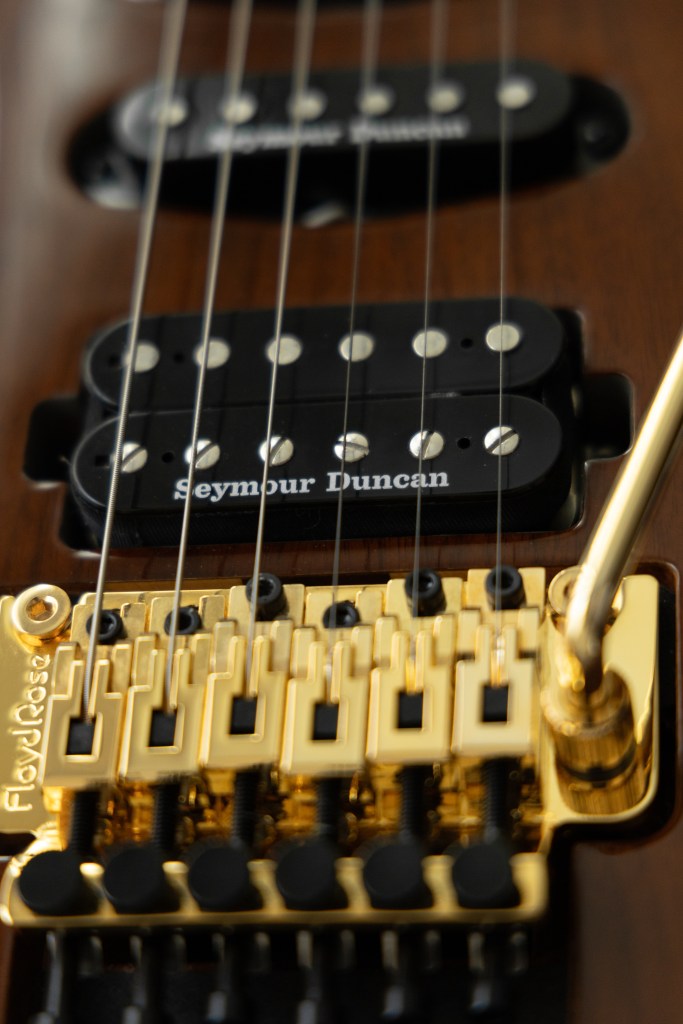
This Jackson has a quite personal sound—neither strictly Gibson nor Fender—but its own distinctive and versatile tone.
Almost perfect. Almost.
Overcoming My Doubts: The Surprising Appeal of Golden Hardware
Despite my initial reservations, I have to admit that the golden finish actually looks quite elegant and luxurious. There’s nothing flashy or tacky about it. In fact, it complements the chocolate color palette perfectly. Black hardware would have looked dull, and a chrome finish… well, I just can’t picture it now.

Made in China: Rethinking Craftsmanship and Quality Perception
This Jackson isn’t made in the United States—or even Indonesia—but in China. For many, that might sound like a red flag, given the common association of “Made in China” with subpar craftsmanship. But hold on—China also manufactures top-tier products like iPhones and luxury cars, proving that quality depends on what you’re willing to pay for. At $1,700, this Jackson isn’t cutting corners. Compared to other Chinese-made guitars, like a problematic Epiphone Les Paul I once tried, the difference in fit, finish, and overall craftsmanship is staggering. Despite its origin, this guitar stands out as a high-quality instrument that challenges outdated stereotypes.
Is $1,700 Too Much for This Jackson?
This brings me to my third gripe: the price tag. At $1,700, this Jackson isn’t exactly a bargain, and it almost sent my spouse into cardiac arrest. Still, if it were American-made, it would likely cost $2,500 to $3,400—an even harder pill to swallow. Jokes aside, if “crafted in China” in a $1,700 instrument is a dealbreaker for you, look elsewhere. But if you can accept it, this guitar offers a solid balance of cost and performance.
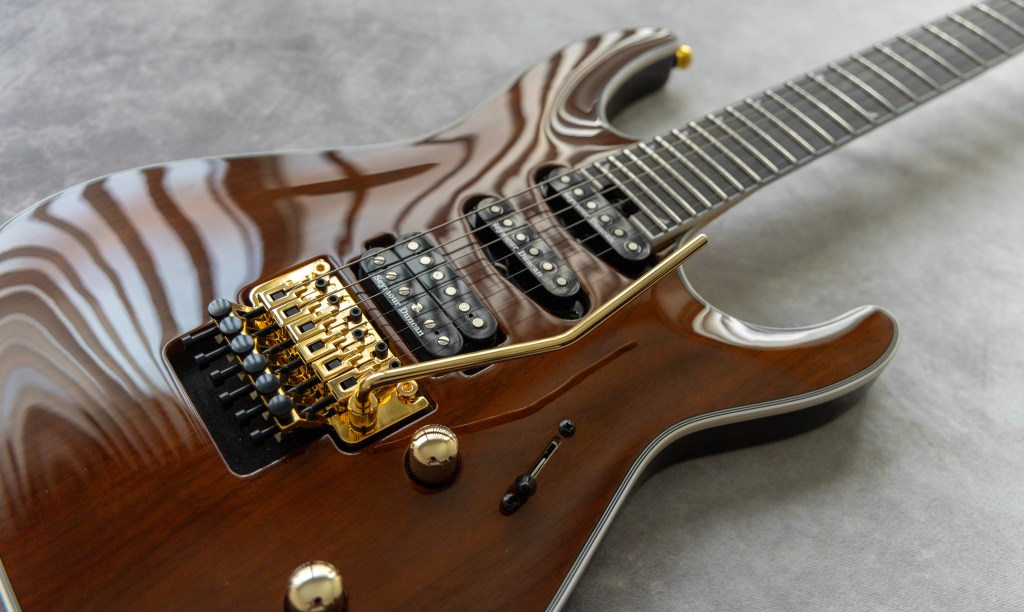
Is it a top-tier or custom shop–level instrument?
No—let’s be honest, it’s not. The hardware is very good, but not top-tier. The Floyd Rose isn’t a 1500 series, and the tuning machines aren’t Gotoh or Schaller (though, to be fair, that’s not really necessary thanks to the locking system). So while the hardware is solid and reliable, it falls just a tad short of the highest standard.
And the Okoume wood? It’s cheaper and different from mahogany, but not necessarily worse—just different.
So, hey: Okoume Matata!
The binding definitely adds to the craftsmanship cost, especially when combined with the oil and glossy finishes, which require more labor hours. So, you get a really very good guitar capable of playing just about anything you throw at it, and it’s genuinely beautiful.
It may not reach the ‘exotic’ or ‘Custom Shop’ level in terms of hardware, but it’s far from your average guitar, even middle-priced instruments. For your hard-earned dollars, you receive a genuinely beautiful guitar with excellent sound, impressive versatility, and a lifetime of joy.

Let’s think for a minute: if my Charvel San Dimas is like a white Dodge Charger Hellcat—powerful but a bit raw—then this Jackson would be like a Buick Regal GS: sporty, luxurious, refined, from a reputable brand, yet made in China.
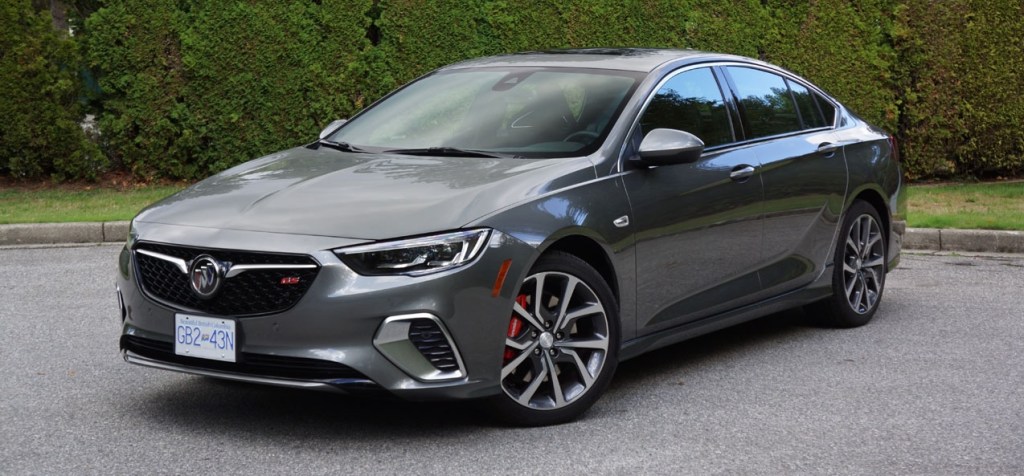
Other alternatives
If you’re considering alternatives to the Jackson Pro Plus Series Soloist SLA3W in the $1,700 range, there are a few options that offer similar high-quality features and pickup configurations.
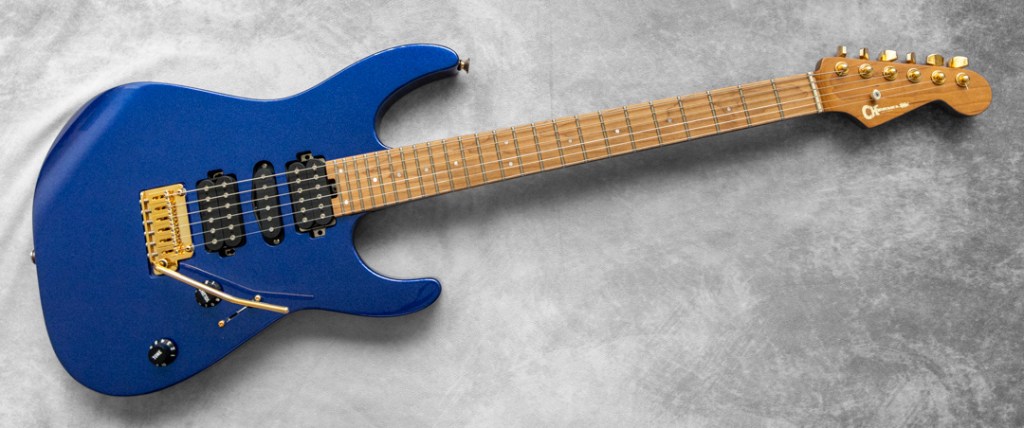
One very strong contender is the Charvel Pro-Mod DK24 HSS 2PT CM. This guitar offers a similar HSS pickup configuration, featuring Seymour Duncan pickups as well, with a Seymour Duncan Custom Full Shred SH-10B in the bridge position and two Seymour Duncan Flat Strat SSL-6 single coils. If also features golden finished hardware. It’s designed for versatile playability and comes with a caramelized maple neck and a Gotoh Custom 510 tremolo but no Floyd Rose.
Another option to consider is the Fender American Professional II HSS Stratocaster. This guitar also features an HSS pickup configuration with a V-Mod II DoubleTap humbucker in the bridge and two V-Mod II single-coils.
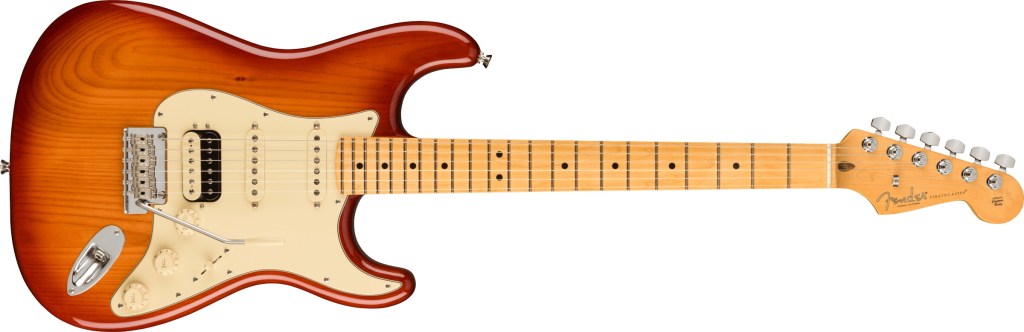
Even when exploring alternatives, the Jackson Pro Plus Series Soloist SLA3W stands out as the most complete option. While there are comparable choices, none quite match its unique blend of features and capabilities. This Jackson holds a strong position, offering a distinctive set of skills that truly sets it apart from the competition.
Pros and Cons of the Jackson Pro Plus Series Soloist SLA3W Walnut
Pros
- Exceptional Playability: The slim, fast neck with a compound radius and stainless steel frets ensures smooth, effortless shredding and comfortable chord play.
- Versatile Sound: The Seymour Duncan pickups (TB-6 and SSL-6) offer a broad tonal palette, from clean funk to aggressive metal.
- High-Quality Materials: Neck-through-body construction with maple and walnut, paired with an ebony fretboard and jumbo stainless steel frets, ensures durability and premium feel.
- Elegant Aesthetics: The luxurious golden hardware complements the chocolate Okoume body, creating a visually stunning guitar.
- Innovative Design Features: The recessed heel, arched body, and sculpted contours improve fret access and ergonomics.
- Durability and Longevity: Premium components, like Luminlay side dots and robust finishes, promise a long-lasting instrument.
Cons
- Pricey for Its Origin: At $1,700, the “Made in China” label may deter some buyers, despite the high quality.
- Hardware Limitations: The Floyd Rose 1000 series and Jackson-branded tuners, while reliable and perfectly functional, don’t quite reach the level of premium alternatives like Gotoh, Schaller, or the top-tier Floyd Rose 1500. To be fair, though, this is a very minor drawback.
- Flashy Aesthetics May Not Appeal to All: The golden hardware, while elegant, might be too bold for some tastes.
- Okoume Wood Preference: While lightweight and resonant, Okoume may not suit players who prefer the tonal characteristics of mahogany or other traditional woods.
Conclusion
The Jackson Pro Plus Series Soloist SLA3W Walnut is a remarkable instrument that bridges the gap between premium features and relatively accessible pricing. Its stunning design, versatile tone, and excellent playability make it a standout choice for shredders and players seeking a high-performance guitar. Despite the “Made in China” label and certain hardware choices that are truly good -but not top-tier-, the overall craftsmanship and quality demonstrate that this guitar offers exceptional value for the price. Whether you’re diving into metal riffs, exploring jazzy tones, or crafting your unique sound, this Jackson has the versatility to keep up.
The Jackson Pro Plus Series Soloist SLA3W Walnut makes a compelling case. With its sleek design, versatile tones, and premium feel, it’s the kind of guitar that can test the strength of a marriage—or at least provide the soundtrack to one. Certainly, the guitar is costly, manufactured in China, and includes a gig bag that is more akin to a glorified dust cover. However, who cares when you are in possession of a guitar that is visually appealing, performs exceptionally well, and produces a sound that is unparalleled in virtually any genre? After all, love is fleeting, but tone is forever… right? Just don’t tell your spouse (or mine) I said that.
Epilogue
I couldn’t resist the temptation. After a couple of years enjoying my superb instrument, I finally pulled the trigger and got the Charvel I’d been eyeing—and wow, what an incredible instrument! These two guitars are absolutely amazing, each with its own unique character and feel.
You can now read my full in-depth review of the Charvel Pro-Mod DK24 HSH 2PT MC.
Specs
Price
Suggested Retail Price: $1,699.99 USD
Body
– Body Material: Okoume
– Body Finish: Gloss
– Body Shape: Soloist™
– Body Binding: 6-Ply
Neck
– Number of Strings: 6
– Neck Material: 3-Piece Maple/Walnut/Maple
– Neck Construction: Neck-Through-Body with Graphite Reinforcement
– Neck Binding: 1-Ply White
– Neck Finish: Oiled
– Scale Length: 25.5″ (64.77 cm)
– Fingerboard Material: Ebony
– Fingerboard Radius: 12″ to 16″ Compound Radius (304.8 mm to 406.4 mm)
– Number of Frets: 24
– Fret Size: Jumbo Stainless Steel
– Nut Material: Floyd Rose® 1000 Series Locking
– Nut Width: 1.6875″ (42.86 mm)
– Position Inlays: Pearloid Piranha Tooth
– Side Dots: Luminlay®
– Truss Rod: Dual-Action with Wheel
Electronics
– Bridge Pickup: Seymour Duncan® Distortion™ TB-6
– Middle Pickup: Seymour Duncan® Custom Flat Strat® SSL-6 Single-Coil
– Neck Pickup: Seymour Duncan® Custom Flat Strat® SSL-6 RWRP Single-Coil
– Controls: Volume, Tone
– Switching: 5-Position Blade:
– Position 1: Bridge Pickup
– Position 2: Inner Coil of Bridge and Middle Pickup
– Position 3: Neck and Bridge Outer Coil
– Position 4: Neck and Middle Pickup
– Position 5: Neck Pickup
– Configuration: HSS
Hardware
– Bridge: Floyd Rose® 1000 Series Double-Locking Tremolo (Recessed)
– Hardware Finish: Gold
– Tuning Machines: Jackson® Sealed Die-Cast
– Control Knobs: Dome-Style

 oscaronguitars.com
Leave a reply to PRS SE Custom 24 Review: The Perfect Blend of Versatility, Style, and Affordability – OscarOnGuitars.com Cancel reply