
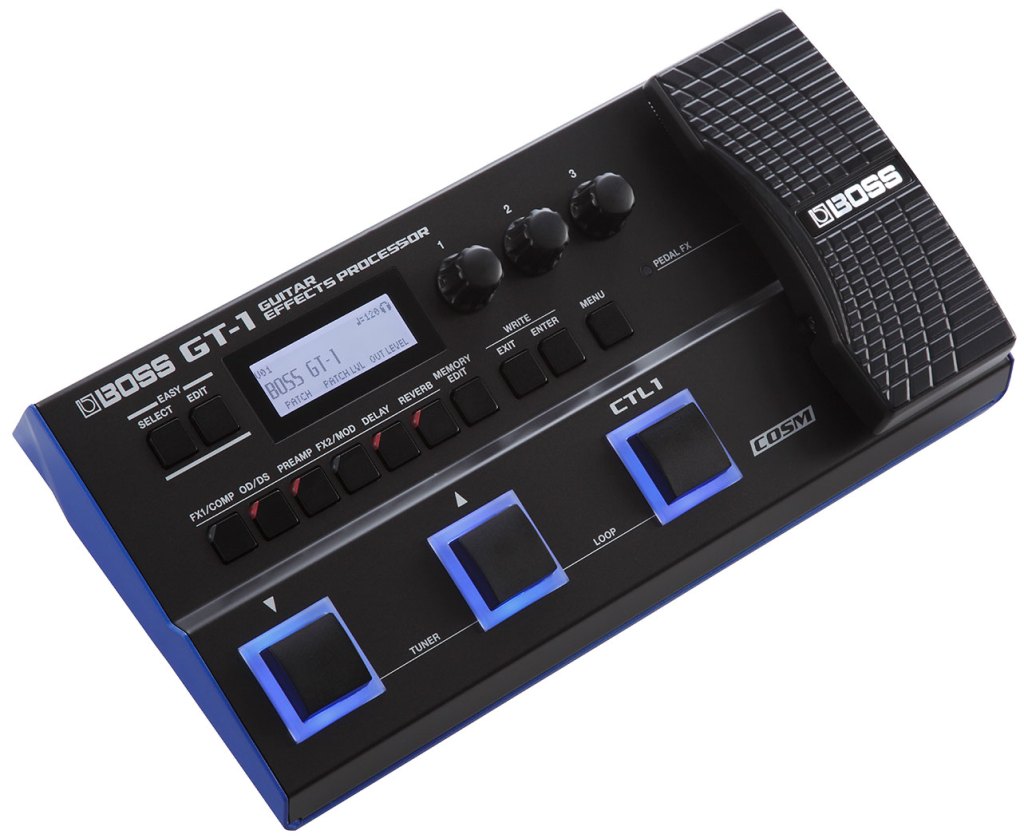
Many years ago, achieving a great guitar tone meant spending thousands of dollars on amp heads, cabinets, pedals, or rack-mounted units. When I began playing guitar in 1987, the cost of sounding like Richie Sambora implied paying tens of thousands of dollars. But for me, that changed forever when, in 1995, I bought a Korg Toneworks Pandora effects processor. It fit in the palm of my hand and provided me with a sound that was previously impossible for me to get. It completely blew my mind and changed my practice and playing forever.
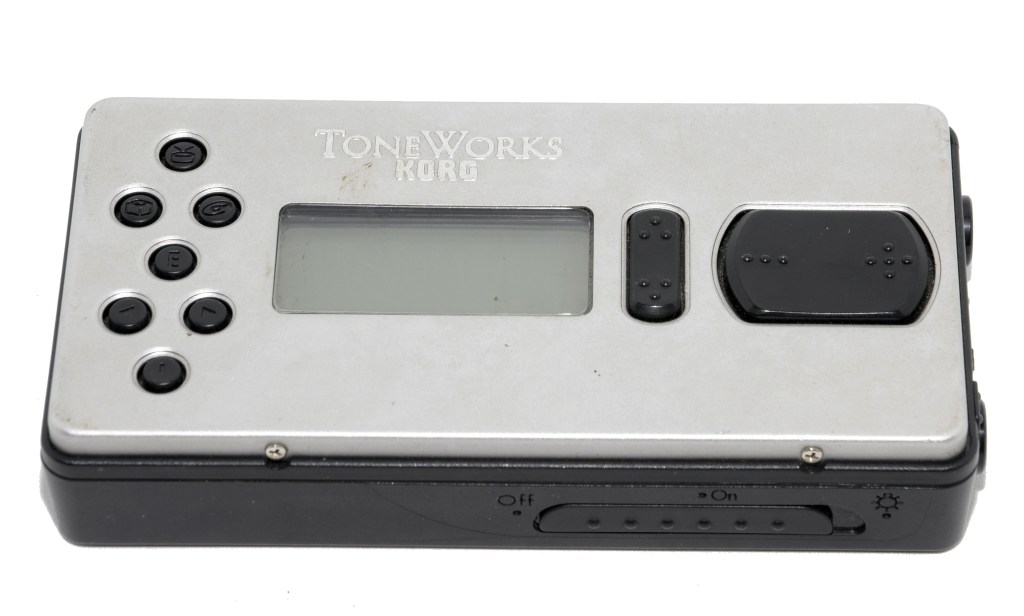
Fast forward 30 years, and things have changed enormously. One day, I needed a capable portable processor that I could use onstage, which was very portable, sounded great, and worked on batteries. It was for an event that I will write about soon. Almost a year before, I had bought a Boss GT Pocket unit with a great sound but had usability and small quality issues that prevented me from using it. However, since the sound was amazing, I looked for a floor processor similar to it at a decent price and found the Boss GT-1. Both the GT Pocket and the GT-1 use the same processor, and since I had spent quite some time refining the sounds I was looking for, it was a no-brainer to buy it.
The experience was vastly different from the GT Pocket. Suffice it to say, this unit was much easier to use, with a volume/expression pedal that was incredibly useful and surprisingly sturdy for an all-plastic construction, oh, and with a proper screen.
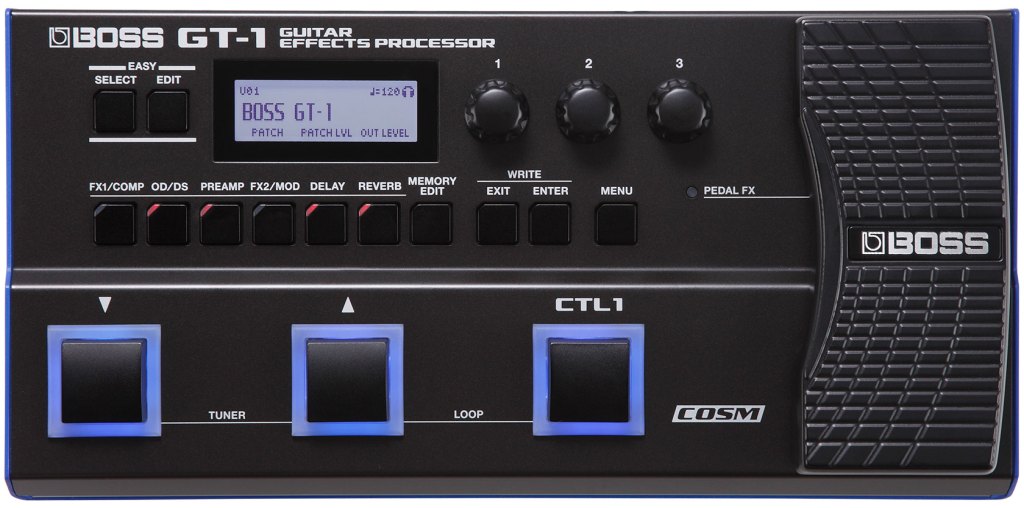
Let’s dig into the different quirks and features (as Doug DeMuro would say) of the Boss GT-1 Guitar Effects Processor.
Design and Build Quality
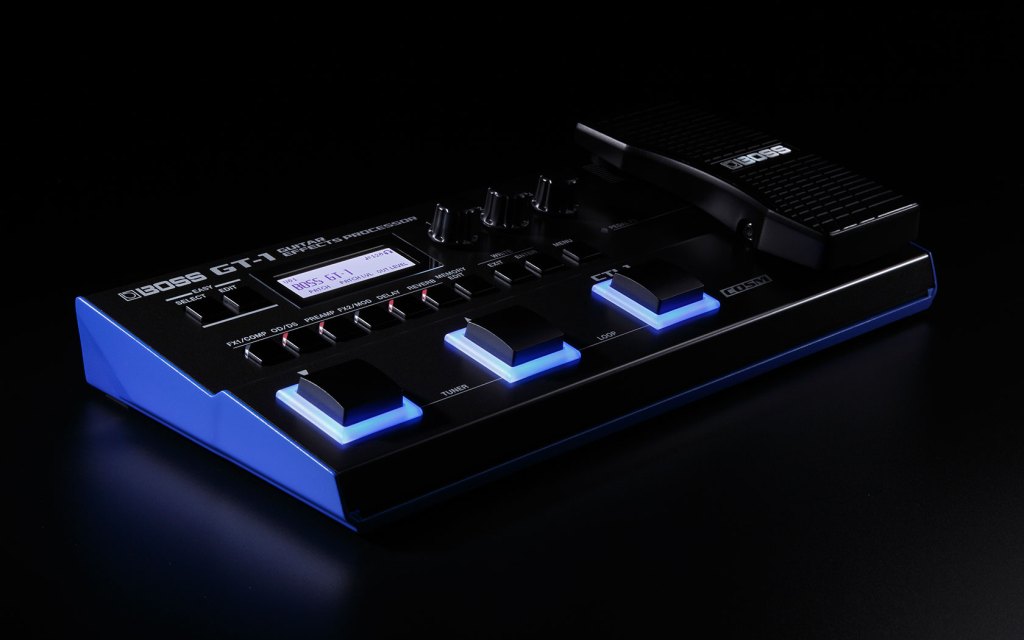
I am impressed with the build quality of this unit. It’s made of plastic, but it feels surprisingly well-built and sturdy. It’s not particularly heavy, but it feels substantial and doesn’t move when I operate it on the floor. At the same time, since it’s not that big, I can use it at my desk. That might sound funny, but for practicing in front of my computer, it works very well for me (as long as I don’t need the volume or expression pedal).
The GT-1 boasts a sleek, modern design that prioritizes portability without compromising durability. It fits my gig bag, but without much room and not being able to close the zipper. It features a lightweight and compact form factor, making it easy to transport. The absence of hard edges ensures that it won’t damage other equipment during transport. The unit is powered by either an AC adapter or four AA batteries. I use two sets of rechargeable batteries to avoid having one more cable. The promised time of operation on batteries is around seven hours. I don’t chronometer my practice or playing time, but I have to change the batteries two or three times a week. The battery operation is ideal for street performances and mobile gigs.
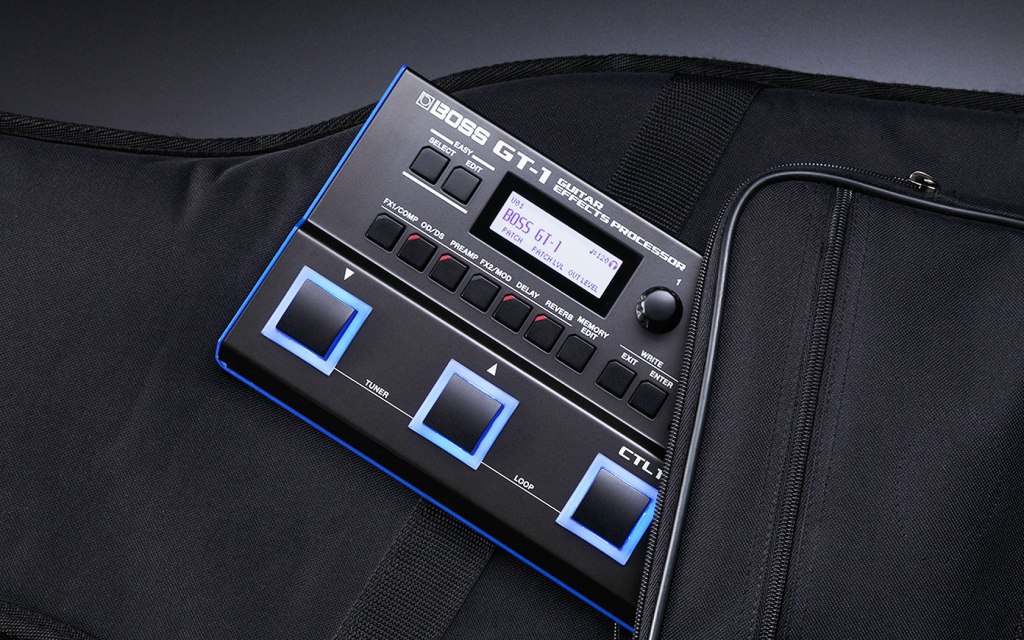
Speaking of batteries, something that makes no sense to me is that you can’t dim the screen or the LED lights on the foot buttons nor switch them off completely if you need to. That would help a lot to save battery life.
I don’t know how important the visual attractiveness of the unit is, but I found it quite handsome, and I like the blue and red lights surrounding the foot buttons. The GT-1 feels modern. The button layout is well-spaced, logically ordered, and easy to operate. I appreciate the possibility of using the small buttons to switch on and off parameters such as overdrive, delay, and reverb. The only thing I don’t quite like is the screen.
Screen
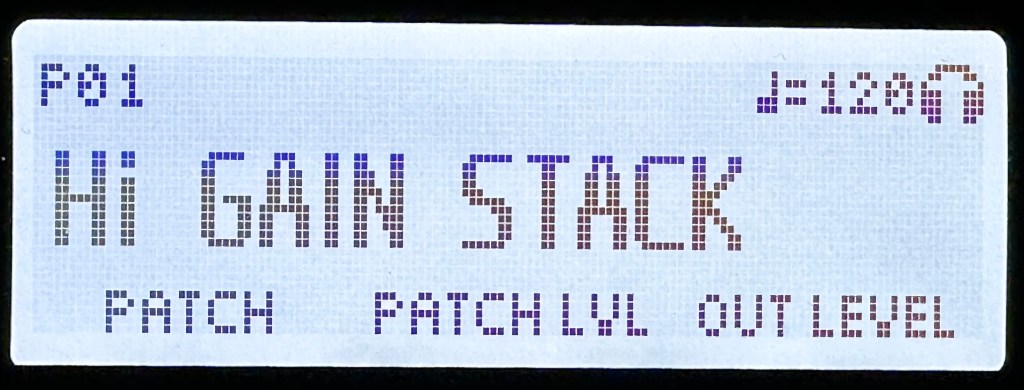
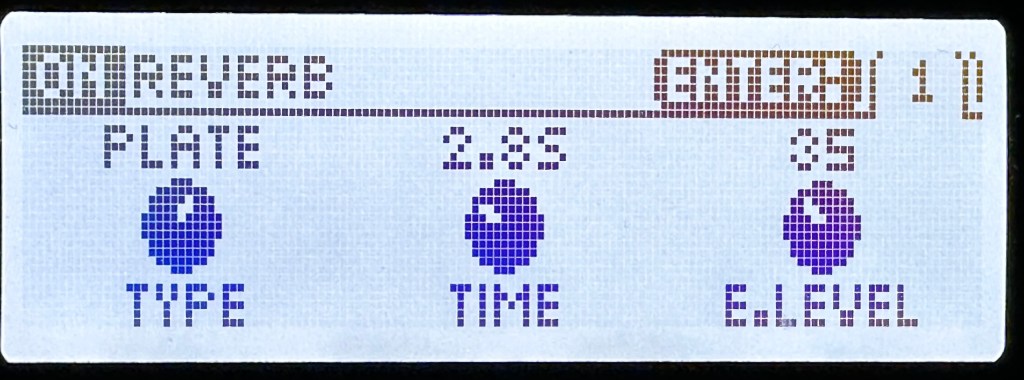
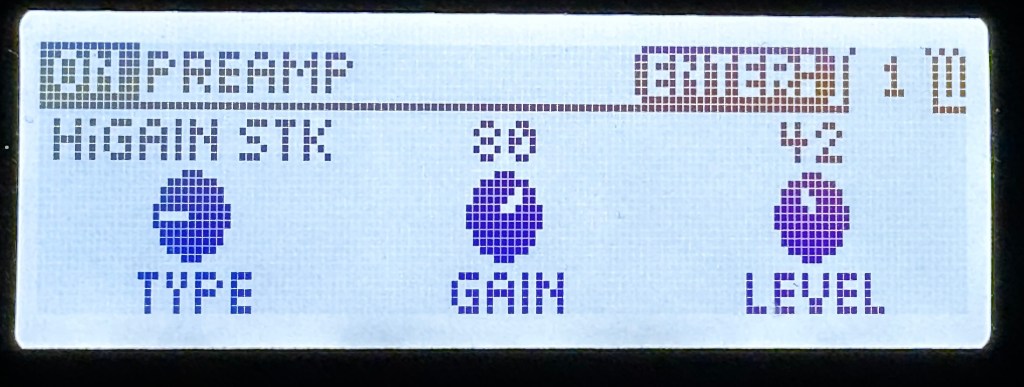
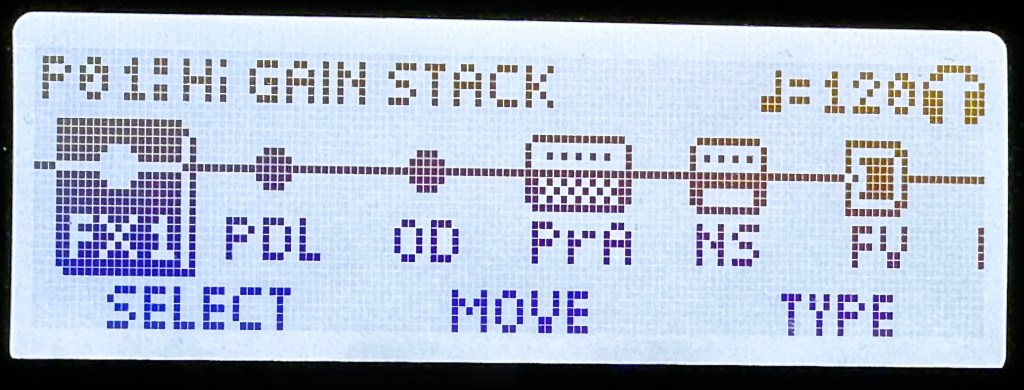
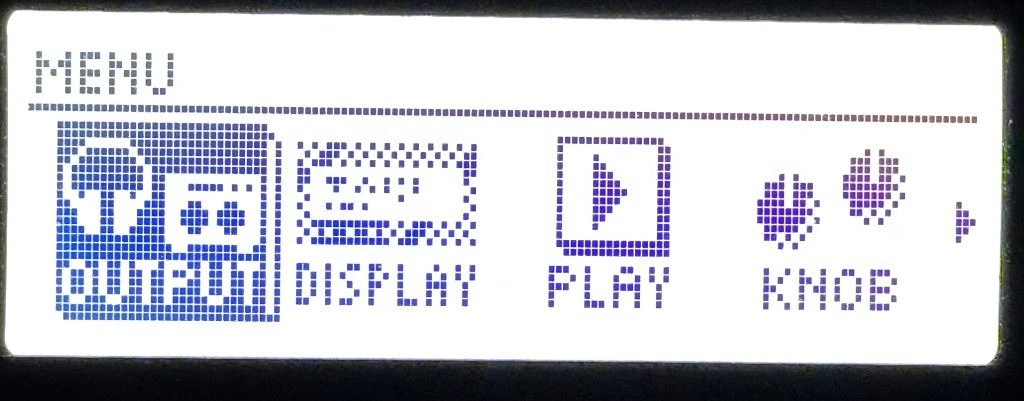
The screen is a monochromatic matrix LCD with white illumination, which looks and feels outdated. However, it’s useful and big enough to change parameters easily. A color touchscreen would improve the experience but also increase the cost. Given the price, I prefer the current screen. My only real gripe is not being able to dim the backlight or switch it off to save battery life.
Sound Quality
The sound quality in this kind of unit is of the utmost importance, and the BOSS GT-1 does not disappoint. As you can imagine, the modulation effects such as delay, phaser, flanger, reverb, and other controls like noise reduction or compression are impressively good. For Pete’s sake! A single unit pedal doing just one function is anything between $100 and $150, and with the BOSS GT-1, you get the BOSS sound quality from a wide range of effects already included. So, regarding modulation effects, this unit works wonderfully. What about amps and overdrive sound? Let’s see.
Amp modeling began with BOSS’s parent company Roland and its GP-8 unit from 1987. It introduced digital effects and early simulations. Then, in 1989, Tech 21’s SansAmp provided analog amp tones in a compact unit. Johnson’s JM150 in 1996 further advanced modeling with comprehensive digital simulations. Yamaha’s DG series in 1997 offered detailed digital modeling amplifiers. The launch of Line 6’s POD in 1998 popularized amp modeling. So, guitar modeling is not Roland’s first rodeo.
The GT-1 provides a wide array of world-class amps, from clean Fender amps to head-melting metal sounds based on EVH’S 5150 heads. The cabinet simulators are competent. Certainly, some dedicated plug-ins or amp simulations by Neural DSP or AmpliTube may be better, but for the bedroom player and someone looking for a portable decent sound on a budget, the Gt-1 amp and cabinet simulations work pretty well.
The only thing I disliked about the amp simulation is that it doesn’t seem to respond very well to volume input. With real amps and good emulations, you can have crystalline sounds when playing at low volumes and a grittier sound as you level up the volume. In these amps, my impression is that it’s an on/off thing, which I don’t love.
I don’t use the acoustic simulator much, but it may be useful for some players.
All in all, I can say that the sound quality is really very good considering the price. Can you get a better sound? Yes, indeed. But you’ll have to pay much more than the cost of this unit. I compared this with a Zoom G1X Four, and the difference is overwhelming in favor of the BOSS unit. So, for classic overdrive or intricate modulations, the GT-1 provides a rich, dynamic sound that caters to both beginners and seasoned players.
Functionality and Features
Before the GT-1, I bought the Boss Pocket GT, and since the processor is essentially the same, the sound quality is identical. So, why did I buy the GT-1? Wasn’t such a purchase redundant? Well, yes and no. The sound is the same, but as I’ll detail in another review for the Pocket GT, usability and quality issues were a deal-breaker for me. In short: the usability of the Pocket GT is poor. It has an almost useless two-digit screen, ineffective buttons on the front, requires external software to change parameters, and includes “learning from YouTube” features that are not practical. Moreover, the 3.5mm output connection fails, only allowing the left channel to be heard (expired warranty, obviously). Despite its excellent sound, the Pocket GT is expensive (costs about the same as the GT-1), an usability nightmare, and has many useless features. So, usability is a big deal, believe me.
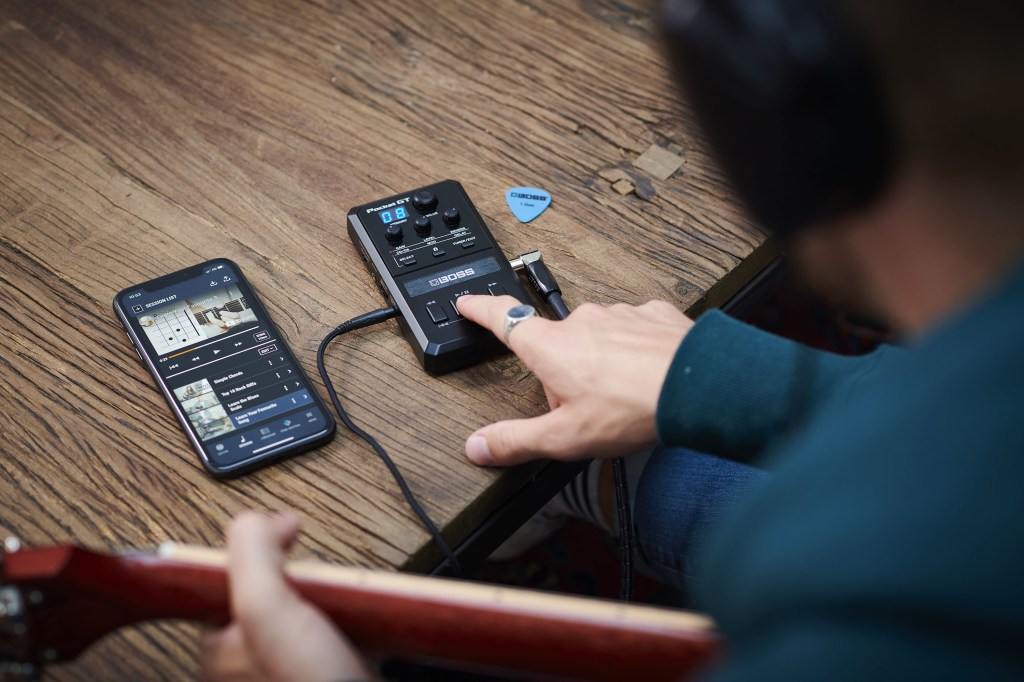
Since I spent a lot of time refining the sounds I wanted from the Pocket GT, upgrading to a more user-friendly version with the same excellent sound quality seemed like a sensible decision. And time proved me right: the GT-1 is very user-friendly and useful. The interface is intuitive, and I was able to exactly replicate my Pocket GT patches quickly. I never use the GT Studio software because operating the unit itself is easy (a vastly different experience from the Pocket GT). It has an Easy Select function that lets users choose patches by genre, distortion, or effect type, while the Easy Edit function simplifies the tweaking of drive, modulation, and echo tones.
The processor includes three footswitches that offer patch selection, tuner access, and looper control, all within a minimal footprint. An assignable control switch and an expression pedal provide dynamic real-time effects adjustment. For those who crave more control, the GT-1 supports the connection of up to two external footswitches or an additional expression pedal.

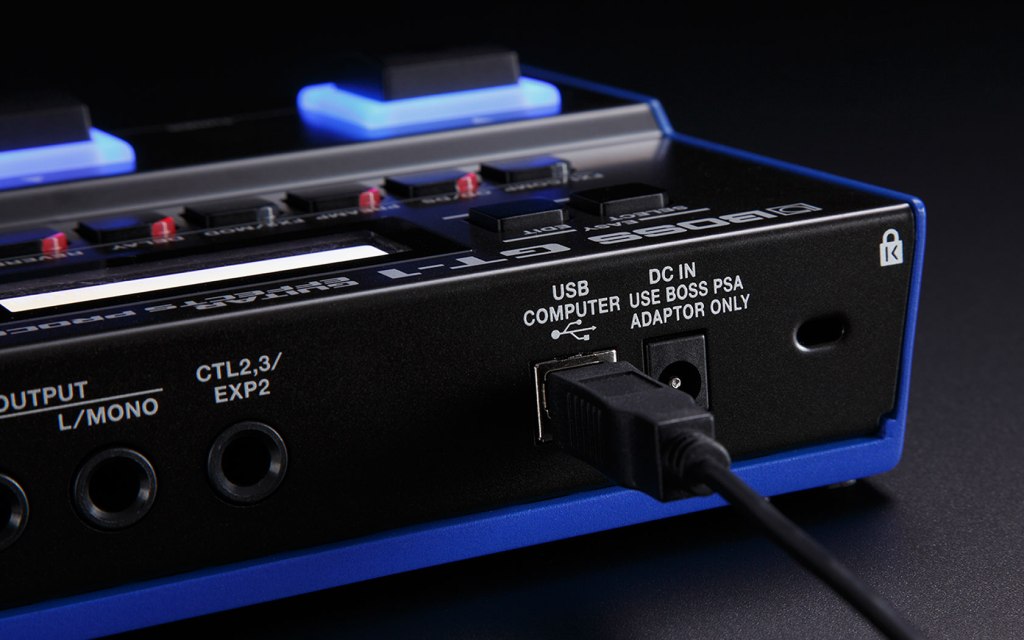
Regarding connectivity, the GT-1 is simple, and its straightforward connections will be friendly for newer users. You can connect your phone or computer sound through a 3.5mm aux-in connection (it’s a shame that it does not have Bluetooth connectivity like the Pocket GT), a 3.5mm headphone jack, stereo or mono output connections, an external connector, an outdated USB connection, and an AC adaptor. I also liked that it has an anti-theft “K-slot”.
The only thing I miss from this unit, and I think it’s worth mentioning, is a drum box or even an integrated metronome. Cheaper effect processors like the Zoom G1X have such amenities. And believe me, BOSS knows drum units.
Another small quirk is that there is no on/off switch. When you connect the guitar, it powers on, and it only disconnects when you unplug it.
Connectivity options are robust, with a USB jack that facilitates recording and re-amping tones with your favorite DAW. However, I have not been able to connect the GT-1 to my DAW via USB. I don’t know if it’s my old cable, which uses an outdated USB standard once used for printers, or if I didn’t install the Mac drivers properly. Anyway, since I connect to my DAW with an old M-Audio unit that works fine for me, I haven’t needed the USB connection that much. Also, since I don’t mind using the GT Studio software, it’s not a problem for me.
Value for Money
Priced around $199.99, the BOSS GT-1 offers tremendous value for its price point. Yes, it’s mostly an entry-level unit, but it is really affordable and provides excellent user experience, design, portability, and sound quality without breaking the bank.
Conclusion
So, there you have it. The BOSS GT-1 is a fantastic piece of gear that merges affordability, portability, and great sound quality into one compact unit. It’s impressive to see how much technology has evolved since the days when getting a great guitar tone required spending thousands of dollars. The GT-1 brings the rich legacy of BOSS and Roland’s sound engineering into a user-friendly package, making it accessible for both beginners and seasoned players. Despite a few minor drawbacks like the outdated screen and lack of built-in metronome or drum box, the GT-1’s overall performance and value for money make it a solid choice. Whether you’re jamming at home, recording in the studio, or performing on stage, this little powerhouse has got you covered. So, if you’re on the fence about getting one, I’d say go for it—you won’t be disappointed!
Pros and Cons of the BOSS GT-1
Pros
- Sound Quality: The GT-1 features the same high-quality processor, offering a wide range of effects and amp simulations. The modulation effects like delay, phaser, flanger, and reverb are particularly impressive.
- Portability: Compact and lightweight, the GT-1 is easy to transport.
- Battery Operation: It can run on four AA batteries, which is perfect for street performances and mobile gigs.
- User-Friendly Interface: Adjustement of patches and effects is quick and simple.
- Versatility: The GT-1 includes three footswitches for patch selection, tuner access, and looper control,.
- Expression Pedal. Great for dynamic real-time effects adjustment.
- Value for Money: Priced around $199.99, the GT-1 offers excellent value for its price point.
Cons
- Outdated Screen: The monochromatic matrix LCD screen feels outdated. While functional, a color touchscreen would enhance the user experience.
- Volume Response: The amp simulation does not respond well to volume input, lacking the nuanced change in tone that comes with real amps or higher-end simulations.
- Lack of Built-In Metronome or Drum Box: Unlike some cheaper effect processors, the GT-1 does not include these features, which could be useful for practice sessions.
- Connectivity Issues: Some users may experience difficulties connecting the GT-1 to their DAW via USB, possibly due to outdated cables or driver issues.
SPECS
Sound Quality
- Sampling Frequency: 44.1 kHz
- AD Conversion: 24 bits + AF method
- AF method (Adaptive Focus method): Proprietary Roland & BOSS method improving the signal-to-noise (SN) ratio of the AD and DA converters.
- DA Conversion: 24 bits
Effects and Patches
- Effects: 108 types
- Patches: 99 (User) + 99 (Preset)
- Phrase Loop: 32 seconds
Input and Output
- Nominal Input Level:
- INPUT: -10 dBu
- AUX IN: -20 dBu
- Maximum Input Level:
- INPUT: +7 dBu
- AUX IN: 0 dBu
- Input Impedance:
- INPUT: 1 M ohm
- AUX IN: 27 k ohms
- Nominal Output Level:
- OUTPUT (L/MONO, R): -10 dBu
- PHONES: -10 dBu
- Output Impedance:
- OUTPUT (L/MONO, R): 1 k ohm
- PHONES: 44 ohms
- Recommended Load Impedance:
- OUTPUT (L/MONO, R): 10 k ohms or greater
- PHONES: 44 ohms or greater
Controls
- Switches: DOWN, UP, CTL1
- Buttons:
- EASY SELECT
- EASY EDIT
- FX1/COMP
- OD/DS
- PREAMP
- FX2/MOD
- DELAY
- REVERB
- MEMORY EDIT
- EXIT
- ENTER
- MENU
- Knobs: 1, 2, 3
- Pedal: Expression pedal
Display
- Type: Graphic LCD (132 x 32 dots, backlit)
Connectivity
- Input/Output Jacks:
- INPUT: 1/4-inch phone type
- OUTPUT (L/MONO, R): 1/4-inch phone type
- CTL2, 3/EXP2: 1/4-inch TRS phone type
- AUX IN: Stereo miniature phone type
- PHONES: Stereo miniature phone type
- USB COMPUTER port: USB type B
- DC IN jack
Power
- Power Supply:
- Alkaline battery (AA, LR6) x 4
- AC adaptor (sold separately)
- Current Draw: 200 mA
- Battery Life: Approx. 7 hours (continuous use with alkaline batteries)
Accessories
- Included:
- Owner’s manual
- Leaflet “USING THE UNIT SAFELY”
- Alkaline battery (AA, LR6) x 4
- Optional (sold separately):
- AC adaptor: PSA series
- Footswitch: FS-5U, FS-5L, FS-6, FS-7
- Expression Pedal: FV-500L, FV-500H, Roland EV-5
Dimensions and Weight
- Width: 305 mm / 12-1/16 inches
- Depth: 152 mm / 6 inches
- Height: 56 mm / 2-1/4 inches
- Maximum Height: 74 mm / 2-15/16 inches
- Weight: 1.3 kg / 2 lbs 14 oz (including battery)
*0 dBu = 0.775 Vrms


Leave a comment